Filters

54 filtered results

Clear all filters
Favorites
With answer key
Interactive

54 filtered results

Difficulty Level

Grade


Check out this FREE Trial Lesson on Adding on the Farm for age 4-7!

Z

Favorites
With answer key
Interactive
  • 4-7
  • Counting practice
  • Adding on the Farm
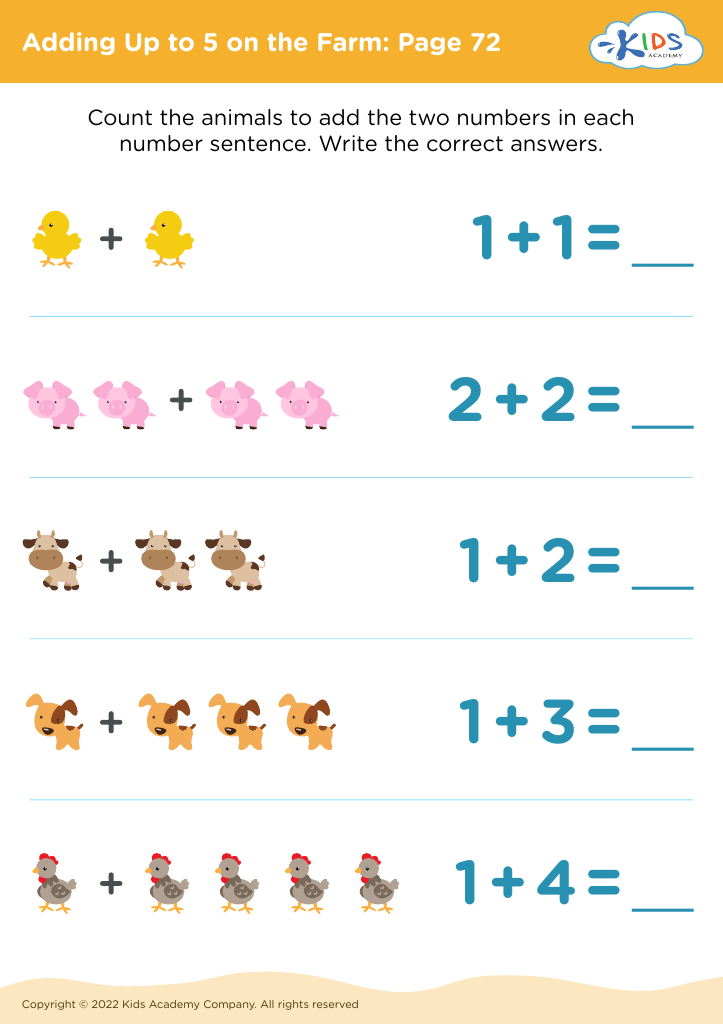
Adding Up to 5 on the Farm: Page 72
Worksheet
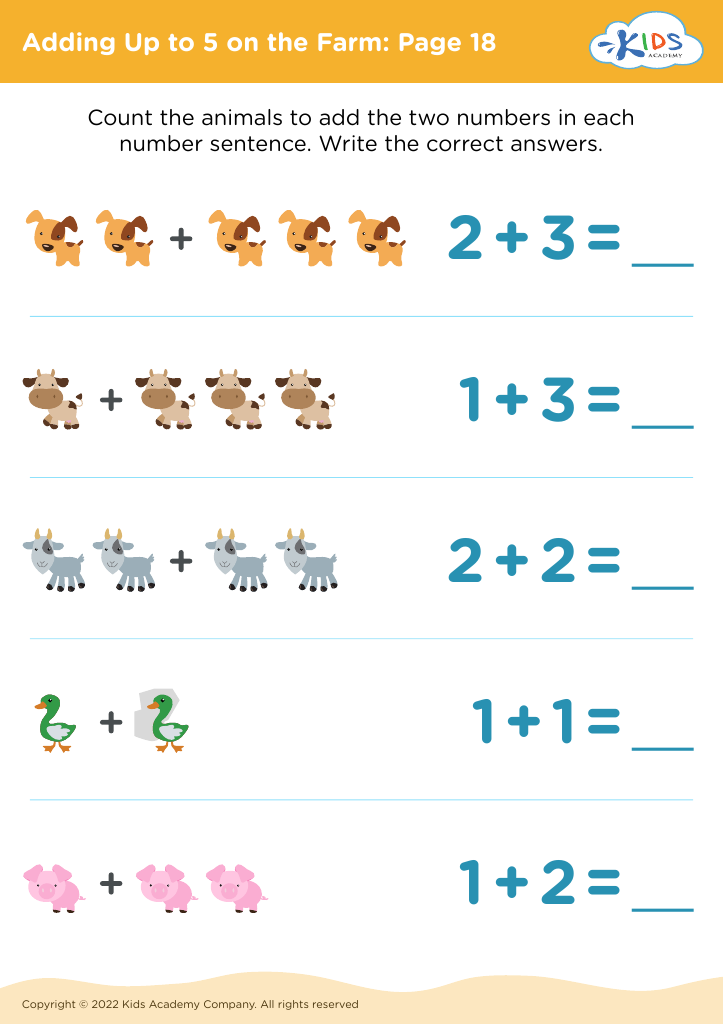
Adding Up to 5 on the Farm: Page 18
Worksheet
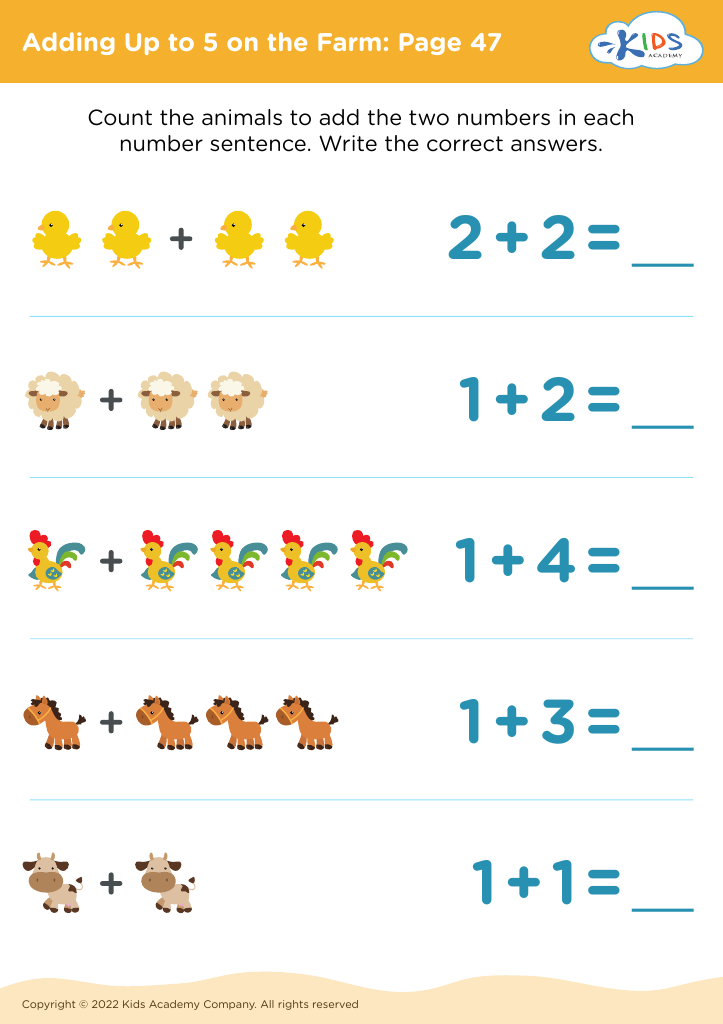
Adding Up to 5 on the Farm: Page 47
Worksheet
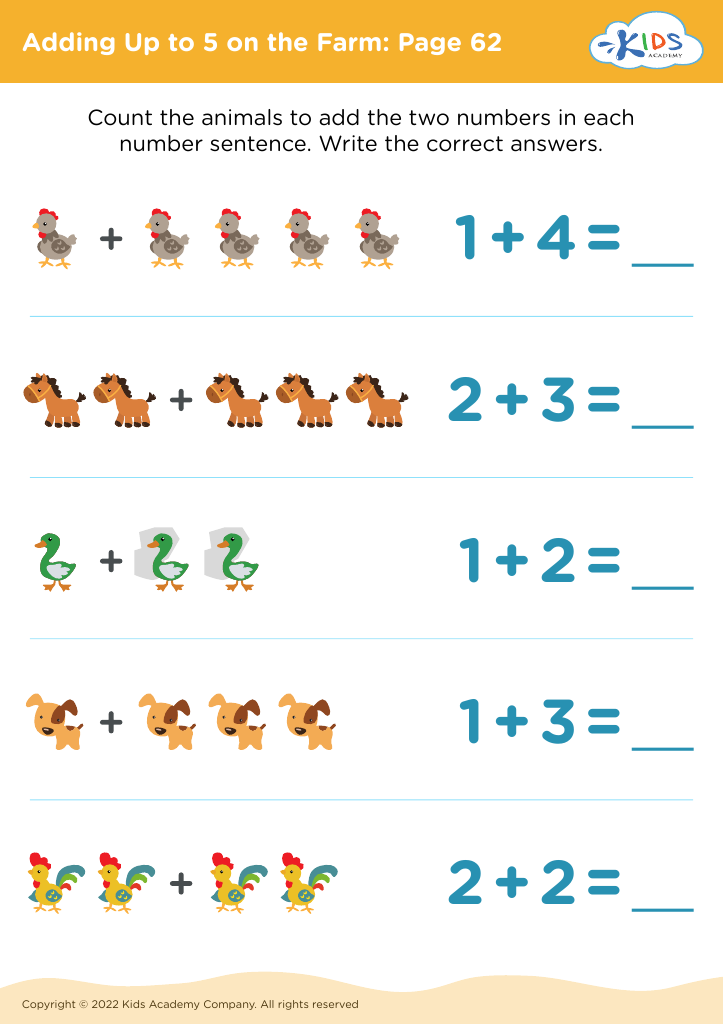
Adding Up to 5 on the Farm: Page 62
Worksheet
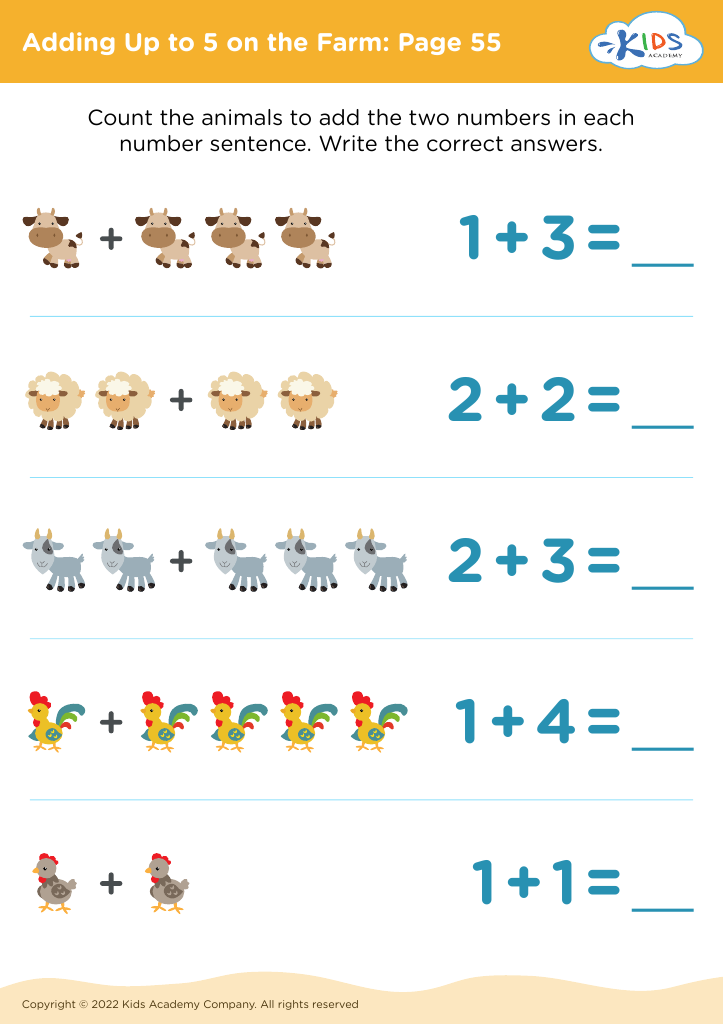
Adding Up to 5 on the Farm: Page 55
Worksheet
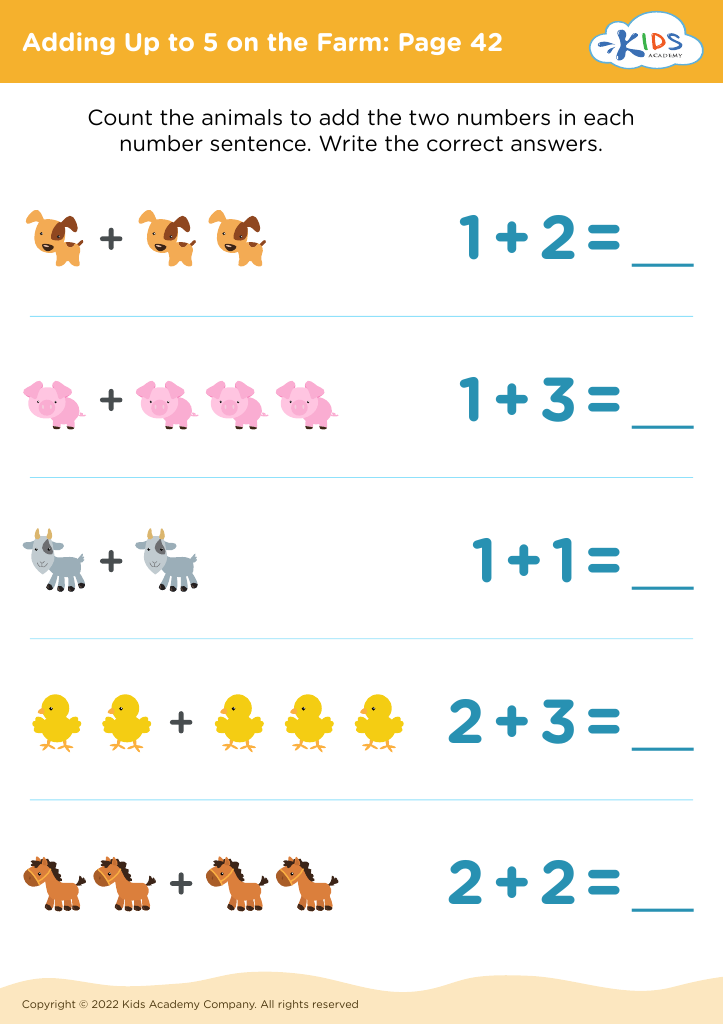
Adding Up to 5 on the Farm: Page 42
Worksheet
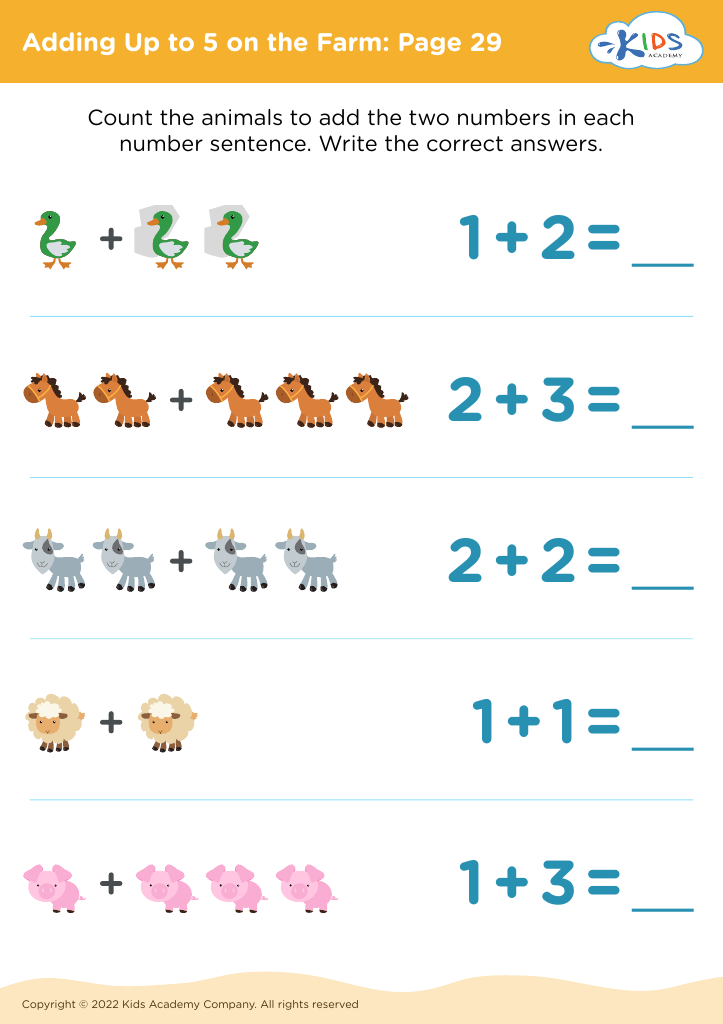
Adding Up to 5 on the Farm: Page 29
Worksheet
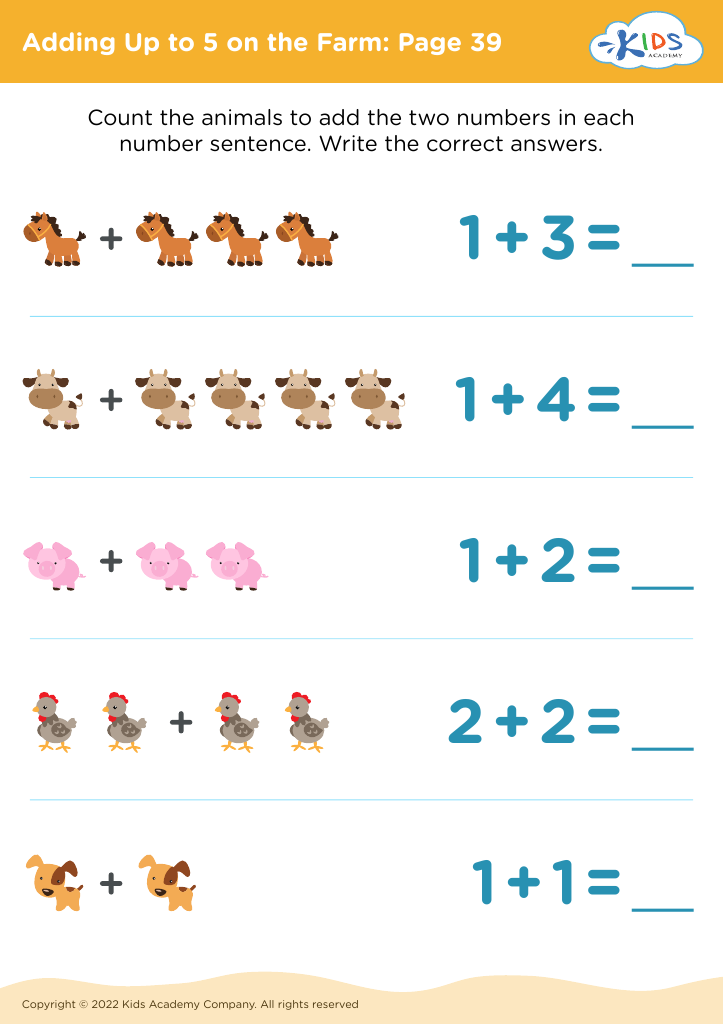
Adding Up to 5 on the Farm: Page 39
Worksheet
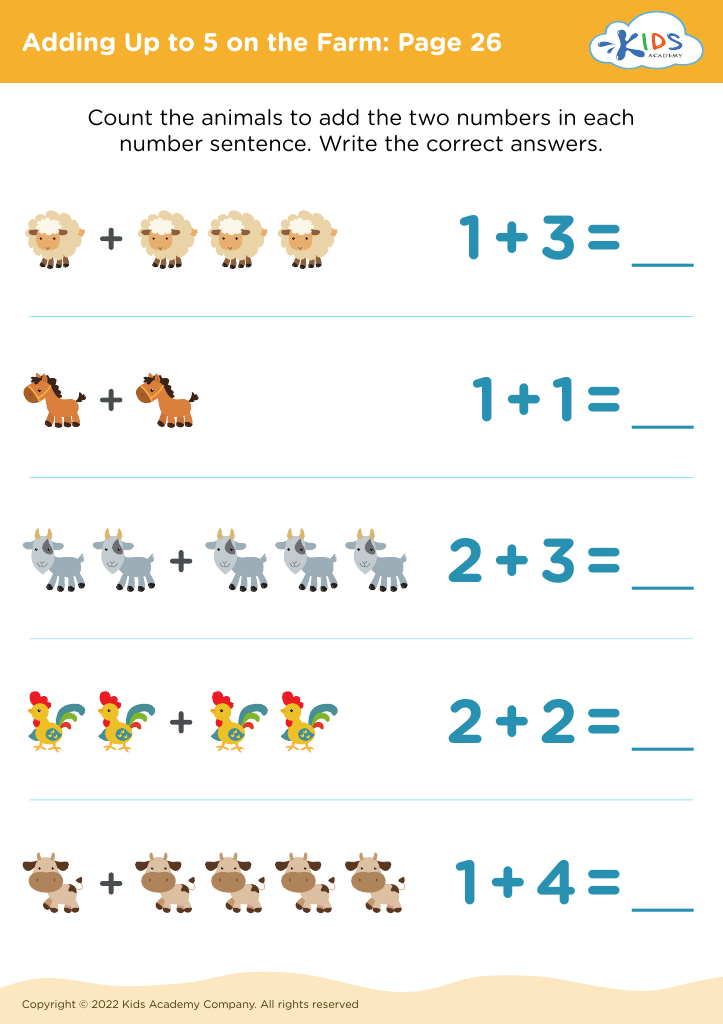
Adding Up to 5 on the Farm: Page 26
Worksheet
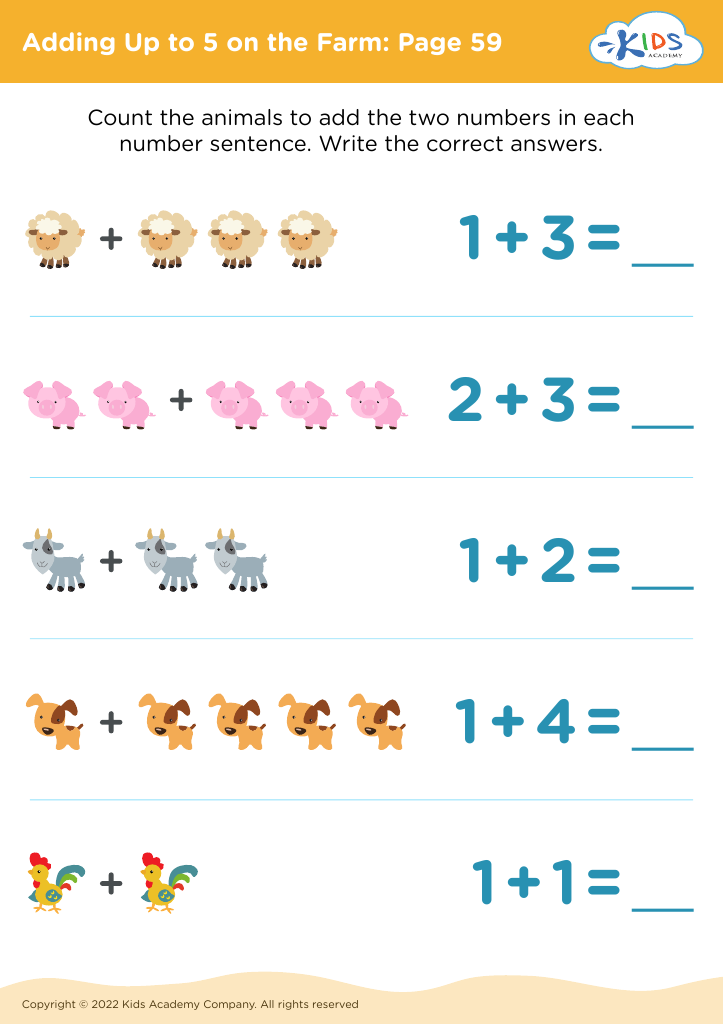
Adding Up to 5 on the Farm: Page 59
Worksheet
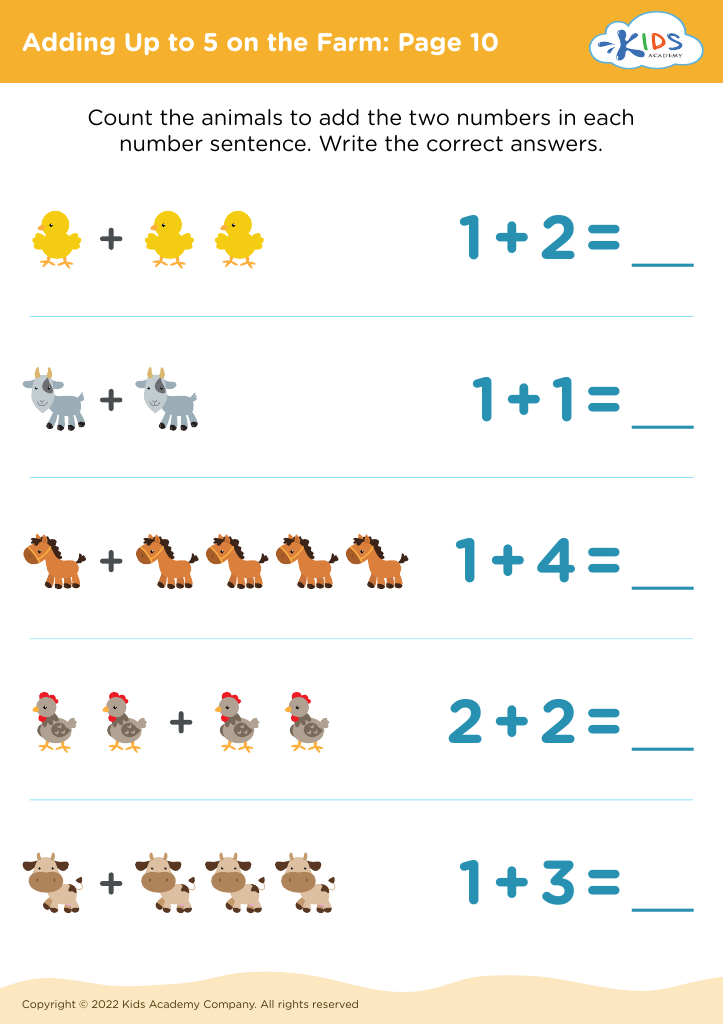
Adding Up to 5 on the Farm: Page 10
Worksheet
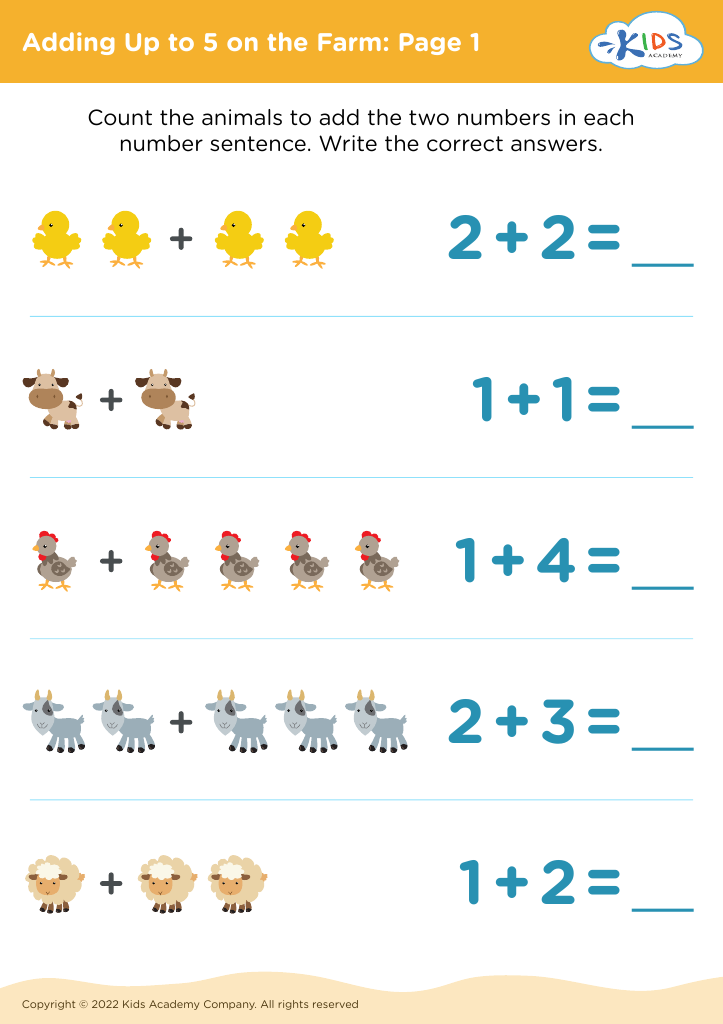
Adding Up to 5 on the Farm: Page 1
Worksheet
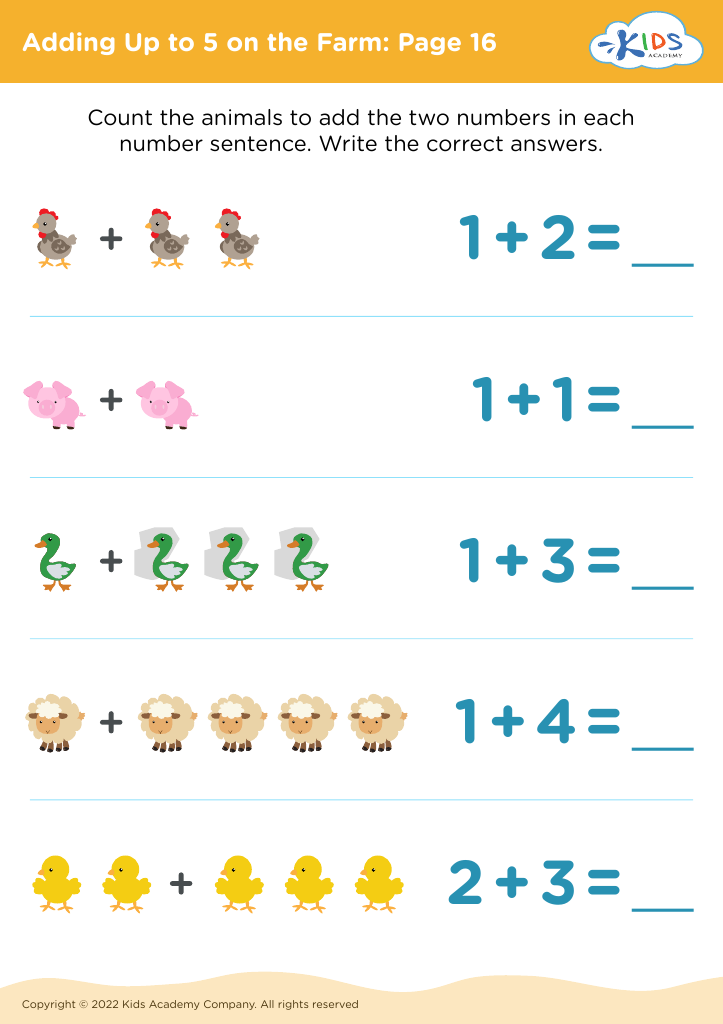
Adding Up to 5 on the Farm: Page 16
Worksheet
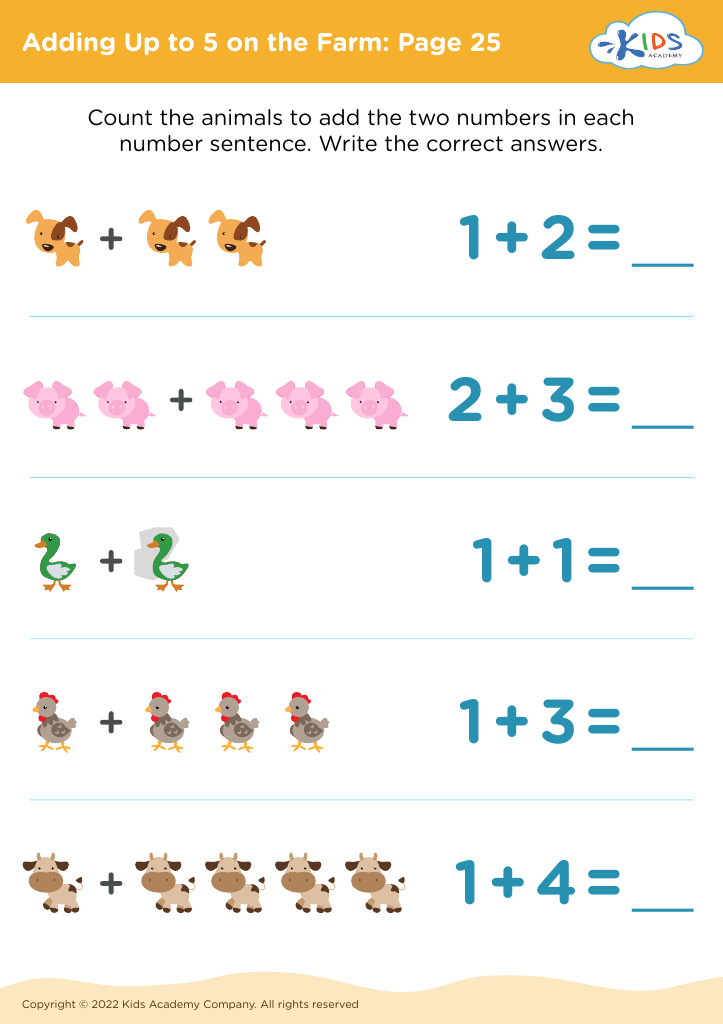
Adding Up to 5 on the Farm: Page 25
Worksheet
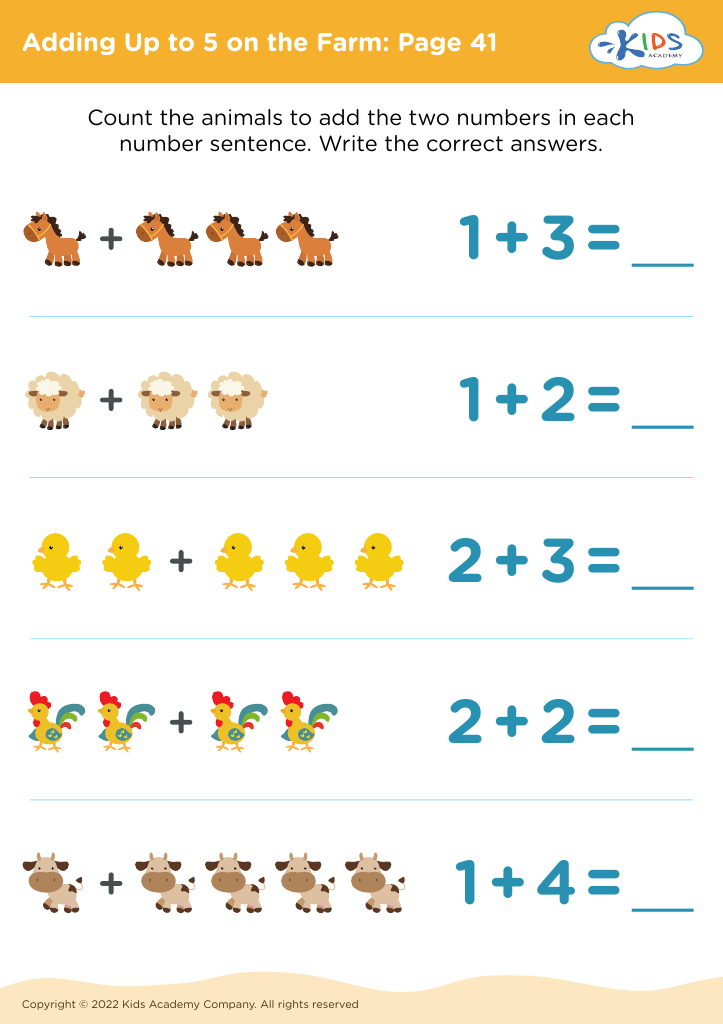
Adding Up to 5 on the Farm: Page 41
Worksheet
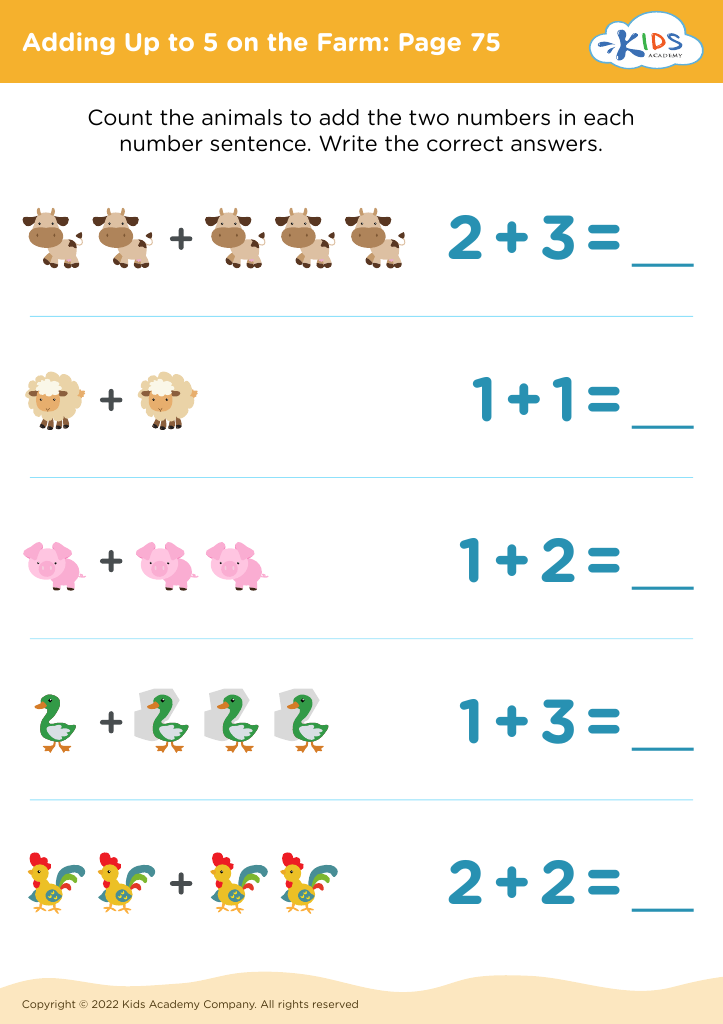
Adding Up to 5 on the Farm: Page 75
Worksheet
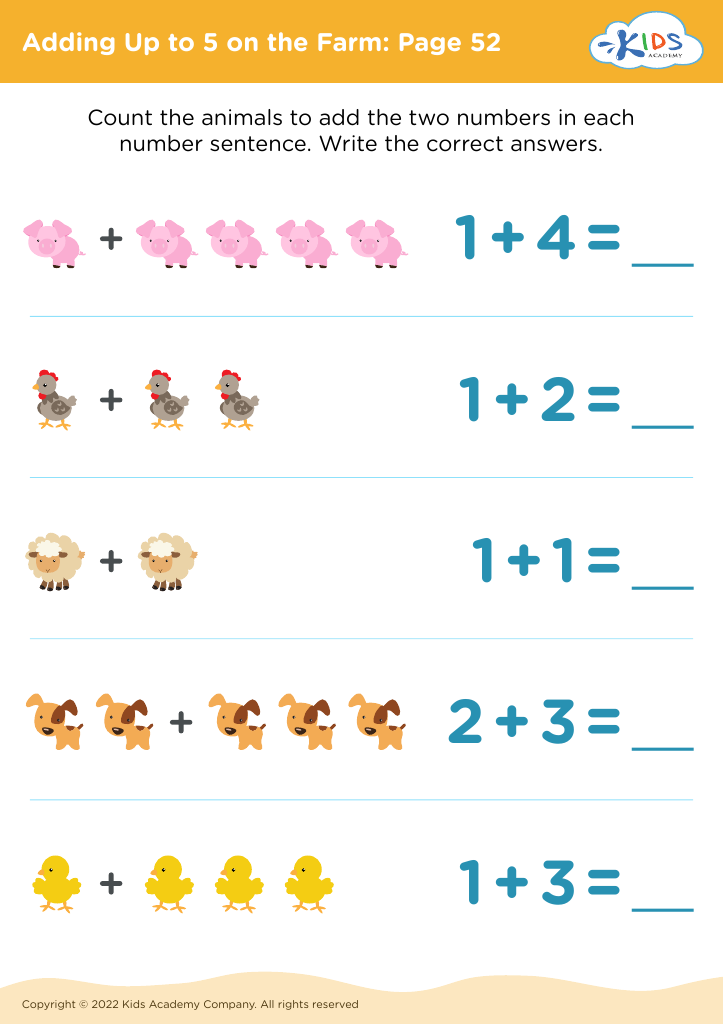
Adding Up to 5 on the Farm: Page 52
Worksheet
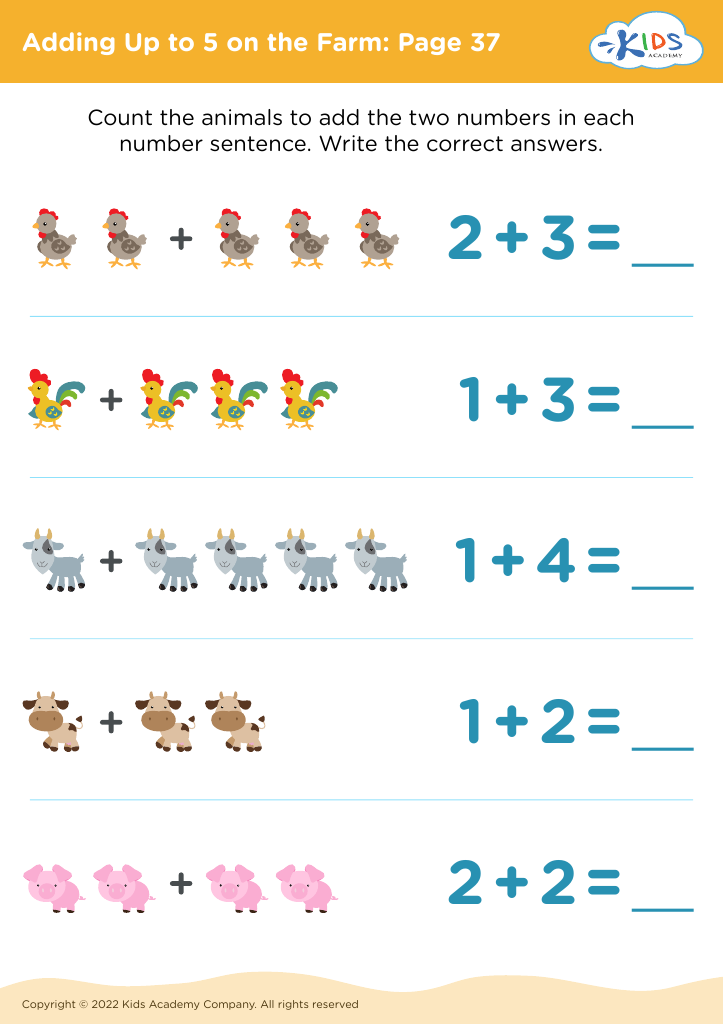
Adding Up to 5 on the Farm: Page 37
Worksheet
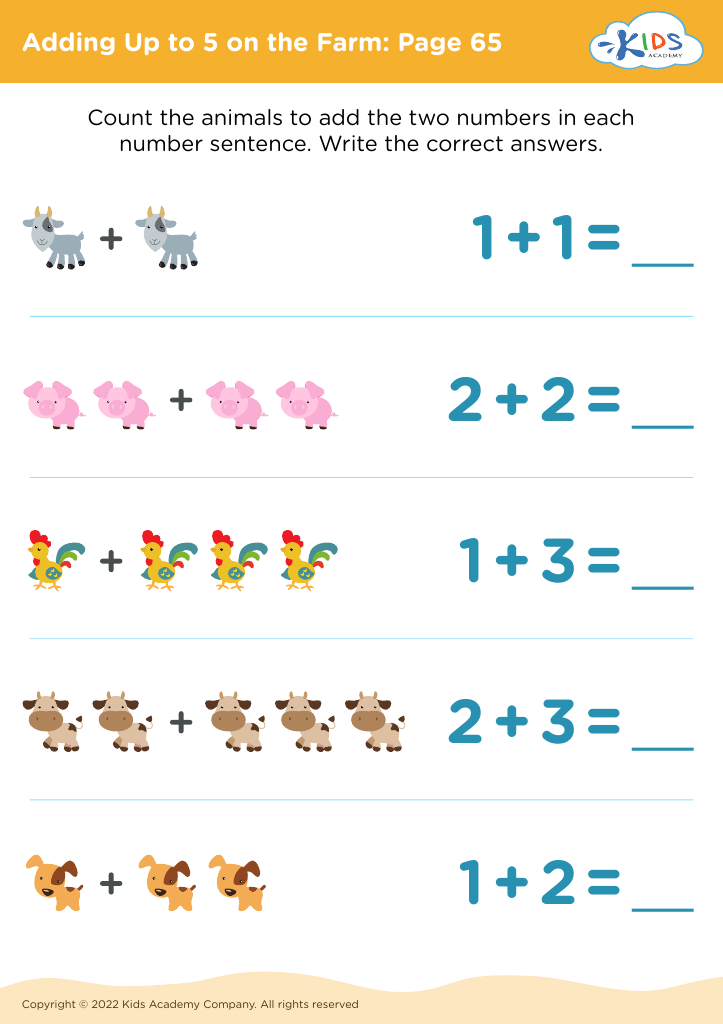
Adding Up to 5 on the Farm: Page 65
Worksheet
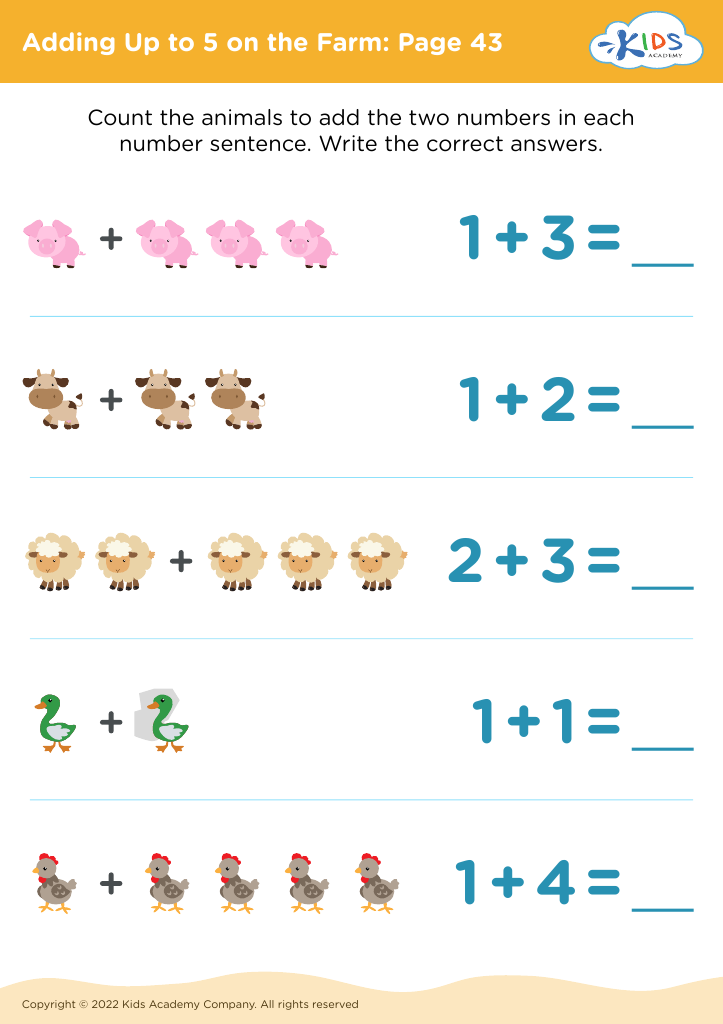
Adding Up to 5 on the Farm: Page 43
Worksheet
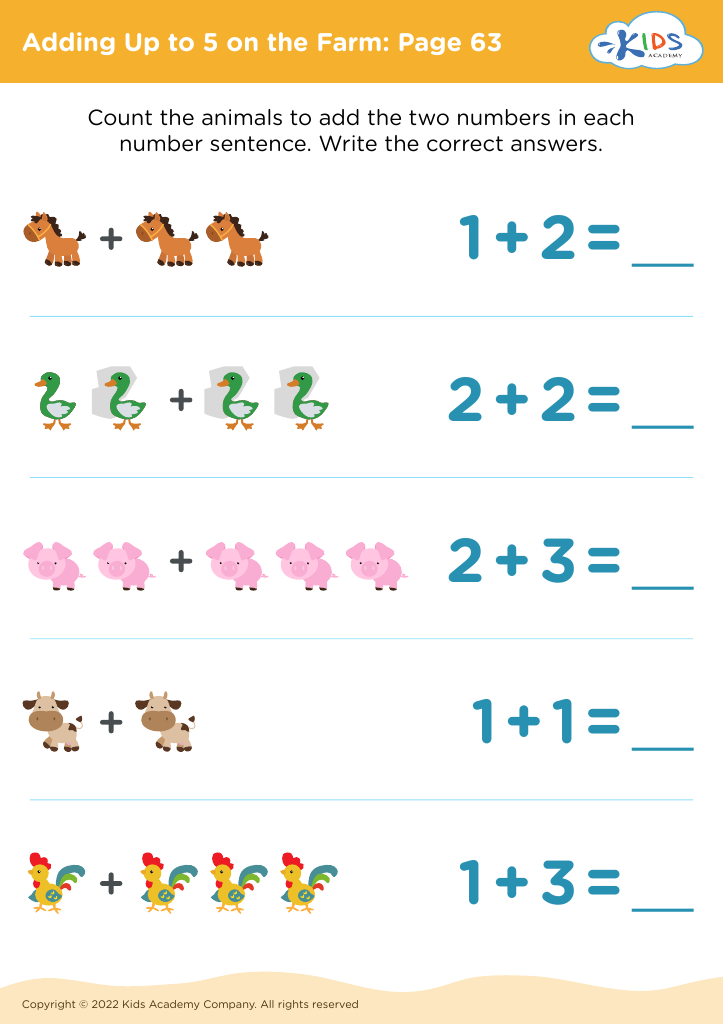
Adding Up to 5 on the Farm: Page 63
Worksheet
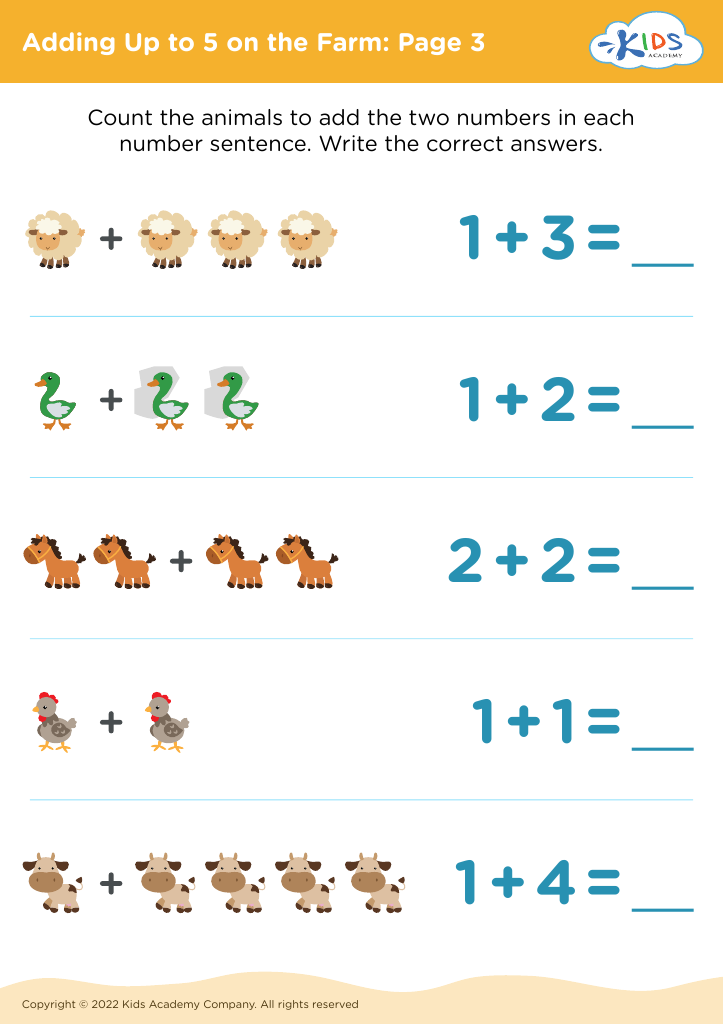
Adding Up to 5 on the Farm: Page 3
Worksheet
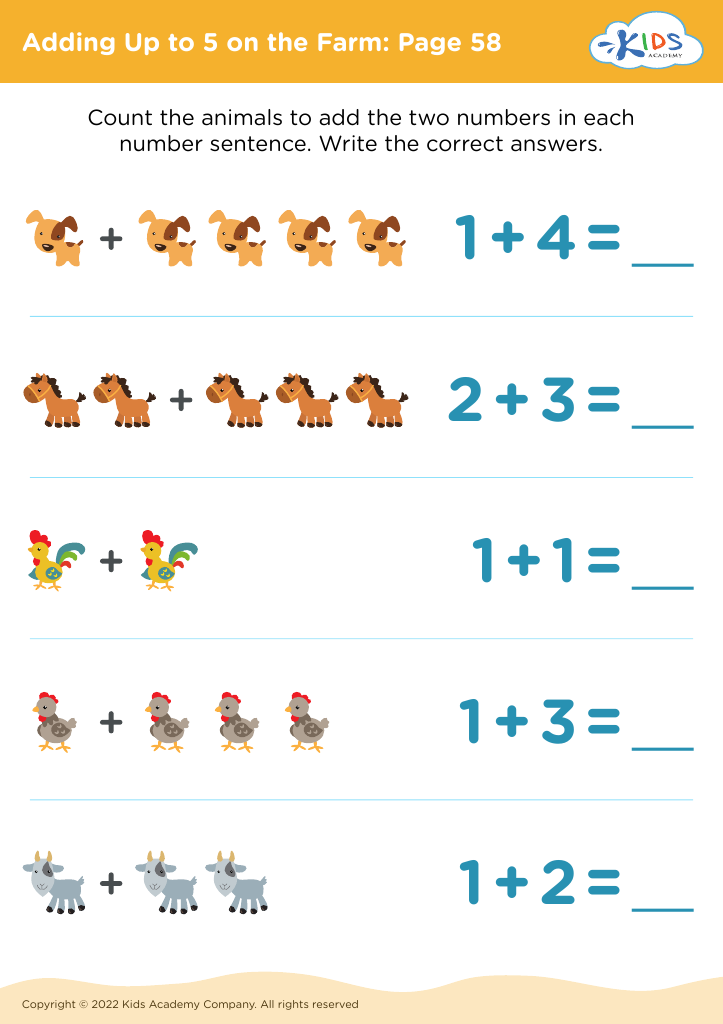
Adding Up to 5 on the Farm: Page 58
Worksheet
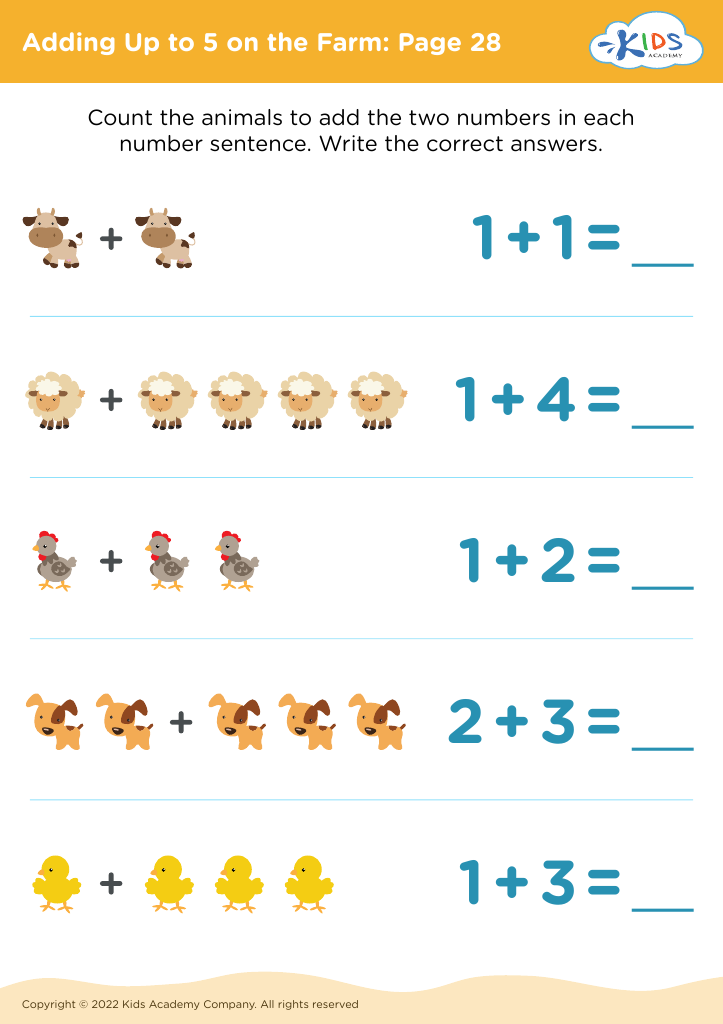
Adding Up to 5 on the Farm: Page 28
Worksheet


Counting practice, such as "Counting Practice Adding on the Farm" for ages 4-7, is essential for young learners as it lays the foundational skills for their mathematical development and cognitive growth. For parents and teachers, engaging children with farm-themed counting practices capitalizes on their curiosity and interest in animals and the farm environment, making learning both fun and educational.

Firstly, counting practice improves number recognition, which is vital for understanding and manipulating numbers. Early exposure to arithmetic through relatable contexts, like farm animals and objects, makes abstract concepts more concrete for young minds. It grows their confidence and competence in handling numbers, leading to smoother transitions to more complex mathematical concepts like addition, subtraction, and eventually, multiplication and division.

Secondly, counting activities enhance fine motor skills and hand-eye coordination when combined with hands-on elements like counting toys or drawing. They also foster problem-solving skills, logical thinking, and perseverance as children figure out which groups or pairs add up correctly.

Lastly, such practices promote social interaction as children often engage with peers or adults during learning sessions. This collaboration supports language development and social-skills.

By integrating an engaging theme like the farm, children develop a love for learning and a strong foundation, putting them on a path towards academic success and lifelong curiosity. Parents and teachers play a crucial role in nurturing these early experiences, which shape future attitudes towards education.