Filters

19 filtered results

Clear all filters
Favorites
With answer key
Interactive

19 filtered results

Difficulty Level

Grade


Enhance your child’s counting skills with our "Adding Up to 100 Worksheets," specially designed for ages 4-7. These engaging worksheets provide interactive opportunities for young learners to practice addition and develop their number sense. Children will enjoy a variety of fun activities and colorful illustrations that make learning enjoyable and effective. Our resources encourage a solid understanding of numbers while building confidence in basic math skills. Perfect for home, classroom, or extra practice, these worksheets are a valuable tool in your child's educational journey. Start exploring today to help them master counting and addition up to 100!
Check out this FREE Trial Lesson on Adding up to 100 for age 4-7!

Exactly the Same, or Not

Favorites
With answer key
Interactive
  • 4-7
  • Improve counting skills
  • Adding up to 100
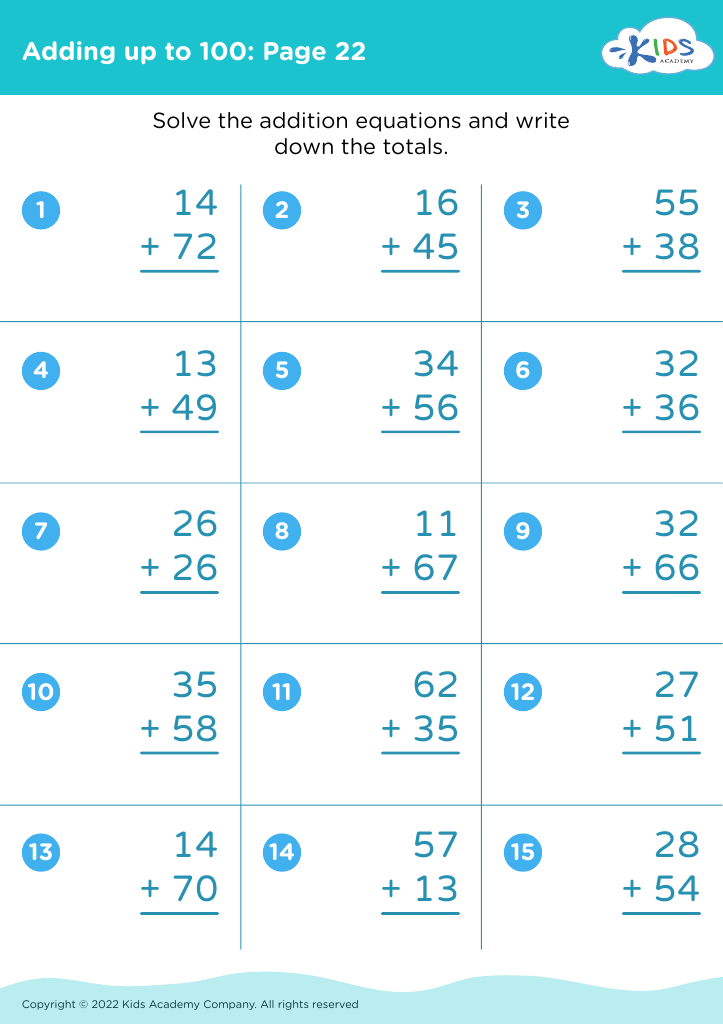
Adding up to 100: Page 22

Adding up to 100: Page 22

Adding up to 100: Page 22
Worksheet
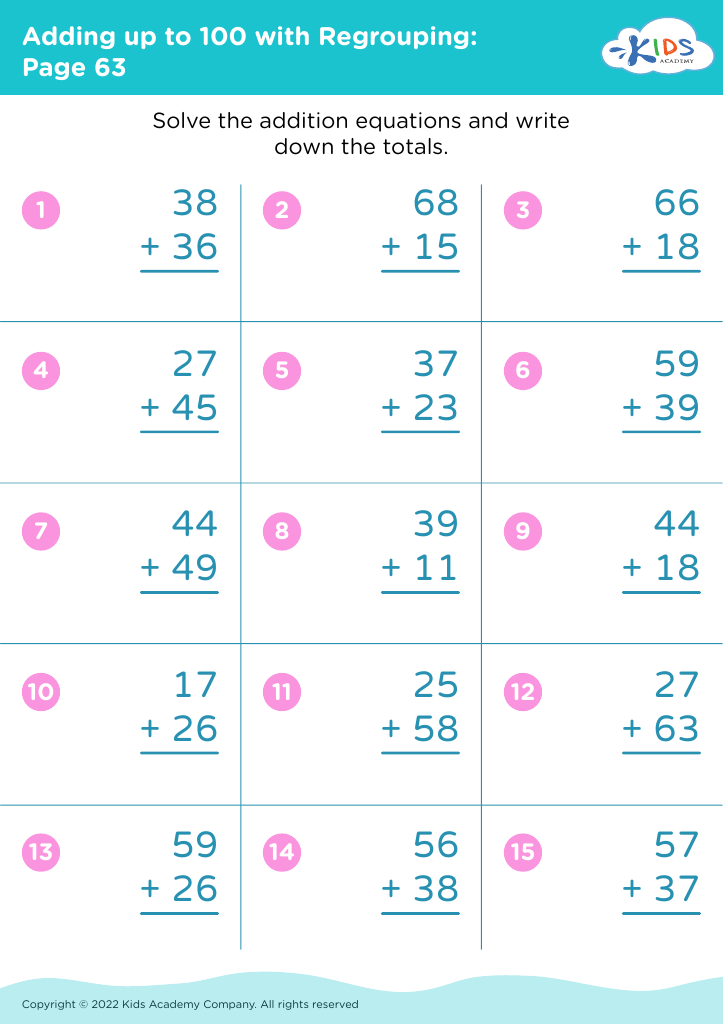
Adding up to 100 with Regrouping: Page 63
Worksheet
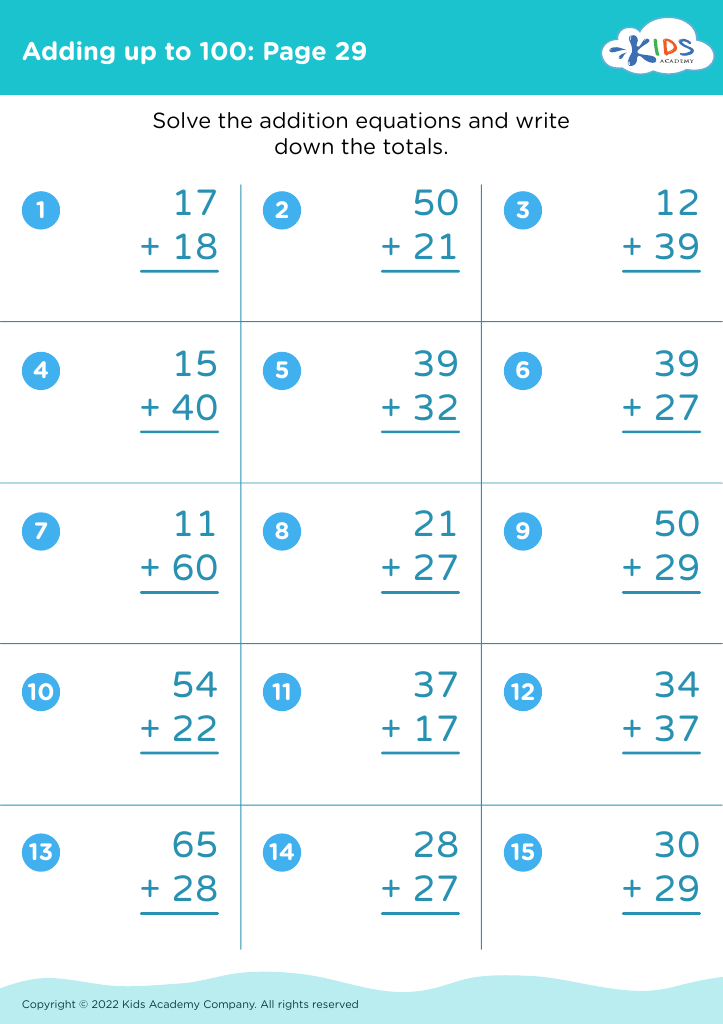
Adding up to 100: Page 29

Adding up to 100: Page 29

Adding up to 100: Page 29
Worksheet
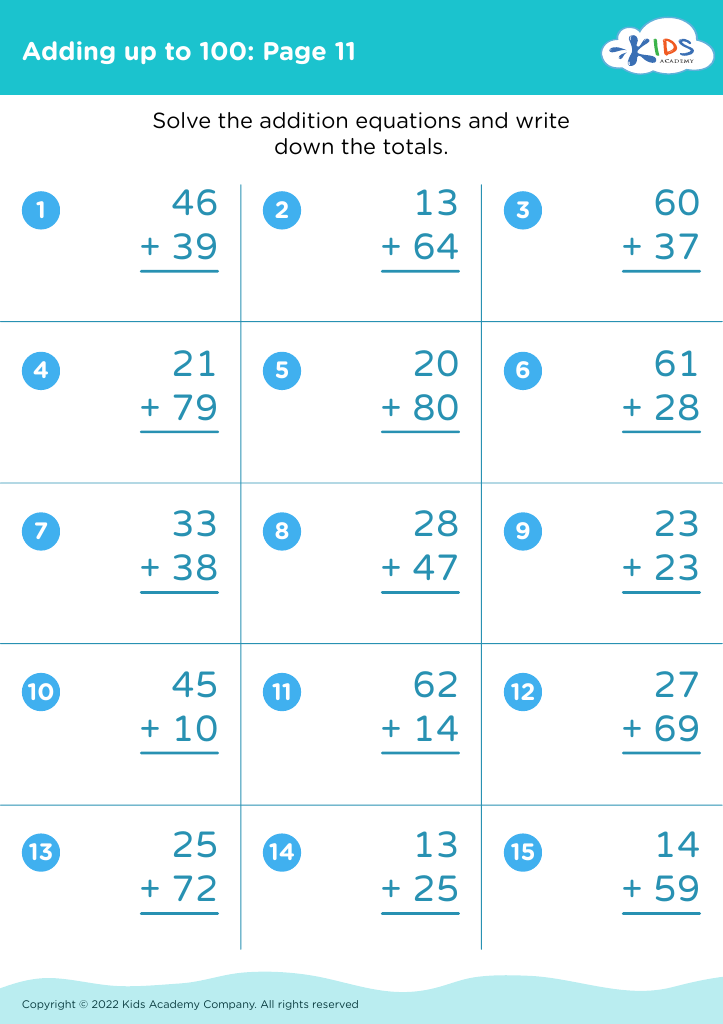
Adding up to 100: Page 11

Adding up to 100: Page 11

Adding up to 100: Page 11
Worksheet
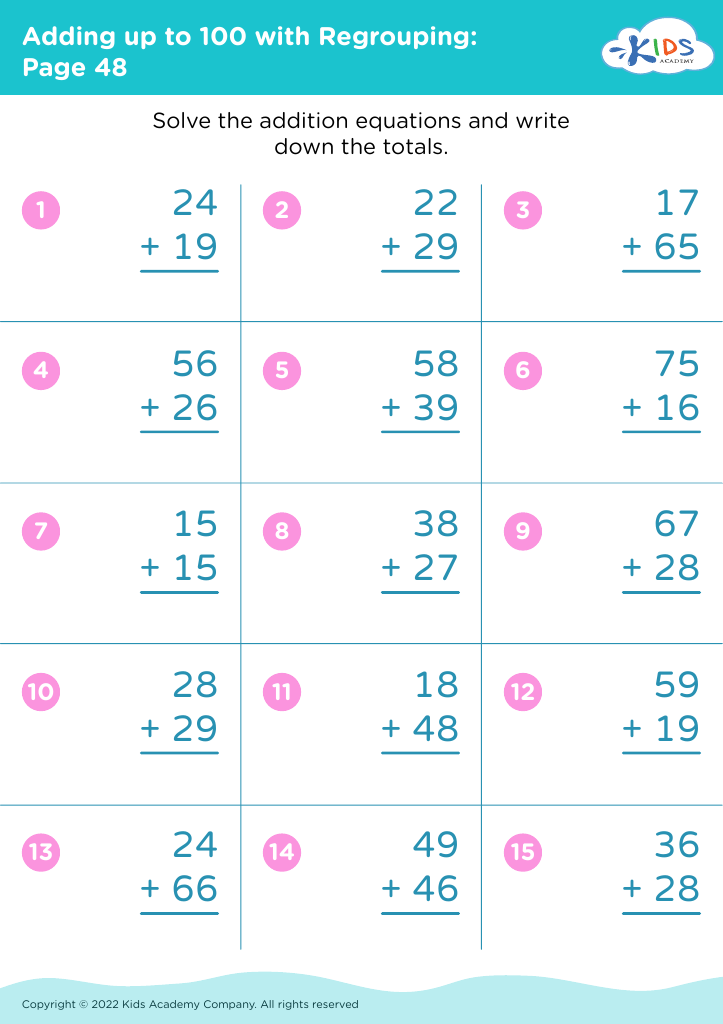
Adding up to 100 with Regrouping: Page 48
Worksheet
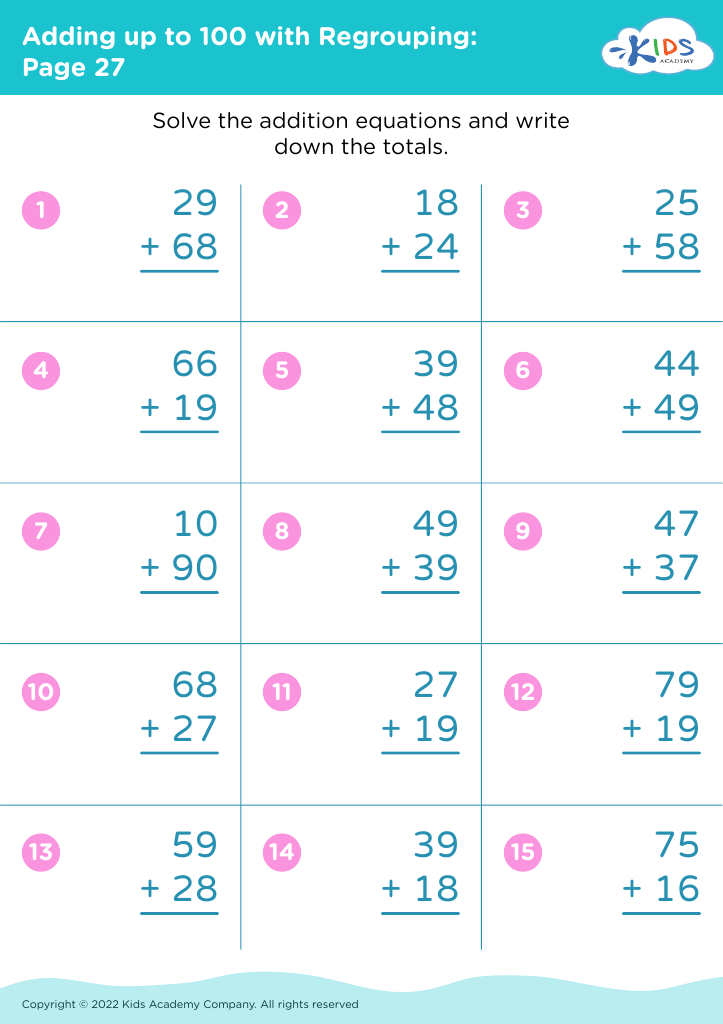
Adding up to 100 with Regrouping: Page 27
Worksheet
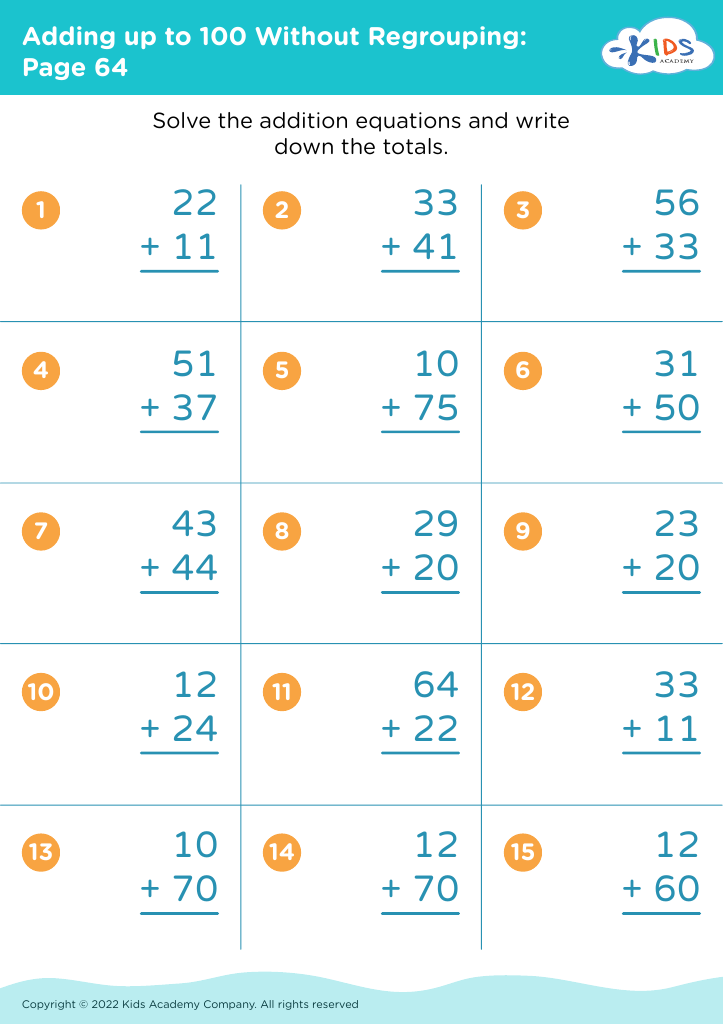
Adding up to 100 Without Regrouping: Page 64
Worksheet
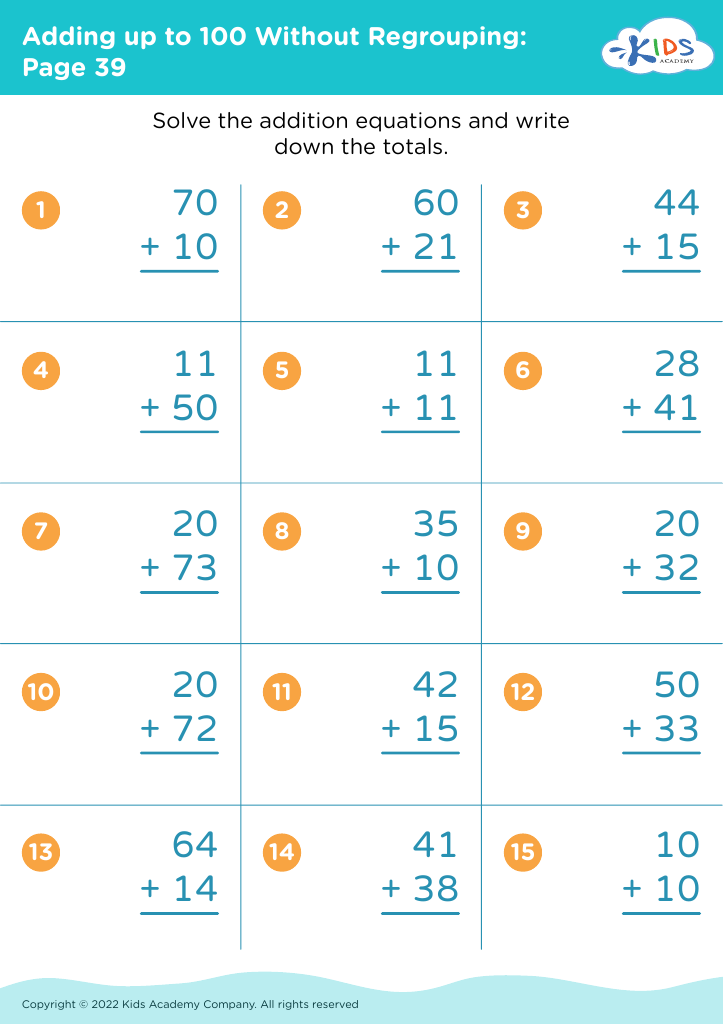
Adding up to 100 Without Regrouping: Page 39
Worksheet
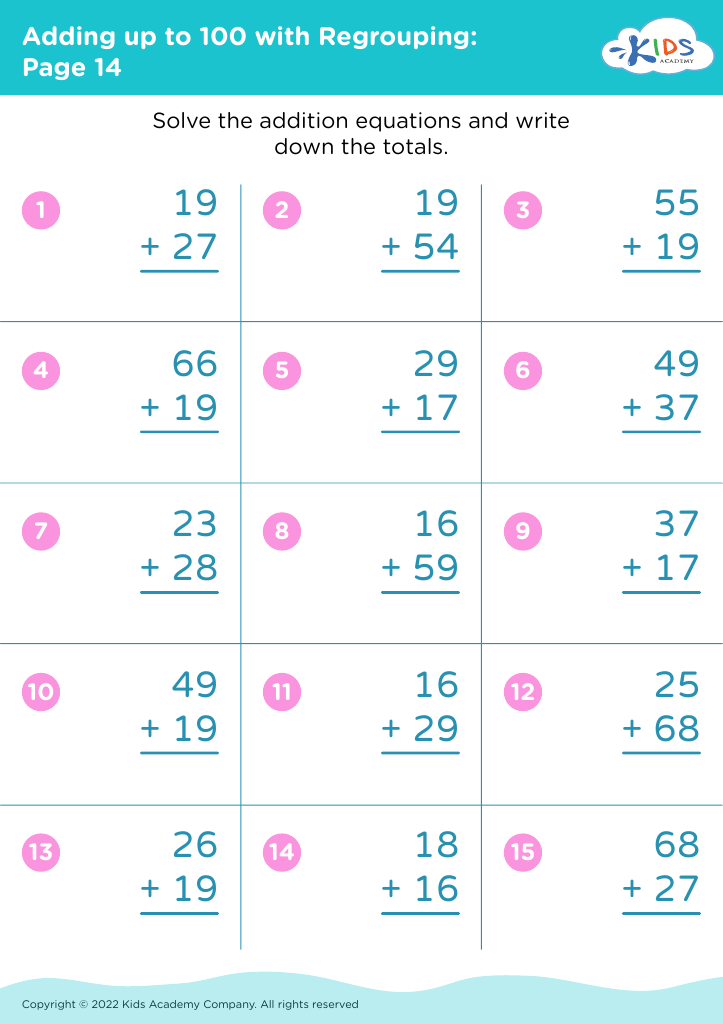
Adding up to 100 with Regrouping: Page 14
Worksheet
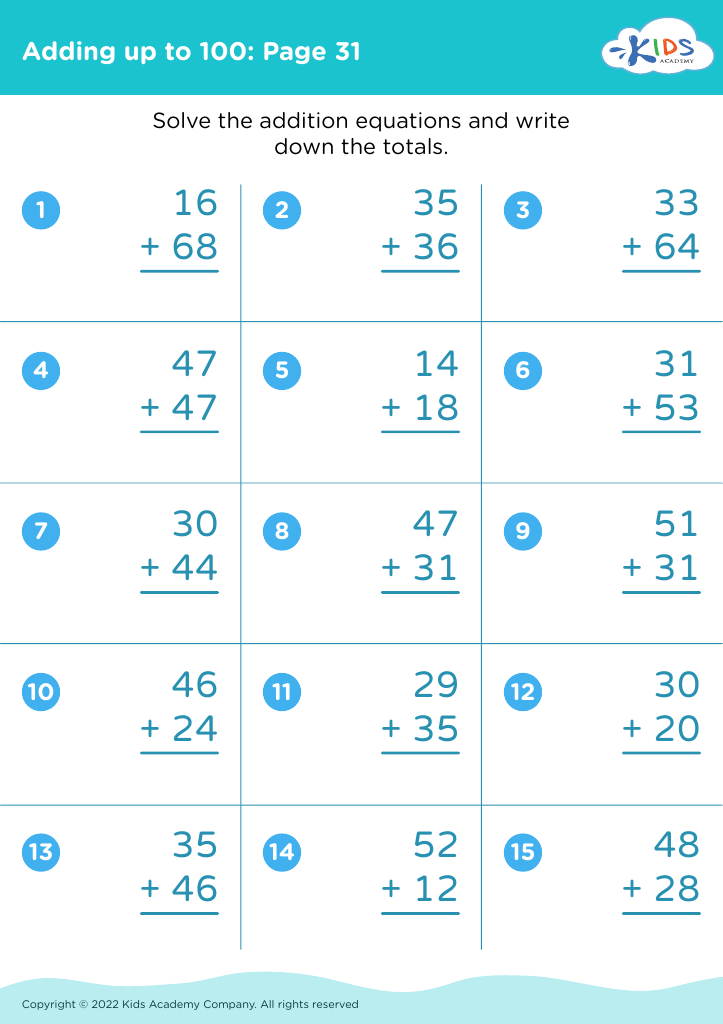
Adding up to 100: Page 31

Adding up to 100: Page 31

Adding up to 100: Page 31
Worksheet
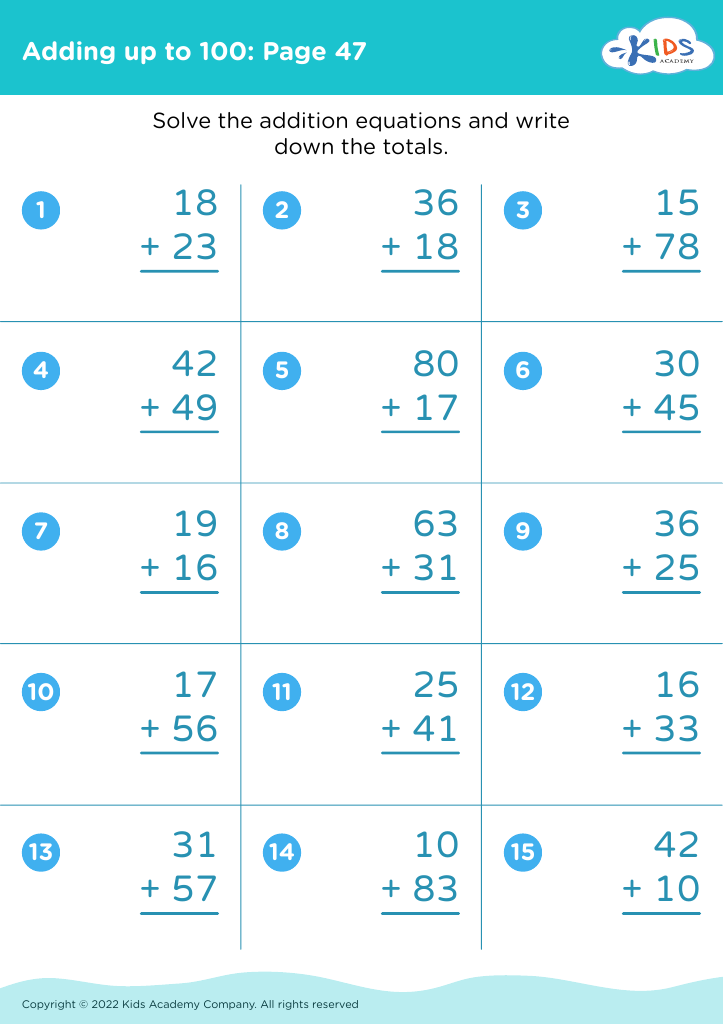
Adding up to 100: Page 47

Adding up to 100: Page 47

Adding up to 100: Page 47
Worksheet
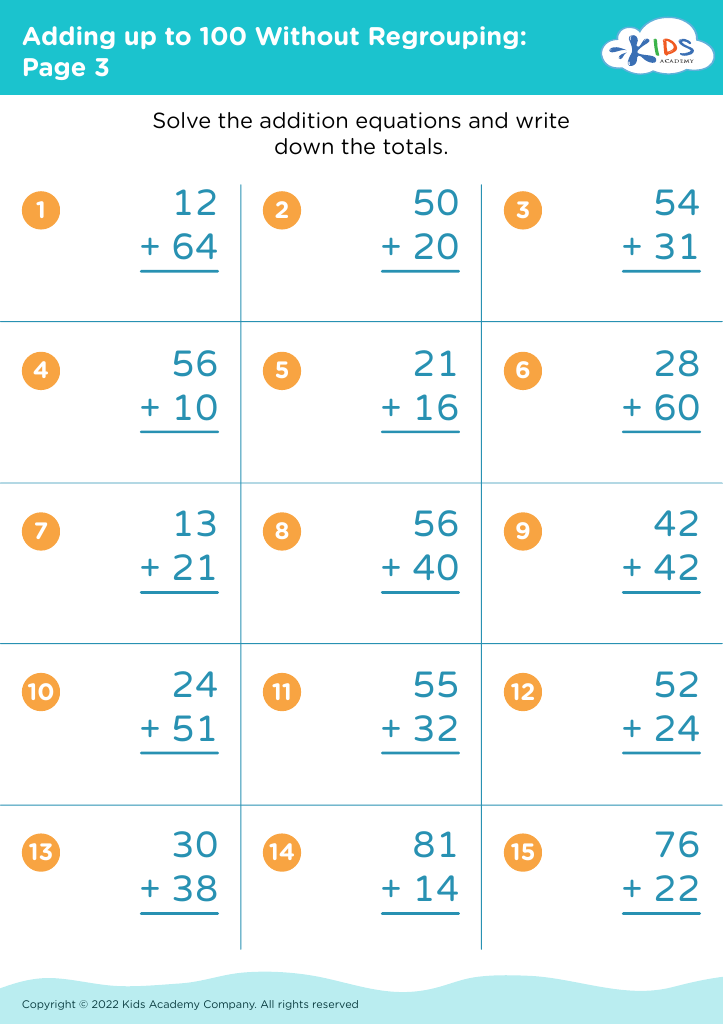
Adding up to 100 Without Regrouping: Page 3
Worksheet
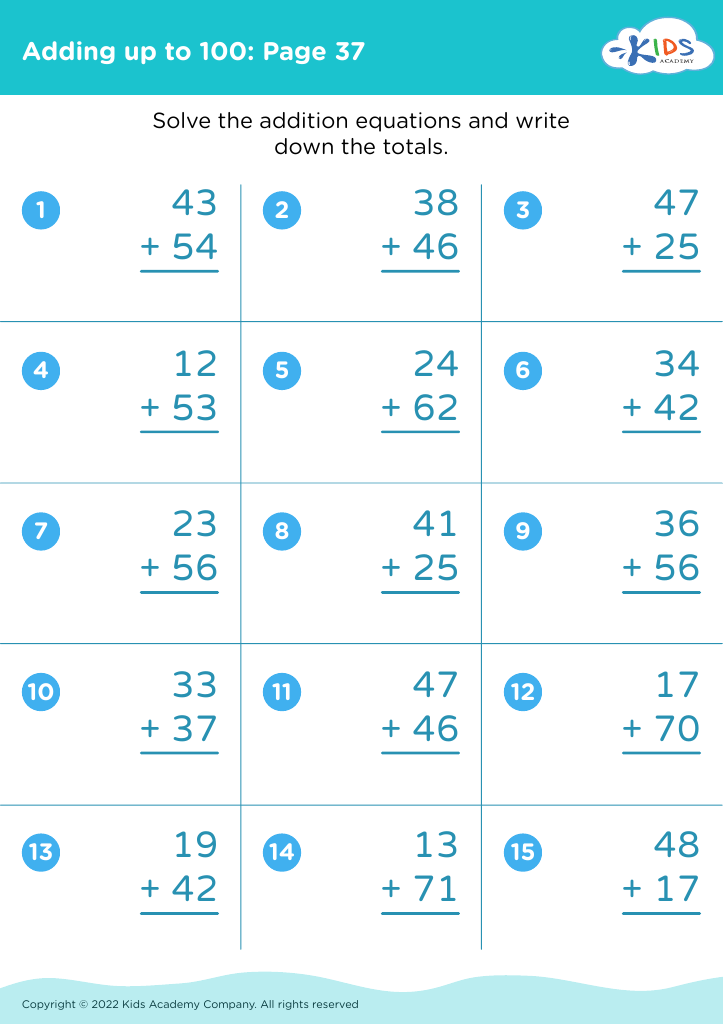
Adding up to 100: Page 37

Adding up to 100: Page 37

Adding up to 100: Page 37
Worksheet
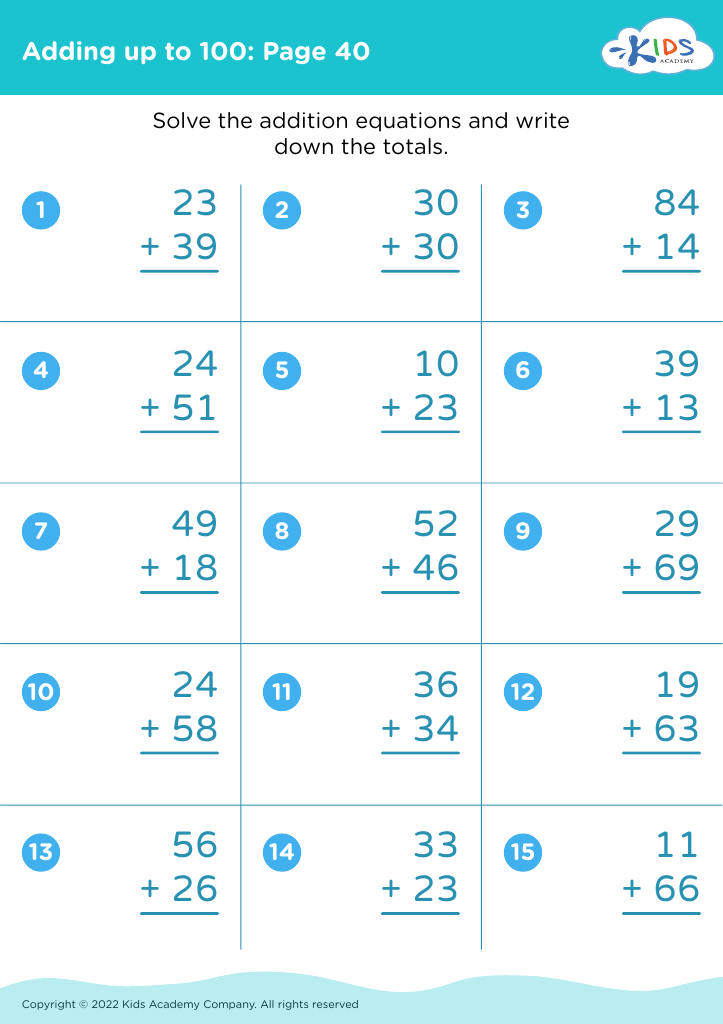
Adding up to 100: Page 40

Adding up to 100: Page 40

Adding up to 100: Page 40
Worksheet
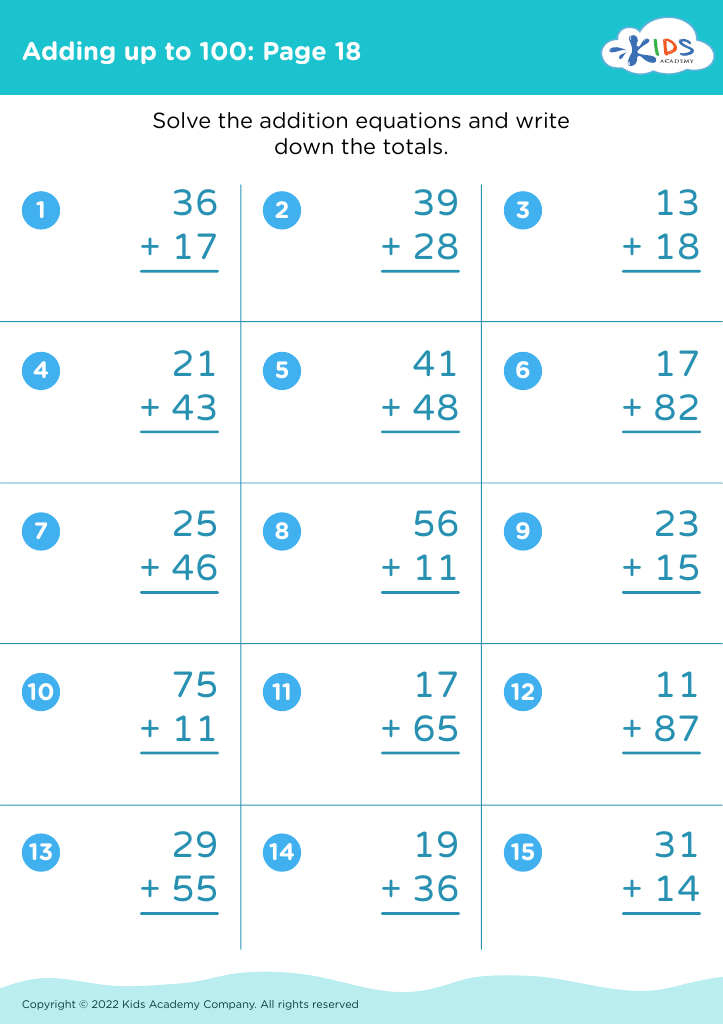
Adding up to 100: Page 18

Adding up to 100: Page 18

Adding up to 100: Page 18
Worksheet
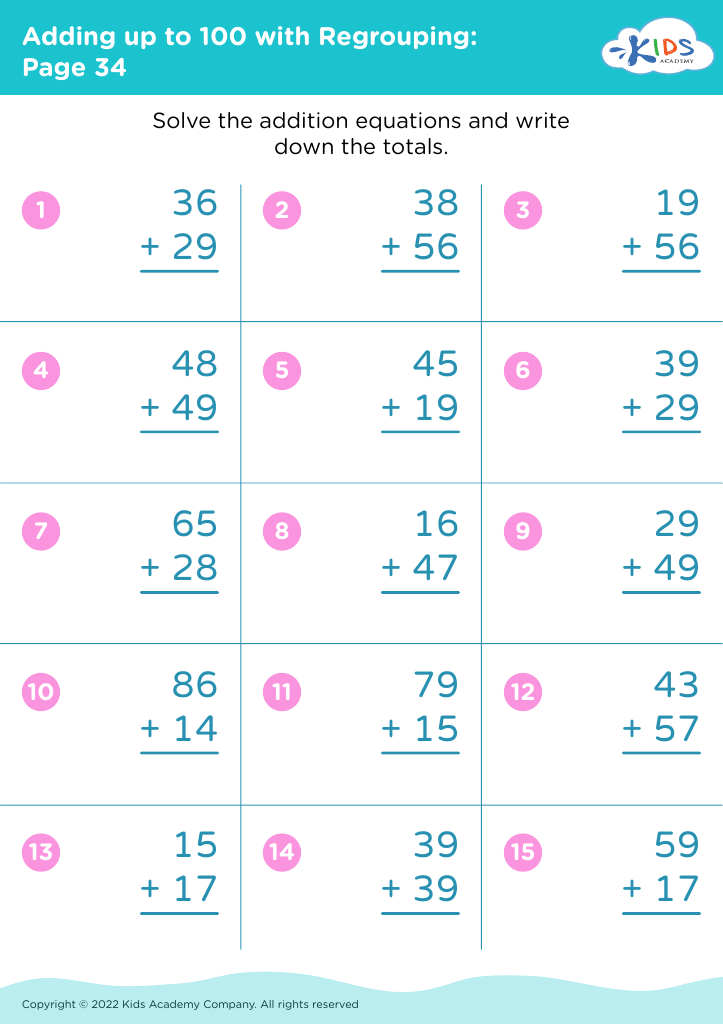
Adding up to 100 with Regrouping: Page 34
Worksheet
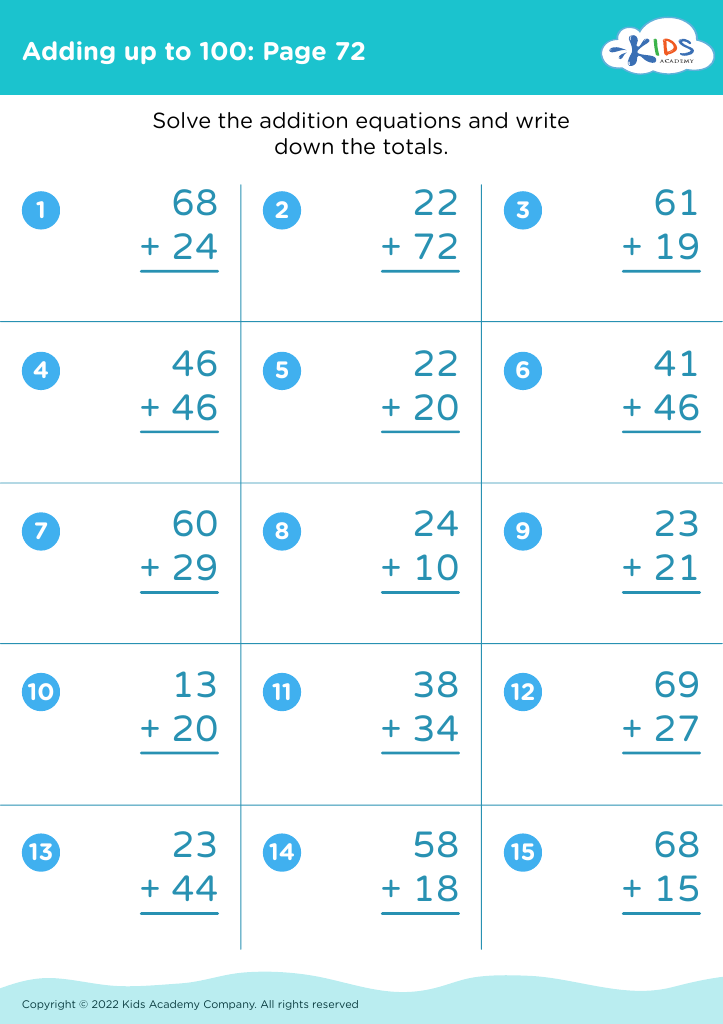
Adding up to 100: Page 72

Adding up to 100: Page 72

Adding up to 100: Page 72
Worksheet
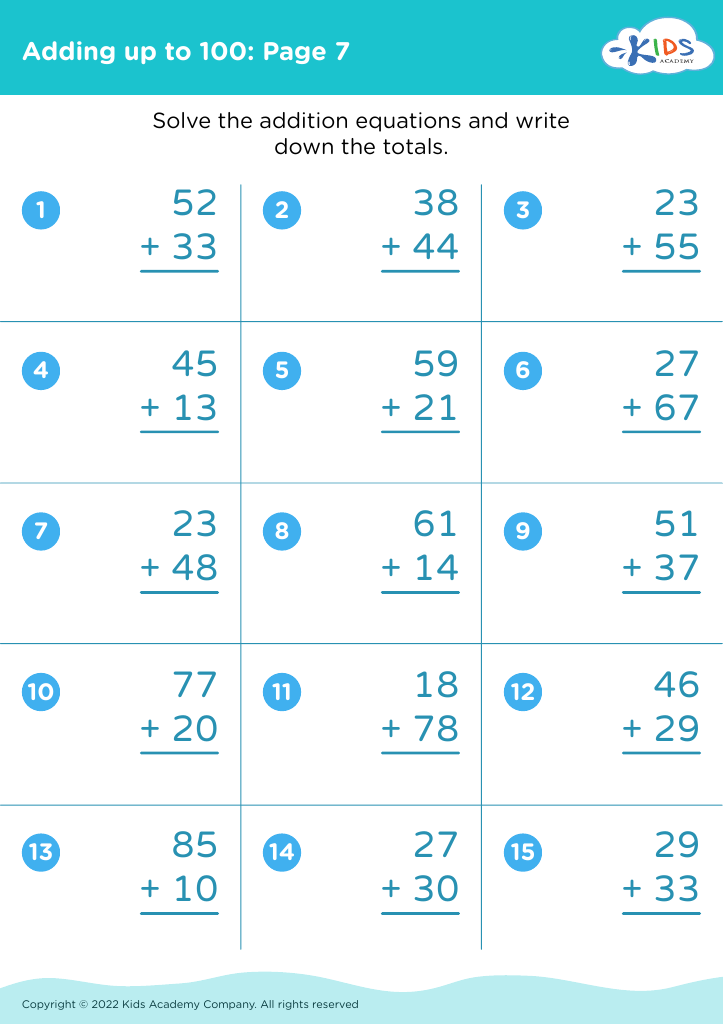
Adding up to 100: Page 7

Adding up to 100: Page 7

Adding up to 100: Page 7
Worksheet
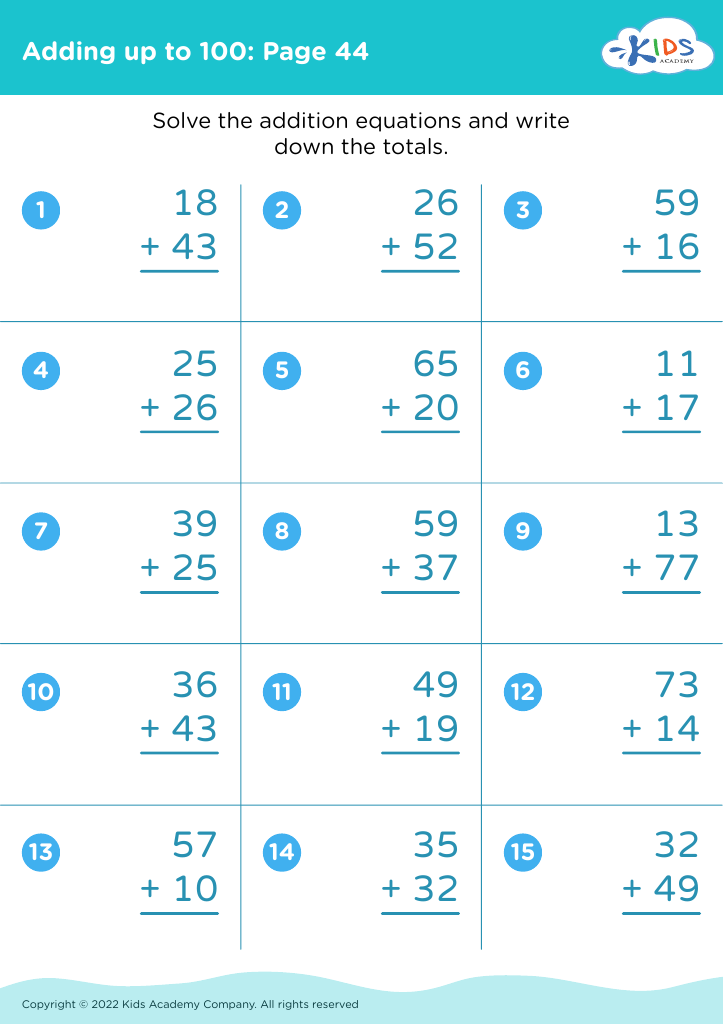
Adding up to 100: Page 44

Adding up to 100: Page 44

Adding up to 100: Page 44
Worksheet


Improving counting skills and the ability to add up to 100 is crucial for children aged 4 to 7, as it lays the foundational blocks for their mathematical understanding. During these formative years, children develop not only their numeracy skills but also critical thinking and problem-solving abilities. Mastering counting and addition fosters a sense of accomplishment and boosts confidence in their mathematical capabilities.

As parents or teachers, nurturing these skills is essential because mathematics is a pervasive part of everyday life. Proficiency in counting helps children understand concepts such as quantity, comparison, and basic measurements. Integrating lessons that encourage counting and simple addition allows children to visualize numbers, enhancing their comprehension and retention.

Additionally, strong counting skills pave the way for more complex operations like subtraction and multiplication, which they will encounter in later grades. Fostering a positive attitude towards math early on can lead to lifelong benefits, including academic success and positive self-esteem.

By prioritizing activities that engage and motivate young learners in counting and addition, parents and teachers can set a solid educational foundation that supports their overall development and prepares them for future learning challenges.