Understanding quantity Adding Up to 5 Worksheets for Ages 4-7
17 filtered results
-
From - To
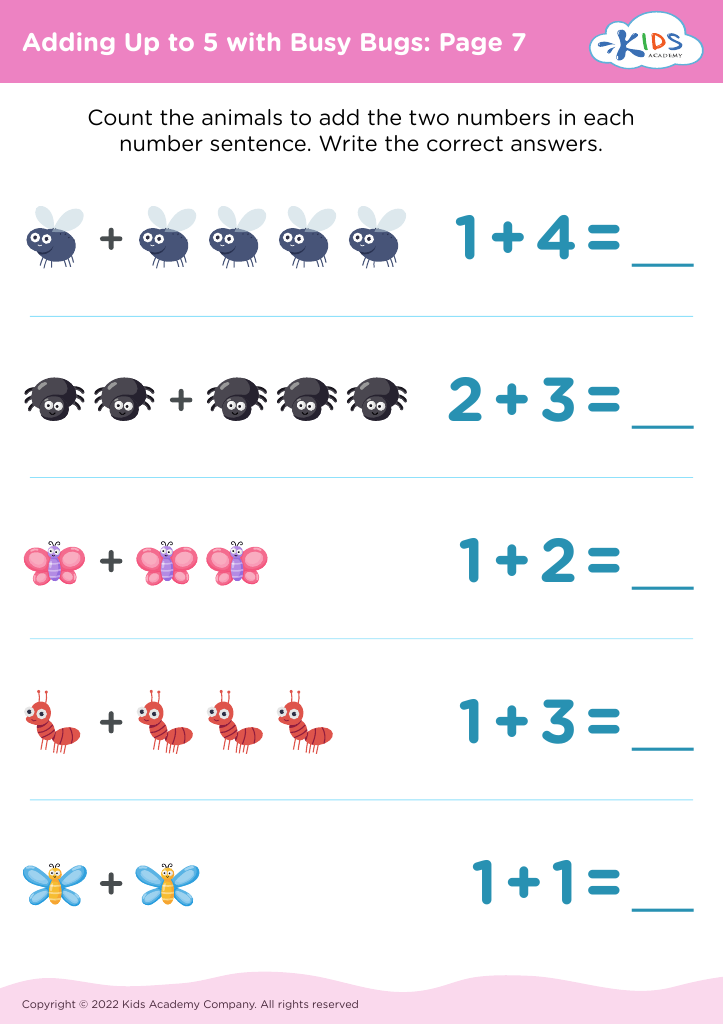
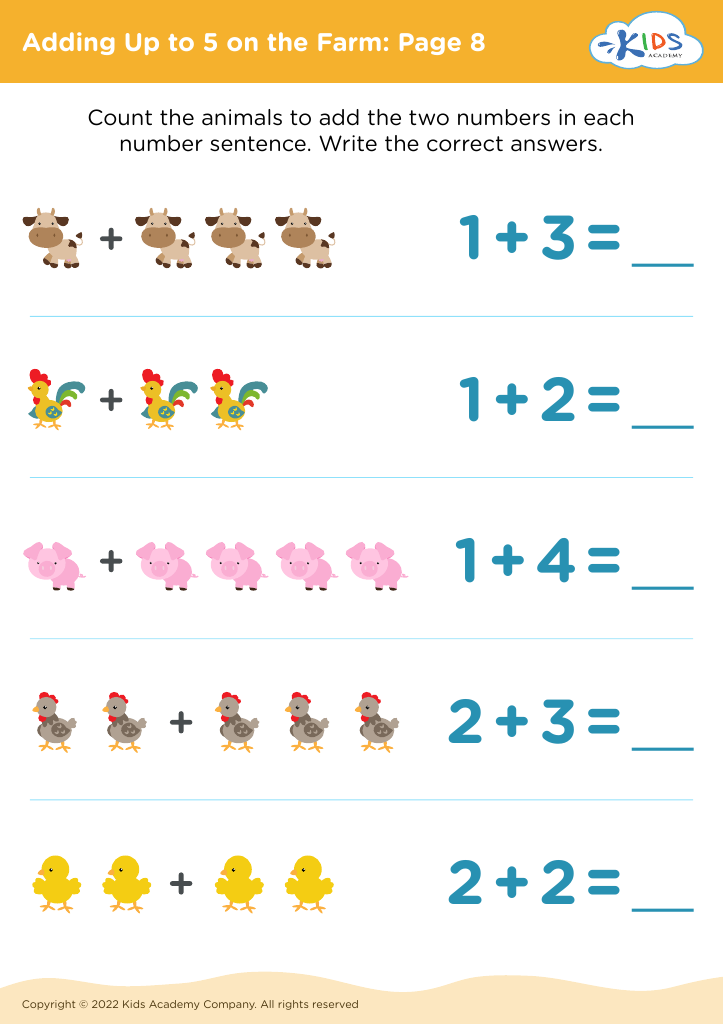
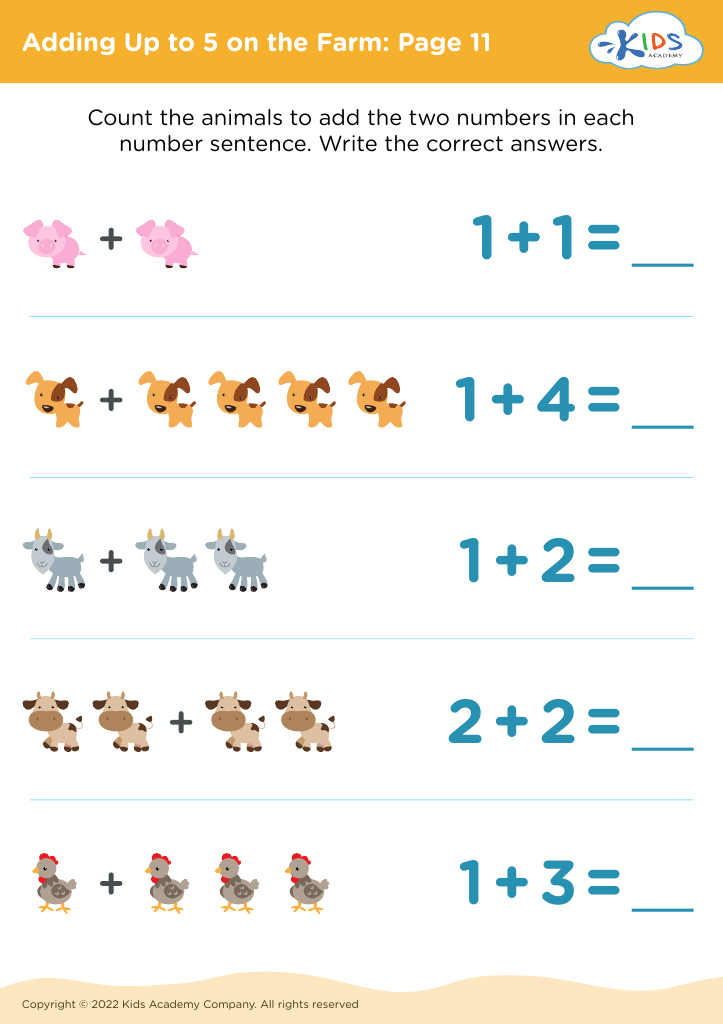
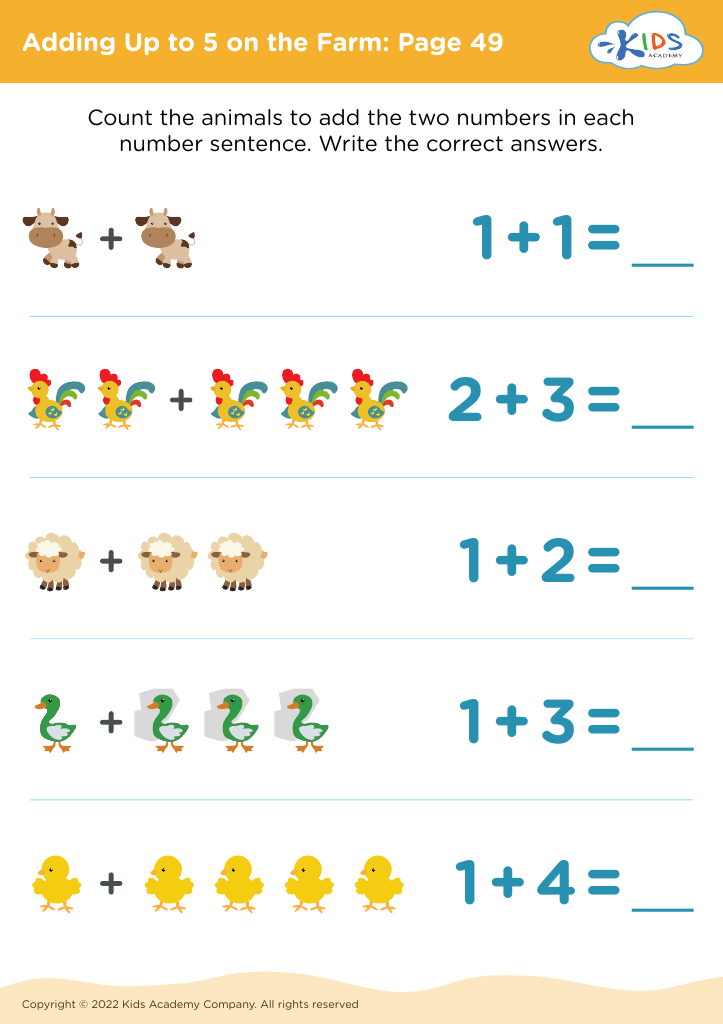
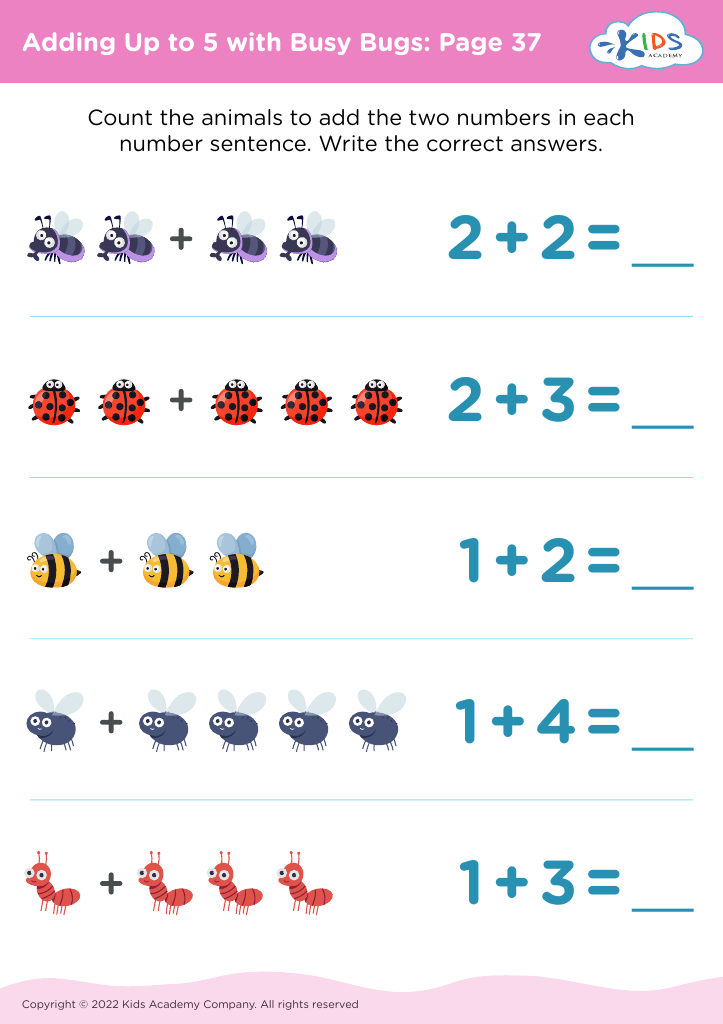
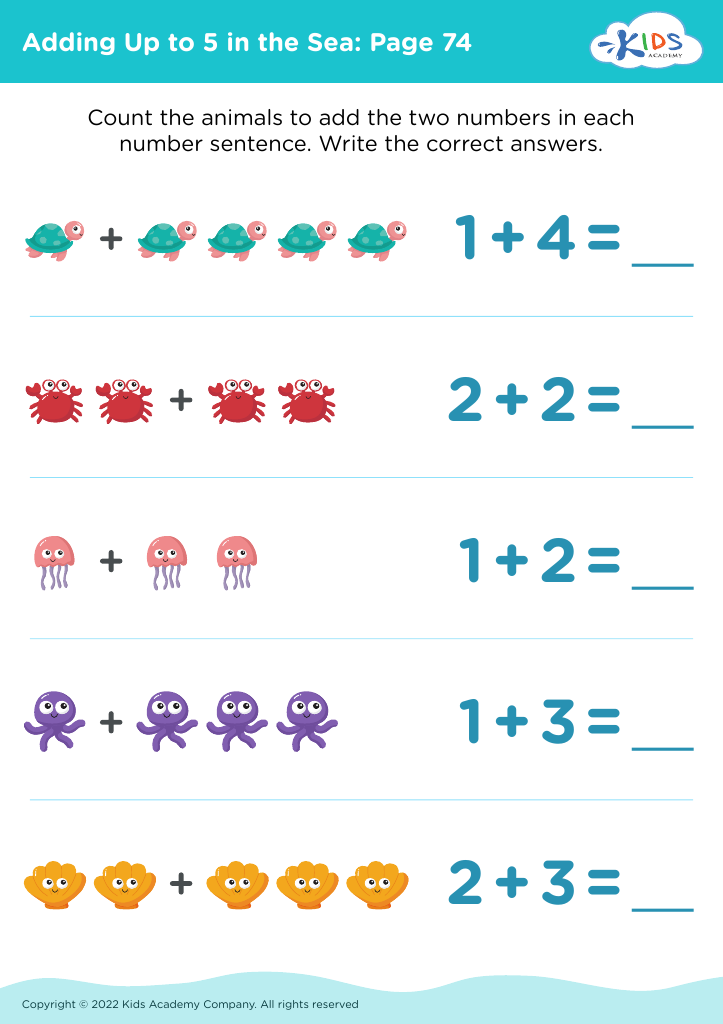
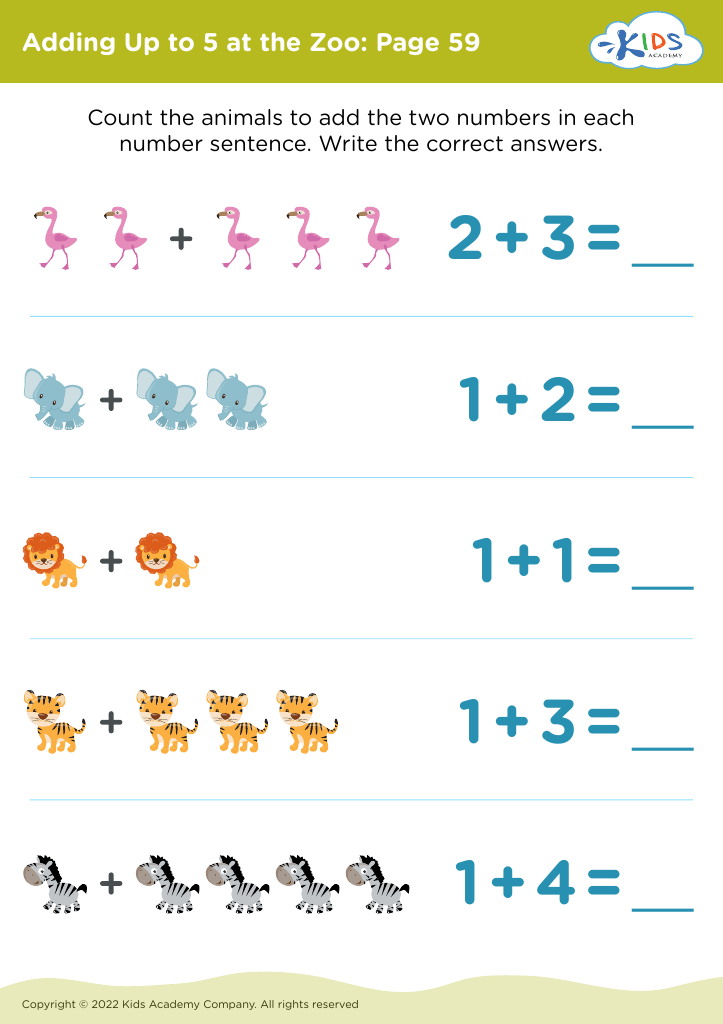
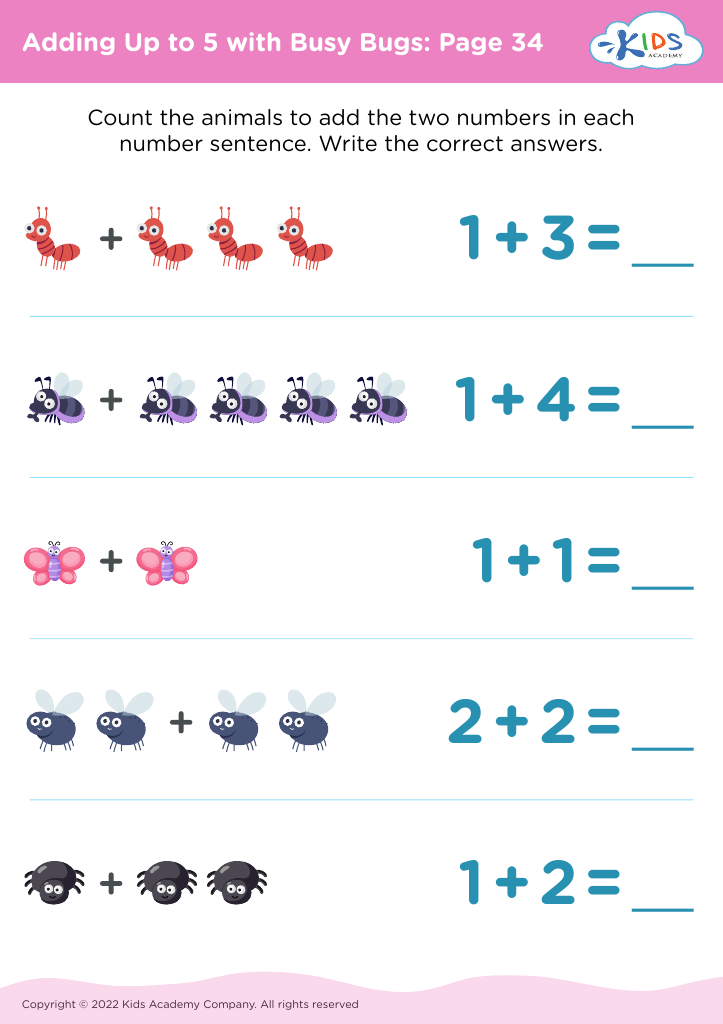
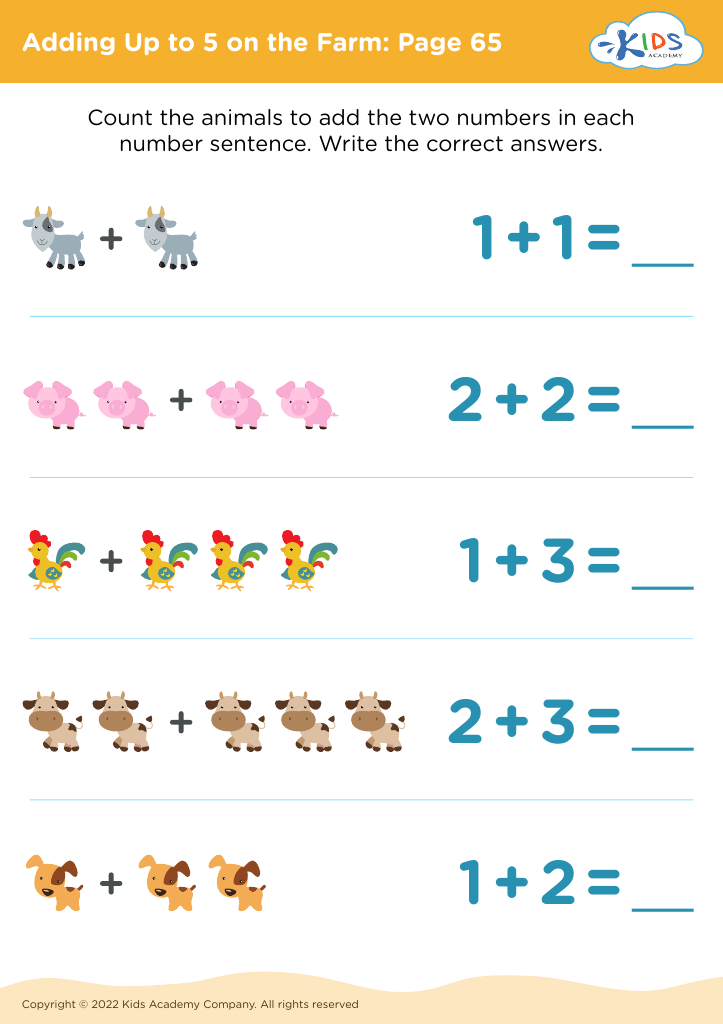
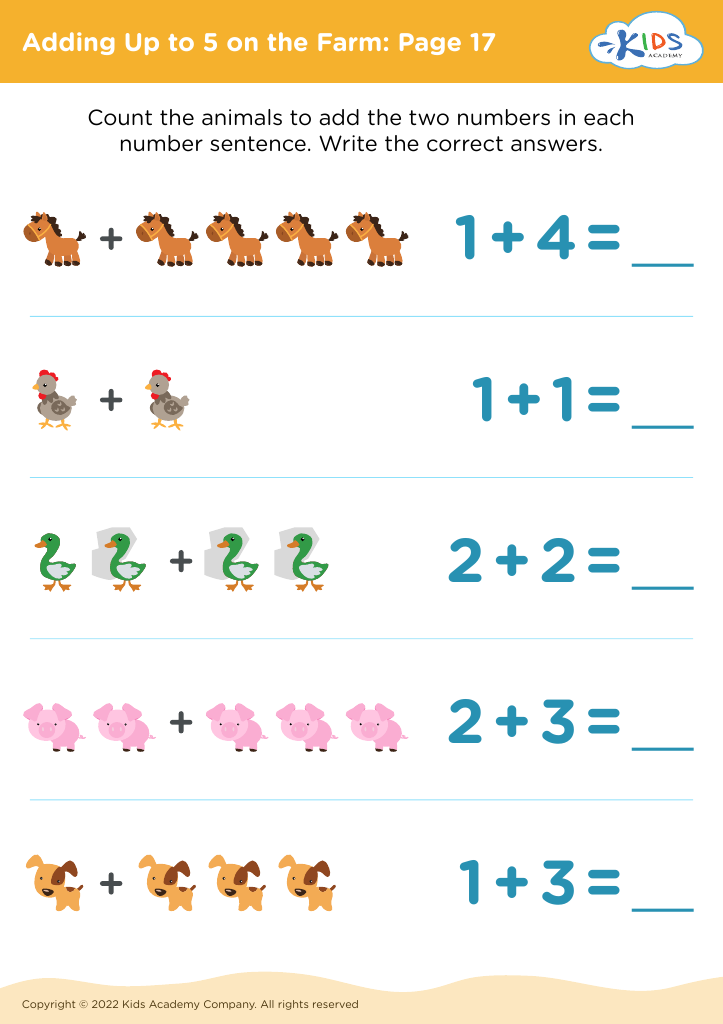
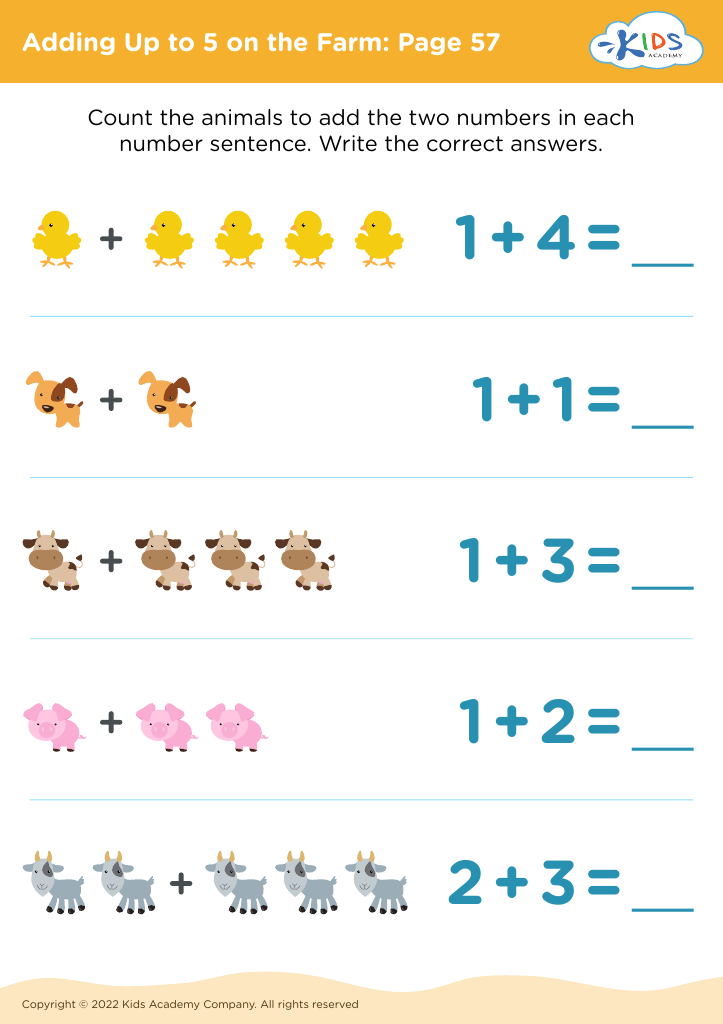
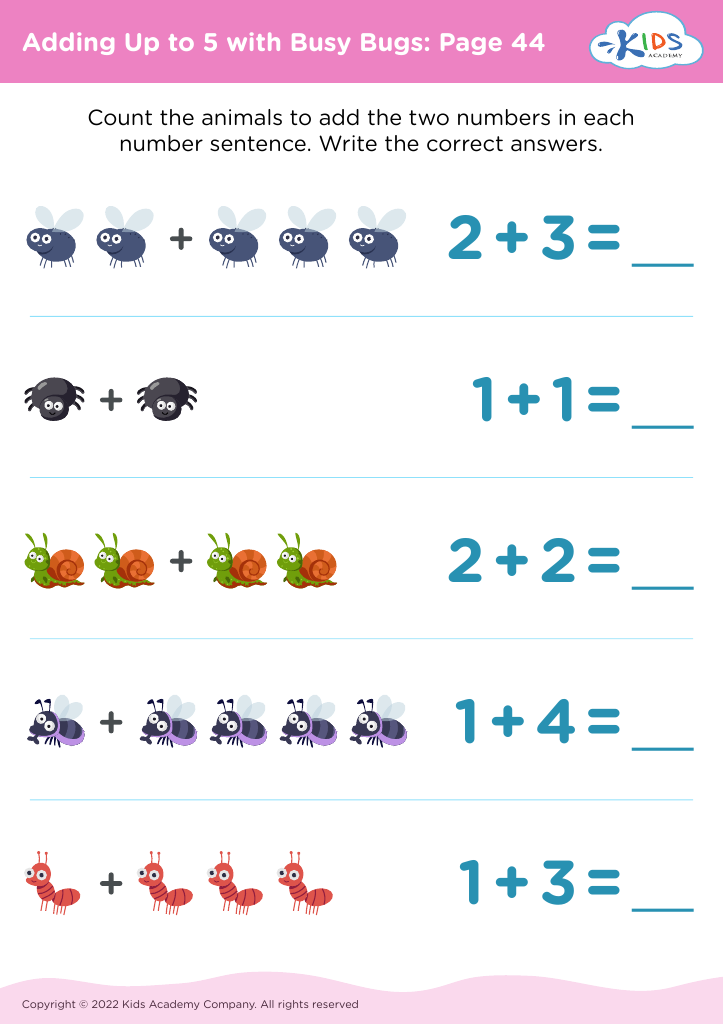
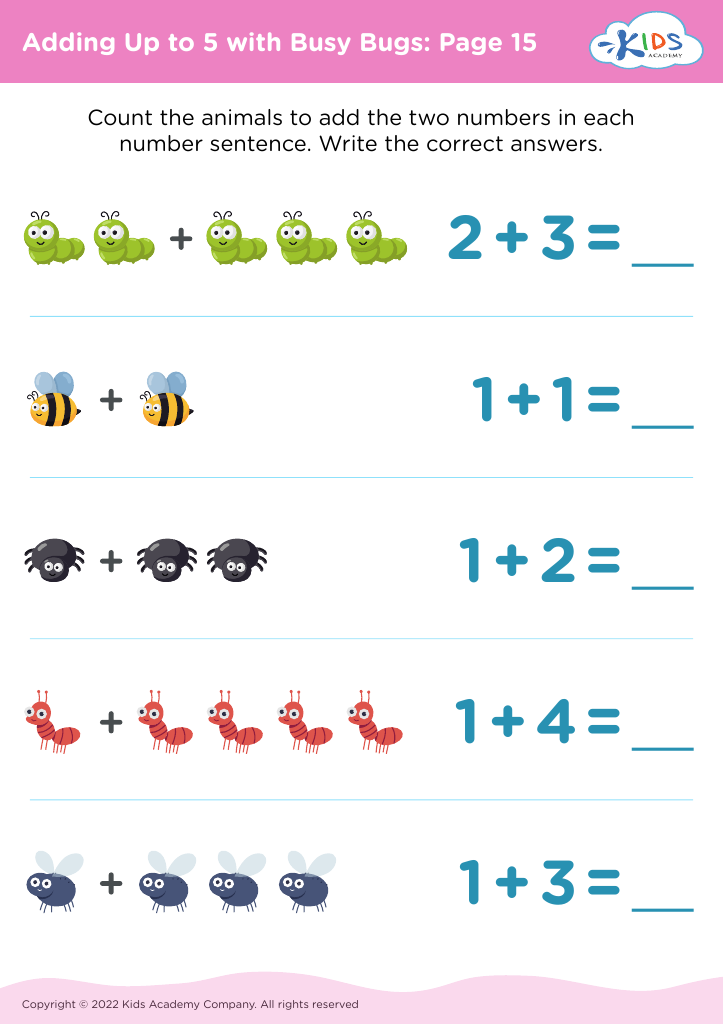
"Understanding Quantity: Adding Up to 5 Worksheets for Ages 4-7" offers a fun and engaging way for young learners to grasp the concept of basic addition. Tailored for children aged 4-7, these printable worksheets help kids practice counting and combining groups of items to develop their math skills. The exercises focus on addition problems that sum up to 5, making them perfect for early math education. Bright, colorful visuals keep kids interested while fostering their understanding of numbers and quantities. Download these worksheets to give your child a head start on math literacy in a playful and educational environment.
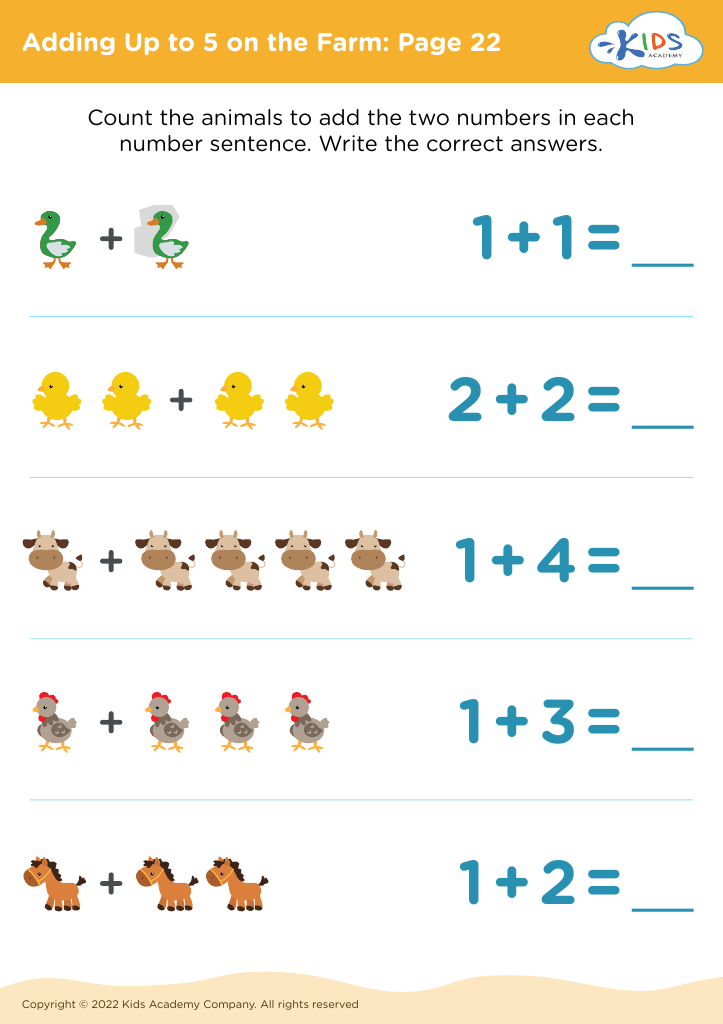
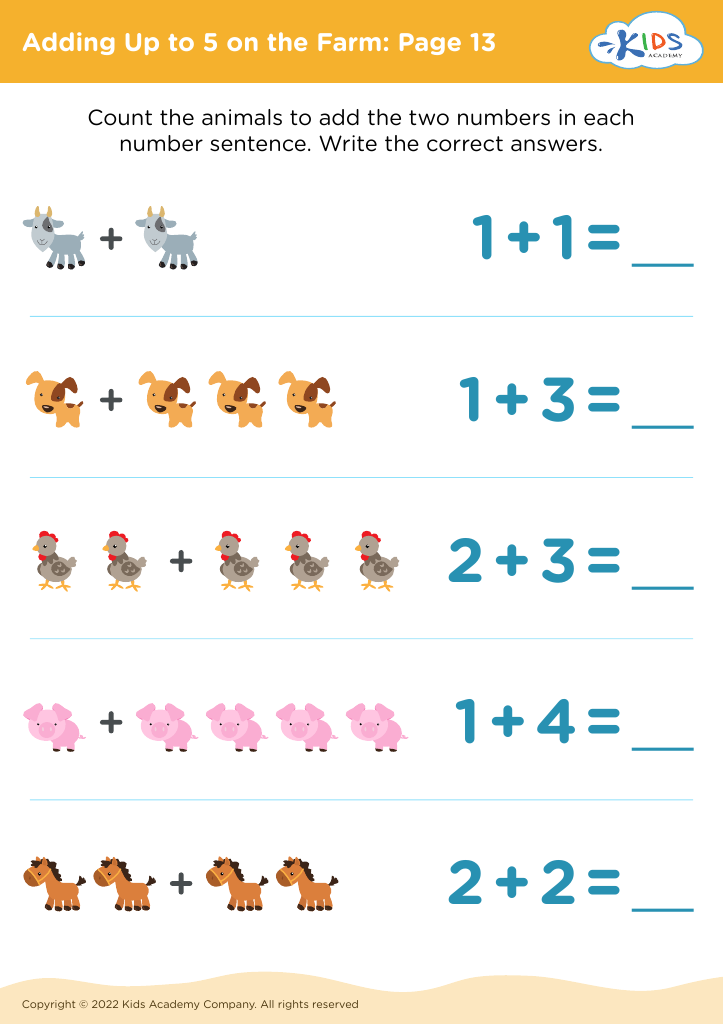
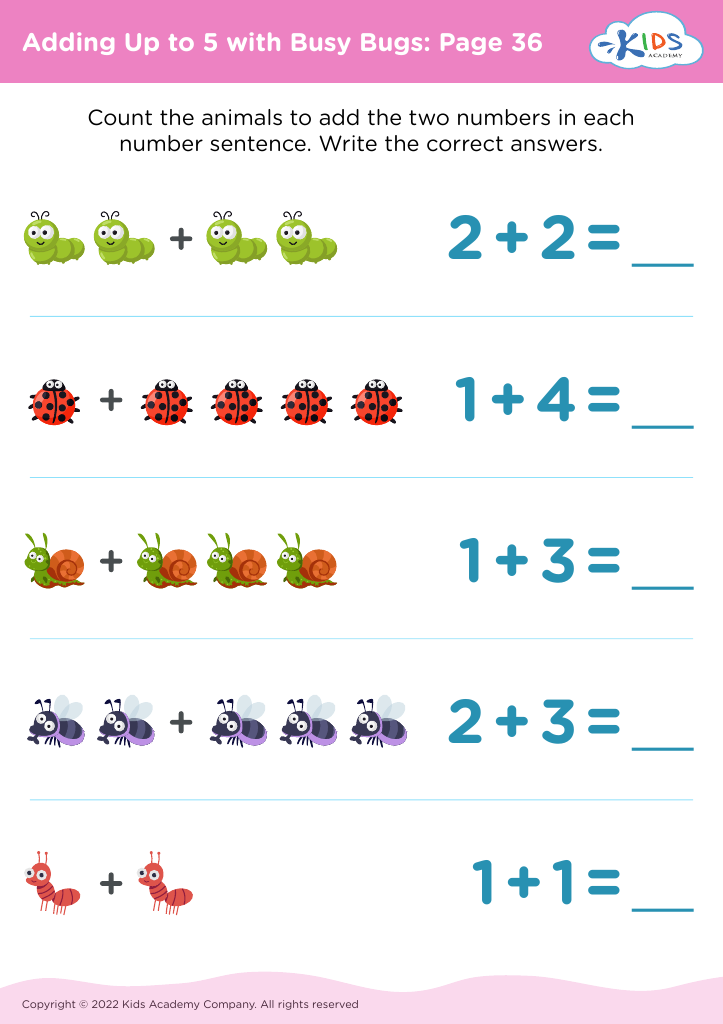
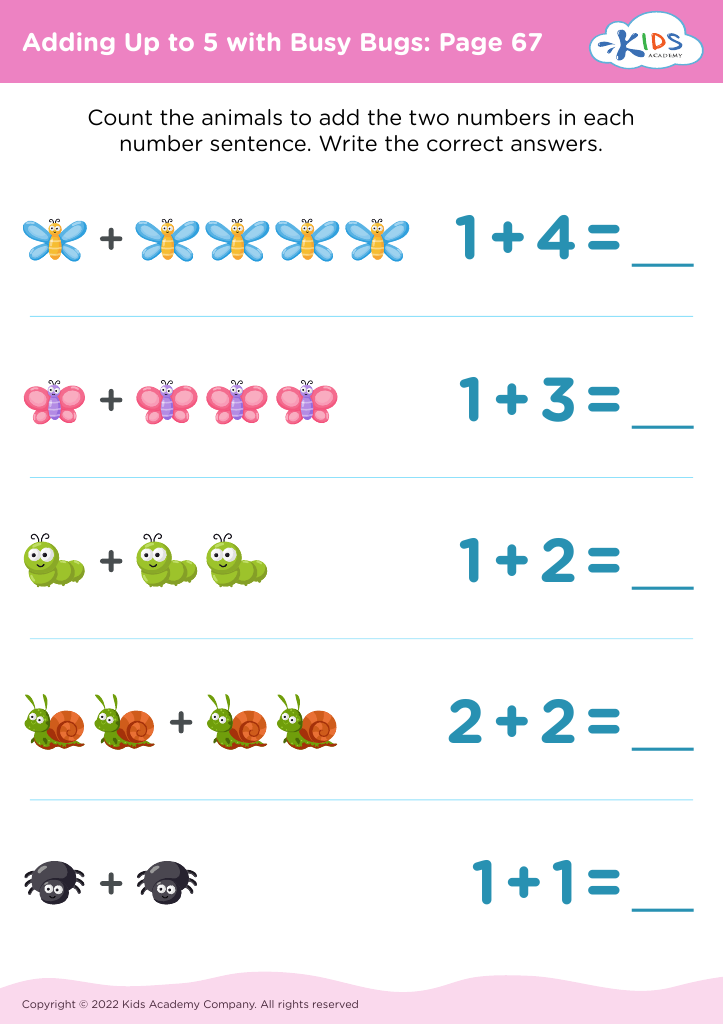





.jpg)


Understanding quantity and basic addition up to 5 for children ages 4 to 7 is foundational for their mathematical development. This early learning stage sets the groundwork for more advanced arithmetic, including addition, subtraction, and ultimately, multiplication and division. At this young age, children are highly concrete thinkers. They benefit immensely from hands-on experience with quantities and number manipulation, which helps them develop a strong sense of numbers and their relationships.
Grasping quantities up to 5 is a manageable and crucial step. It helps children build confidence and encourages them to enjoy learning math. These smaller numbers allow for simple, repetitive practice, which is essential for young minds to reinforce concepts through multiple exposures and active problem-solving.
Moreover, early exposure to these basic principles can bolster cognitive development, improve fine motor skills through the handling of objects for counting, and enhance problem-solving abilities. It's also critical for children to experience mathematical concepts in real-life settings, such as sharing snacks or playing with toys, which ties their learning to everyday activities making it more relevant and engaging.
For both parents and teachers, ensuring a solid understanding of these basics provides children a platform to build upon as they progress in their education, cultivating long-term academic success and fostering a positive attitude toward math.








