Counting skills Adding up to 50 Worksheets for Ages 4-7 - Page 2
34 filtered results
-
From - To
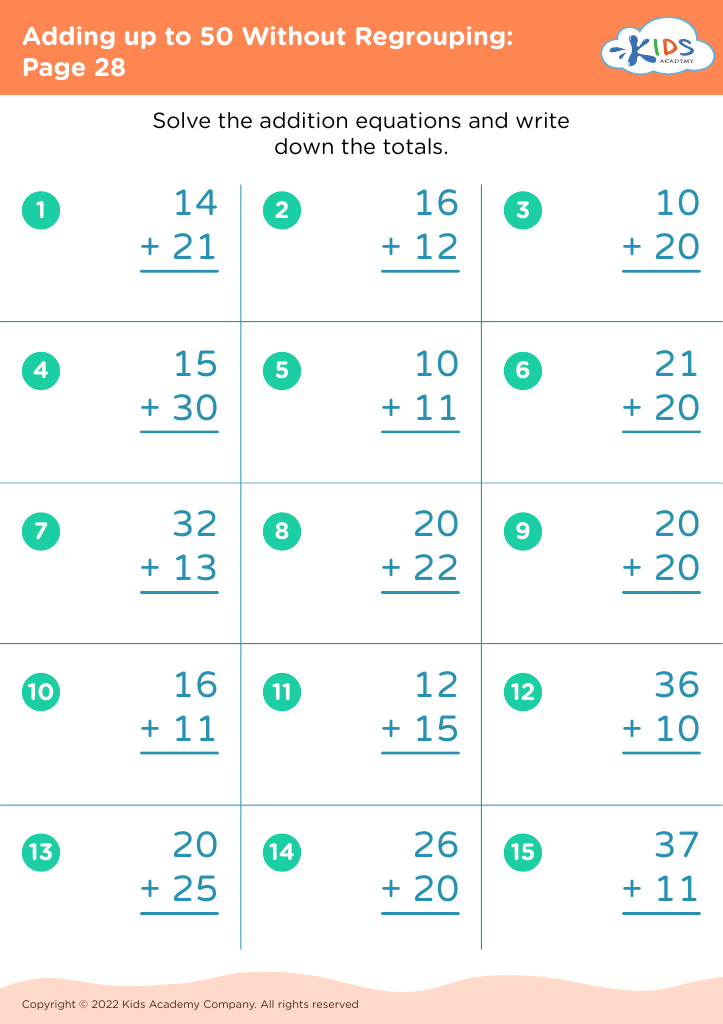
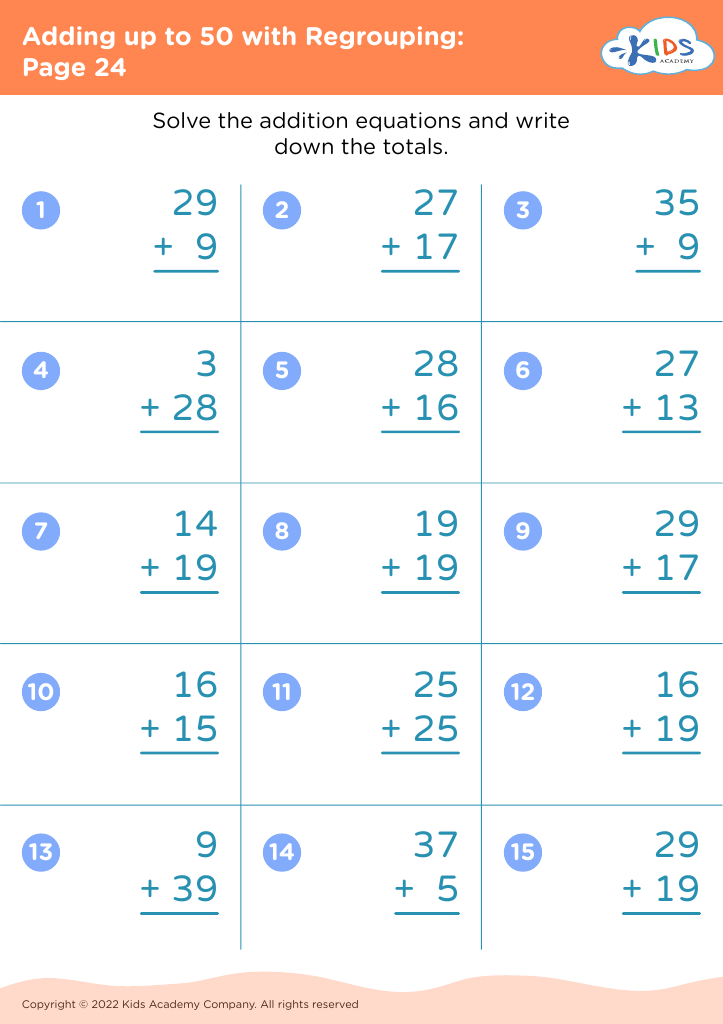
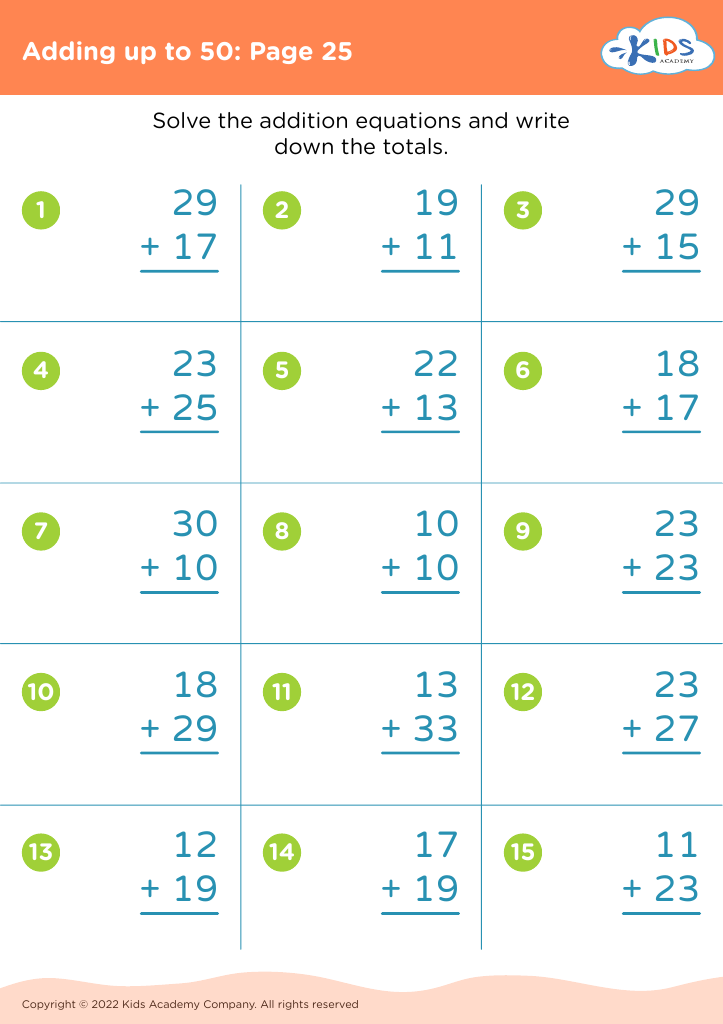
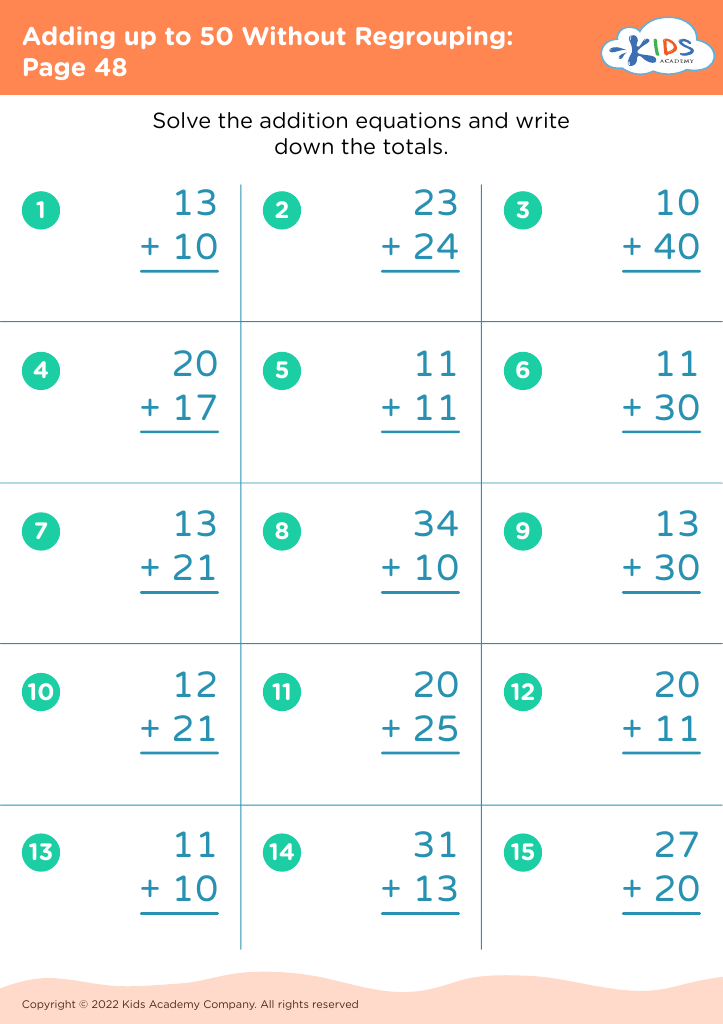
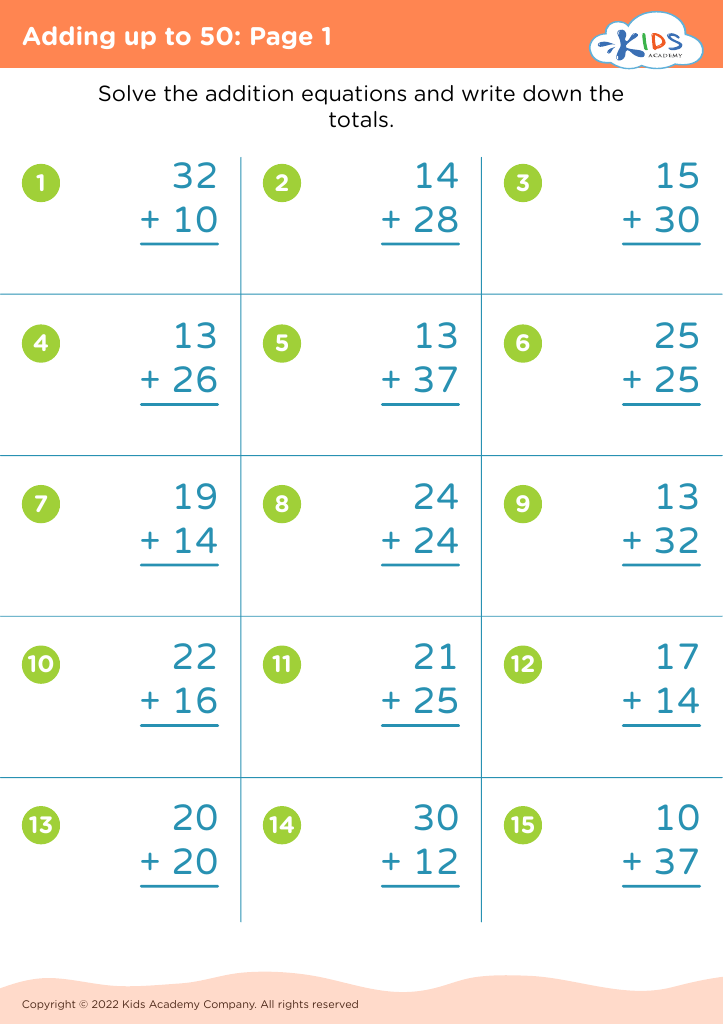
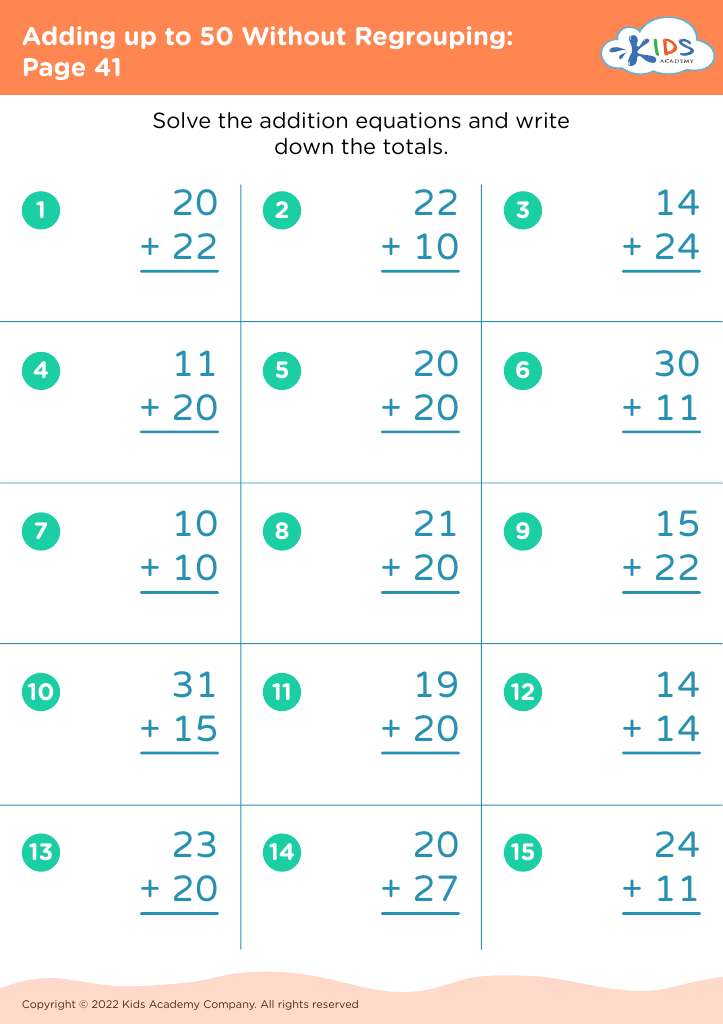
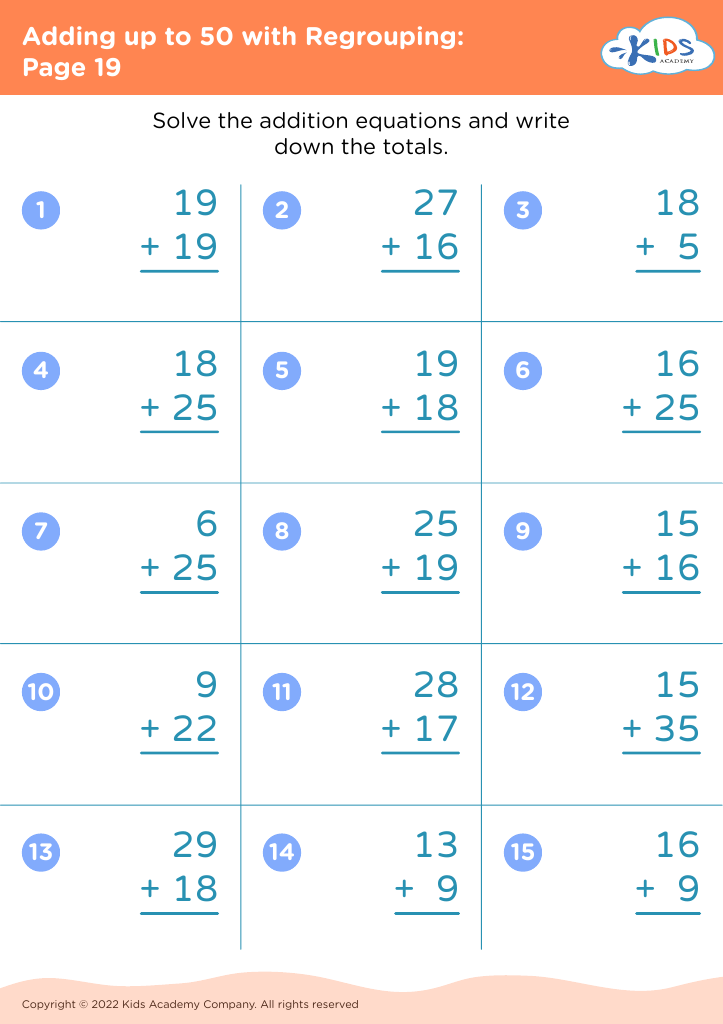
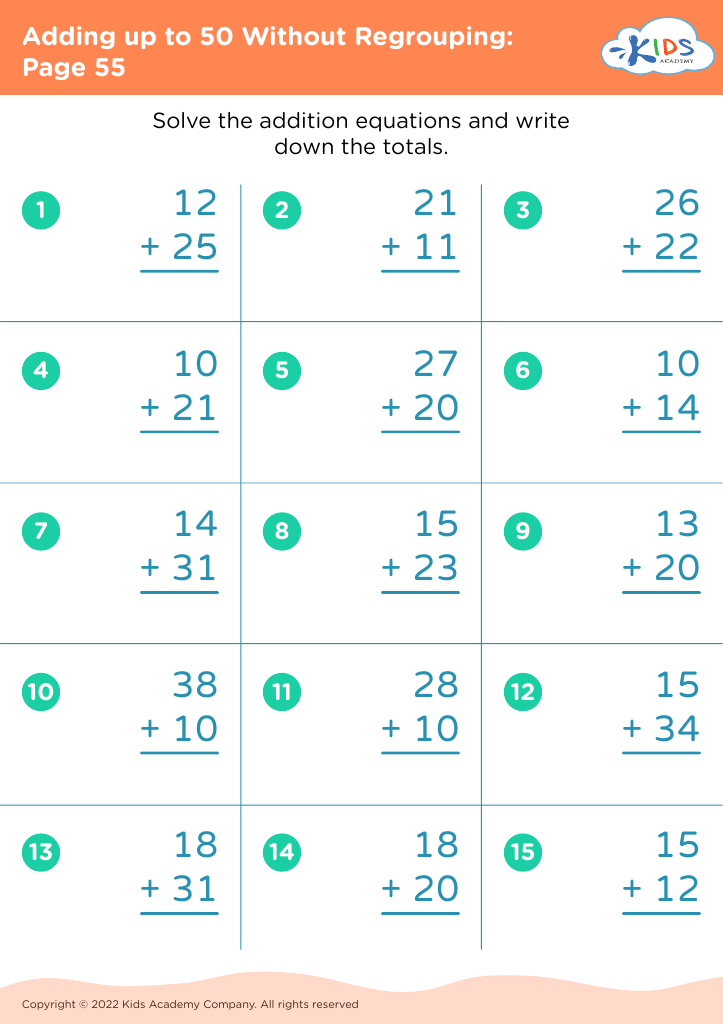
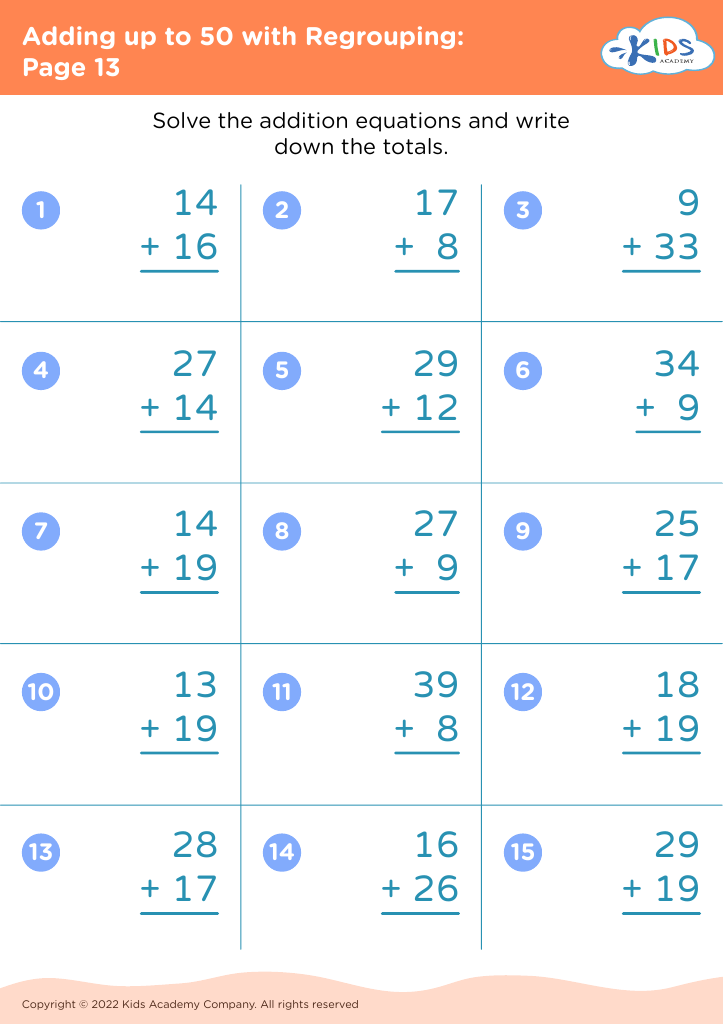
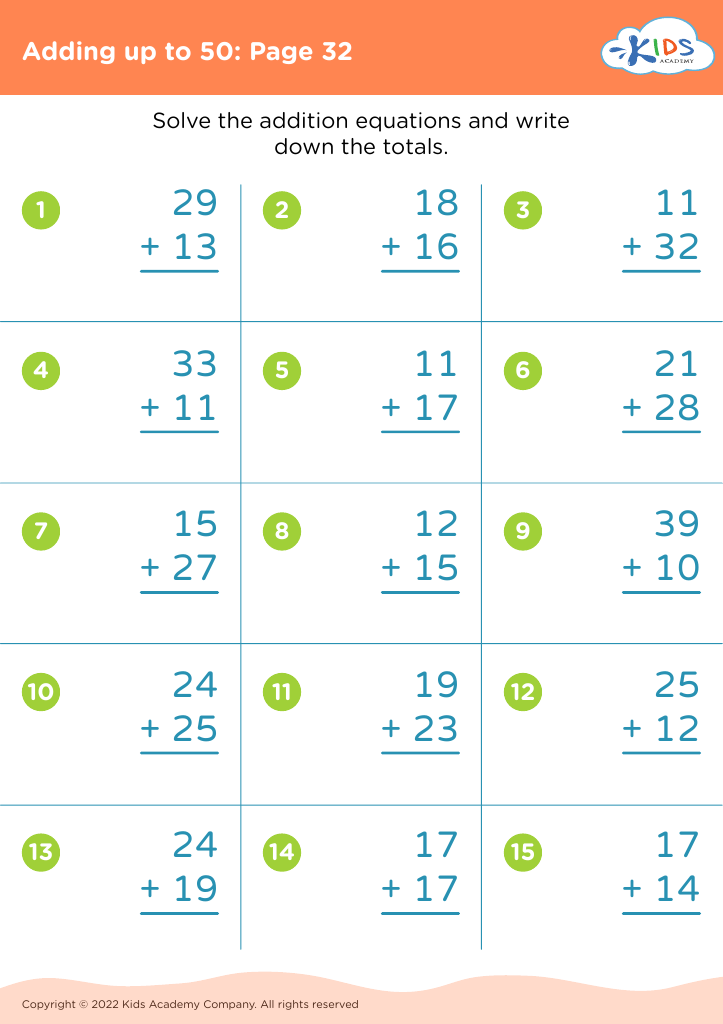




Counting skills, particularly the ability to add up to 50, are foundational for children ages 4-7, laying the groundwork for their future academic success. Firstly, mastering these skills enhances cognitive development, aiding in problem-solving and logical thinking. By learning to count and perform simple additions, children develop a deeper understanding of numbers and their relationships, which is crucial in both mathematics and real-world situations.
Moreover, counting skills promote a sense of confidence and independence in young learners. When children can successfully add up to 50, it not only reinforces their understanding of quantity but also encourages them to take on more complex mathematical challenges as they grow. This confidence spills over into other areas of learning, impacting overall academic achievement.
Additionally, counting and adding provide opportunities for parents and teachers to engage children in meaningful interactions, whether through games, everyday activities, or playful learning. Such involvement strengthens the parent-child or teacher-student bond, fostering a positive learning environment.
Lastly, building these foundational skills ensures that children are well-prepared for future educational milestones, creating a smooth transition into more advanced mathematical concepts and promoting lifelong learning habits. For all these reasons, advocating for the development of counting skills is vital.








