Cognitive Development Addition and Subtraction Word Problems Worksheets for Ages 4-7
4 filtered results
-
From - To
Enhance your child's cognitive development with our engaging collection of addition and subtraction word problems designed for ages 4-7. These printable worksheets from Kids Academy specialize in fostering critical thinking, problem-solving, and basic arithmetic skills through relatable, everyday scenarios. By integrating storytelling with math challenges, these activities help young learners understand the concepts of adding and subtracting seamlessly. Perfect for parents and educators, our word problems promote a deeper comprehension of mathematics while making learning fun and interactive. Empower your child to thrive in math with expertly-crafted worksheets that spark curiosity and build a solid foundation for future success.
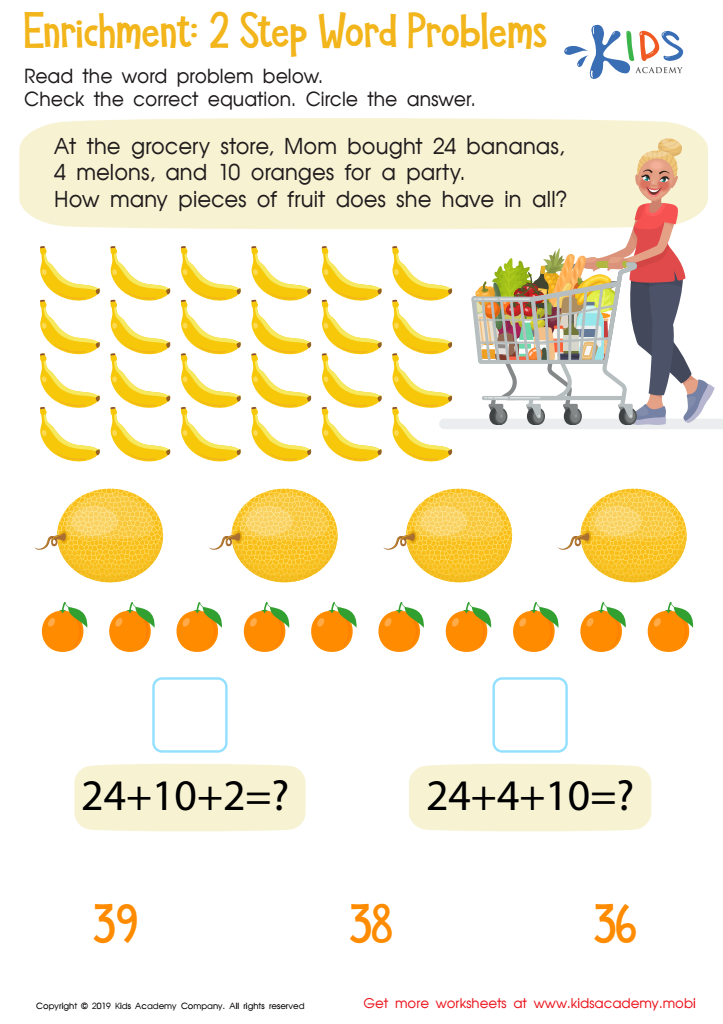
Enrichment -2 Step Word Problems Worksheet
 Assign to My Students
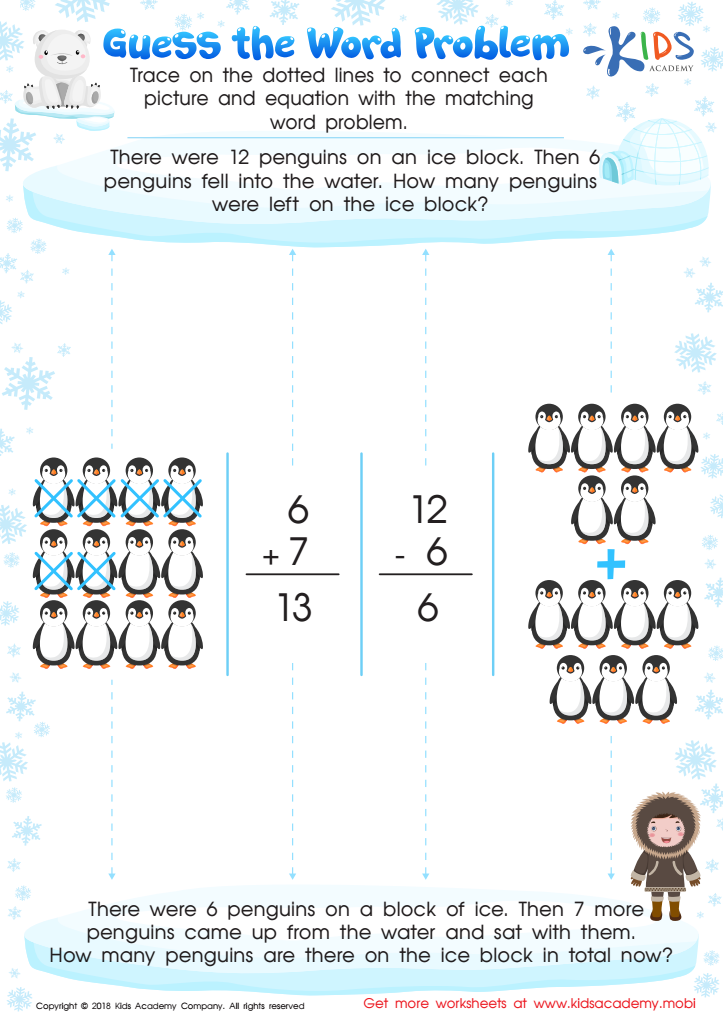
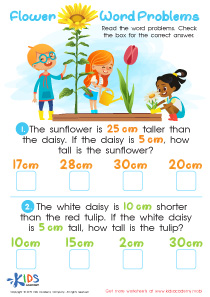
Guess the Word Problem Worksheet
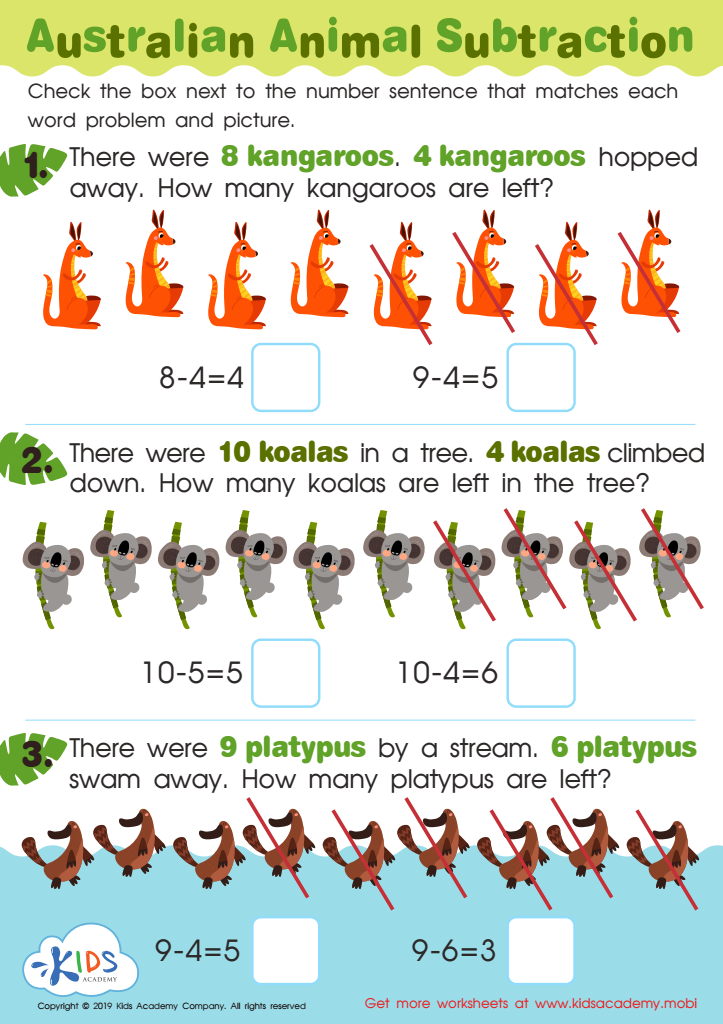
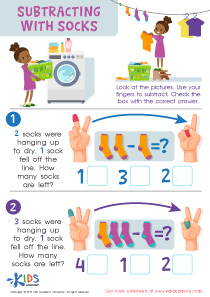
Australian Animal Subtraction Worksheet
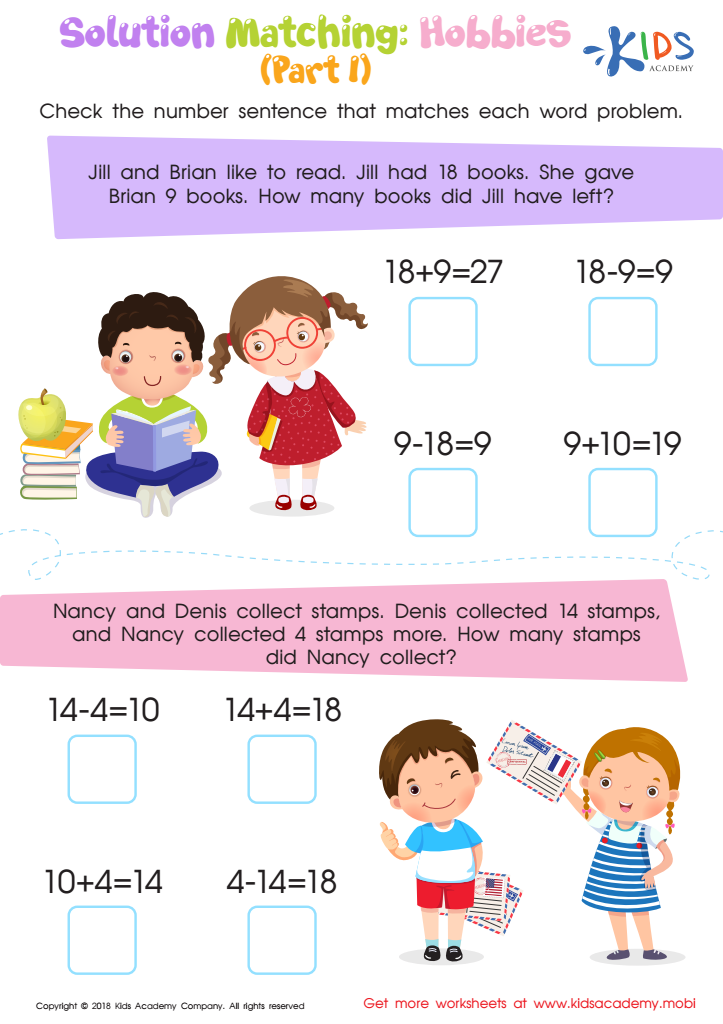
Solution Matching: Hobbies. Part 1 Worksheet








Cognitive development in early childhood is crucial, as it lays the foundation for lifelong learning and problem-solving skills. Focusing on addition and subtraction word problems for ages 4-7 is particularly important for several reasons. First, these types of math problems encourage critical thinking and comprehension. Unlike simple rote calculations, word problems involve understanding a scenario, identifying relevant information, and applying mathematical operations to find a solution. This process helps children develop skills in logical reasoning and interpretation.
Second, engaging with word problems at an early age improves literacy alongside numeracy. To solve a word problem, children need to read or listen carefully, decipher what the words mean in a mathematical context, and follow multi-step instructions. Thus, these activities simultaneously enhance reading comprehension and vocabulary.
Additionally, early exposure to these types of problems helps mitigate math anxiety. When children practice and become comfortable with addition and subtraction in a fun, story-based setting, they often find math more approachable and less intimidating. This confidence can have long-lasting effects, fostering a positive attitude toward math that persists through their academic careers.
Finally, practical life skills are another benefit. Word problems often simulate real-world scenarios (e.g., sharing snacks or budgeting allowances), making math relevant and useful. Essentially, they provide an early, integrated approach to learning that combines cognitive development, emotional confidence, language skills, and practical application.