
Basic subtraction skills Addition & Subtraction Worksheets for Ages 4-7
8 filtered results
Difficulty Level
Grade
Age
-
From - To
Subject
Activity
Standards
Enhance your child's math foundation with our engaging Basic Subtraction Worksheets, designed for ages 4-7. Our interactive resources help young learners grasp essential subtraction concepts through fun activities that promote learning and retention. Each worksheet is crafted to develop basic subtraction skills, allowing children to practice solving problems in an enjoyable way. With vibrant illustrations and age-appropriate exercises, these worksheets cater to diverse learning styles, ensuring that every child builds confidence in their math abilities. Explore our extensive collection of addition and subtraction worksheets to help your child excel in math while having fun! Start their journey to math mastery today!
Favorites
With answer key
Interactive
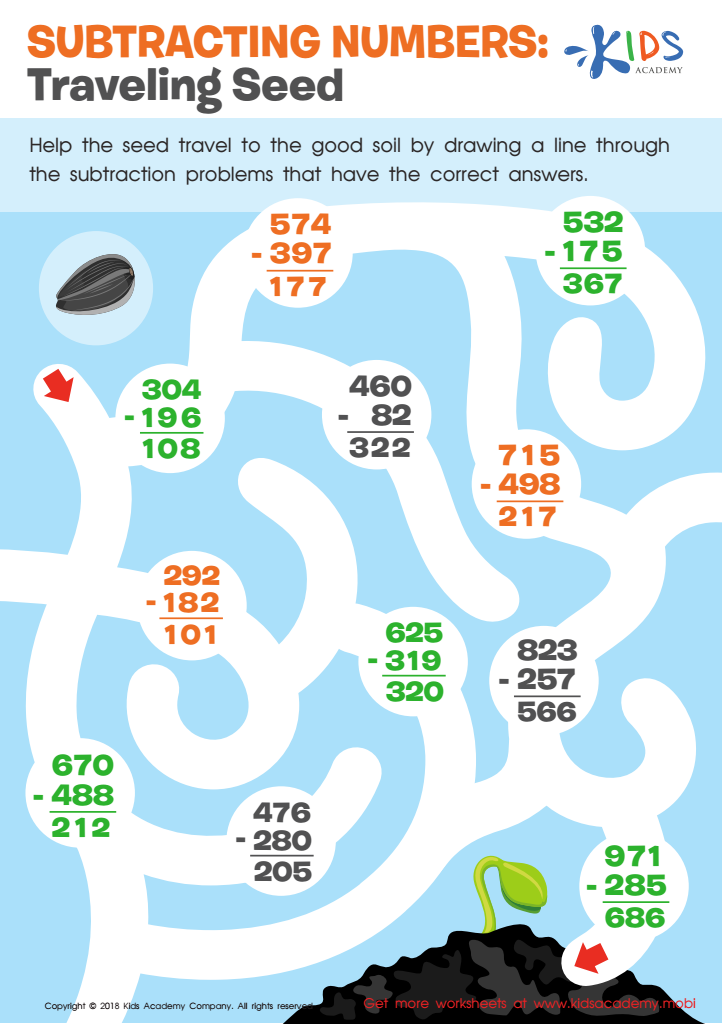
Subtracting Numbers: Traveling Seeds Worksheet
Introduce students to subtracting equations with this math worksheet! Engaging images will help them practice. Draw a line through the subtraction problems with the right answers to help the image reach the good soil. Let your students solve the math maze and have fun while they learn!
 Assign to My Students
Subtracting Numbers: Traveling Seeds Worksheet
Worksheet
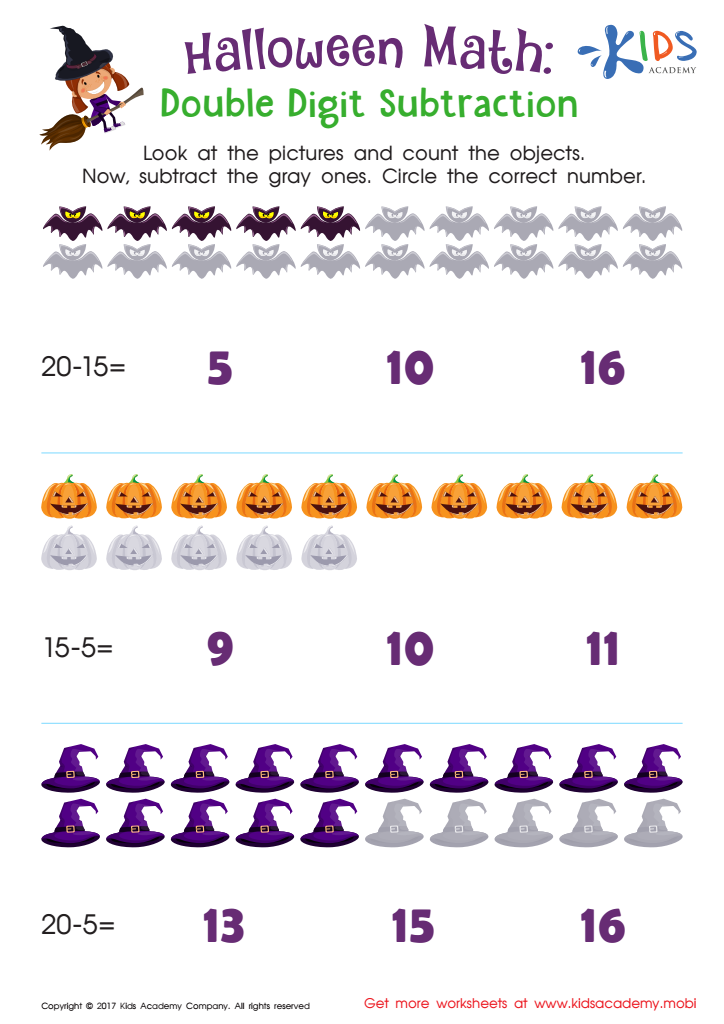
Halloween Math Subtraction Worksheet
Kids can easily understand subtraction by using the visuals provided in this worksheet. Get ready for some fun math!
This Halloween math worksheet uses spooky images to help kids understand subtraction. With it, they can count and solve double digit problems more easily. Get ready for some fun and engaging math practice!
Halloween Math Subtraction Worksheet
Worksheet
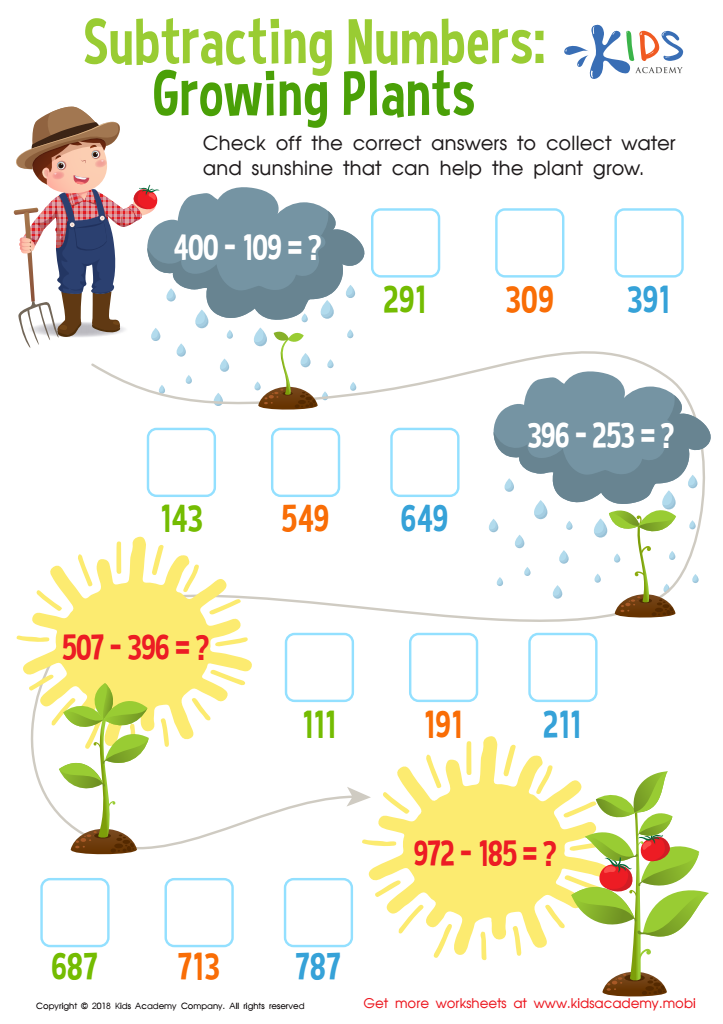
Subtracting Numbers: Growing Plants Worksheet
Farmers plant and nurture crops for us to eat. To help them, check off the items a plant needs to survive: water and sunshine. Ask your child to explain more!
Subtracting Numbers: Growing Plants Worksheet
Worksheet
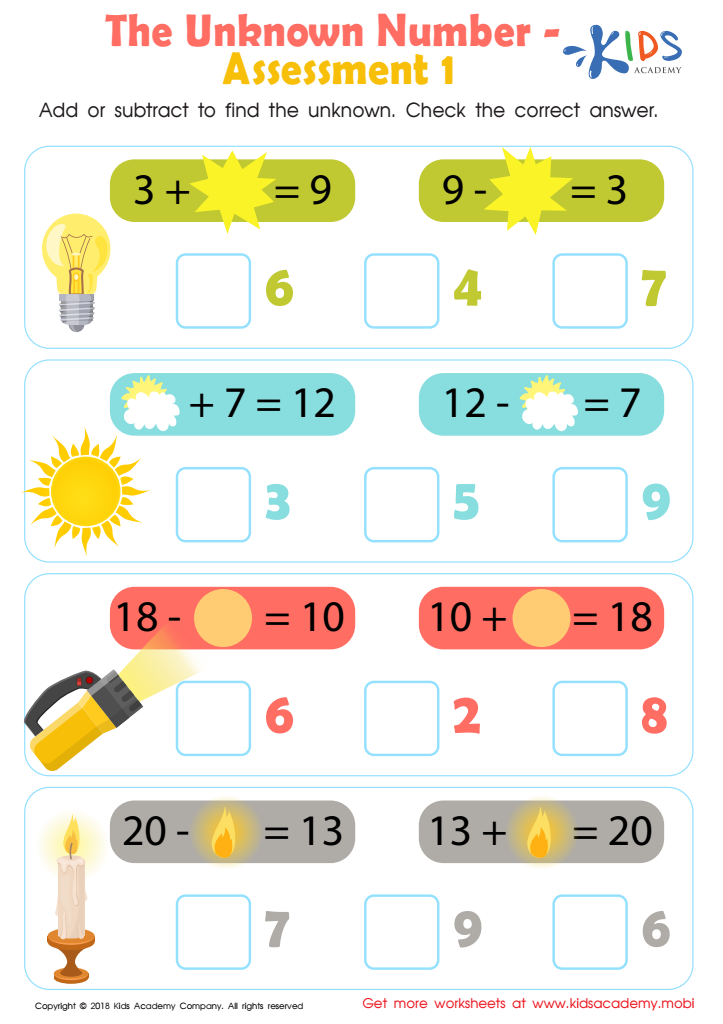
The Unknown Number: Assessment 1 Worksheet
Engage your child's mind with this simple worksheet. Help them overcome math stress and practice their skills! Add or subtract to find the unknown and help them circle the correct answer. Make learning fun and help your kids excel in math - all with this one printout.
The Unknown Number: Assessment 1 Worksheet
Worksheet
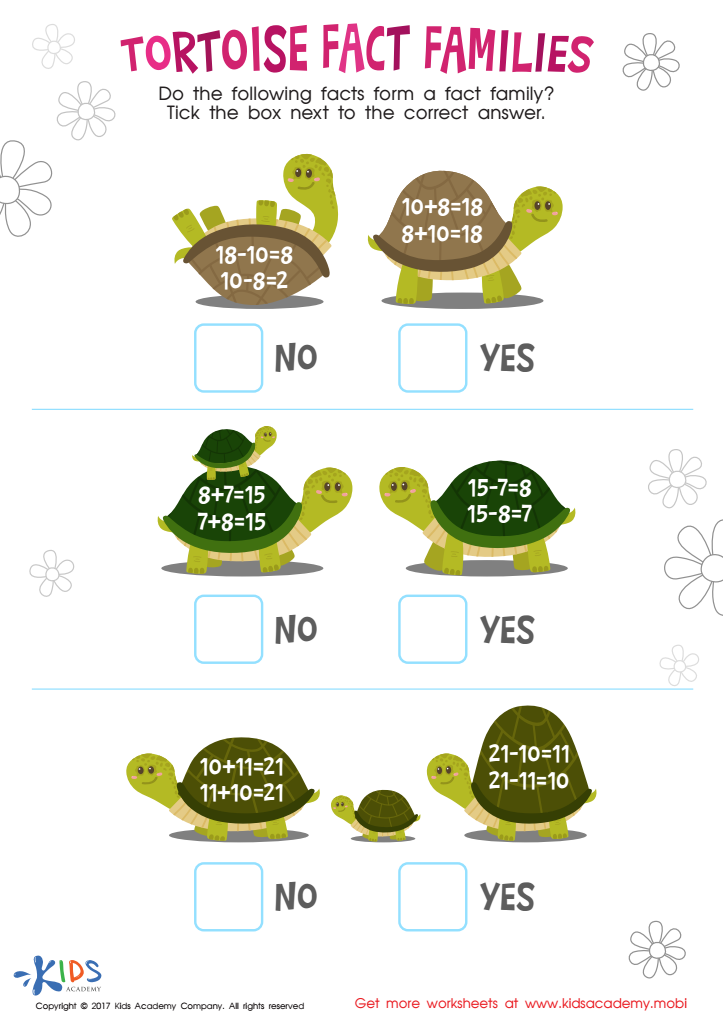
Tortoise Fact Families Printable
With 1st grade add & subtract tortoises, kids can improve their math understanding and skills. Enjoy fun, hands-on practice with fact families and strengthen logical reasoning and critical thinking!
Tortoise Fact Families Printable
Worksheet
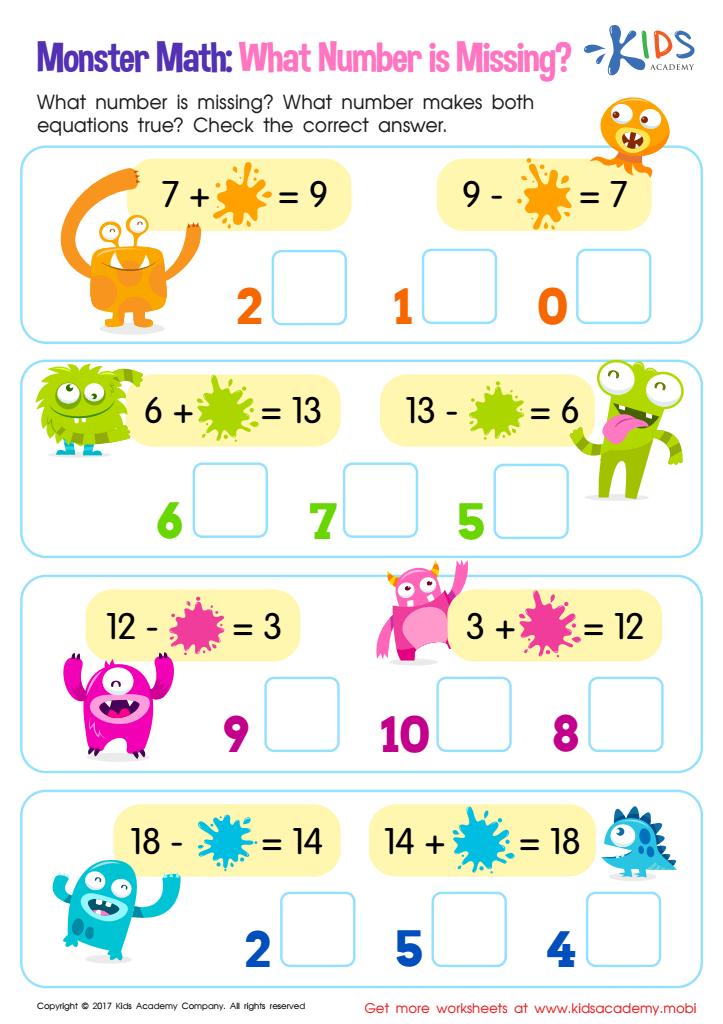
Missing Number: Monster Math Worksheet
Engage your child in monster math fun with a worksheet! They'll need to use their counting, addition and subtraction skills to solve equations on both sides. On the left side, they must complete an addition problem and on the right, the equation is in subtraction form. Assist them in selecting the right number out of the given options to make both equations true.
Missing Number: Monster Math Worksheet
Worksheet
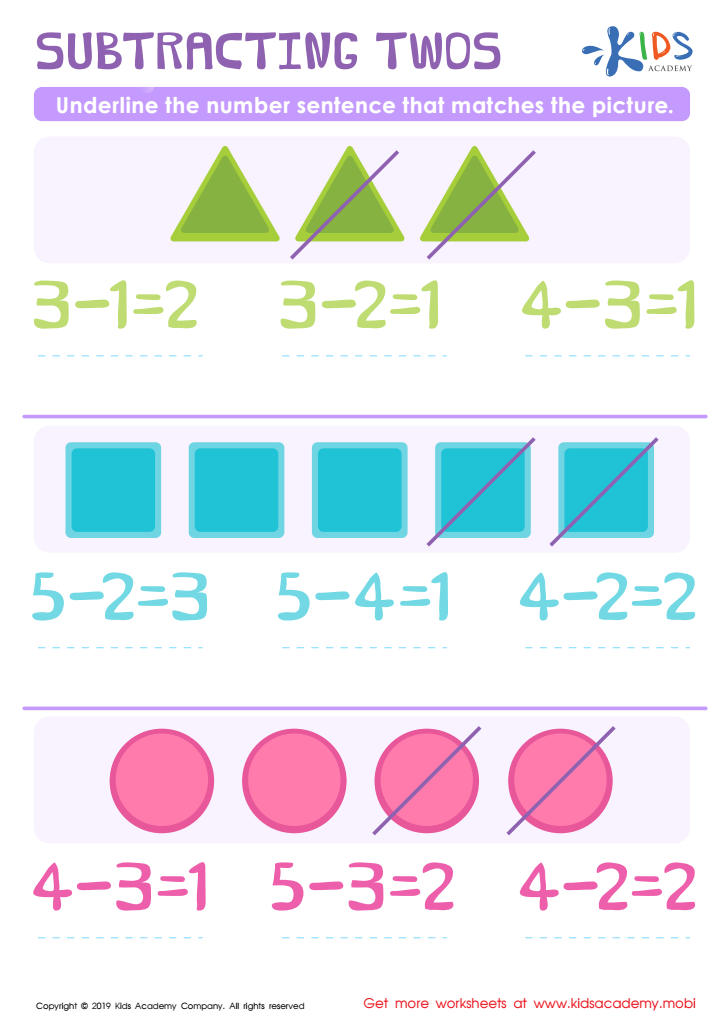
Subtracting Twos Worksheet
Help your children learn the basics of math with this worksheet. It has three number sentences they can match up with the pictures. Start by making math an enjoyable subject and help your kids underline the equation that matches up. This will give them a strong foundation to build on for the rest of their math journey.
Subtracting Twos Worksheet
Worksheet
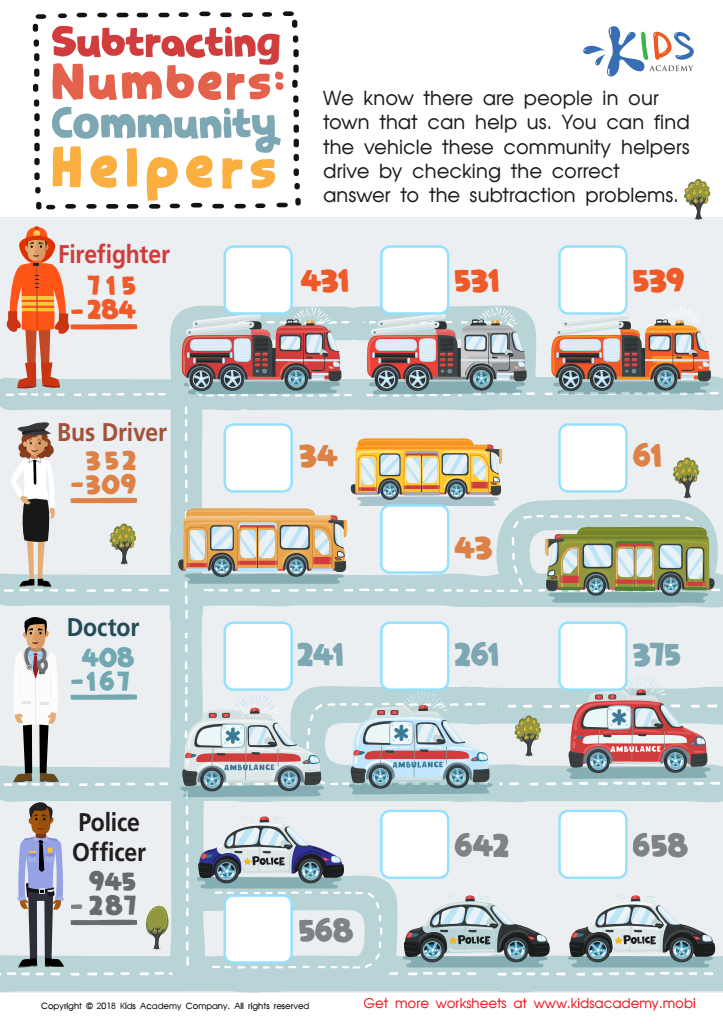
Subtracting Numbers: Community Helpers Worksheet
A community is an area of different people, buildings and other elements. People in a community have varied roles and work together to make it thrive. Ask your child what community helpers they know and how they help. Match the helpers to their vehicles by solving subtraction problems!
Subtracting Numbers: Community Helpers Worksheet
Worksheet
Join Kids Academy for Free
Who is primarily going to use this learning content?








Basic subtraction skills are essential for children aged 4-7 as they lay the groundwork for more advanced mathematical concepts. At this early developmental stage, children are forming their understanding of numbers and operations, which is crucial for their future learning. Subtraction, alongside addition, helps children grasp the concept of quantities, allowing them to see relationships between numbers. This understanding is vital in everyday situations, such as sharing snacks or dividing toys, fostering critical thinking and problem-solving skills.
Moreover, mastering basic subtraction builds confidence and a positive attitude toward mathematics. Children who are proficient in fundamental operations are more likely to embrace challenges in the classroom, leading to better academic performance across subjects. Early mastery of these skills also supports cognitive development, enhancing their ability to reason logically and think abstractly.
As such, parents and teachers play a crucial role in reinforcing these skills through engaging activities. By integrating subtraction into play, daily routines, and educational games, adults can create a supportive environment that encourages exploration and discovery. Ignoring these foundational skills risks creating gaps in a child’s learning trajectory, making it essential for parents and educators to prioritize addition and subtraction during these formative years.








