Check out this FREE Trial Lesson on Addition & Subtraction for age 4-7!

D

Favorites
With answer key
Interactive
  • 4-7
  • Comparing Fractions
  • Addition & Subtraction
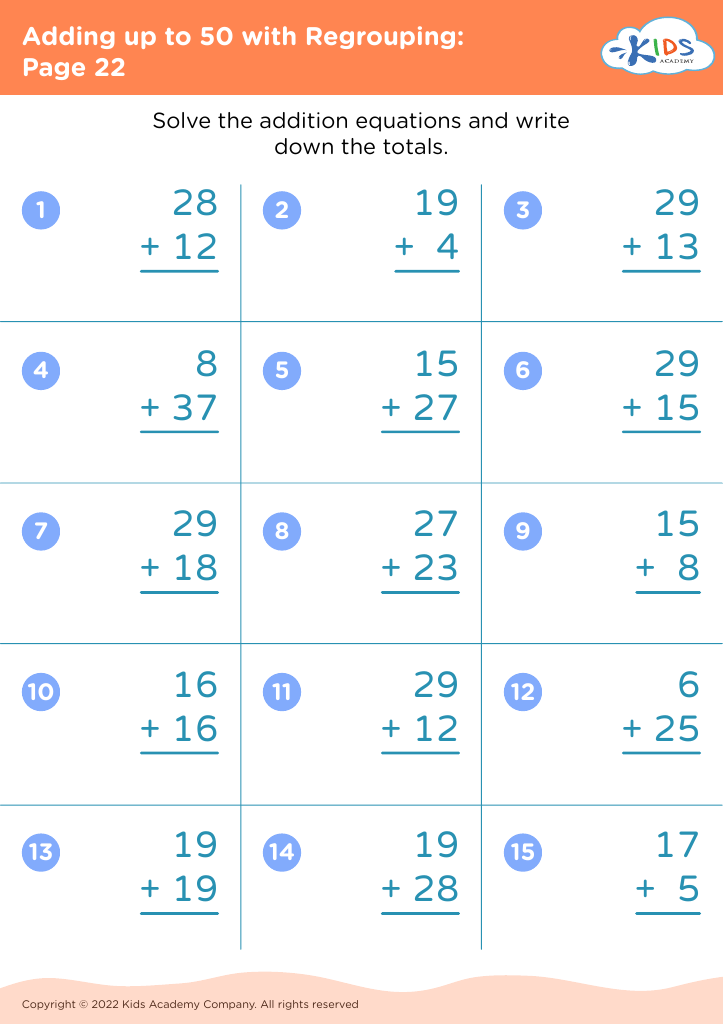
Adding up to 50 with Regrouping: Page 22
Worksheet
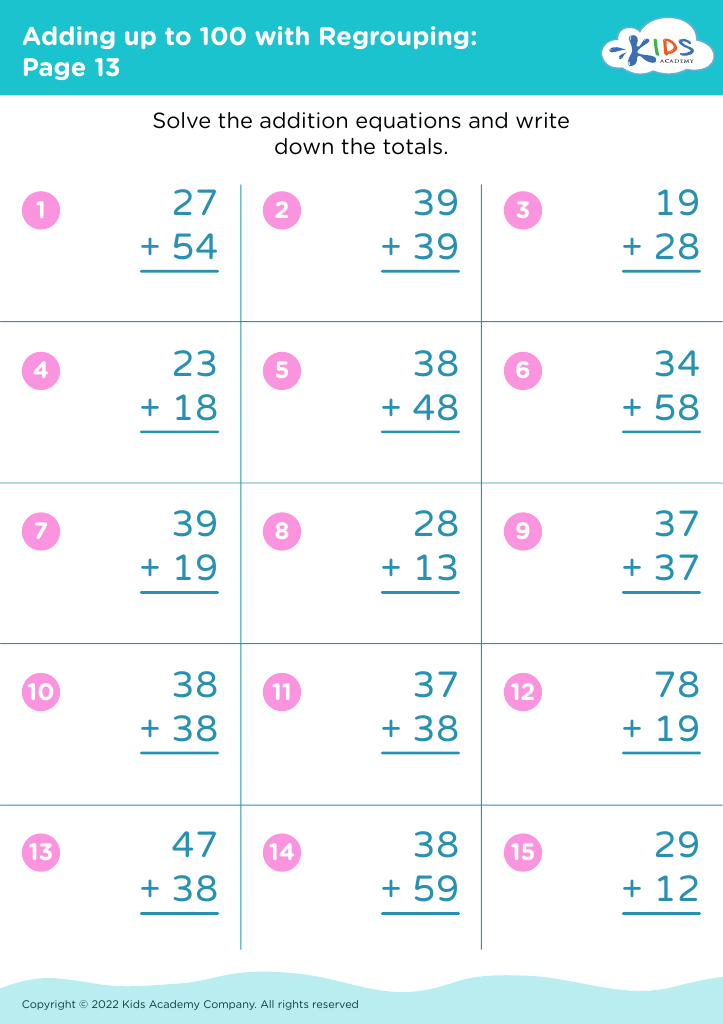
Adding up to 100 with Regrouping: Page 13
Worksheet
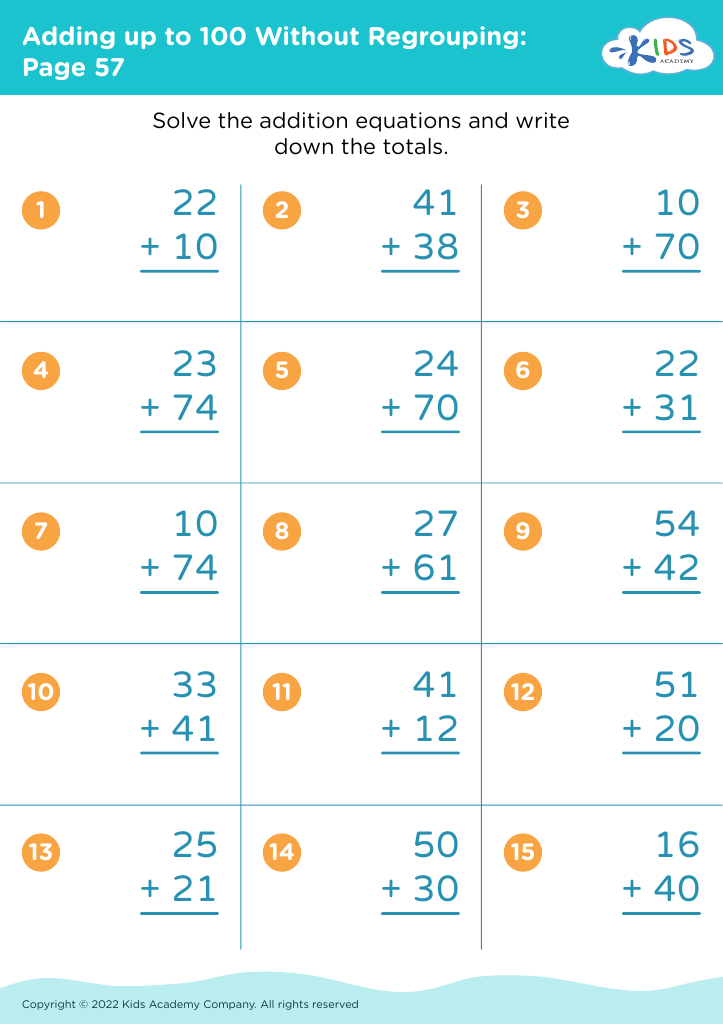
Adding up to 100 Without Regrouping: Page 57
Worksheet
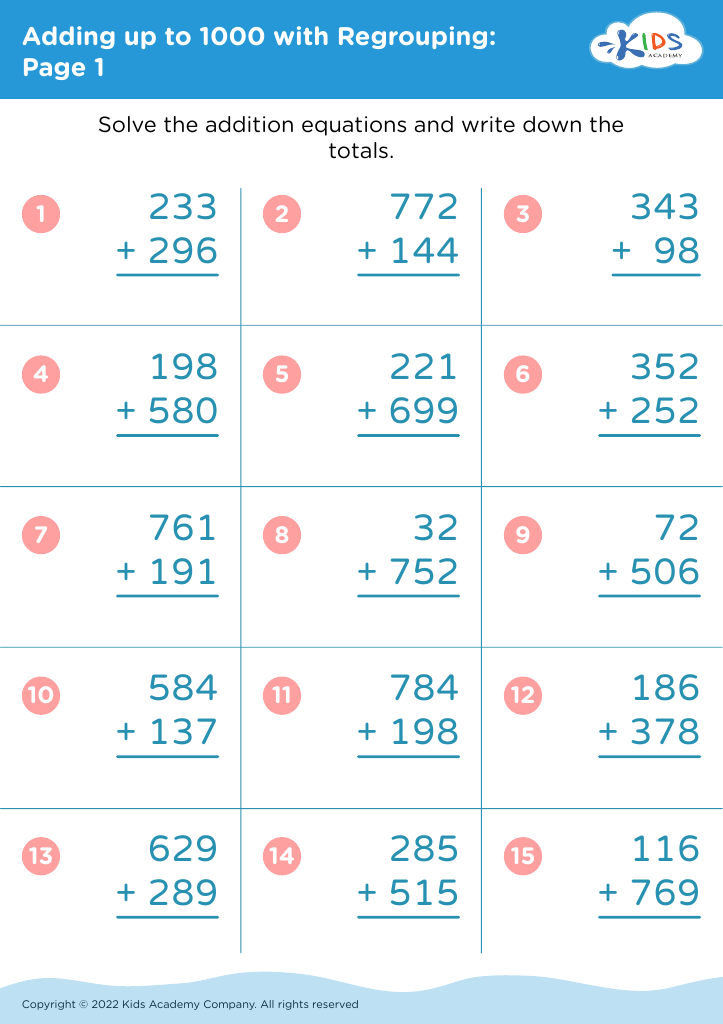
Adding up to 1000 with Regrouping: Page 1
Worksheet
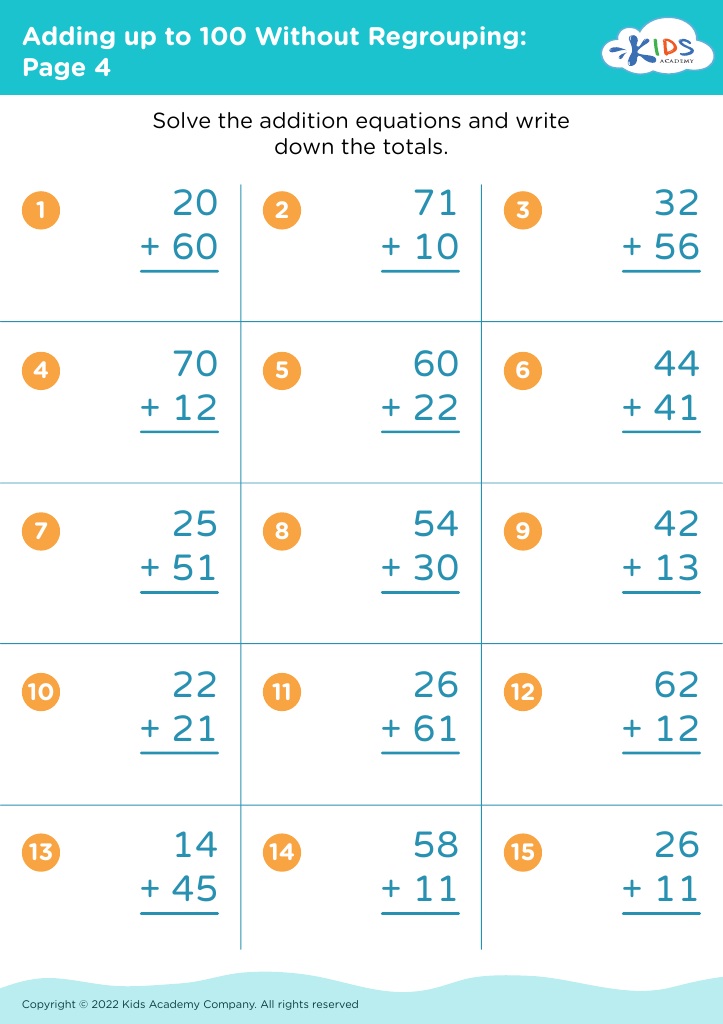
Adding up to 100 Without Regrouping: Page 4
Worksheet
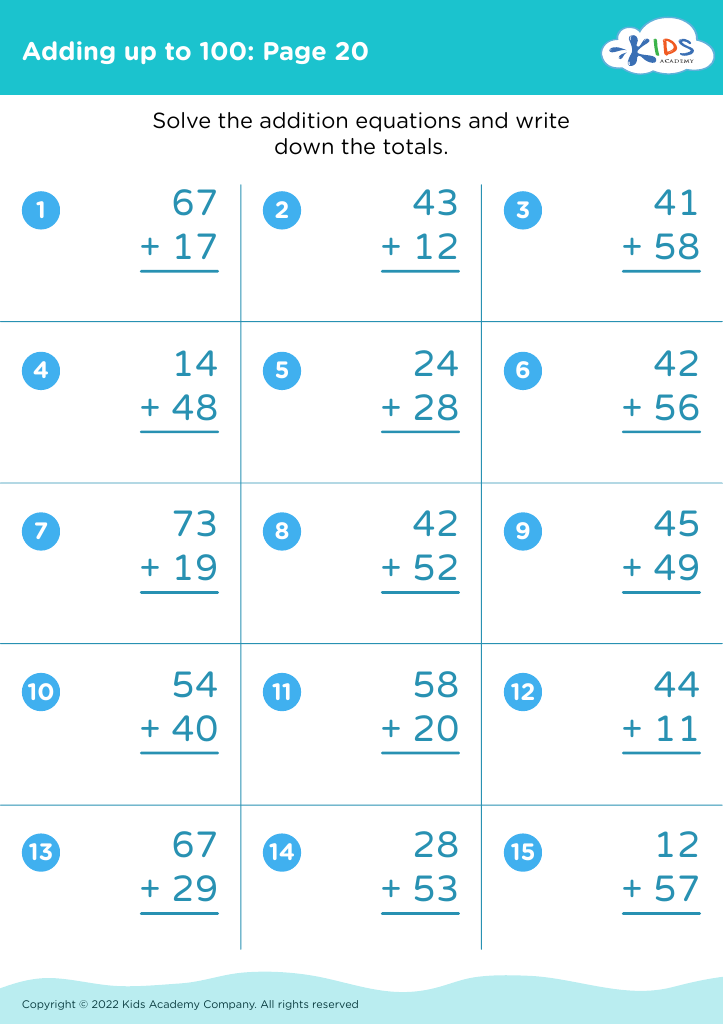
Adding up to 100: Page 20

Adding up to 100: Page 20

Adding up to 100: Page 20
Worksheet
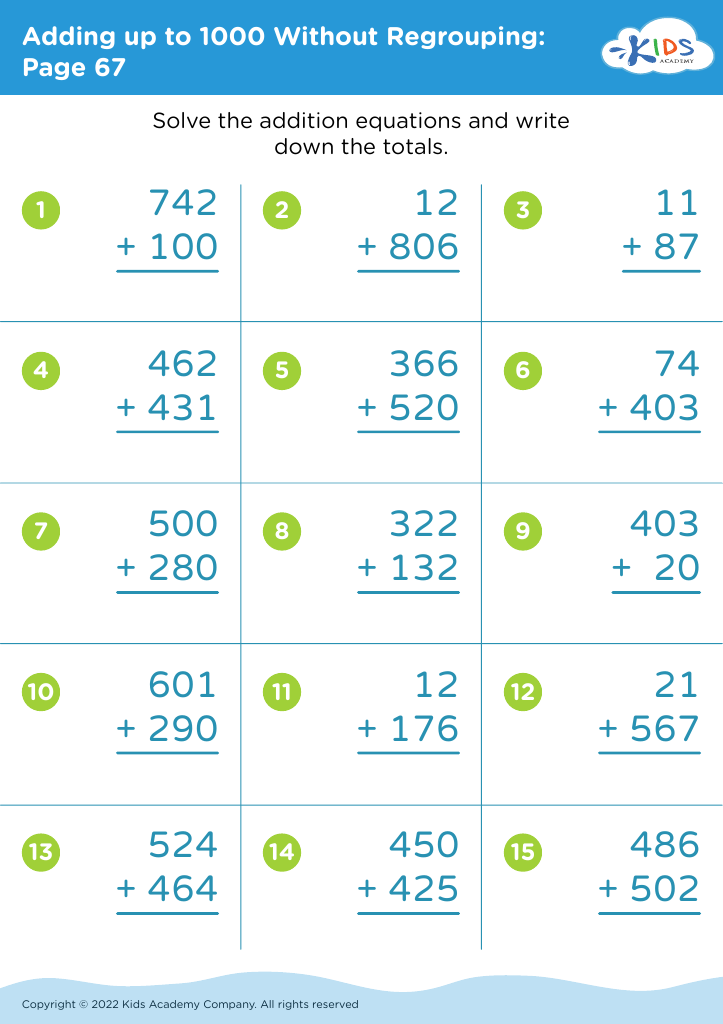
Adding up to 1000 Without Regrouping: Page 67
Worksheet
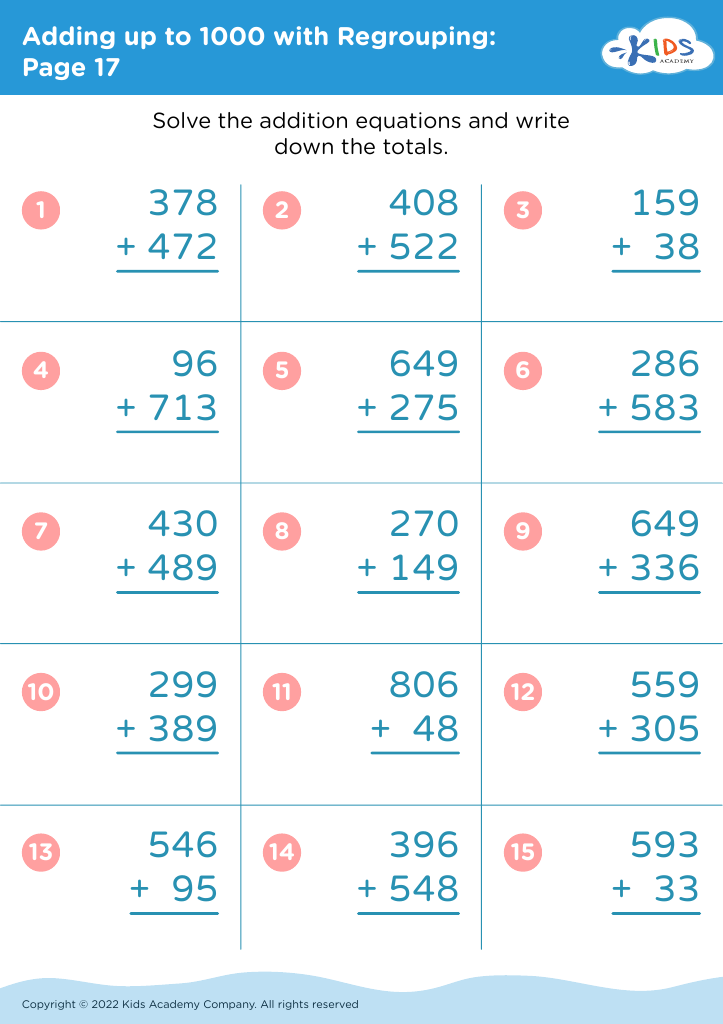
Adding up to 1000 with Regrouping: Page 17
Worksheet
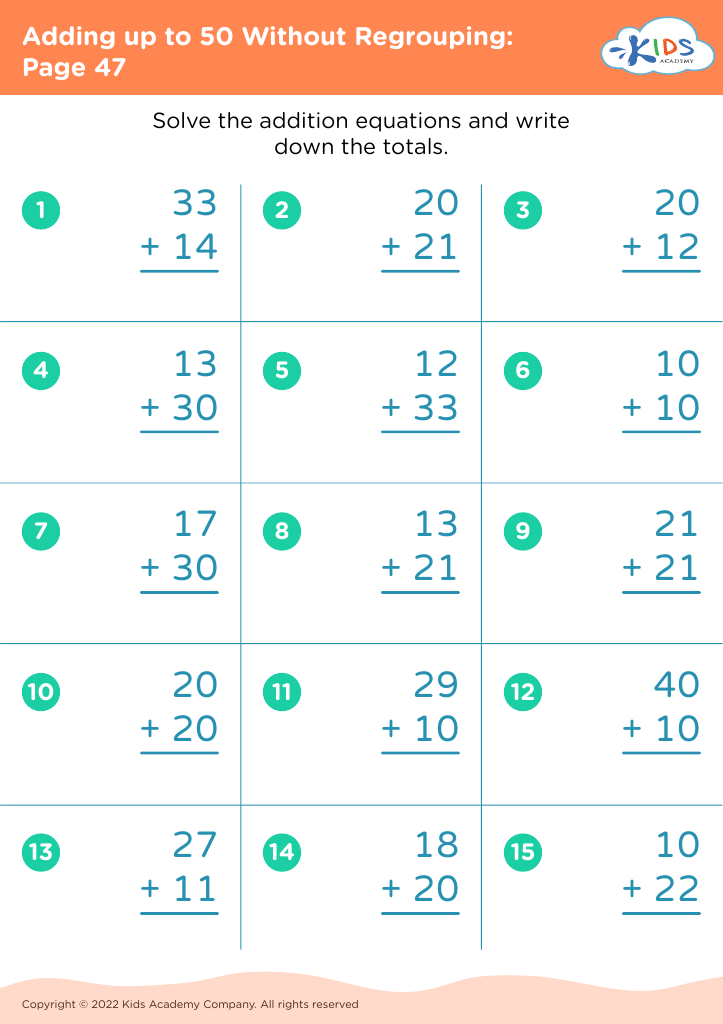
Adding up to 50 Without Regrouping: Page 47
Worksheet
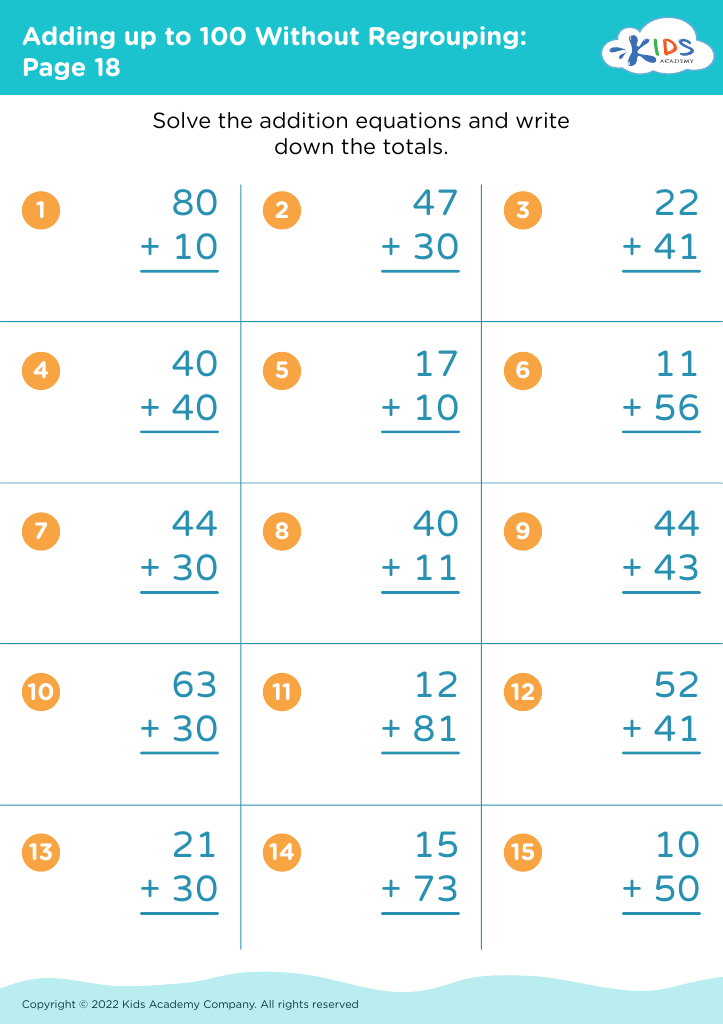
Adding up to 100 Without Regrouping: Page 18
Worksheet
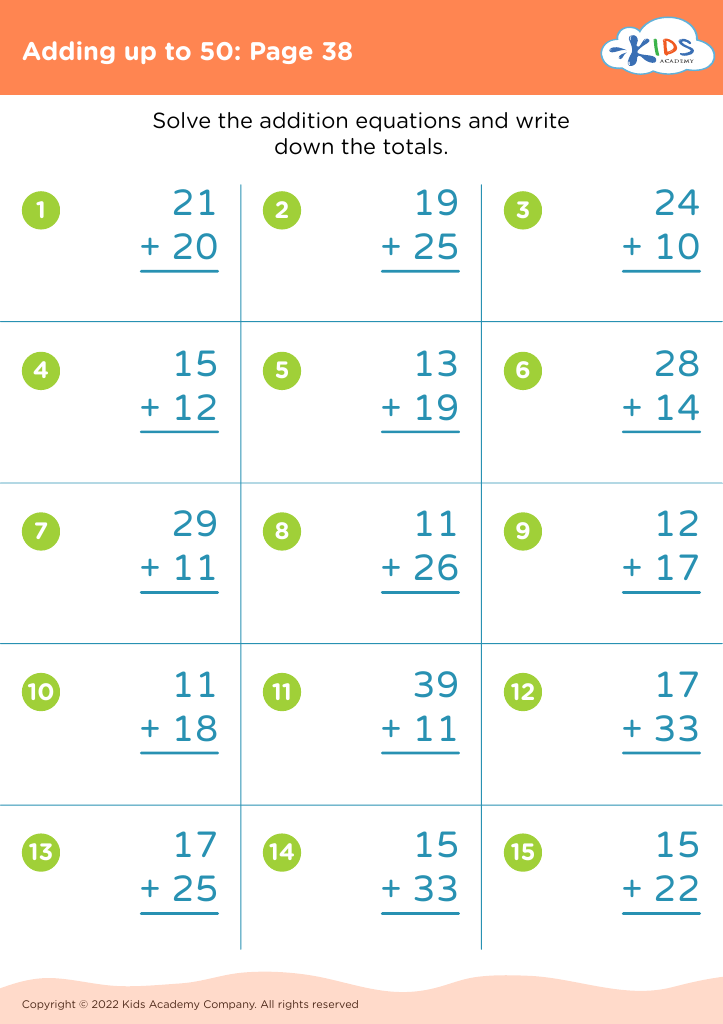
Adding up to 50: Page 38

Adding up to 50: Page 38

Adding up to 50: Page 38
Worksheet
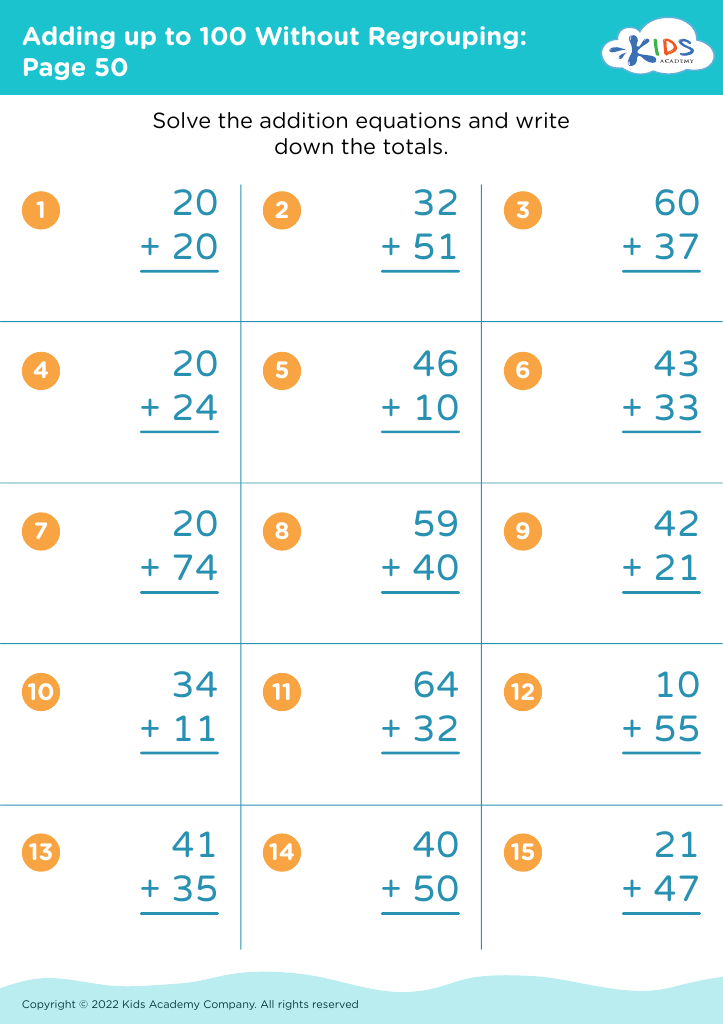
Adding up to 100 Without Regrouping: Page 50
Worksheet
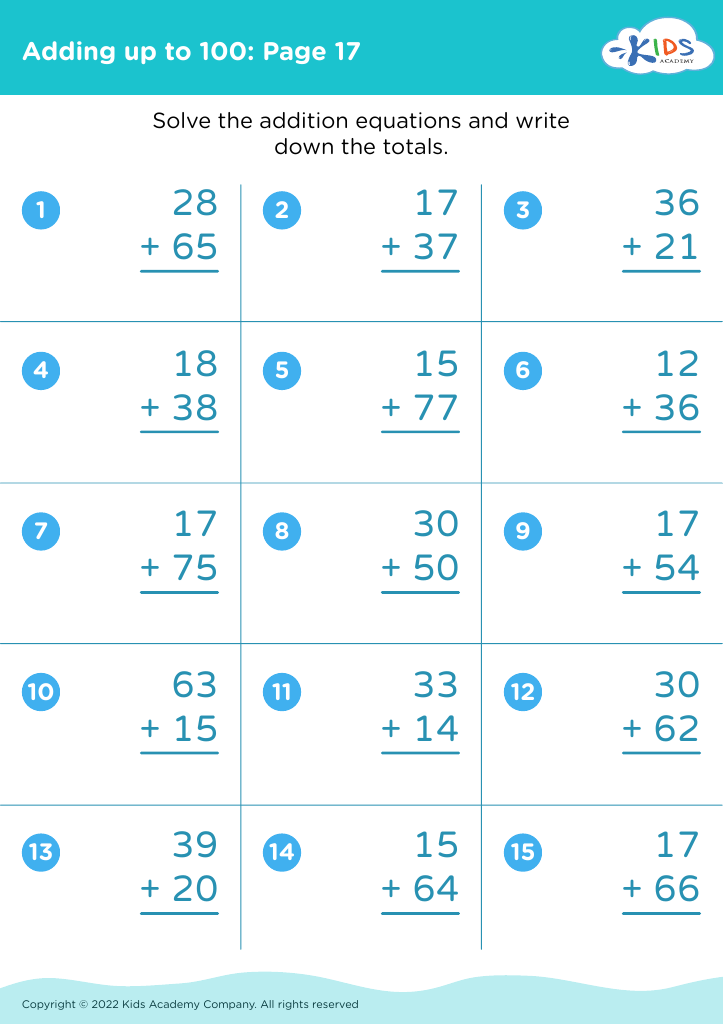
Adding up to 100: Page 17

Adding up to 100: Page 17

Adding up to 100: Page 17
Worksheet
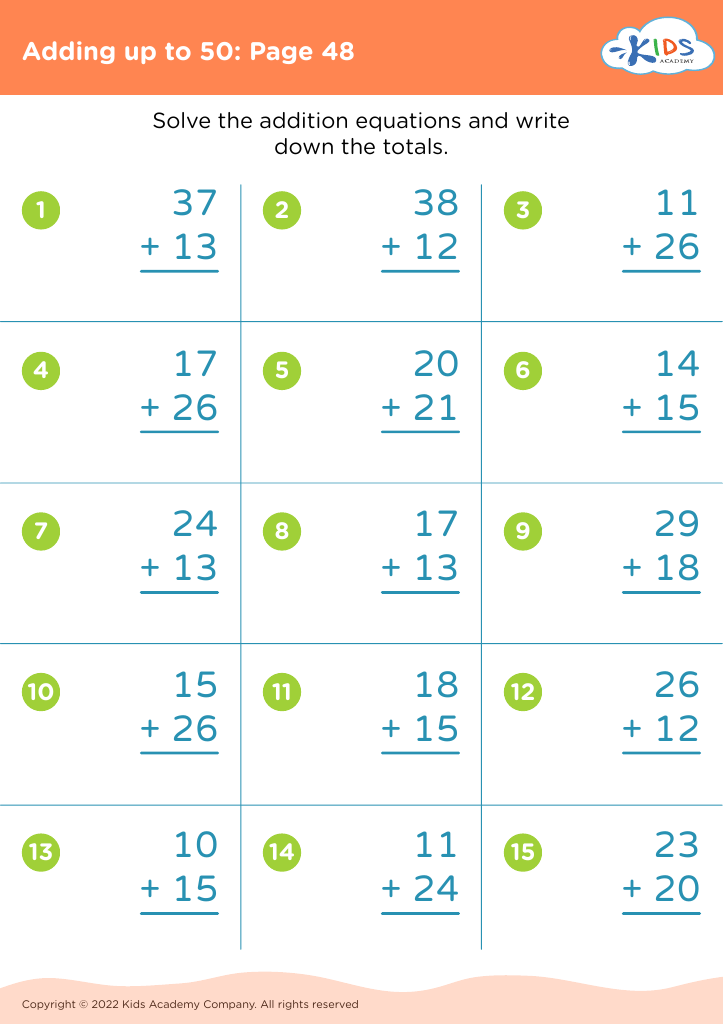
Adding up to 50: Page 48

Adding up to 50: Page 48

Adding up to 50: Page 48
Worksheet
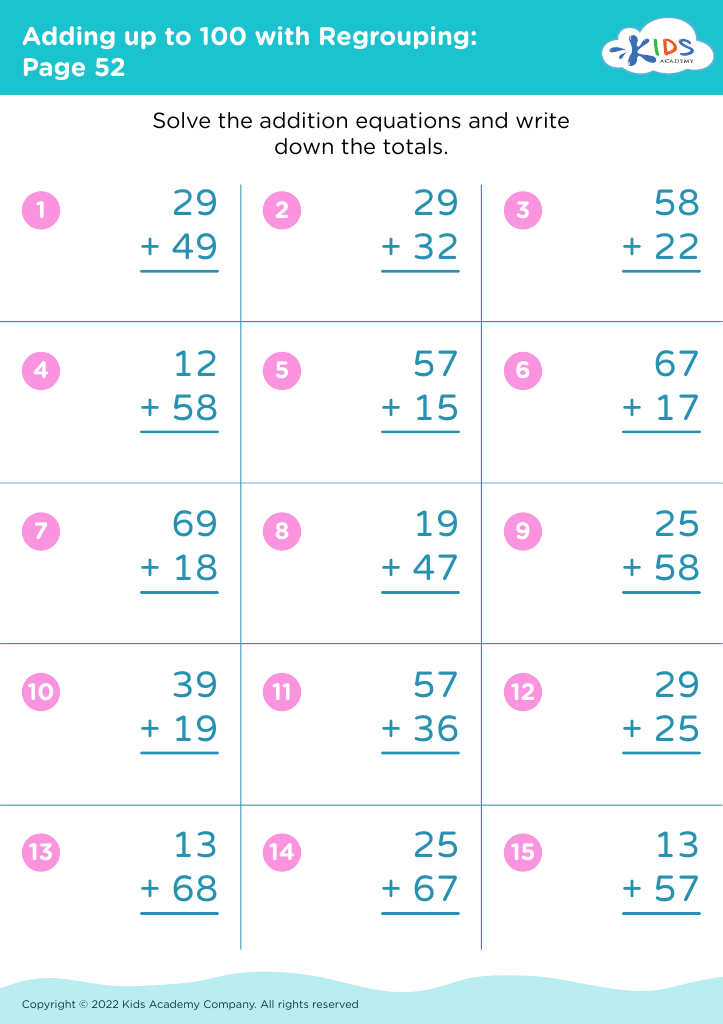
Adding up to 100 with Regrouping: Page 52
Worksheet
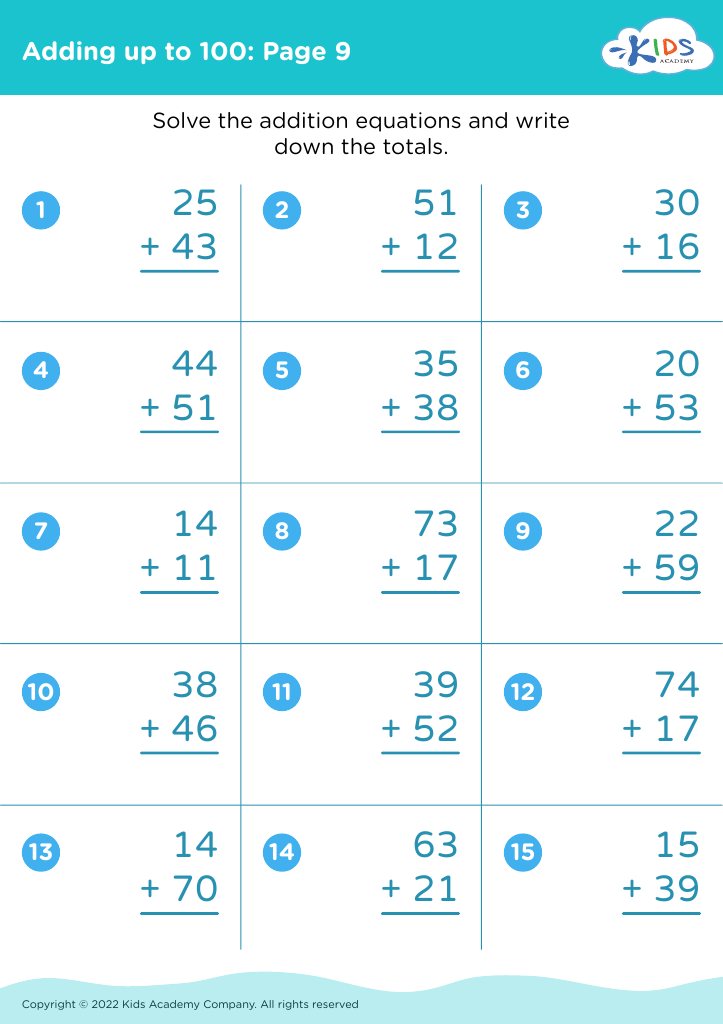
Adding up to 100: Page 9

Adding up to 100: Page 9

Adding up to 100: Page 9
Worksheet
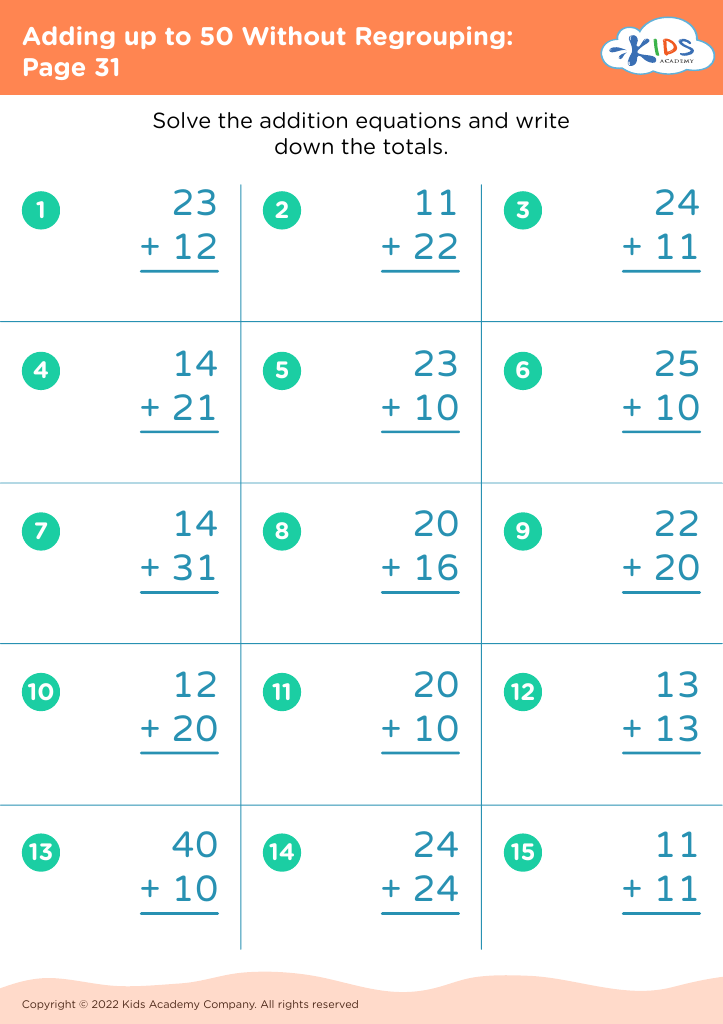
Adding up to 50 Without Regrouping: Page 31
Worksheet
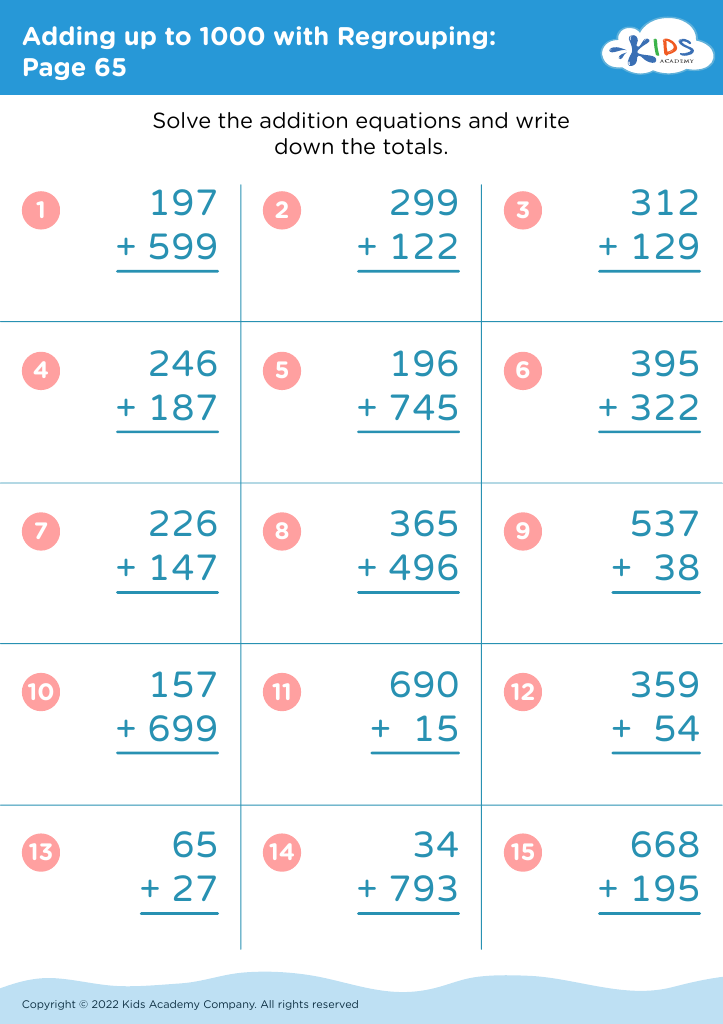
Adding up to 1000 with Regrouping: Page 65
Worksheet
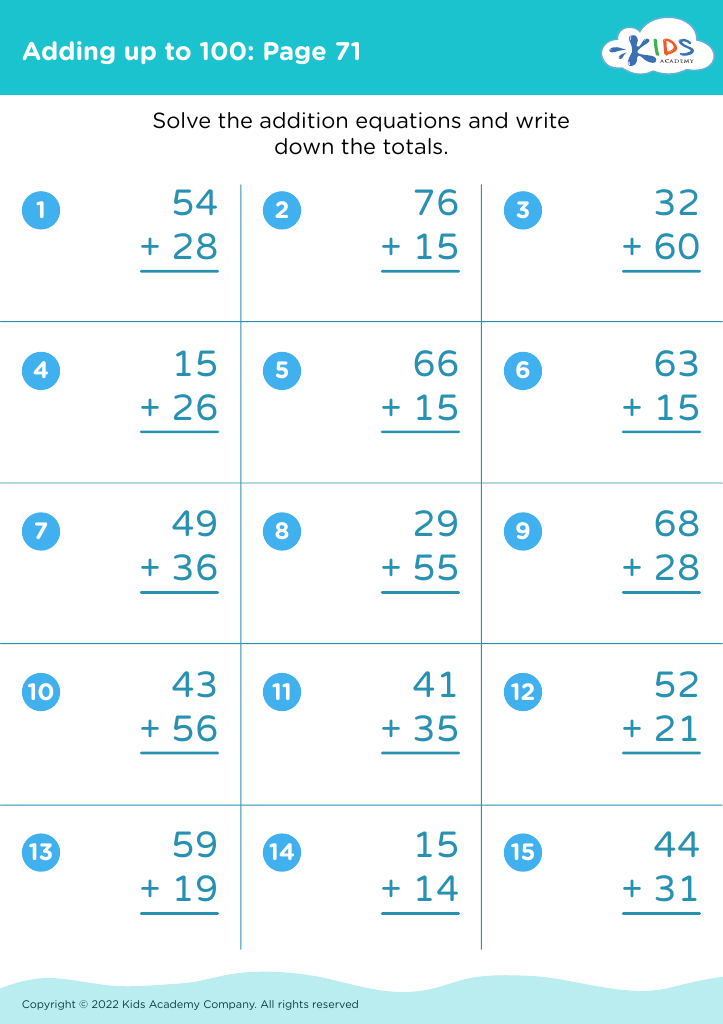
Adding up to 100: Page 71

Adding up to 100: Page 71

Adding up to 100: Page 71
Worksheet
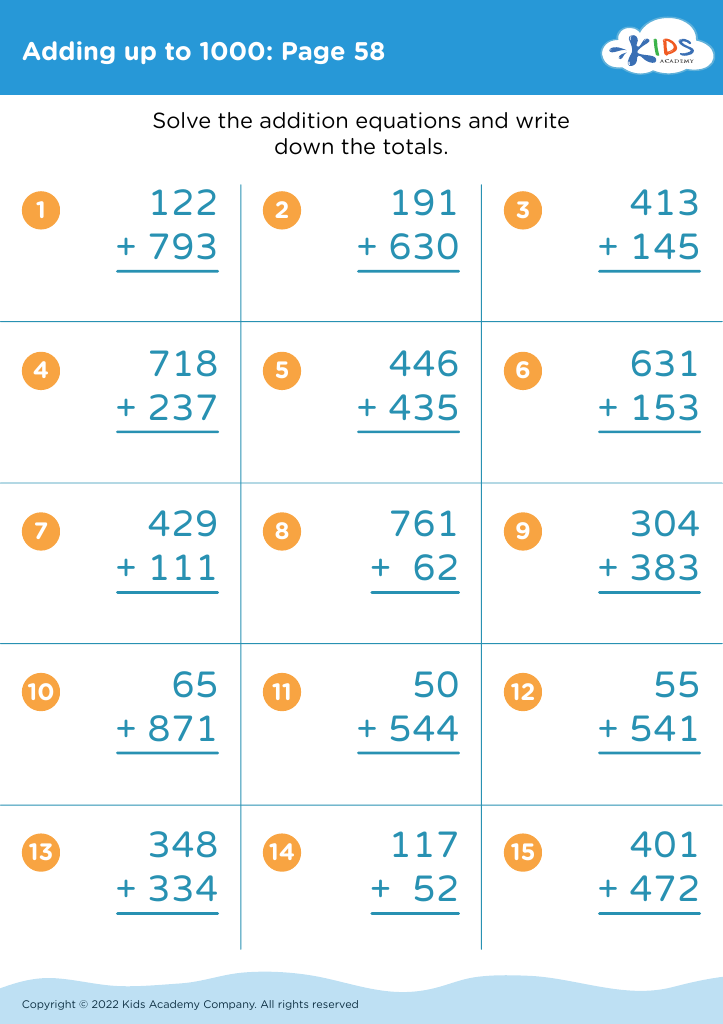
Adding up to 1000: Page 58

Adding up to 1000: Page 58

Adding up to 1000: Page 58
Worksheet
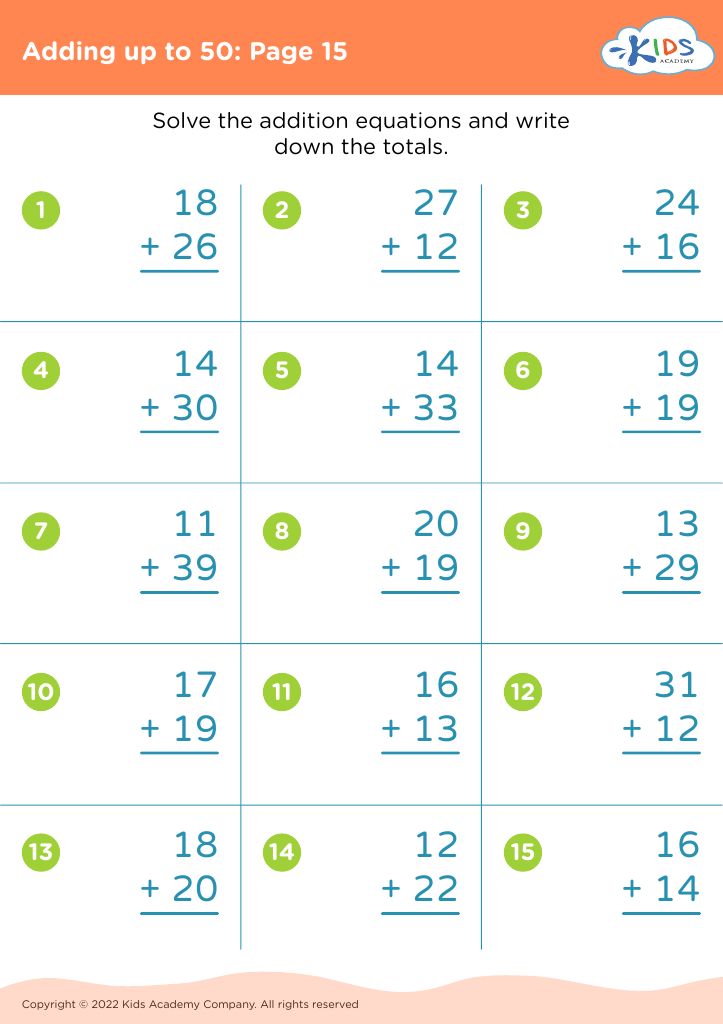
Adding up to 50: Page 15

Adding up to 50: Page 15

Adding up to 50: Page 15
Worksheet
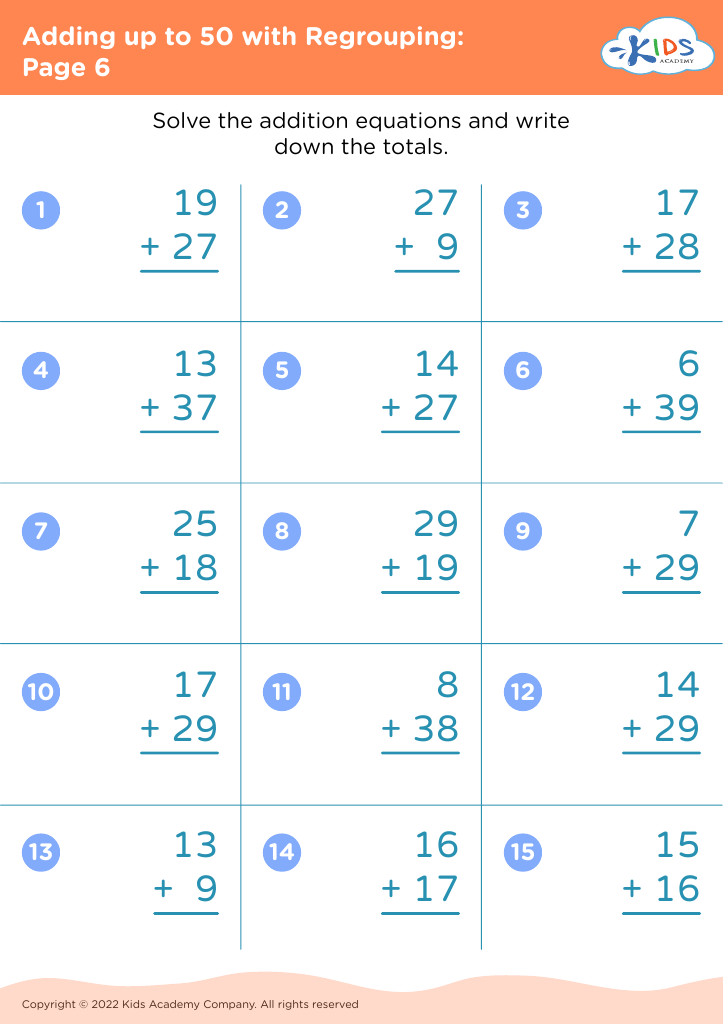
Adding up to 50 with Regrouping: Page 6
Worksheet
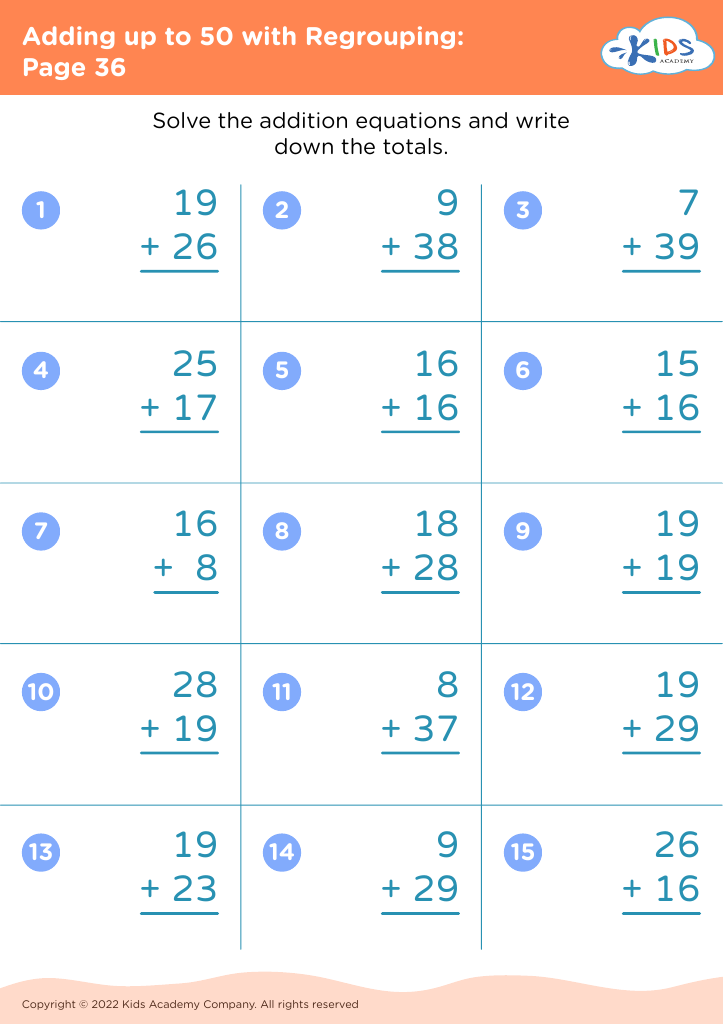
Adding up to 50 with Regrouping: Page 36
Worksheet
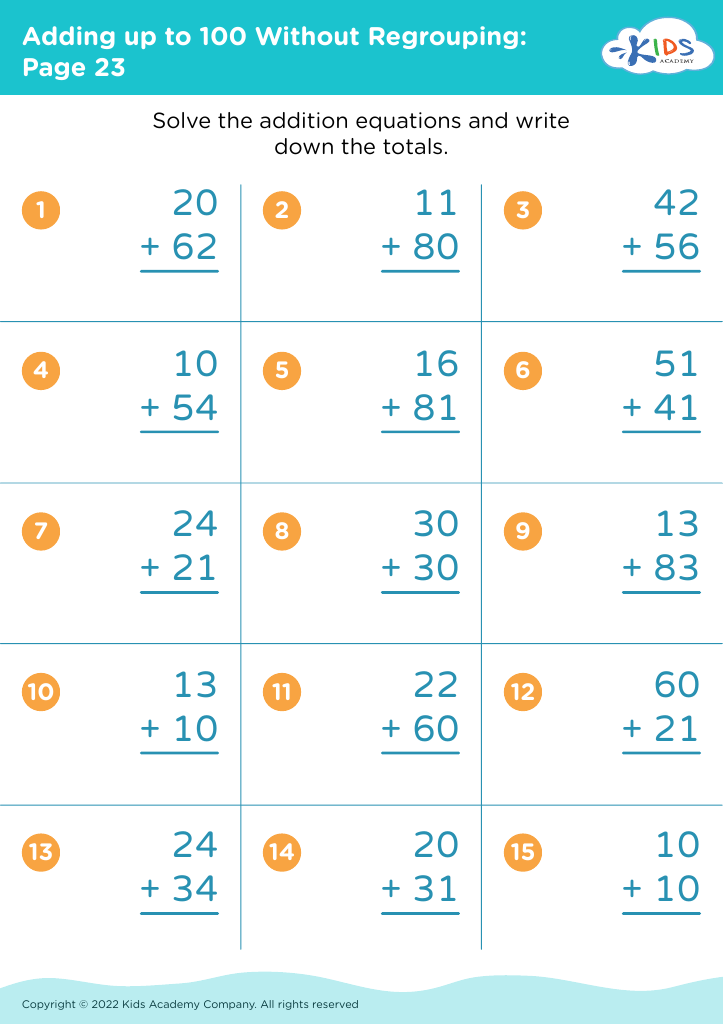
Adding up to 100 Without Regrouping: Page 23
Worksheet


Understanding how to compare fractions, particularly in addition and subtraction, is essential for children aged 4 to 7 as it lays the groundwork for their future mathematical skills. At this stage, children begin to grasp abstract concepts through visual and tangible means. Teaching them to compare fractions encourages critical thinking and enhances their ability to make sense of quantities and relationships.

When children learn to compare fractions, they develop a strong numerical sense, which is foundational for more advanced math topics later on. This skill fosters perseverance and problem-solving abilities, as they encounter situations that require reasoning to determine which fraction is larger or how to combine fractions effectively.

Moreover, learning about fractions and their comparisons nurtures early mathematical conversation at home or in the classroom. It provides a platform for engaging activities, allowing children to explore variety through manipulatives like pie charts or visual aids, transforming abstract concepts into relatable experiences.

Finally, understanding fractions directly impacts real-life decisions, such as cooking, sharing possessions, and dividing resources, promoting practical life skills. Thus, parents and teachers should prioritize teaching fraction comparison to equip children with tools critical for their academic and personal growth.