Counting proficiency Addition & Subtraction Worksheets for Ages 4-7
11 filtered results
-
From - To
Unlock your child's potential with our Counting Proficiency Addition & Subtraction Worksheets designed specifically for ages 4-7! These engaging worksheets provide a fun and interactive way to help young learners master essential counting skills while developing their addition and subtraction abilities. Each worksheet is thoughtfully crafted to encourage critical thinking, problem-solving, and number recognition, laying a solid foundation for future math success. With vibrant illustrations and age-appropriate activities, your child will enjoy counting and calculating in no time. Discover the joy of learning and watch your little one thrive in math with our comprehensive, easy-to-use worksheets today!
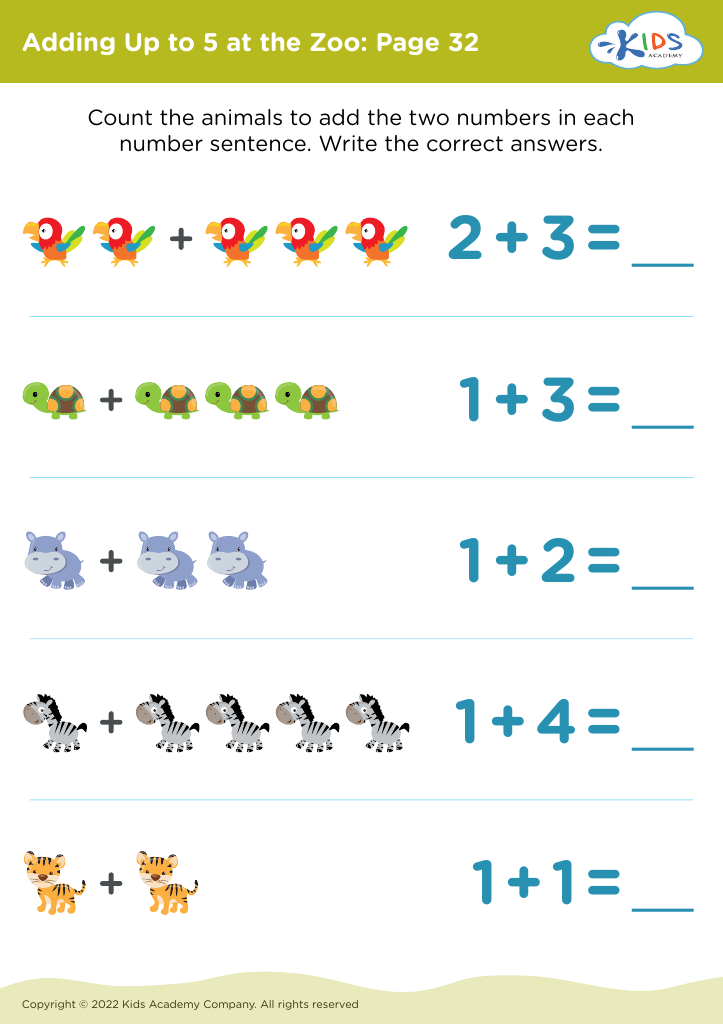
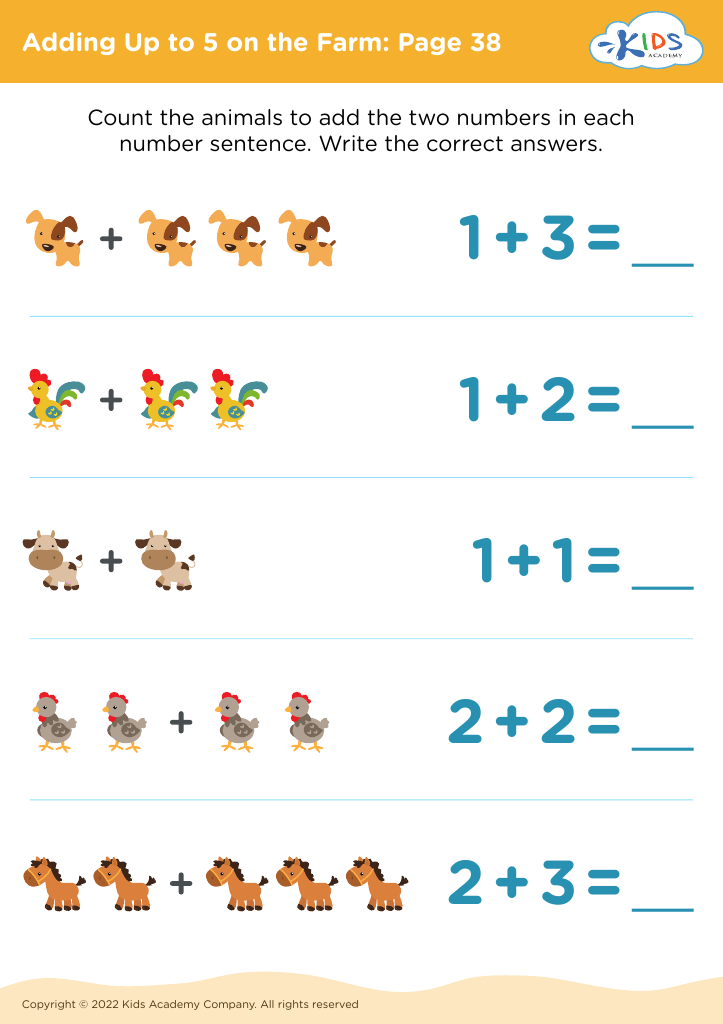
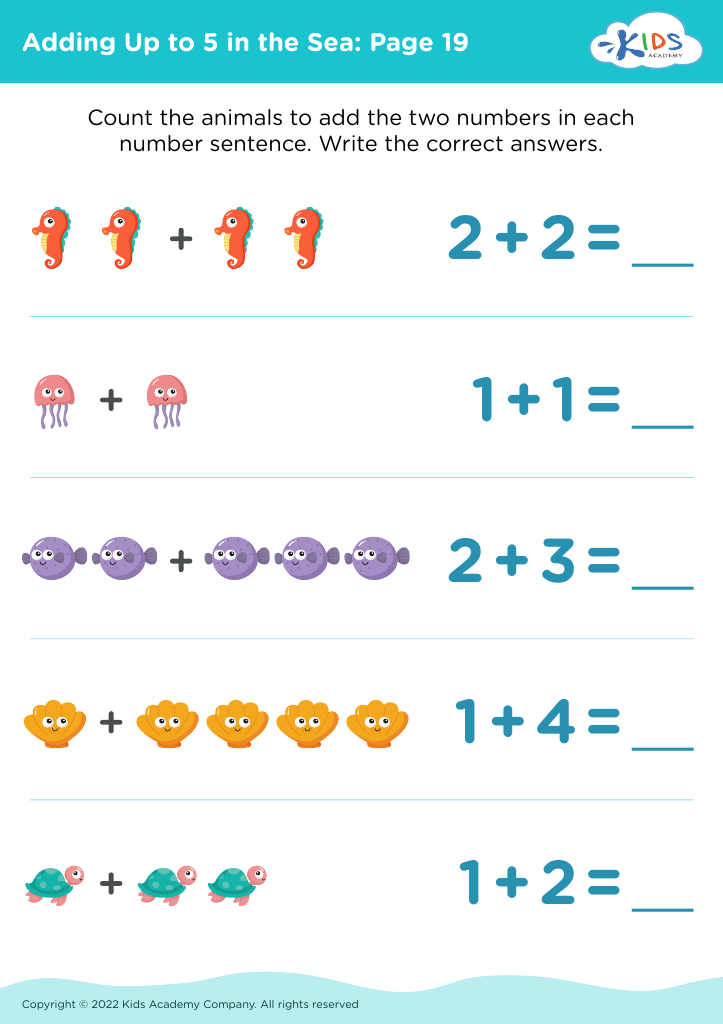
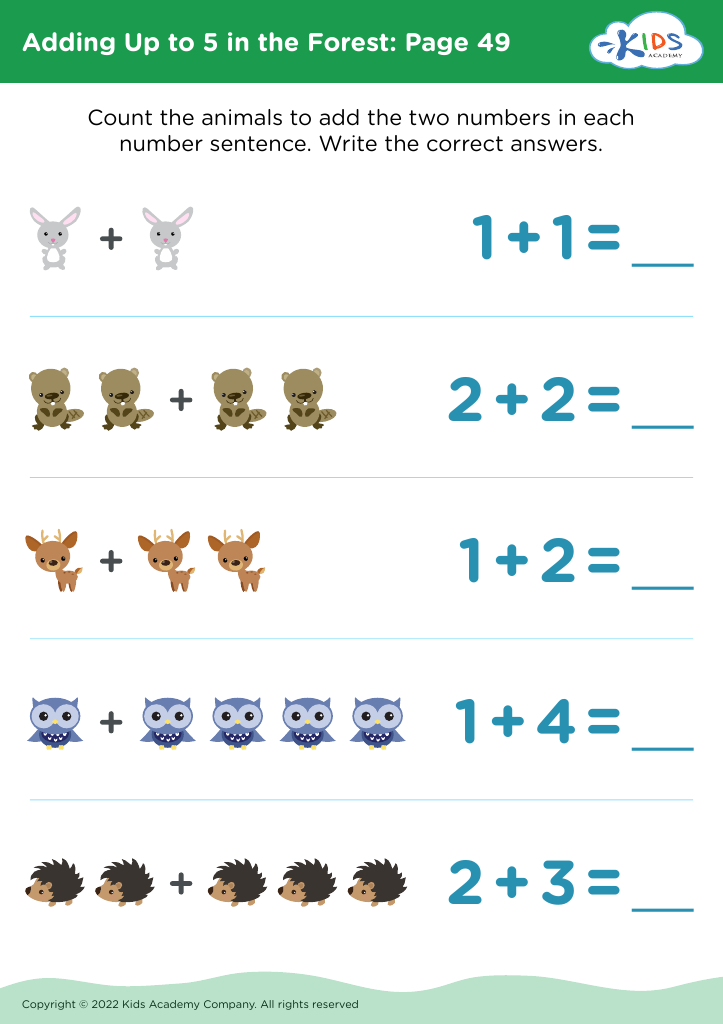
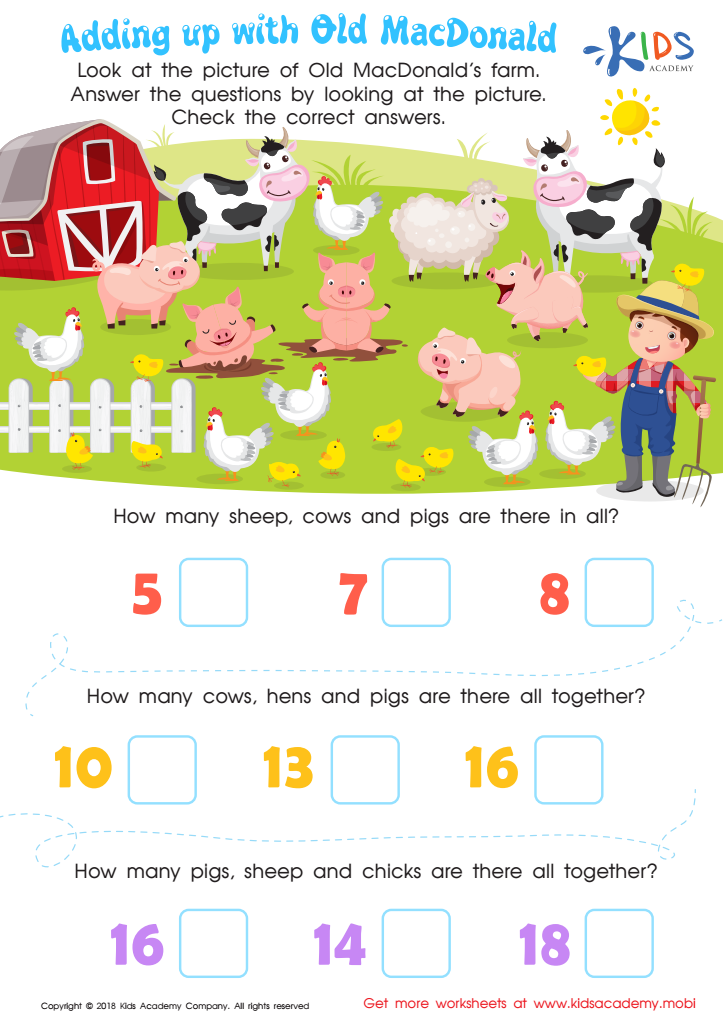
Adding Up with Old MacDonald Worksheet
 Assign to My Students
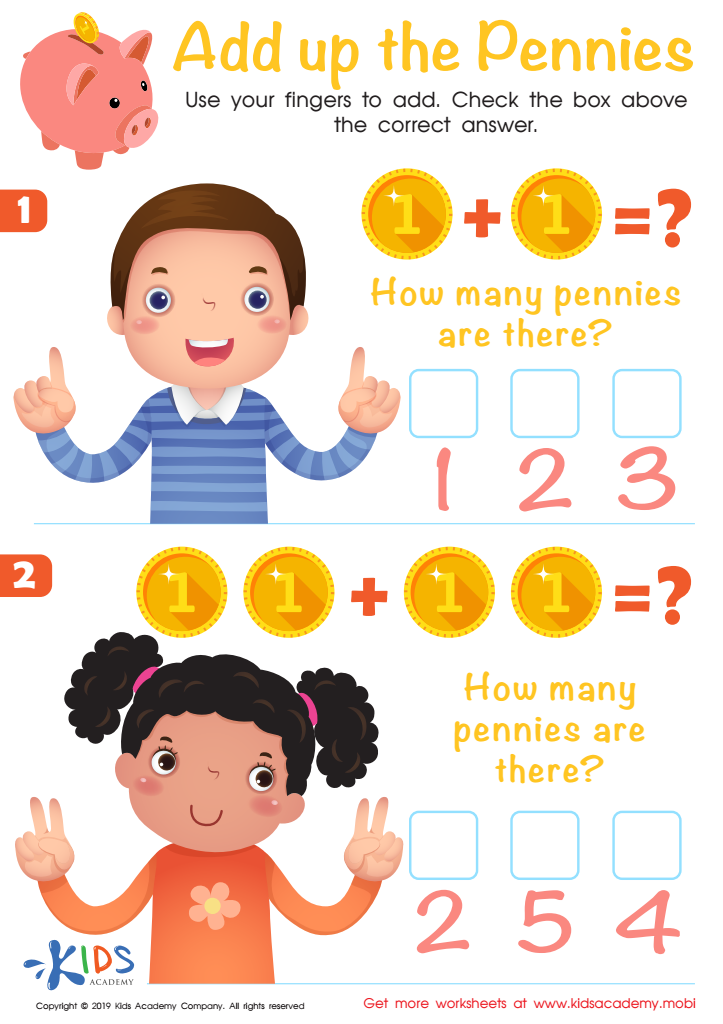
Add up the Pennies Worksheet
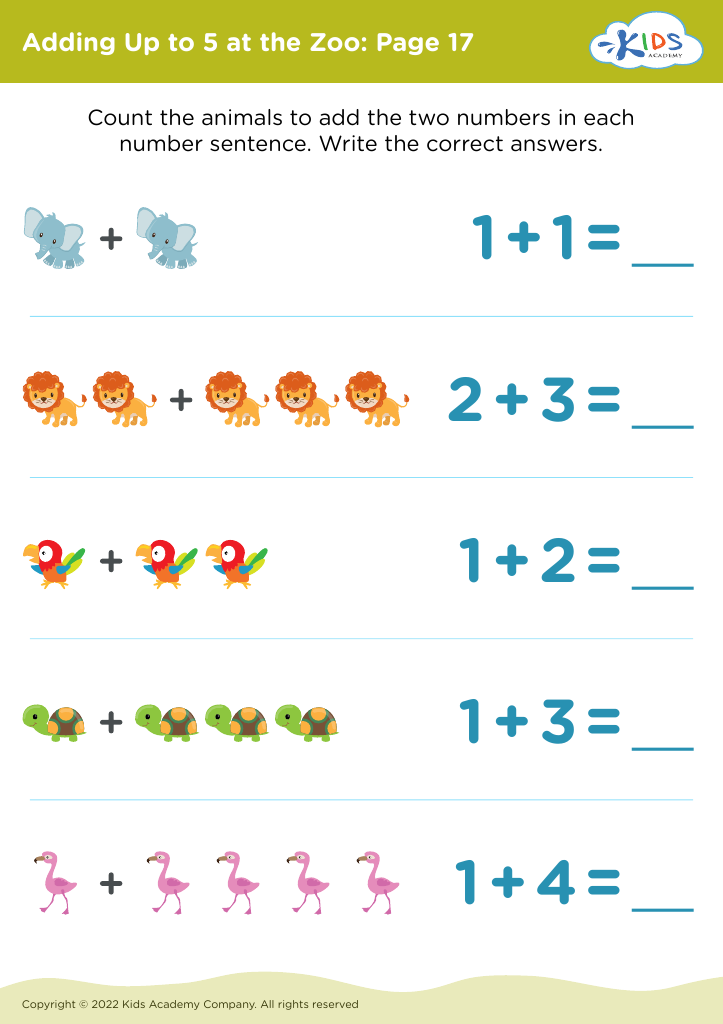
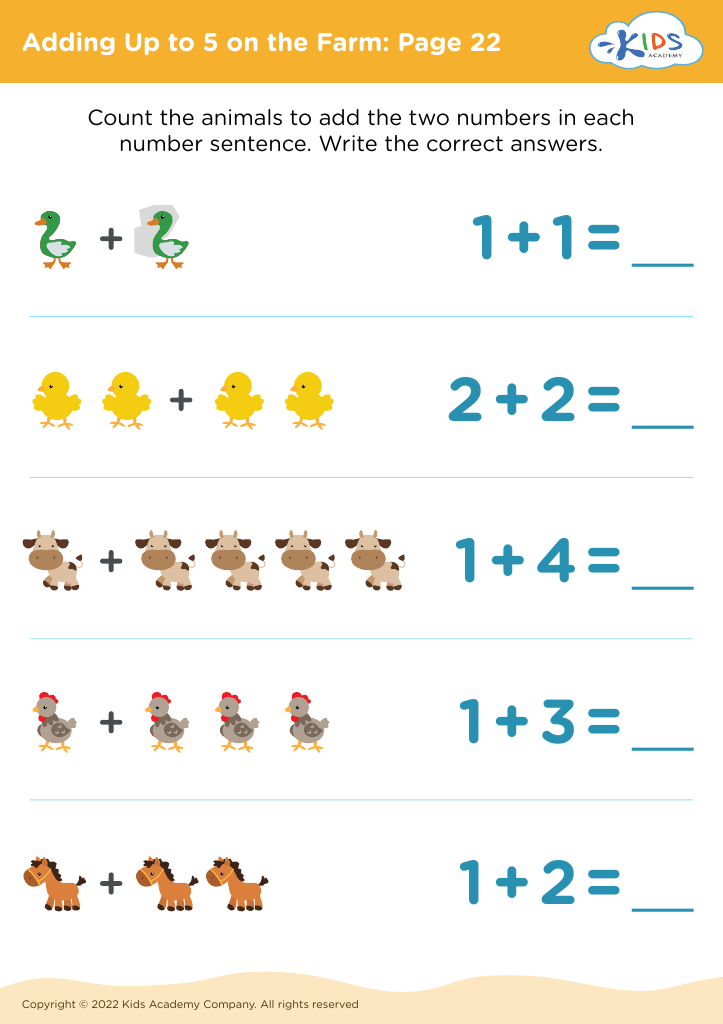
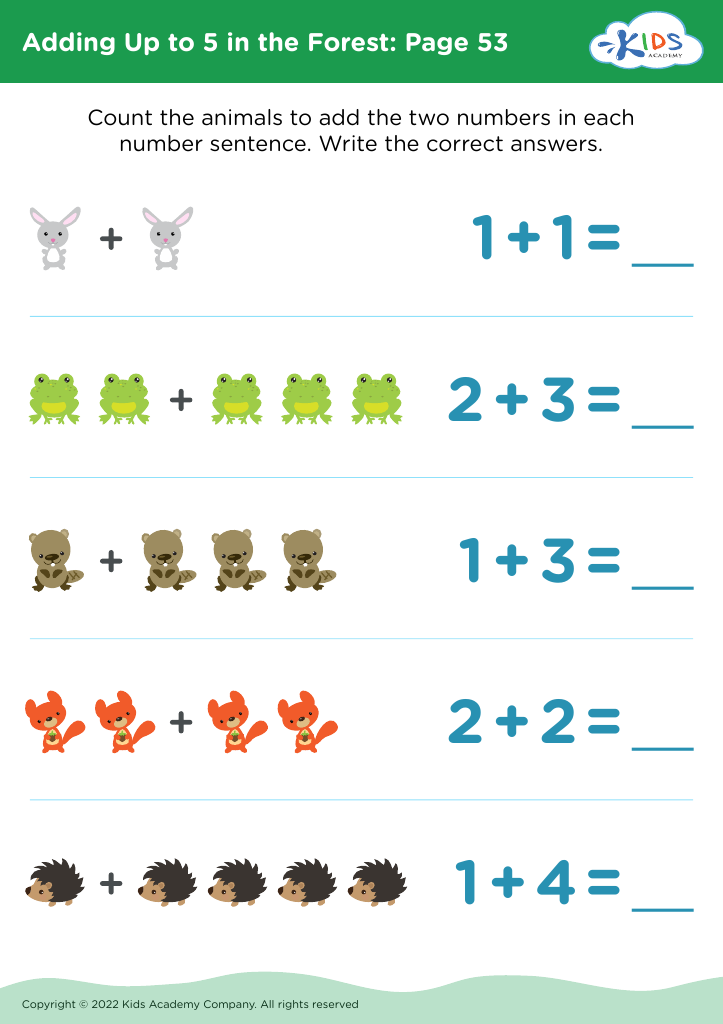
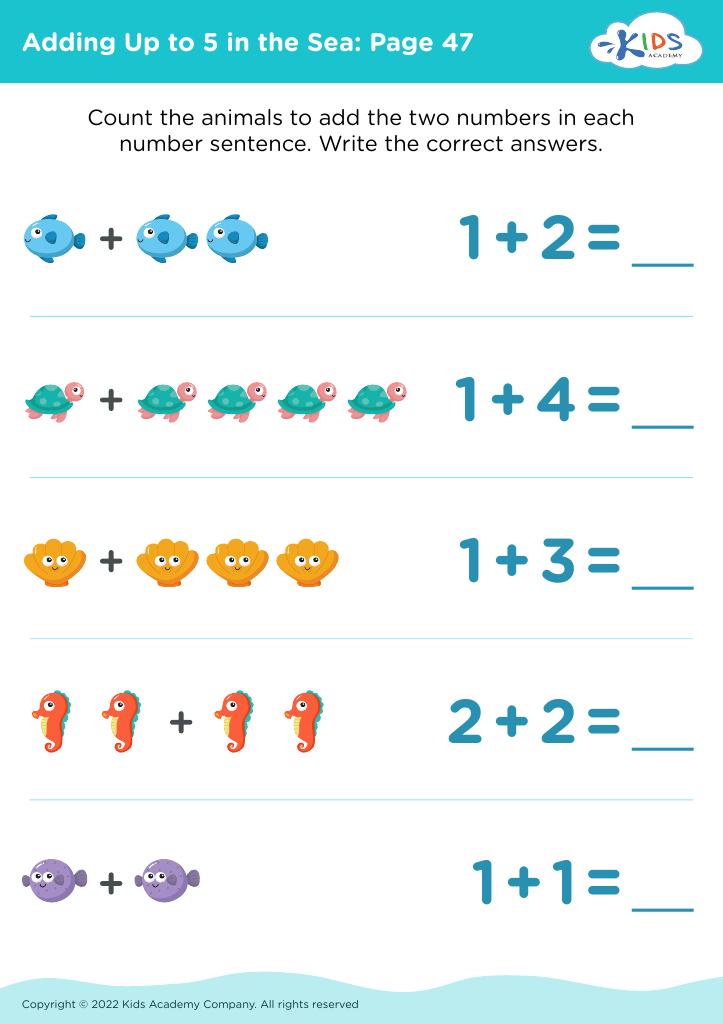
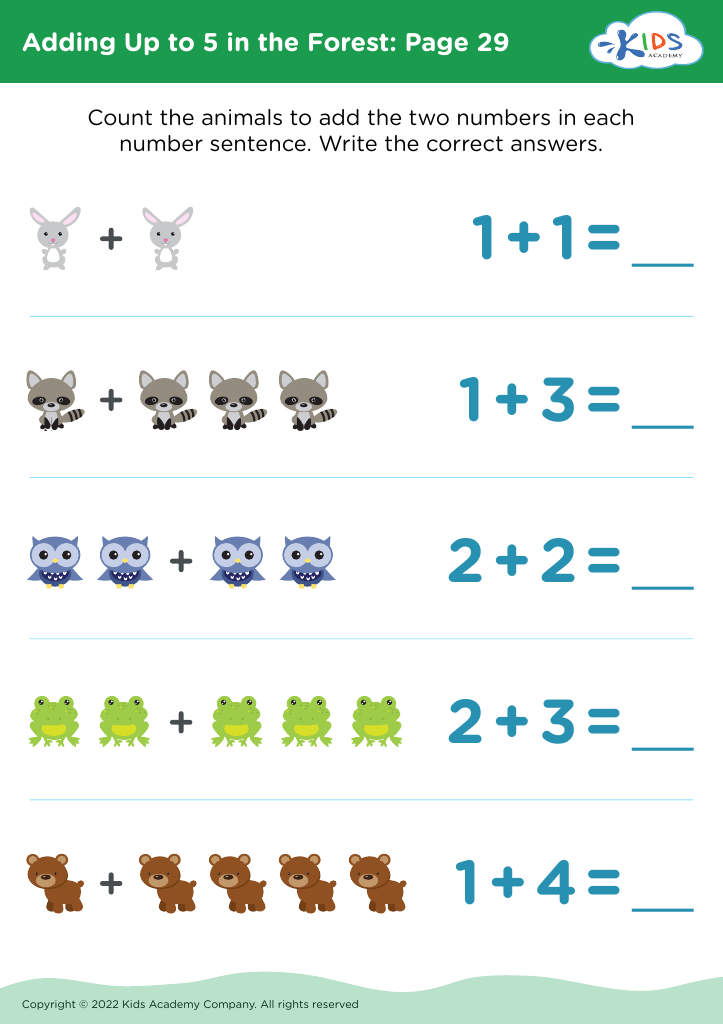








Counting proficiency in addition and subtraction is crucial for children aged 4-7, as it lays the foundation for their mathematical skills and overall cognitive development. Early mastery of these skills fosters confidence and a positive attitude towards math, encouraging further exploration and learning.
At this age, children are naturally curious about numbers and counting, making it an ideal time for parents and teachers to engage them in hands-on activities that enhance these skills. Proficiency in counting aids in their ability to solve basic mathematical problems, which is vital not only for academic success but also for everyday life, such as budgeting, telling time, and measuring ingredients during cooking.
Moreover, understanding addition and subtraction supports the development of critical thinking and problem-solving abilities. Engaging children in games and interactive activities can nurture these skills and make learning enjoyable. Early intervention in math proficiency can also bridge gaps for those who may struggle, helping to prevent future difficulties in more complex mathematical concepts.
In essence, promoting counting proficiency in early childhood empowers children with essential skills that are fundamental to their lifelong learning journey and enables parents and teachers to be active facilitators in their mathematical development.








