Enhance logical thinking Addition & Subtraction Worksheets for Ages 4-7
3 filtered results
-
From - To
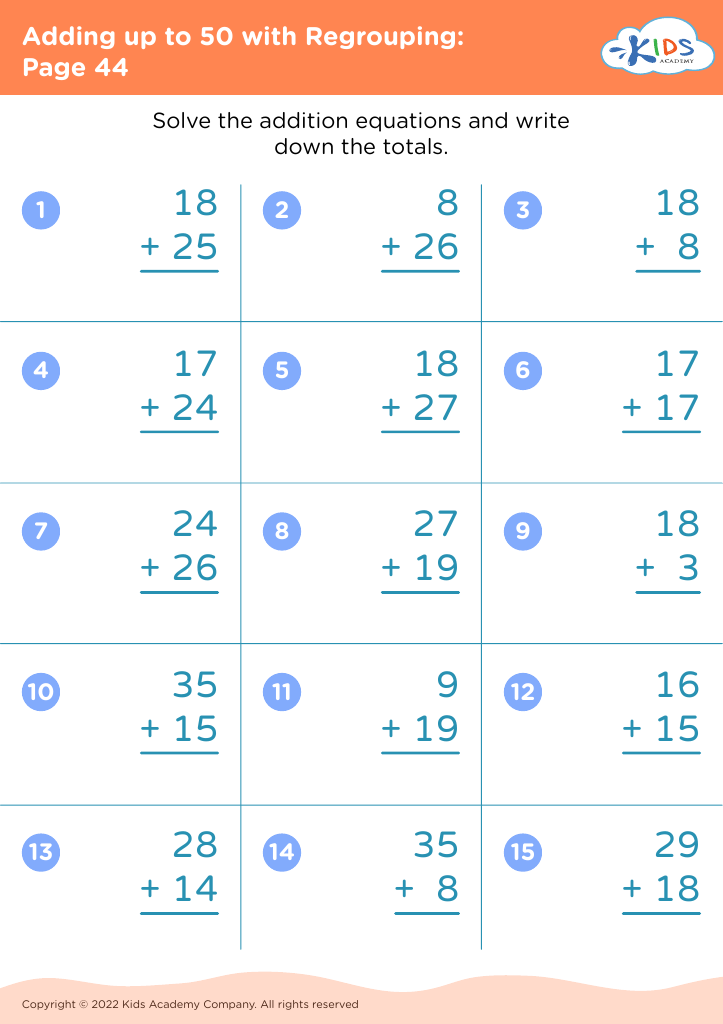
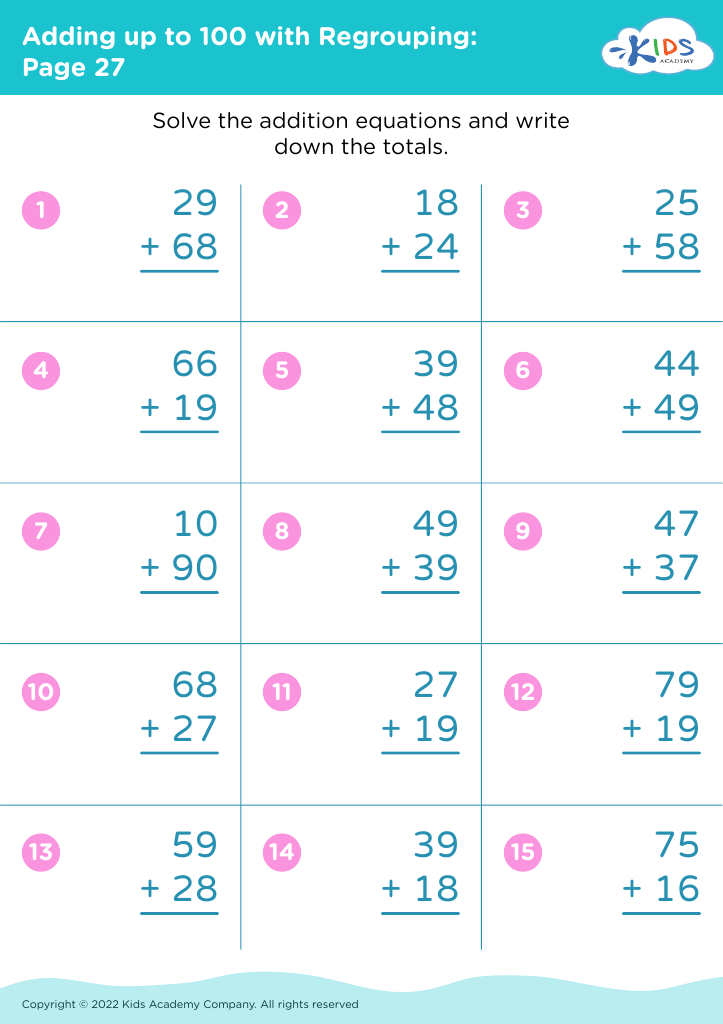
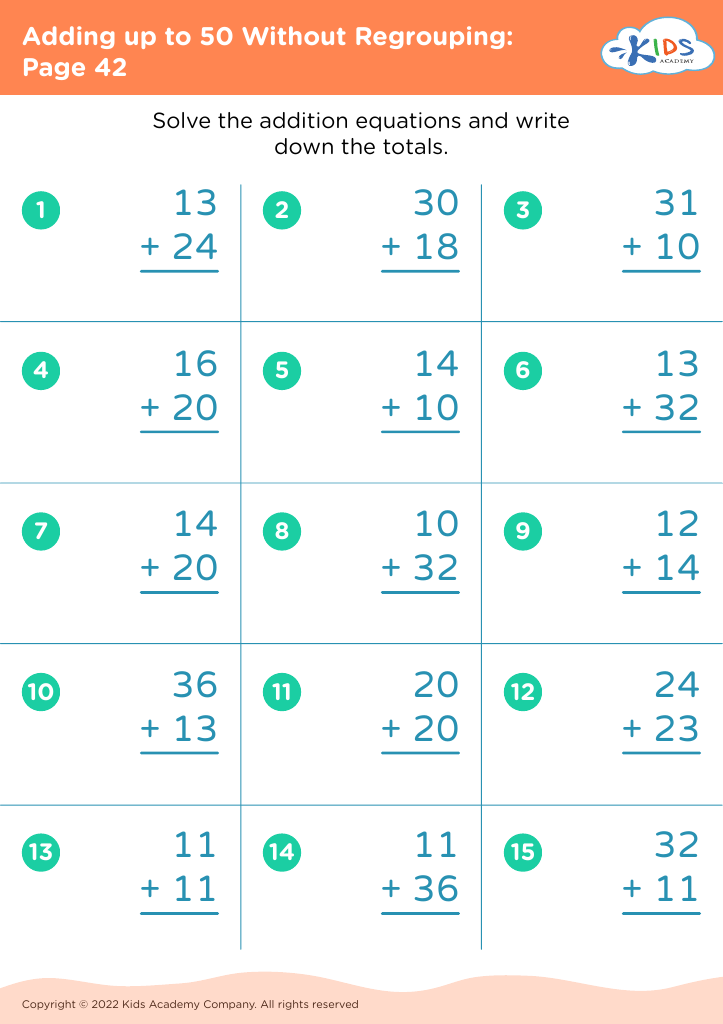
Discover a collection of engaging Addition and Subtraction Worksheets designed to enhance logical thinking for children aged 4-7. Our resources provide a fun and interactive way for young learners to improve their math skills while developing critical thinking abilities. Each worksheet is tailored to spark curiosity, encouraging kids to explore numbers through colorful illustrations and appealing activities. By combining playful elements with essential math concepts, these worksheets promote independent learning and foster a love for mathematics. Help your child build a strong foundation in addition and subtraction while sharpening their logical reasoning skills. Free resources are available for download now!








Enhancing logical thinking in addition and subtraction for children aged 4 to 7 is crucial for several reasons. At this developmental stage, children are forming foundational skills that will guide their understanding of mathematics and problem-solving for years to come. Strong logical thinking enhances a child’s ability to count, recognize patterns, and grasp numerical concepts, thereby setting the groundwork for more advanced arithmetic and mathematical reasoning.
Moreover, logical thinking helps children make connections between numbers and their meanings. As they engage with addition and subtraction, they learn to strategize, analyze situations, and approach problems critically. These skills go beyond mathematics; they foster decision-making and reasoning abilities useful in every aspect of life.
In a broader context, when parents and teachers focus on these skills, they promote confidence and independence in learning. Children recognize that math isn't just about numbers; it's about thinking critically and solving real-world problems. Encouraging logical thought processes ensures that as children grow, they feel prepared to tackle more complex challenges, laying a pathway for success in academics and beyond. By prioritizing logical thinking in early arithmetic, caregivers can significantly influence a child's overall cognitive development and future learning experiences.








