Introduce young learners to the world of fractions with our engaging "Fraction Simplification Addition & Subtraction Worksheets for Ages 4-7." These printable worksheets are expertly designed to simplify the concepts of fractions, addition, and subtraction for early graders. Each activity combines fun visuals and interactive tasks to make learning enjoyable and effective. Perfect for reinforcing classroom lessons or extra practice at home, these worksheets enhance mathematical skills and build a solid foundation in fundamental math concepts. Empower your child’s education journey with our user-friendly and educational resources, ensuring a confident and successful start in math!
Check out this FREE Trial Lesson on Addition & Subtraction for age 4-7!

Lesson 1- Partitioning Shapes

Favorites
With answer key
Interactive
  • 4-7
  • Fraction simplification
  • Addition & Subtraction
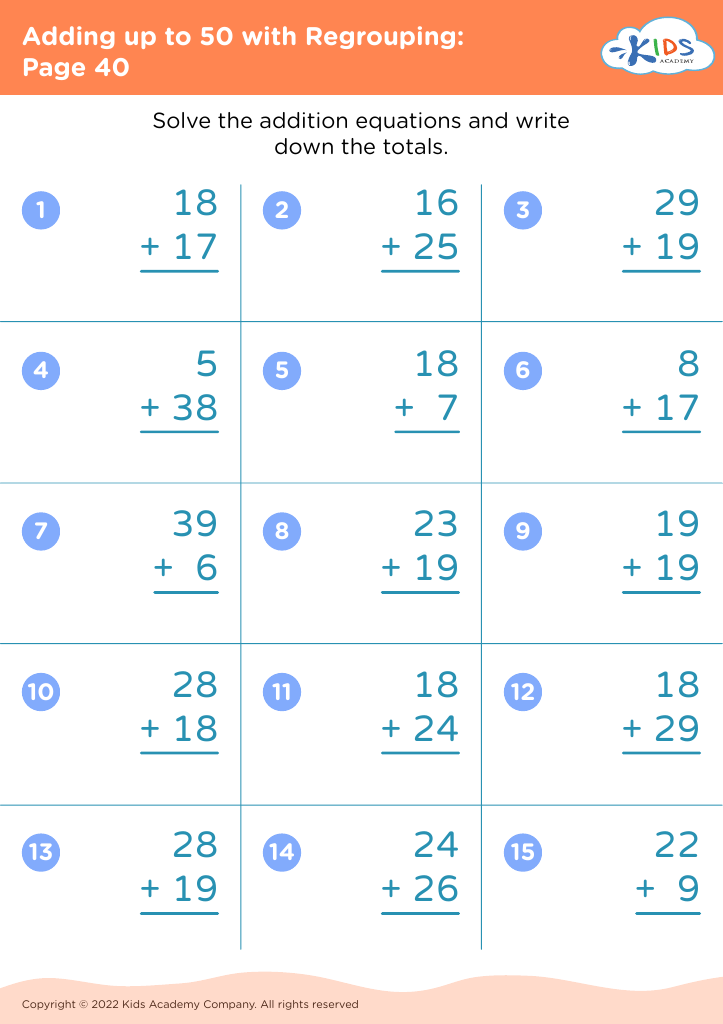
Adding up to 50 with Regrouping: Page 40
Worksheet
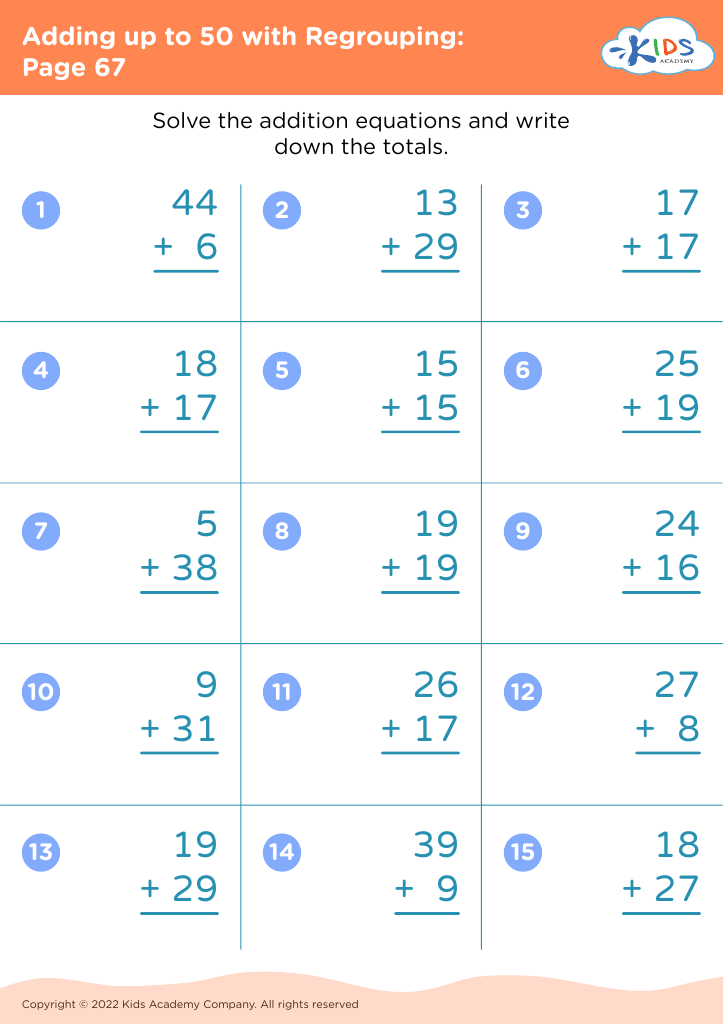
Adding up to 50 with Regrouping: Page 67
Worksheet
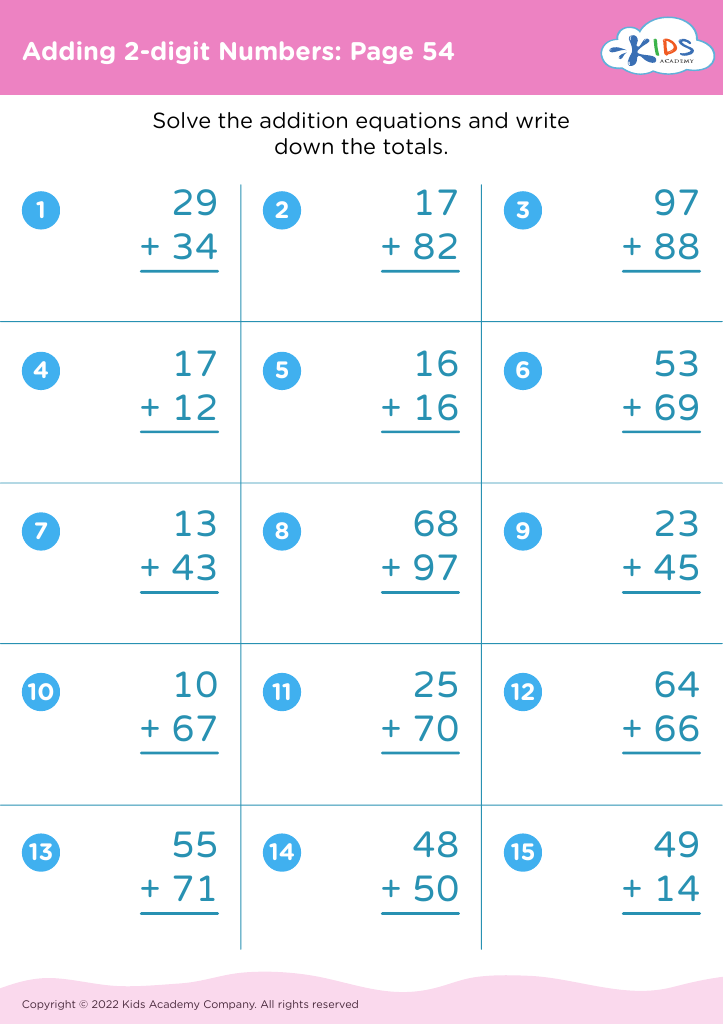
Adding 2-digit Numbers: Page 54

Adding 2-digit Numbers: Page 54

Adding 2-digit Numbers: Page 54
Worksheet
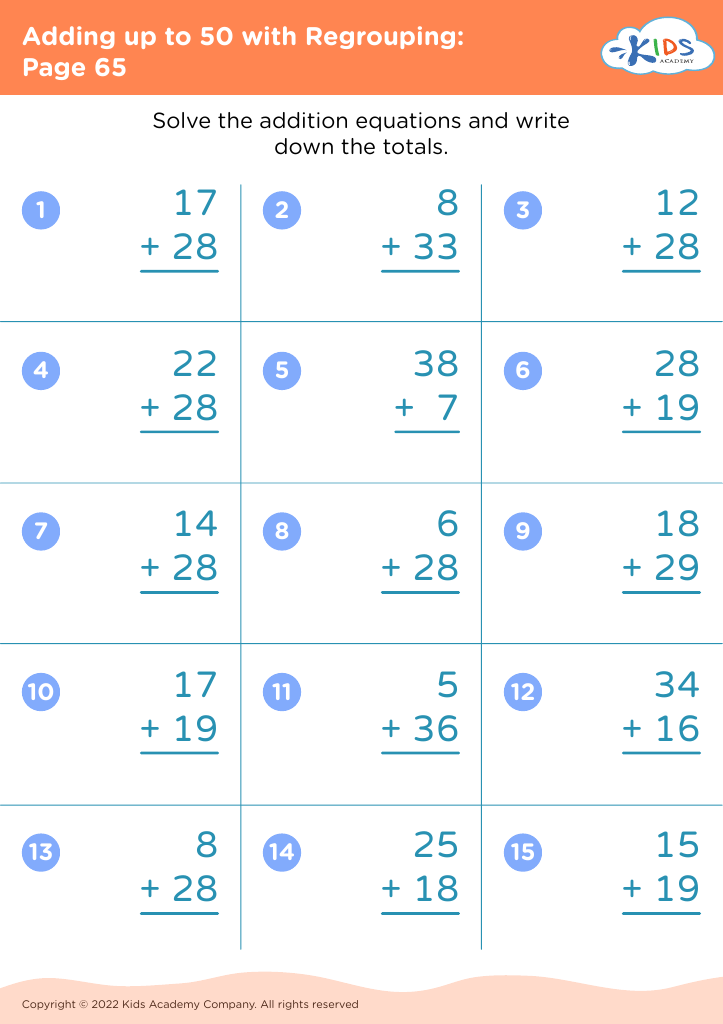
Adding up to 50 with Regrouping: Page 65
Worksheet
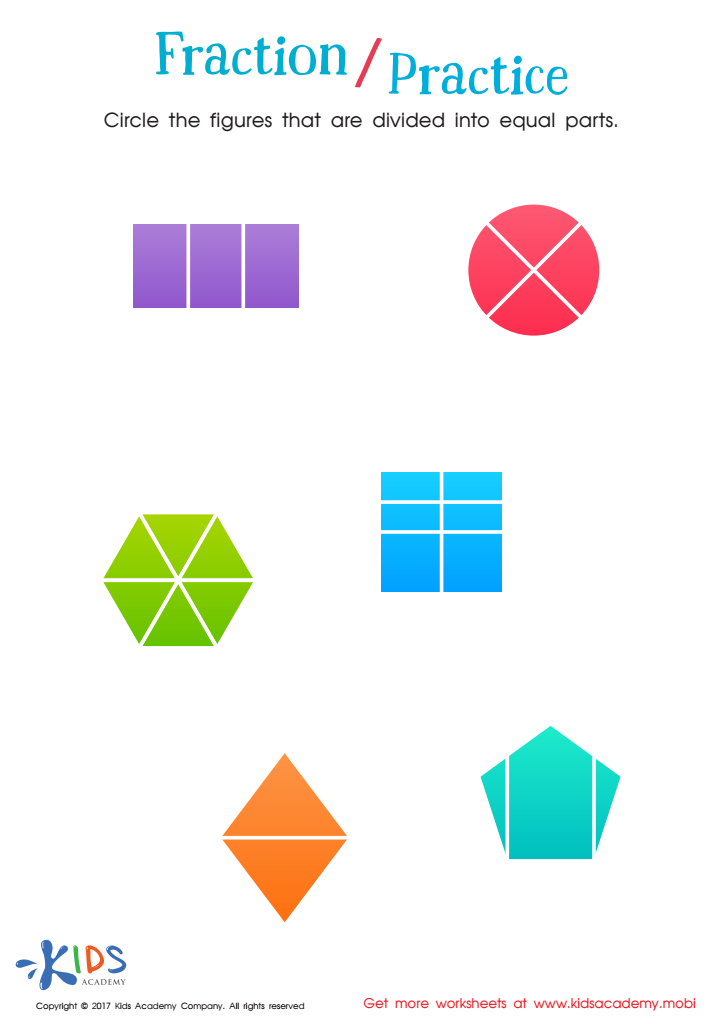
Fraction Practice Printable

Fractions: Shapes Worksheet

Get your printable now. Kids learn math differently today than you did in school; understanding concepts rather than memorizing facts. Help your child understand fractions with this printable worksheet. It'll help your child recognize parts of a whole, identify equal parts and build a foundation for numeracy. A better understanding sets kids up for math success! Get your printable now.
Fractions: Shapes Worksheet
Worksheet
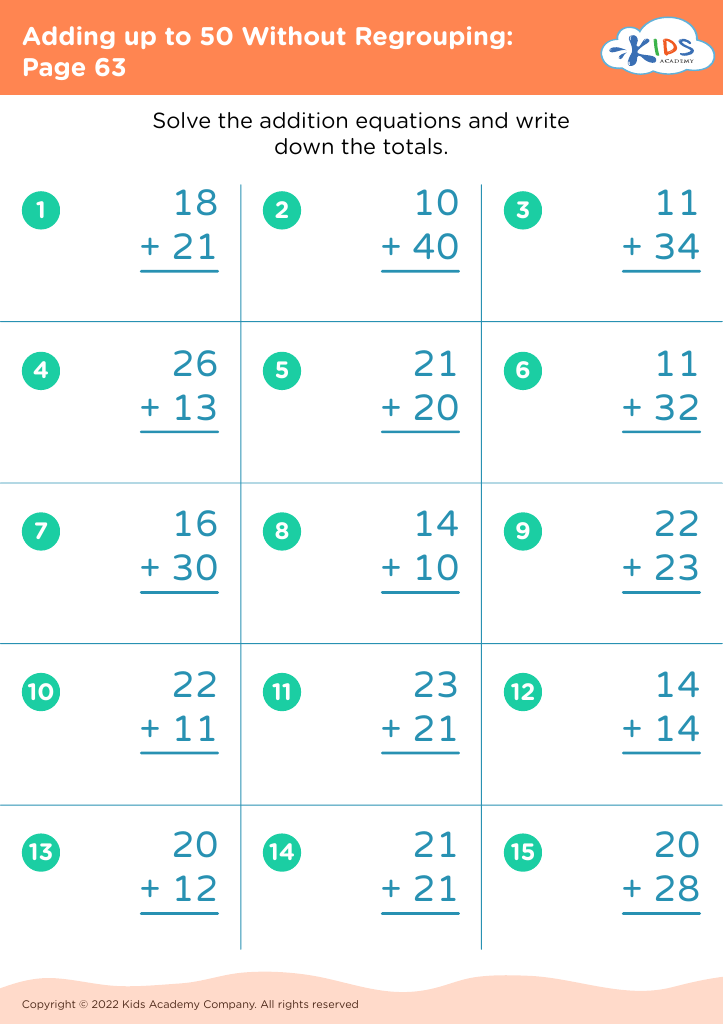
Adding up to 50 Without Regrouping: Page 63
Worksheet
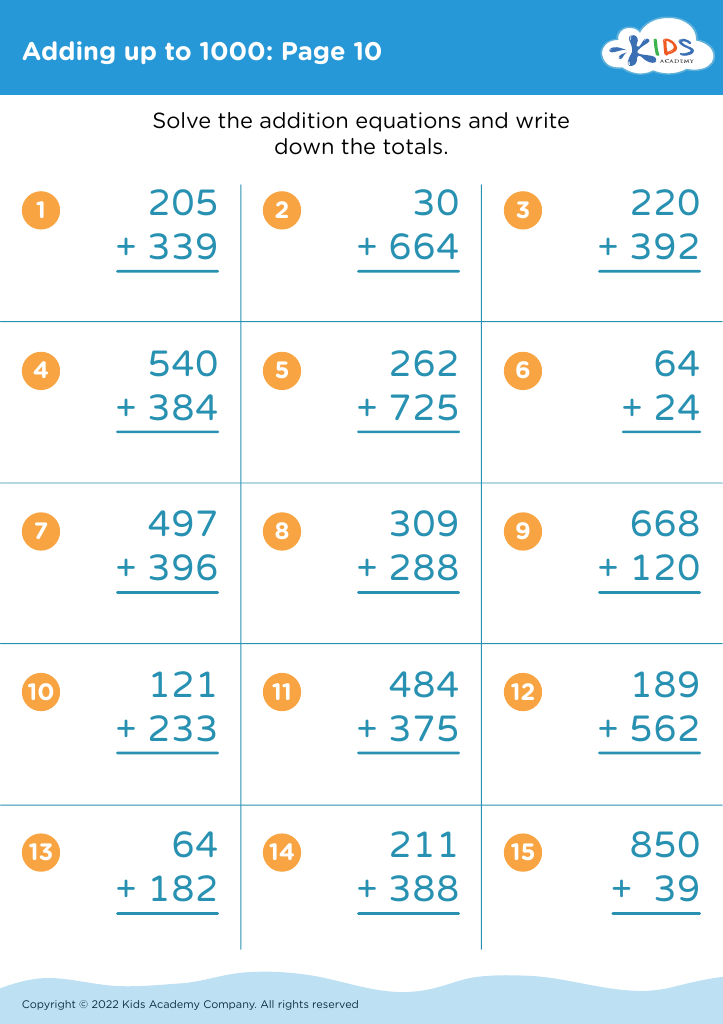
Adding up to 1000: Page 10

Adding up to 1000: Page 10

Adding up to 1000: Page 10
Worksheet
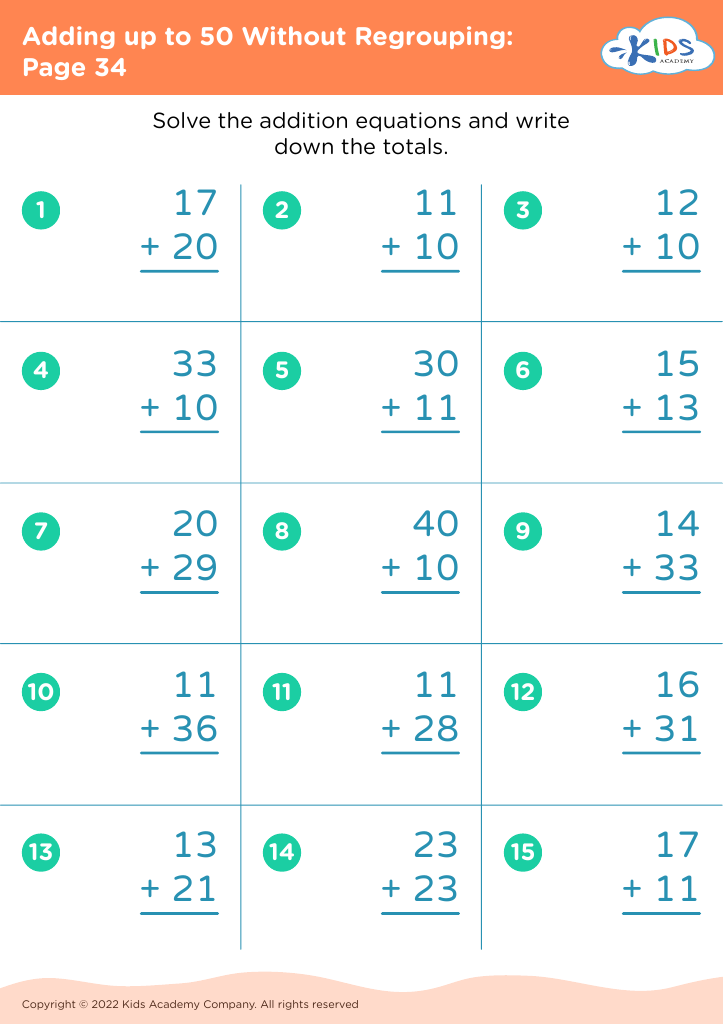
Adding up to 50 Without Regrouping: Page 34
Worksheet
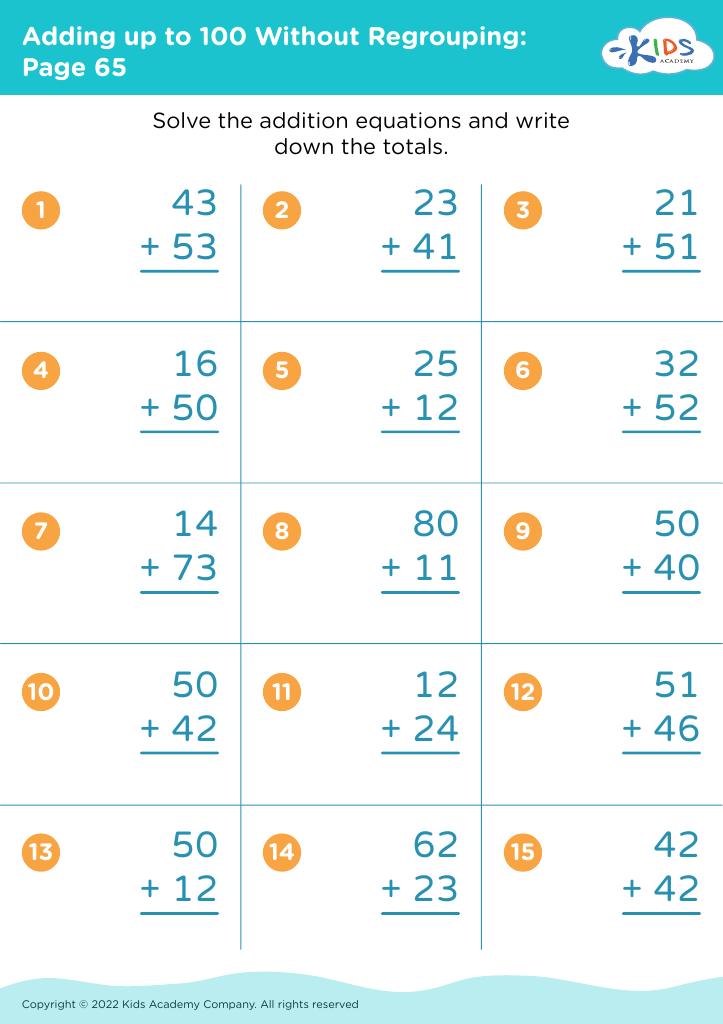
Adding up to 100 Without Regrouping: Page 65
Worksheet
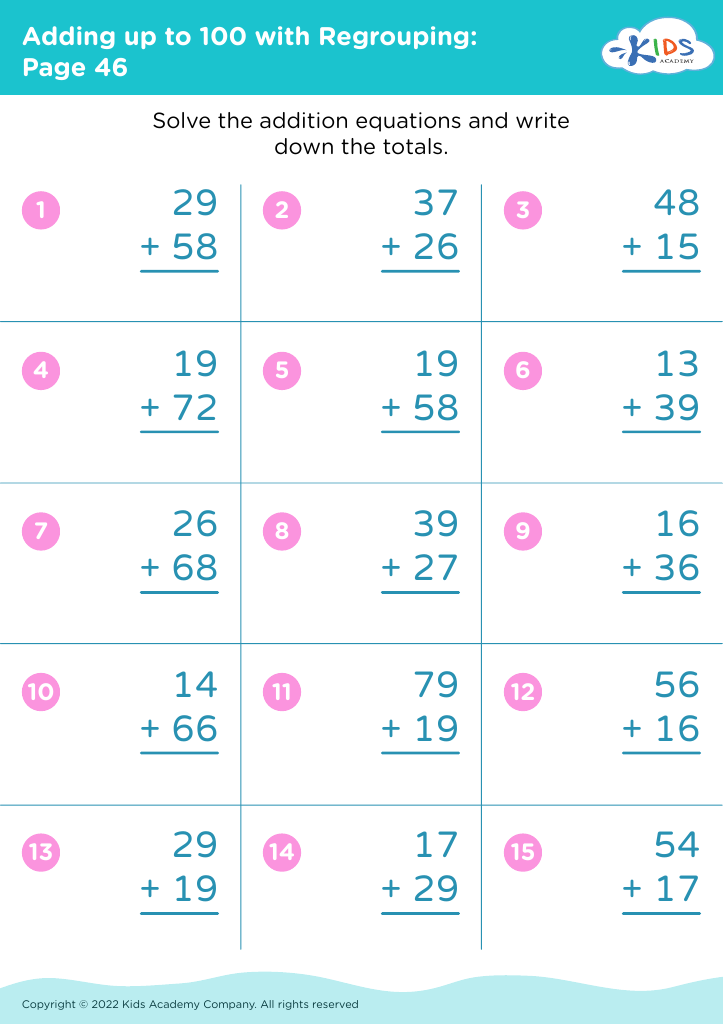
Adding up to 100 with Regrouping: Page 46
Worksheet
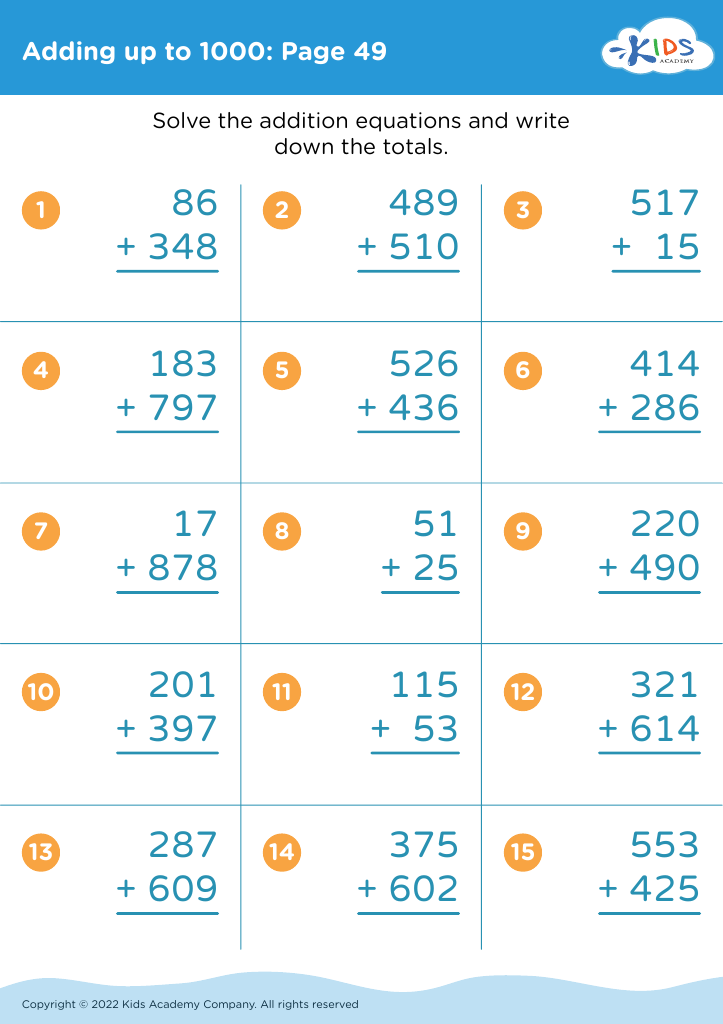
Adding up to 1000: Page 49

Adding up to 1000: Page 49

Adding up to 1000: Page 49
Worksheet
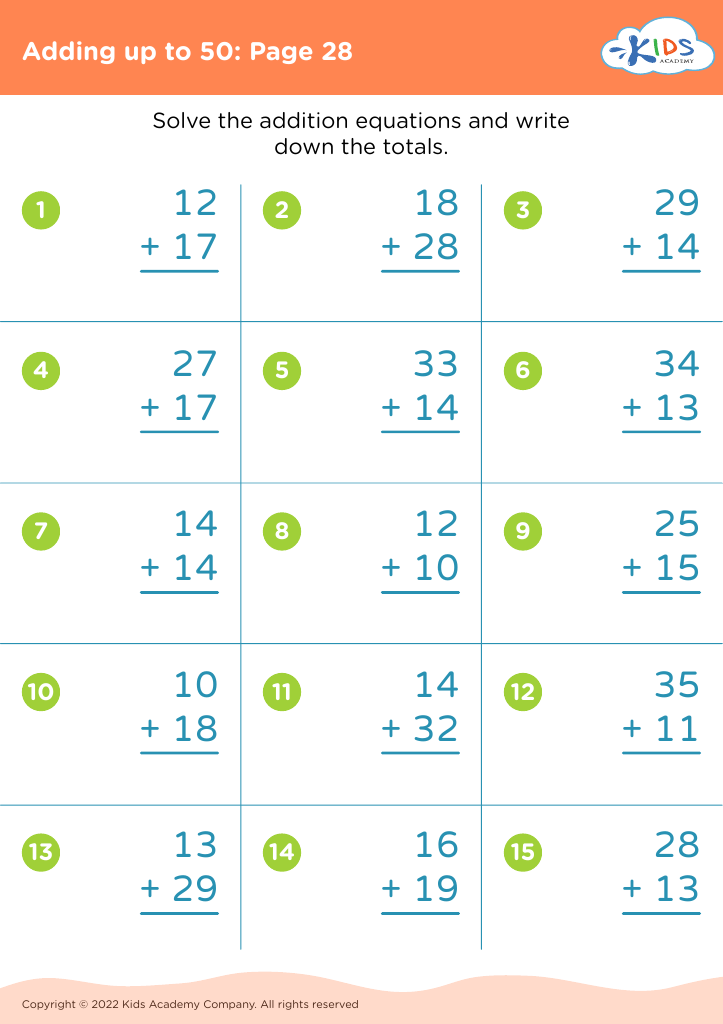
Adding up to 50: Page 28

Adding up to 50: Page 28

Adding up to 50: Page 28
Worksheet
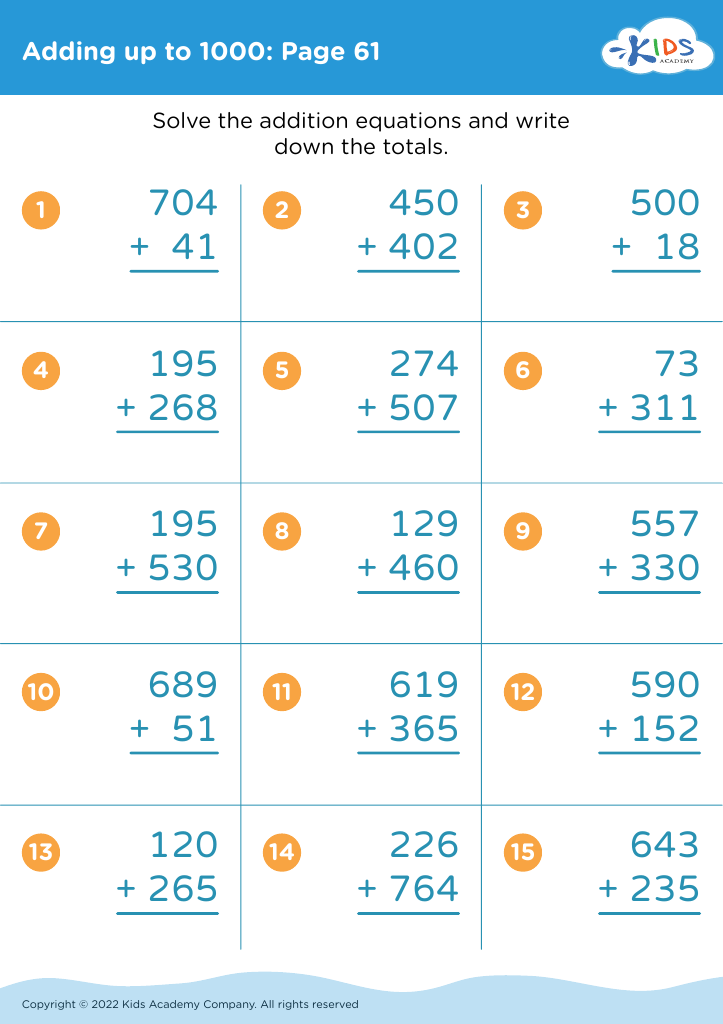
Adding up to 1000: Page 61

Adding up to 1000: Page 61

Adding up to 1000: Page 61
Worksheet
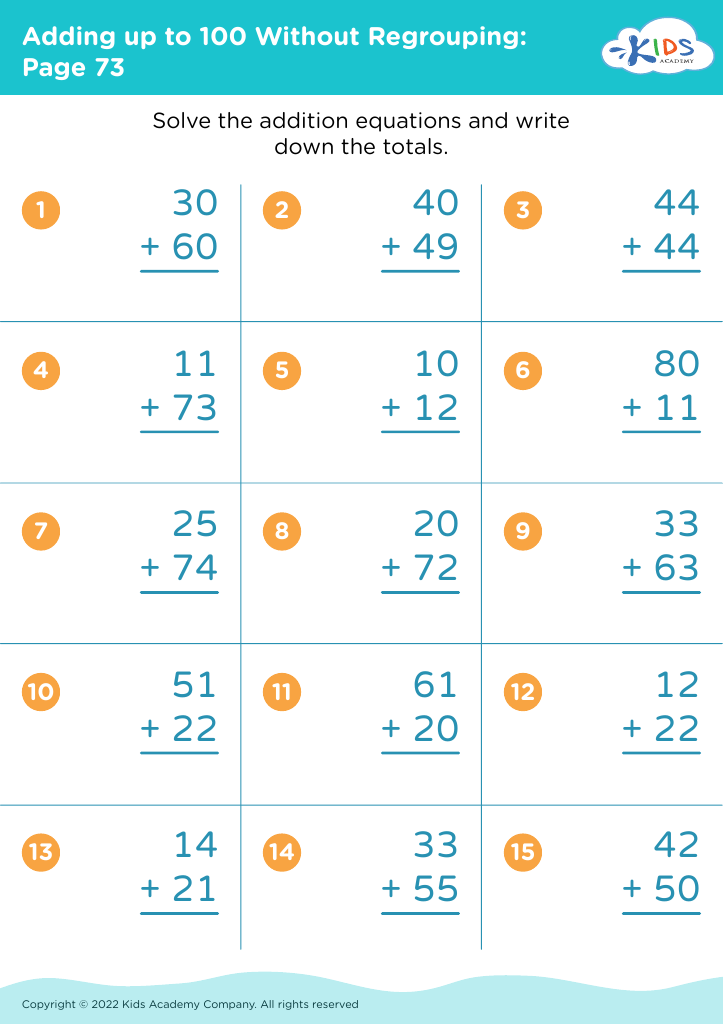
Adding up to 100 Without Regrouping: Page 73
Worksheet
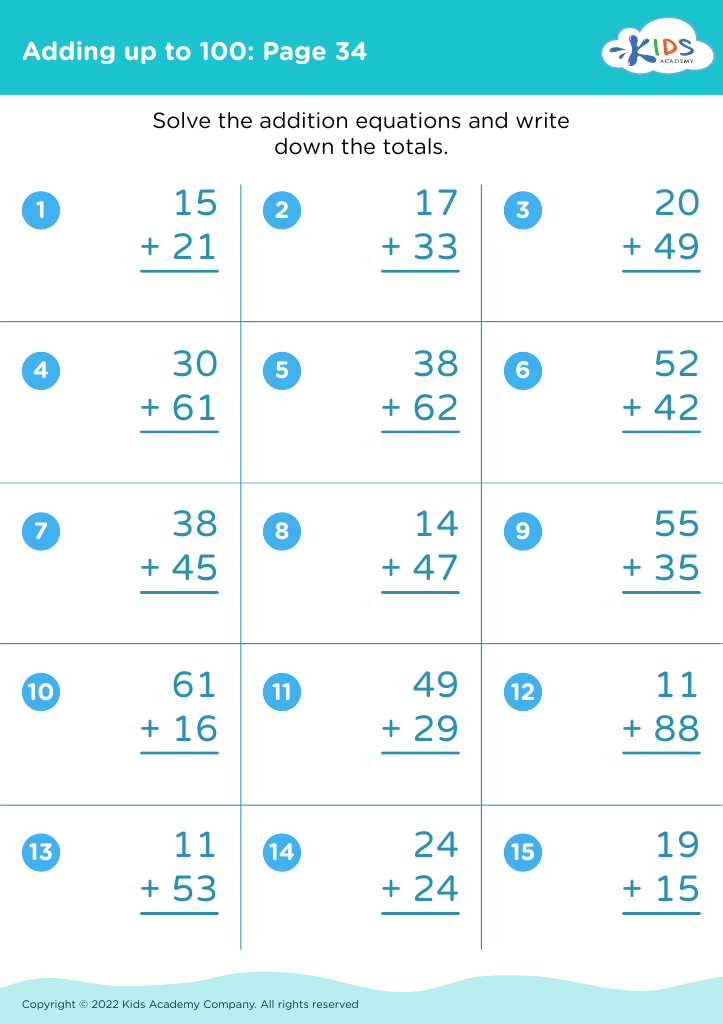
Adding up to 100: Page 34

Adding up to 100: Page 34

Adding up to 100: Page 34
Worksheet
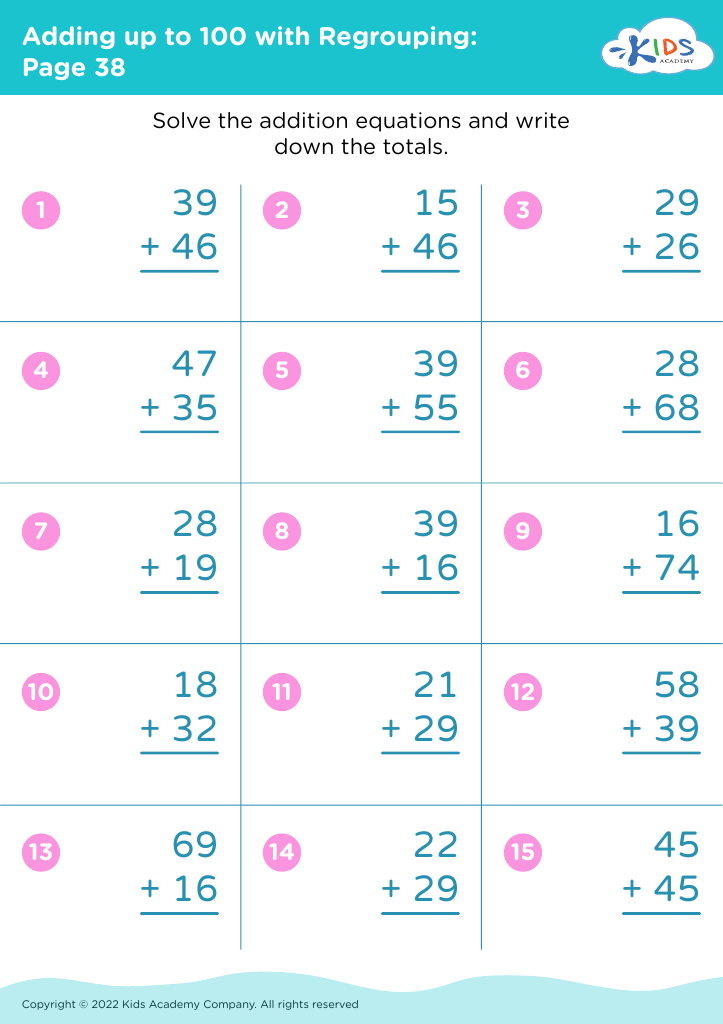
Adding up to 100 with Regrouping: Page 38
Worksheet
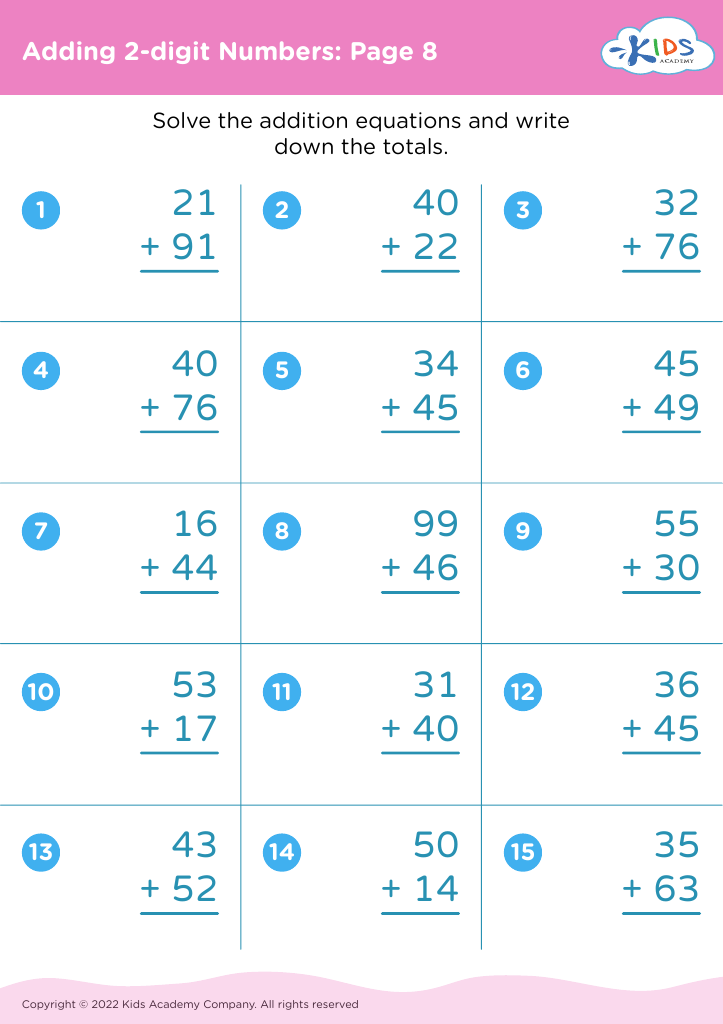
Adding 2-digit Numbers: Page 8

Adding 2-digit Numbers: Page 8

Adding 2-digit Numbers: Page 8
Worksheet
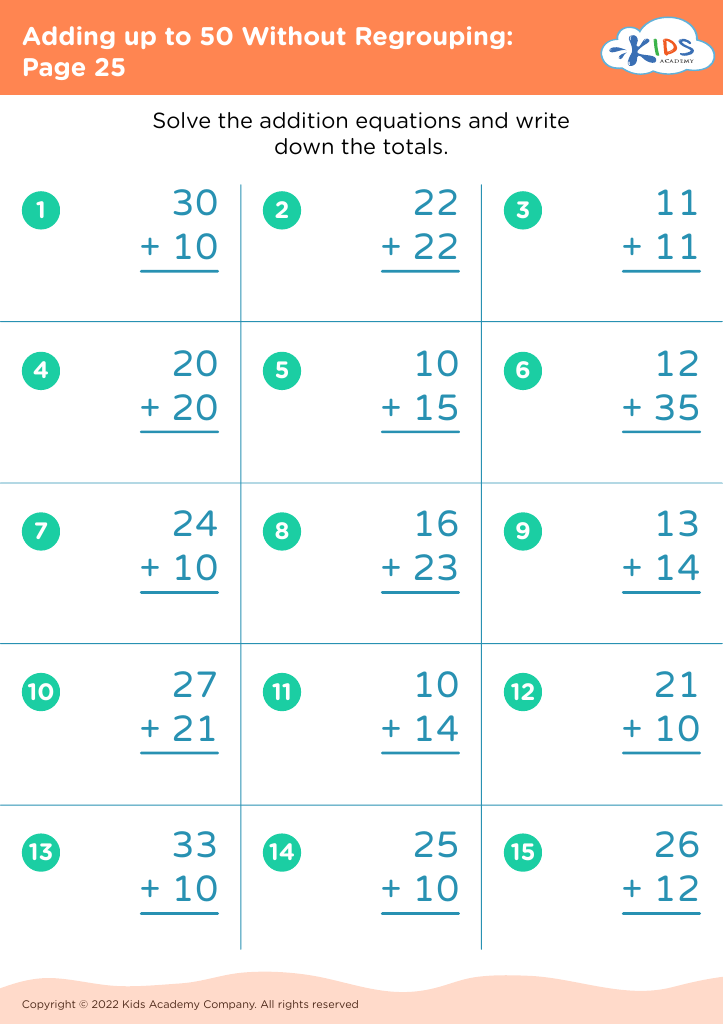
Adding up to 50 Without Regrouping: Page 25
Worksheet
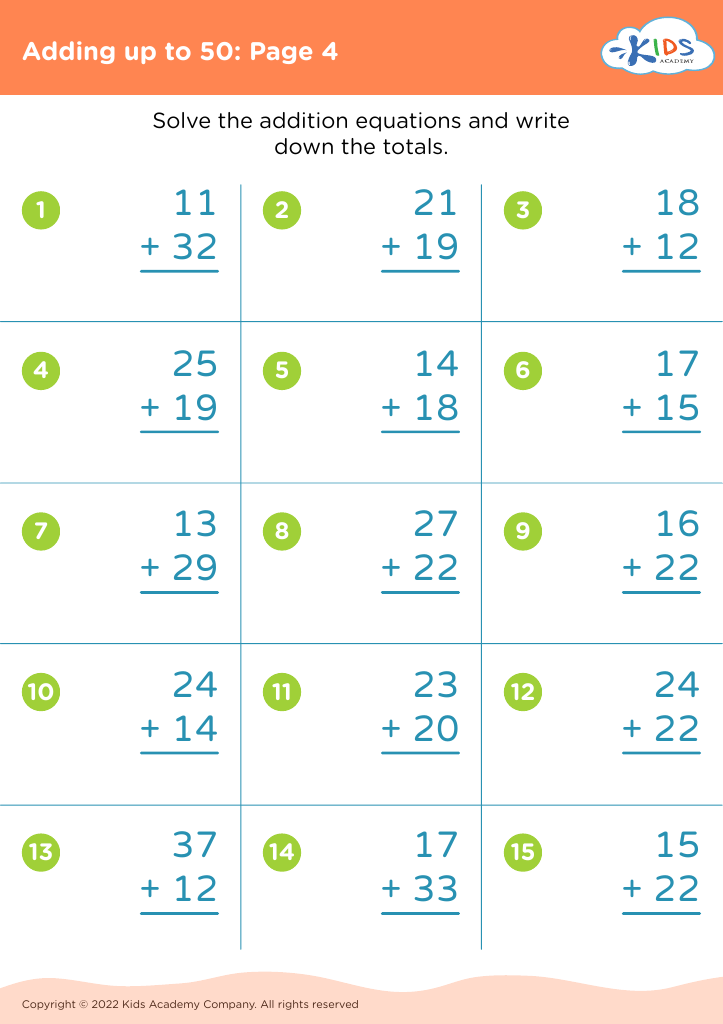
Adding up to 50: Page 4

Adding up to 50: Page 4

Adding up to 50: Page 4
Worksheet
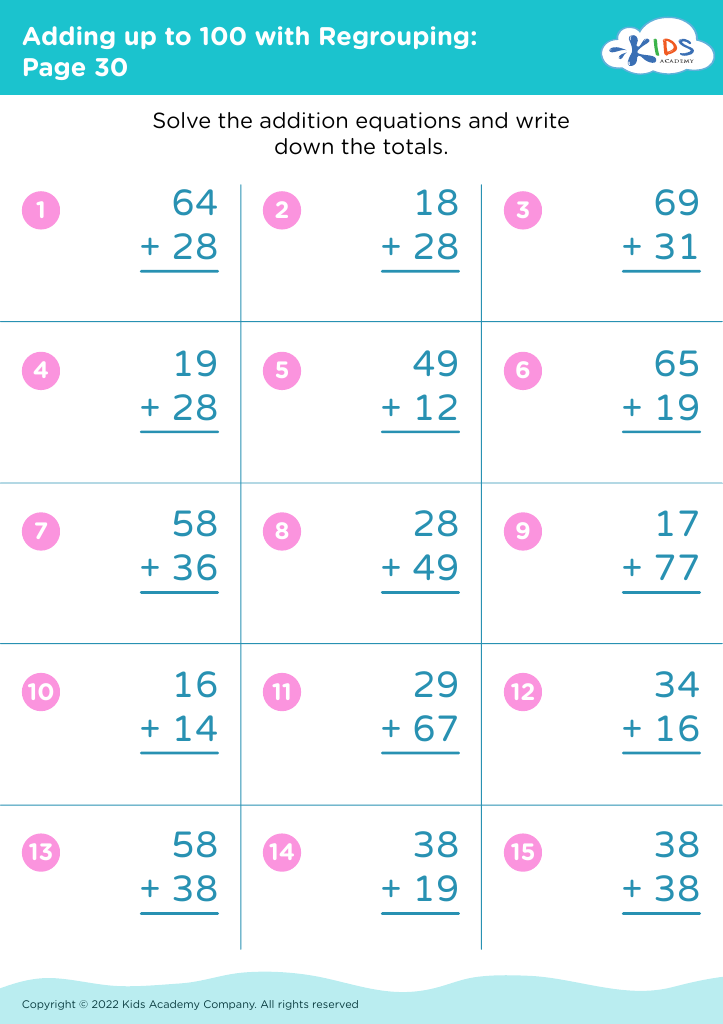
Adding up to 100 with Regrouping: Page 30
Worksheet
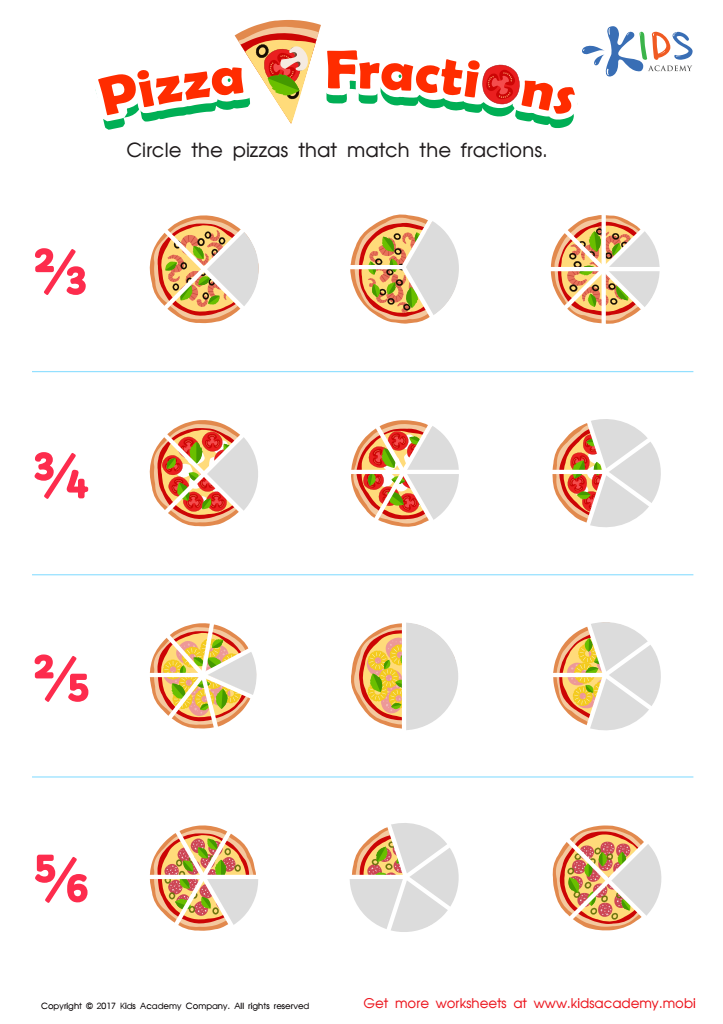
Pizza Fraction Printable

Fractions: Pizza Printable
Fractions can be tricky for kids, but this pizza fractions printable can help! Kids can understand fractions by seeing them, as they use one of their favorite foods. It helps them grasp the concept and gain a deeper understanding of what fractions represent. Extend their learning by quizzing them when you order pizza next time.
Fractions: Pizza Printable
Worksheet
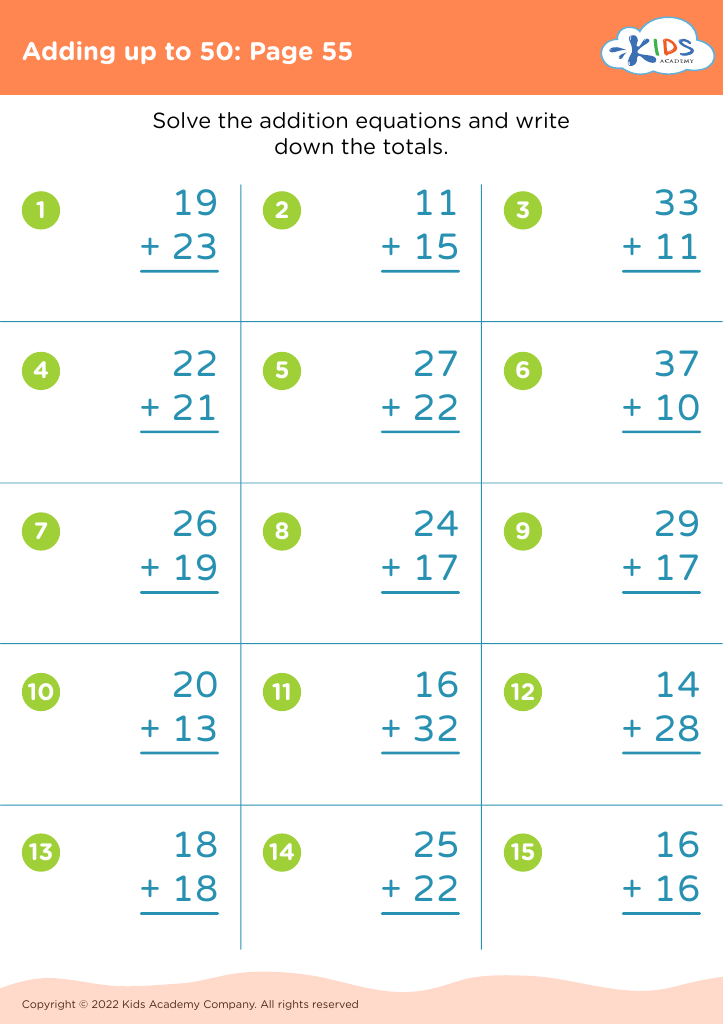
Adding up to 50: Page 55

Adding up to 50: Page 55

Adding up to 50: Page 55
Worksheet
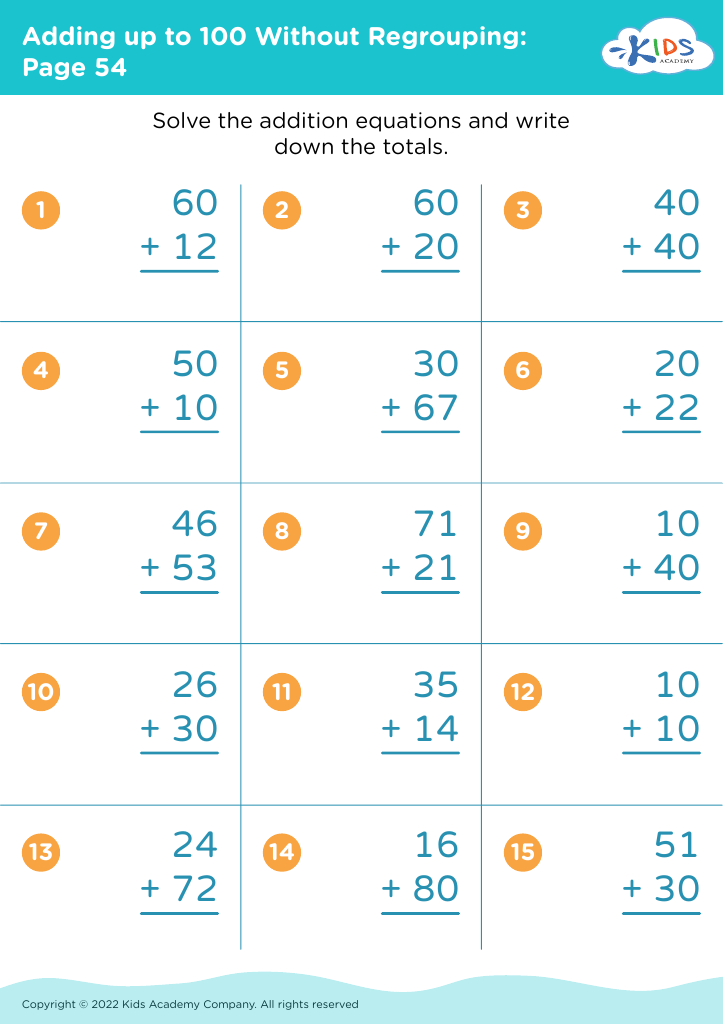
Adding up to 100 Without Regrouping: Page 54
Worksheet
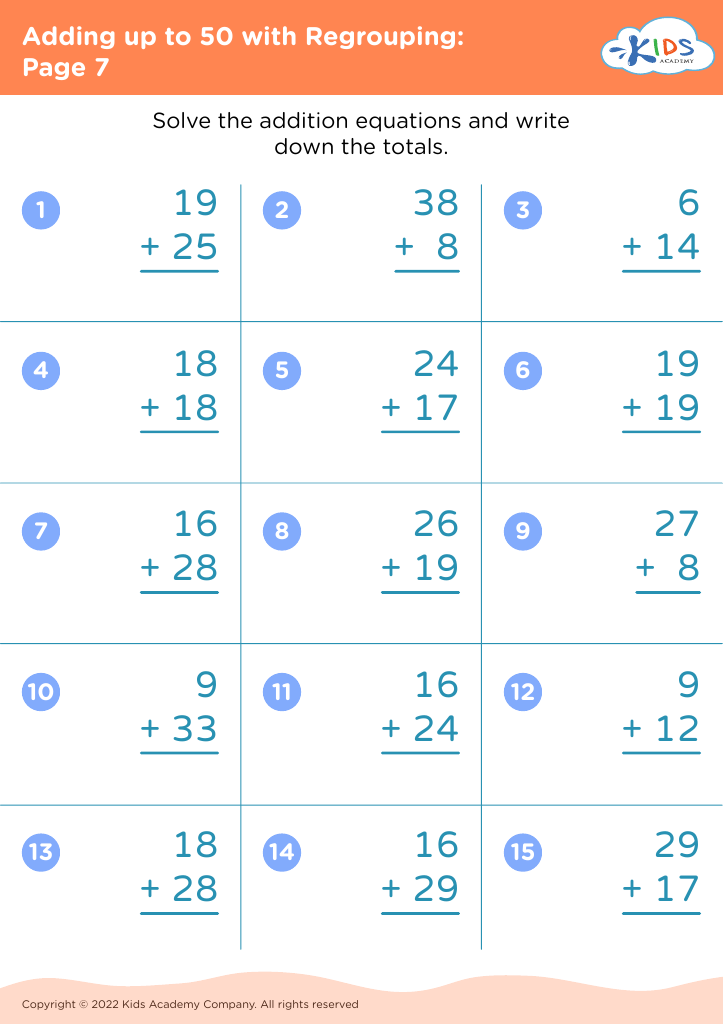
Adding up to 50 with Regrouping: Page 7
Worksheet


Introducing the concepts of fraction simplification, addition, and subtraction to children aged 4-7 lays a fundamental groundwork for their future mathematical understanding. At this tender age, children are developing critical thinking skills and the ability to recognize patterns. Mastering fractions boosts their numerical fluency and problem-solving capacity, essential for more advanced mathematical concepts they will encounter later.

Simplifying fractions helps children grasp the idea that different-looking fractions can represent the same quantity, an important step in promoting number sense. It also aids in making complex problems more manageable. For instance, knowing that 2/4 is the same as 1/2 helps clarify future arithmetic operations and compares quantities efficiently.

Adding and subtracting fractions teaches children to find common denominators and manipulate numbers flexibly. These operations extend their understanding of whole numbers to parts of a whole, making their mathematical perspective more comprehensive. It involves yet another layer of cognitive skills like comparing, contrasting, and equilibrium.

Moreover, these skills are intertwined with real-world applications. Whether it's dividing a pizza or measuring ingredients while cooking, the ability to understand and operate with fractions instills confidence in quotidian activities and enhances practical life skills.

Prioritizing these math concepts early not only bolsters academic success but also fosters a positive attitude towards learning and challenges throughout life.