Improve comprehension Addition Worksheets for Ages 4-7
3 filtered results
-
From - To
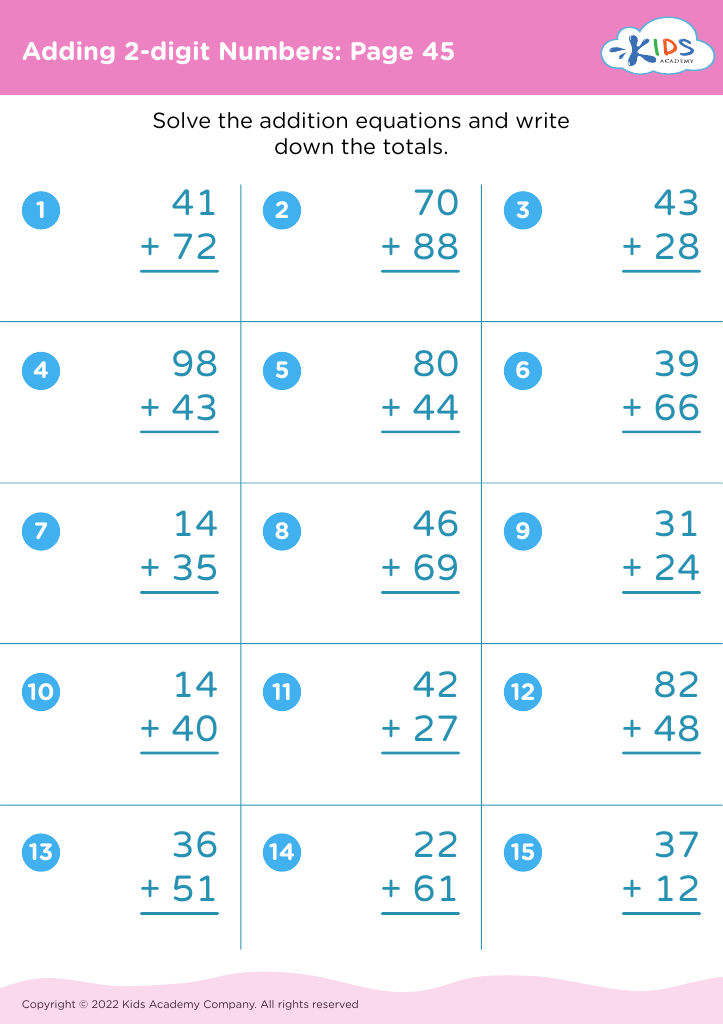
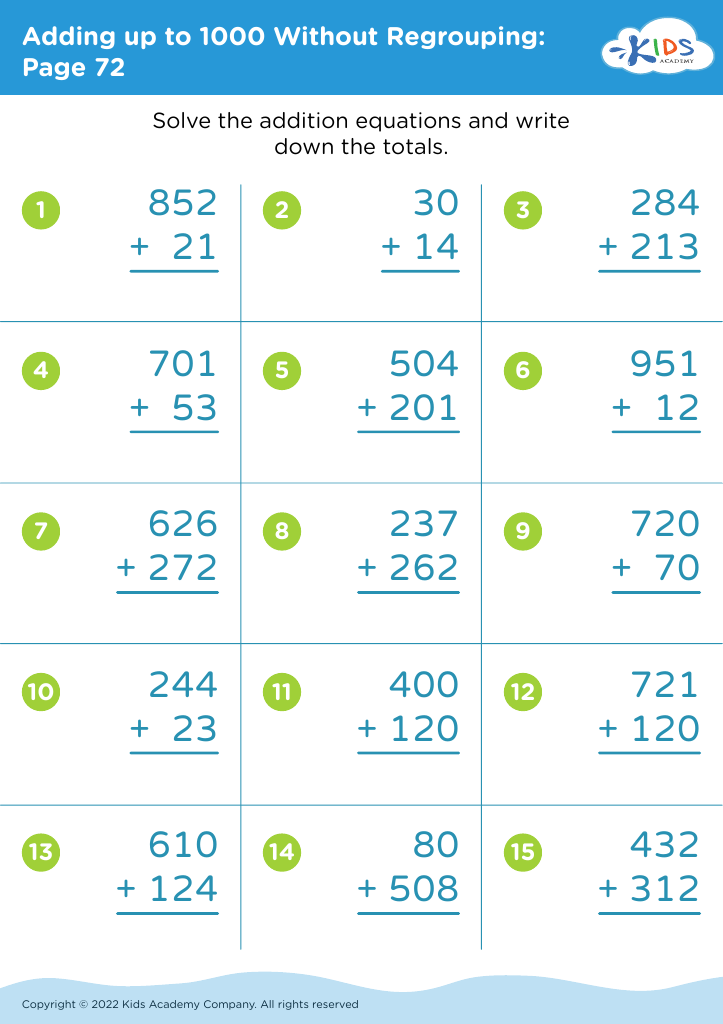
Enhance your child’s understanding of addition with our specially designed worksheets for ages 4-7! Our “Improve Comprehension Addition Worksheets” focus on building foundational math skills through engaging activities. Tailored for young learners, each worksheet encourages critical thinking by presenting addition concepts in relatable contexts. Children explore addition through visual aids, real-life scenarios, and interactive exercises that make learning enjoyable. As they practice, kids develop not only math fluency but also comprehension strategies, ensuring they grasp key ideas. These resources are perfect for home study or classroom use, providing a fun and effective way to reinforce addition skills. Start boosting your child's confidence in math today!
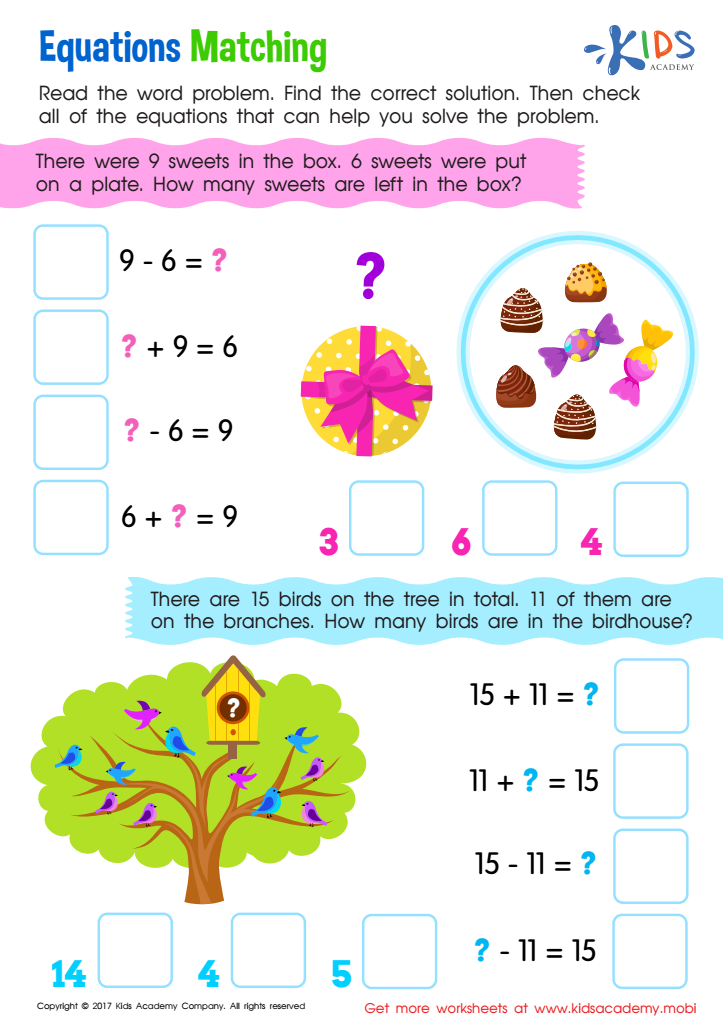
Equations Matching Word Problems Worksheet
 Assign to My Students








Improving comprehension and addition skills in children aged 4-7 is crucial for several reasons. Firstly, this foundational period sets the stage for a child's academic journey. At this age, children are not only learning basic arithmetic concepts but also developing cognitive skills that will serve them in higher-grade learning. Encouraging comprehension alongside addition enables children to better understand word problems and mathematical vocabulary, which enhances their critical thinking abilities.
Additionally, mastering addition fosters confidence in young learners. When children can grasp basic math concepts, they feel more competent and engaged in their learning. This self-esteem can spill over into other subjects, encouraging a positive attitude toward school overall.
Furthermore, teaching these skills helps children develop problem-solving abilities crucial for real-life situations. Comprehension skills empower them to interpret instructions, understand interactions, and ultimately become independent thinkers.
For parents and teachers, investing time and resources in improving these early skills ensures that children build a strong mathematical foundation, thus paving the way for future success. By prioritizing comprehension and addition, caregivers play a vital role in equipping children with essential tools they will need both in school and throughout their lives.








