Logical thinking Addition Worksheets for Ages 4-7
9 filtered results
-
From - To
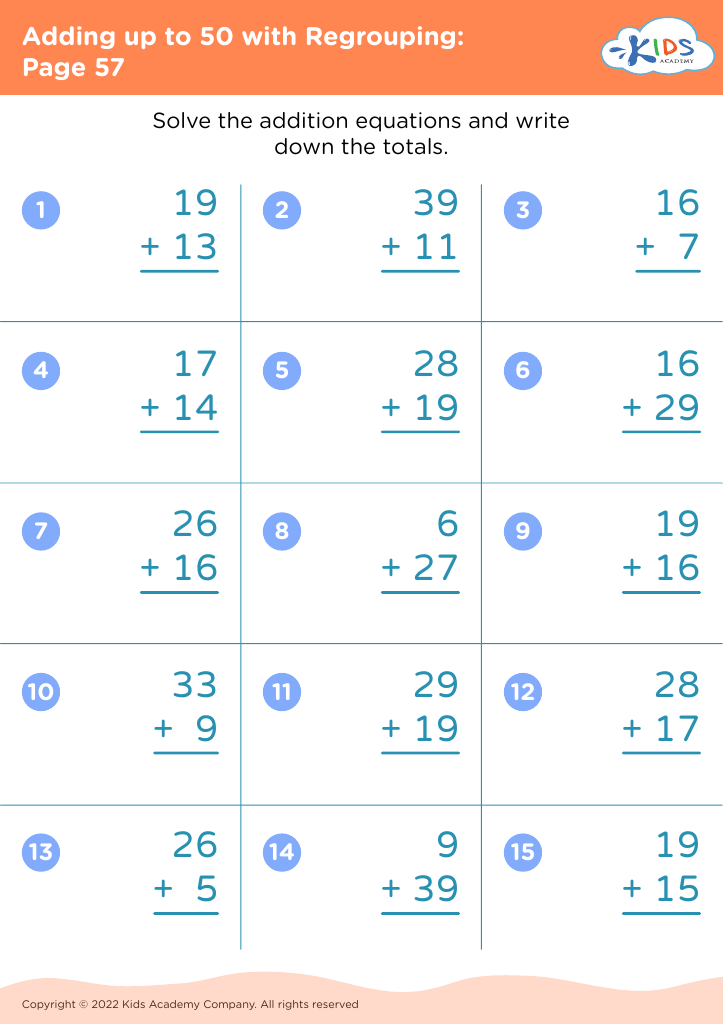
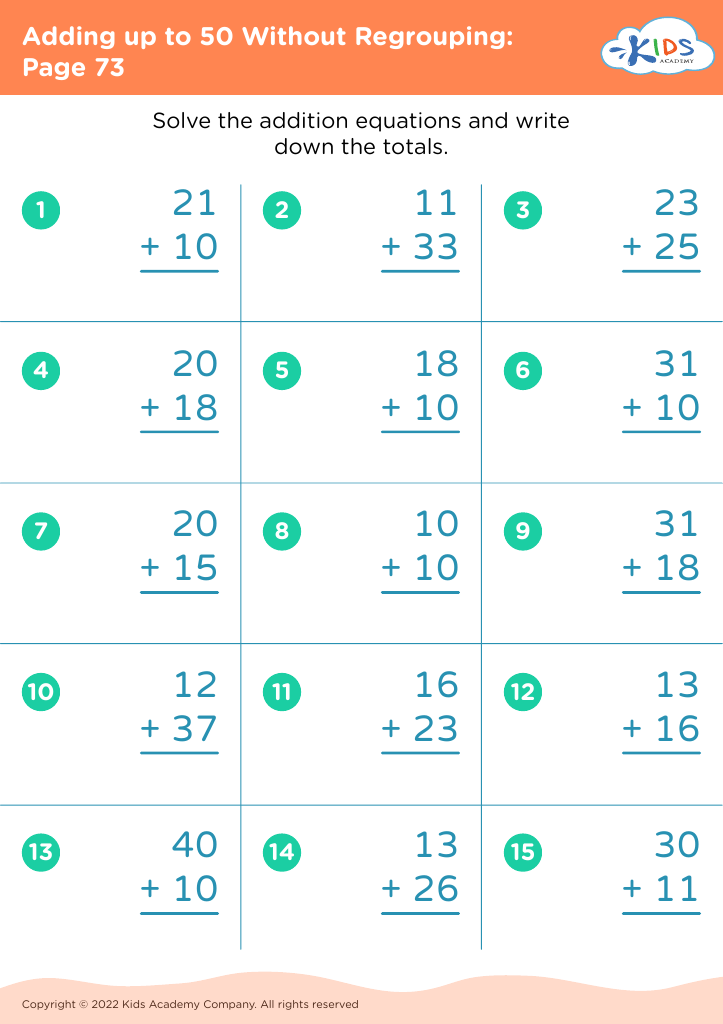
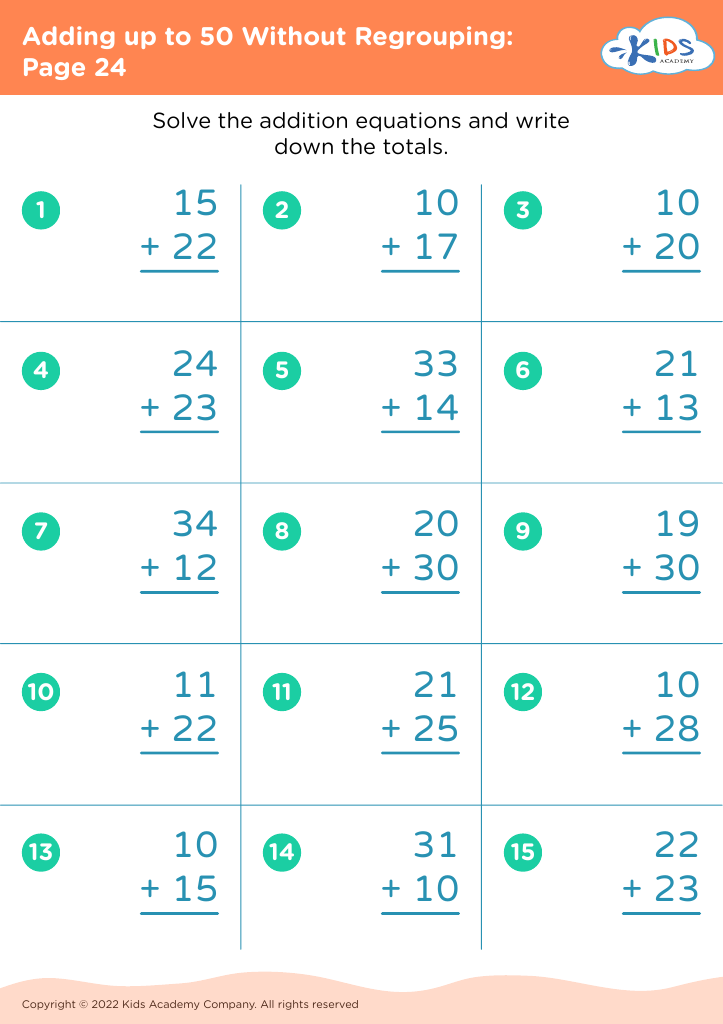
Boost your child's early math skills with our Logical Thinking Addition Worksheets for Ages 4-7! Designed to enhance problem-solving abilities and encourage critical thinking, these engaging worksheets provide fun, interactive addition exercises tailored for young learners. Each activity focuses on logical reasoning, helping kids of varying skill levels master fundamental math concepts. Our worksheets promote essential skills such as pattern recognition and spatial awareness while making math enjoyable. Ideal for home schooling or classroom use, these resources support a strong foundation in arithmetic. Explore our collection today and watch your child's confidence and love for math grow!
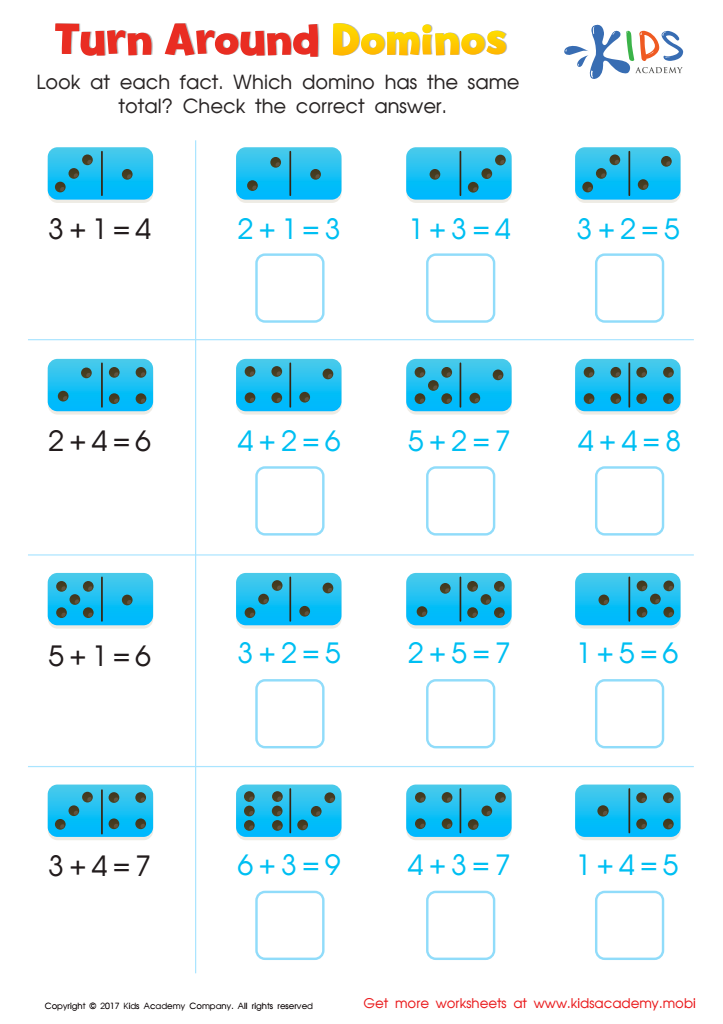
Turn Around Dominos Worksheet
 Assign to My Students
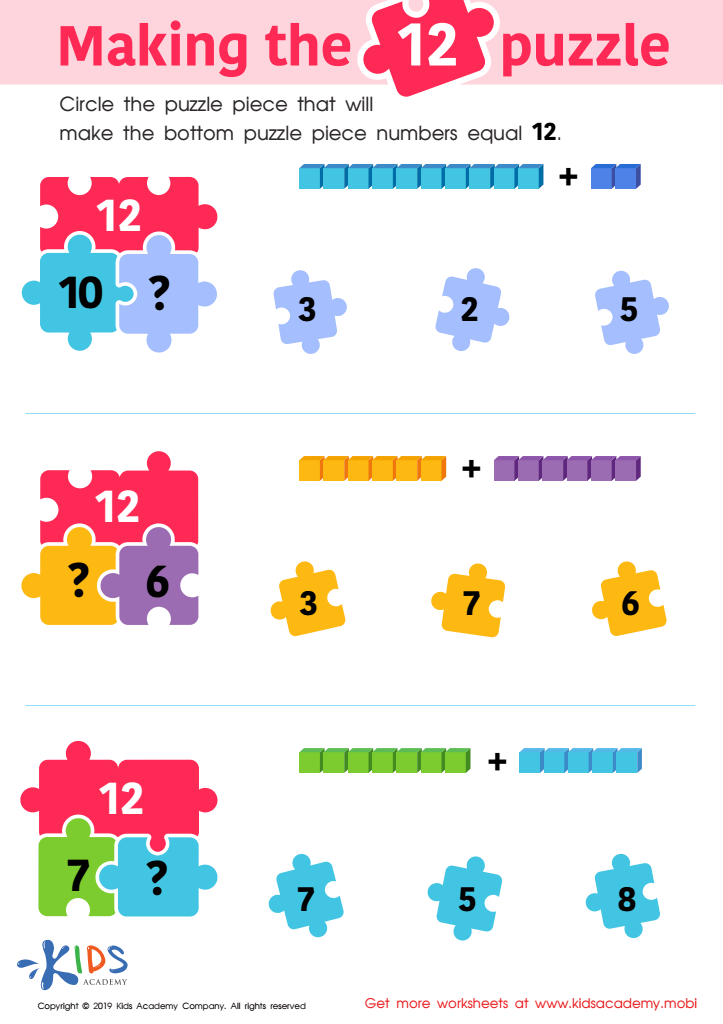
Making the 12 Puzzle Worksheet
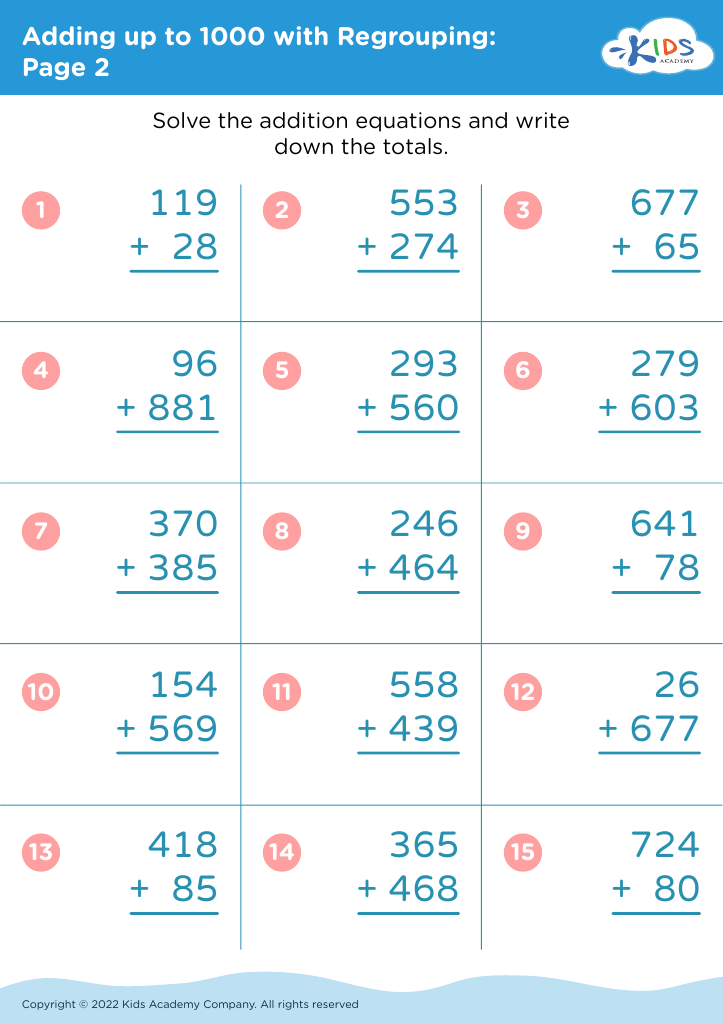








Logical thinking in addition is a crucial skill for children aged 4-7, and it’s essential for both parents and teachers to prioritize its development. During this stage of cognitive growth, children begin to explore mathematical concepts, and a strong foundation in logical thinking helps them make sense of numbers and relationships.
When children engage in logical addition, they don't just memorize sums; they learn to identify patterns, reason through problems, and understand the relationships between quantities. This skill fosters critical thinking, which is vital for later academic success across subjects, not just math.
Furthermore, promoting logical addition early offers benefits beyond academics. It enhances sequential thinking and problem-solving skills, abilities that are fundamental in everyday life, from handling finances to navigating social interactions. By nurturing logical thinking through engaging games, activities, and discussions, parents and teachers help kids develop confidence in their capabilities, sparking a lifetime love for learning.
In summary, logical thinking in addition lays the groundwork for a child’s future success in school and life, making it imperative for parents and teachers to recognize its significance and actively support its development in young learners.








