Understanding patterns Addition Worksheets for Ages 4-7 - Page 2
29 filtered results
-
From - To
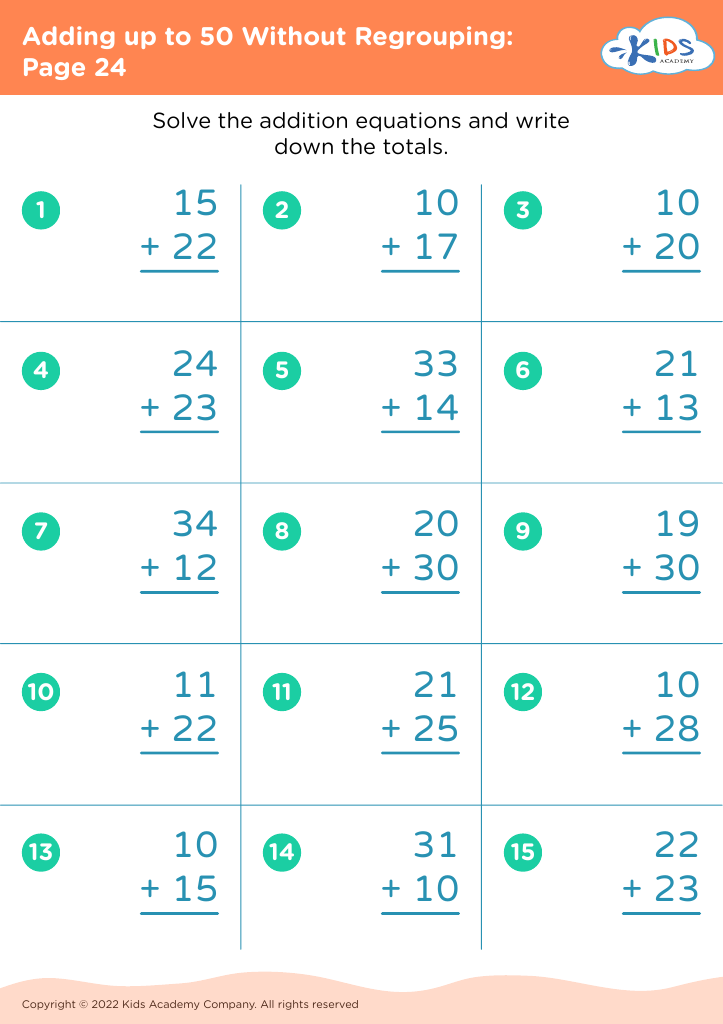
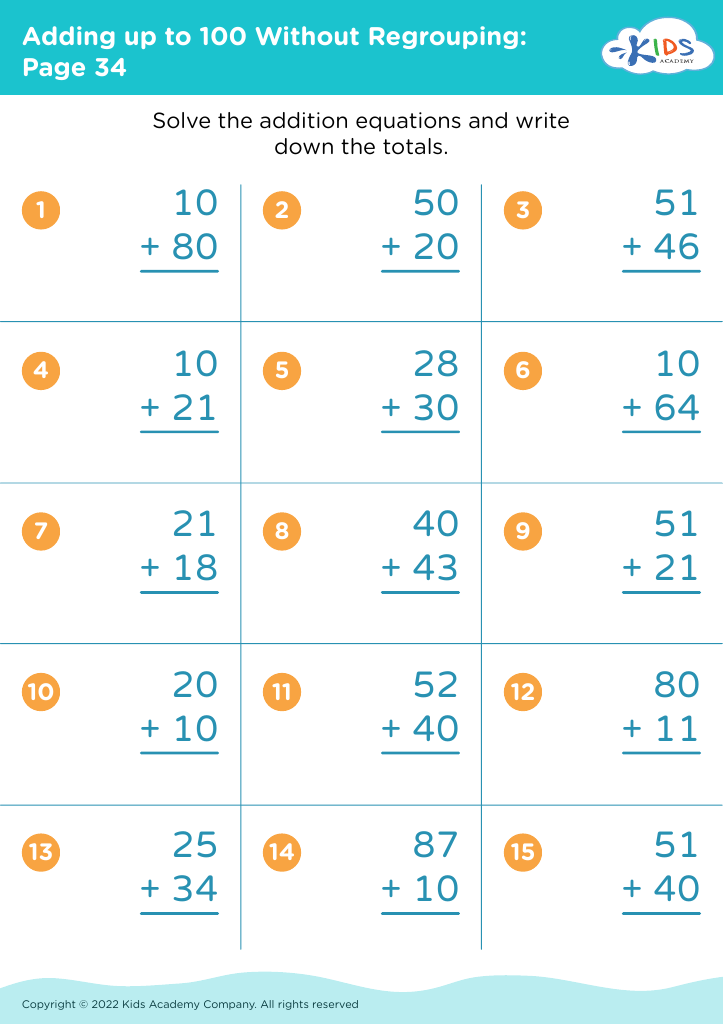
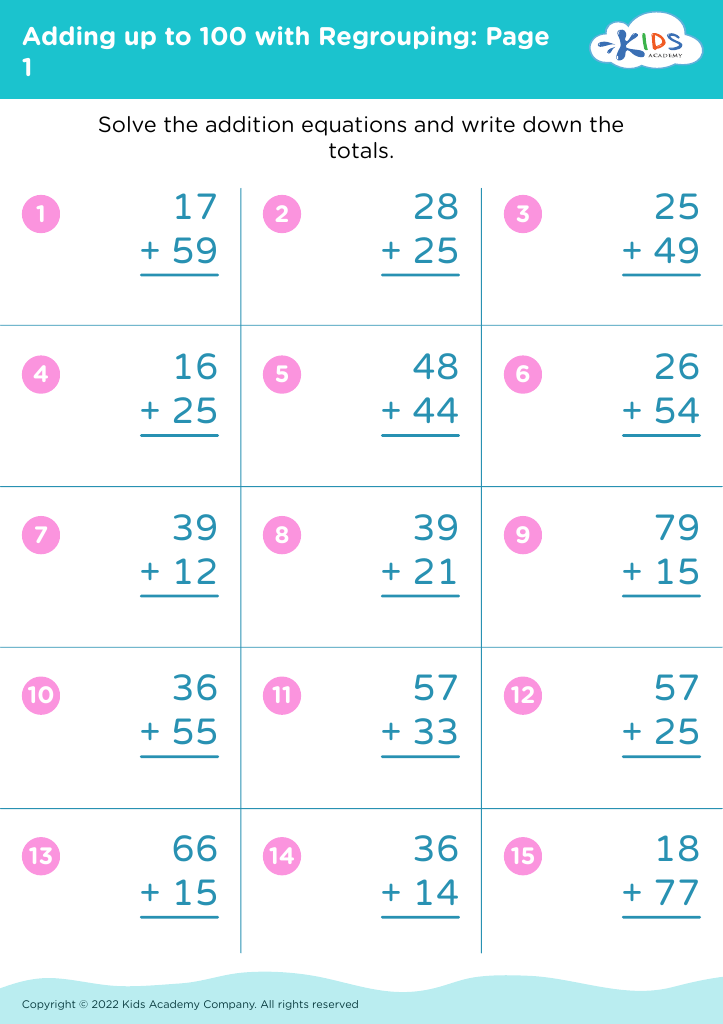
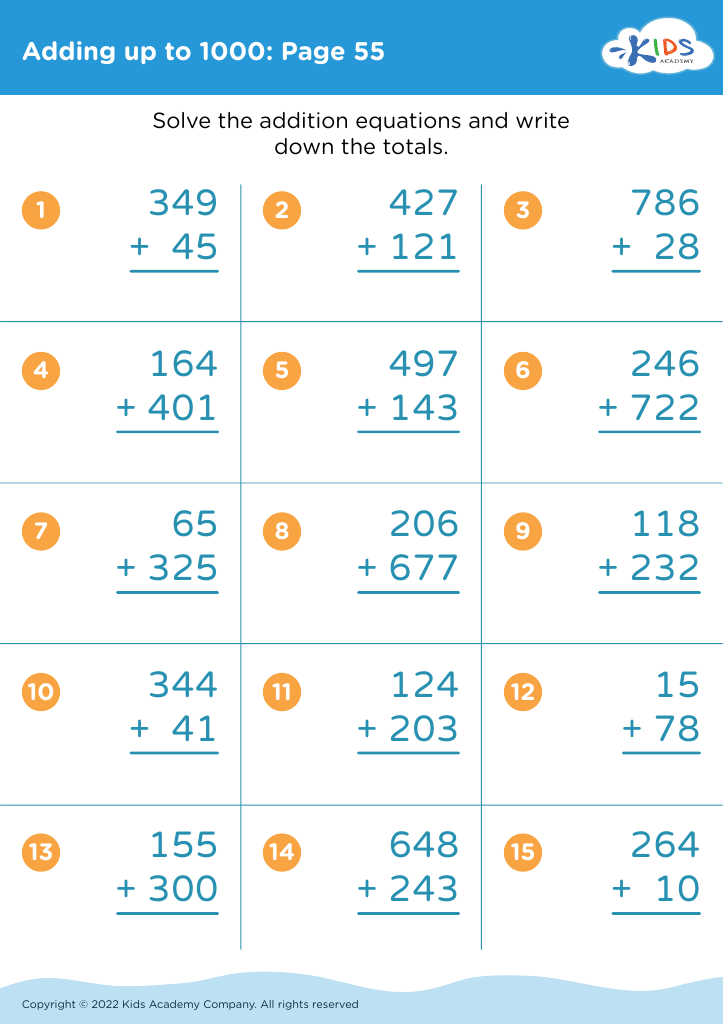
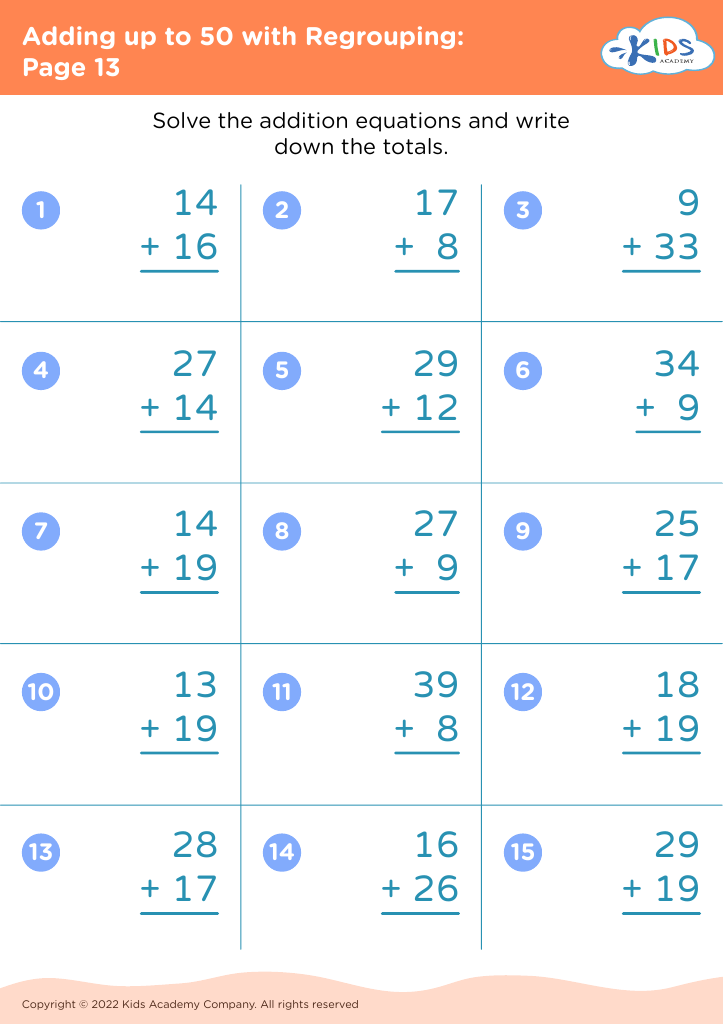








Understanding patterns in addition is crucial for children ages 4-7, as it lays the foundation for more complex mathematical concepts later on. Learning through patterns helps children recognize the relationships between numbers, which enhances their problem-solving skills. When children identify patterns, they become more fluent in addition, making it easier for them to tackle larger numbers and simple equations in the future.
Moreover, mastering addition patterns fosters number sense, enabling young learners to predict outcomes and understand the operations of mathematics better. For instance, recognizing that adding 2 consistently increments a number helps children grasp the idea of skip counting and multiplication later on. Engaging with patterns also encourages cognitive development, promoting logical thinking and reasoning abilities.
Encouraging familiarity with addition patterns through games, songs, and daily activities can make learning enjoyable and strengthen the teacher-parent partnership. Consequently, parents and teachers should advocate for pattern-based addition activities, highlighting their significant role in cognitive development. This approach not only facilitates academic achievement but also nurtures a love for learning, ensuring that students are well-prepared for future mathematical challenges.








