Filters

88 filtered results

Clear all filters
Favorites
With answer key
Interactive

88 filtered results

Difficulty Level

Grade


Check out this FREE Trial Lesson on Addition for age 4-7!

My Family

Favorites
With answer key
Interactive
  • 4-7
  • Visual Learning
  • Addition
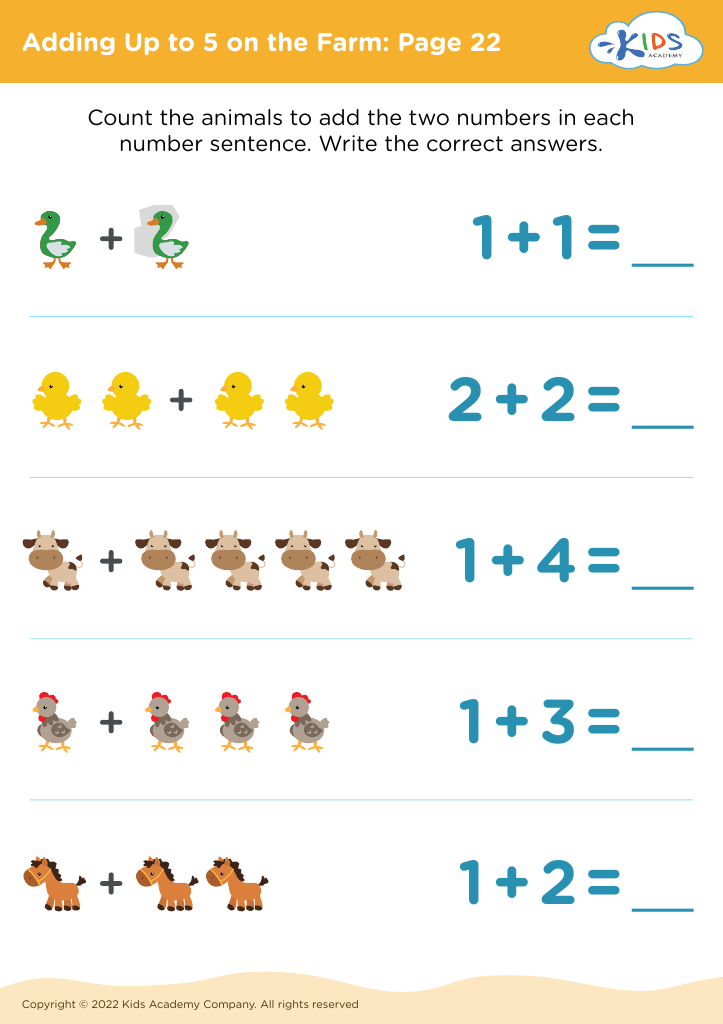
Adding Up to 5 on the Farm: Page 22
Worksheet
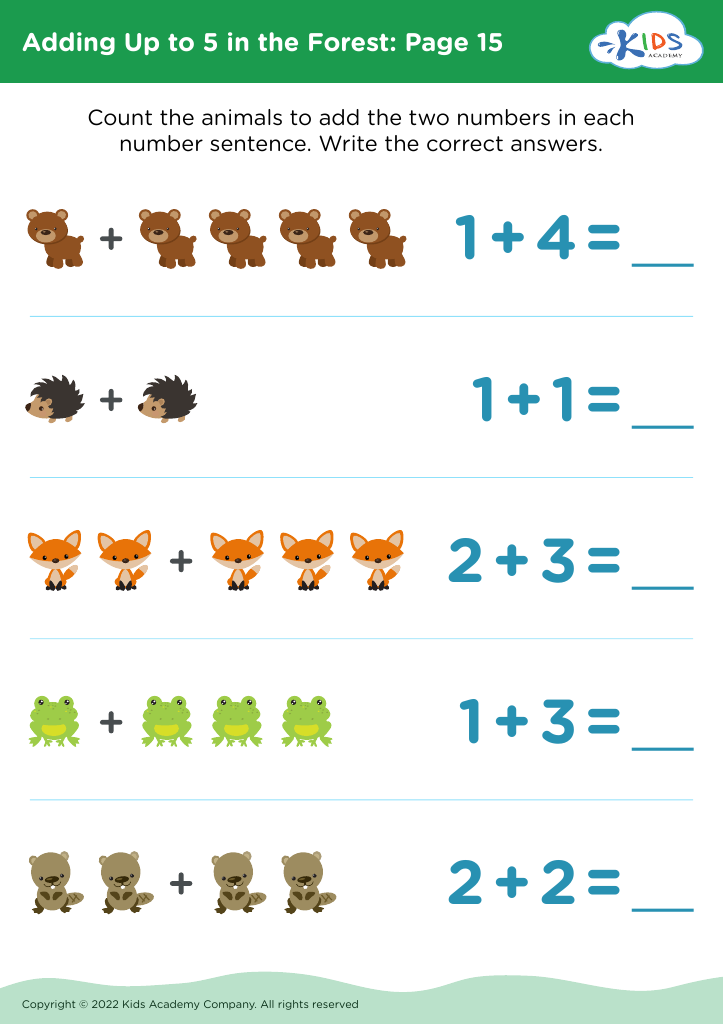
Adding Up to 5 in the Forest: Page 15
Worksheet
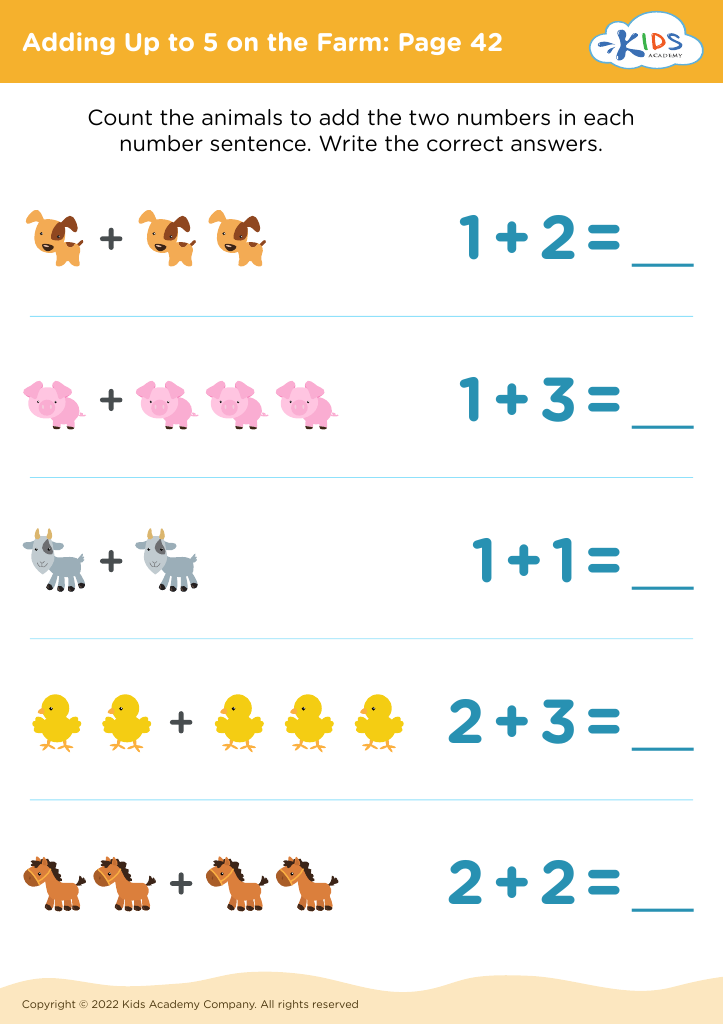
Adding Up to 5 on the Farm: Page 42
Worksheet
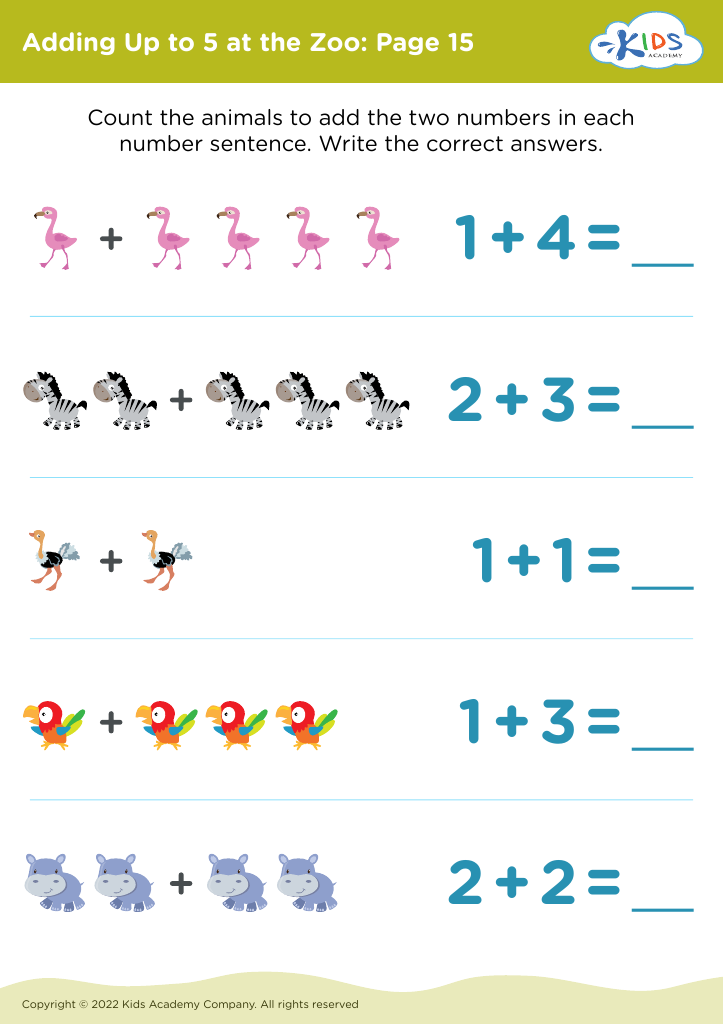
Adding Up to 5 at the Zoo: Page 15
Worksheet
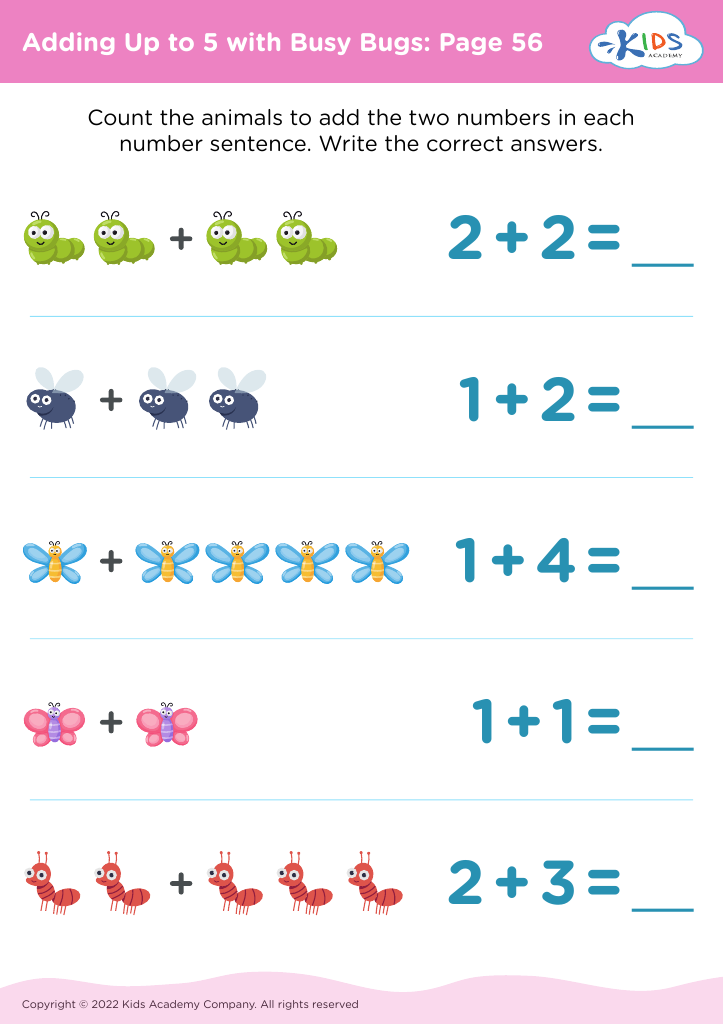
Adding Up to 5 with Busy Bugs: Page 56
Worksheet
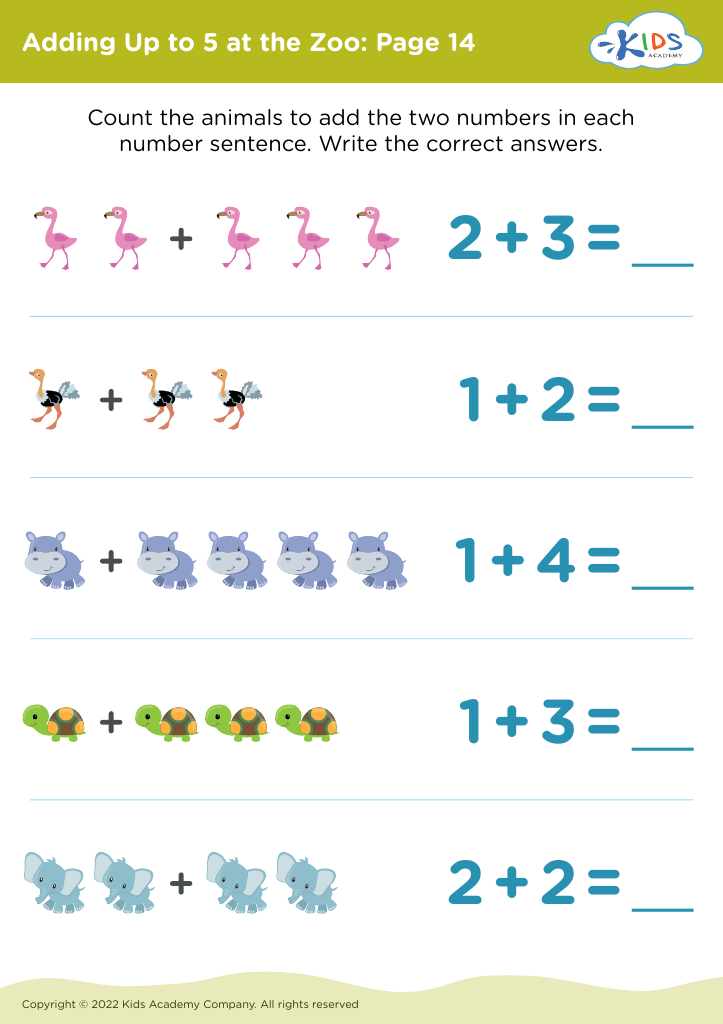
Adding Up to 5 at the Zoo: Page 14
Worksheet
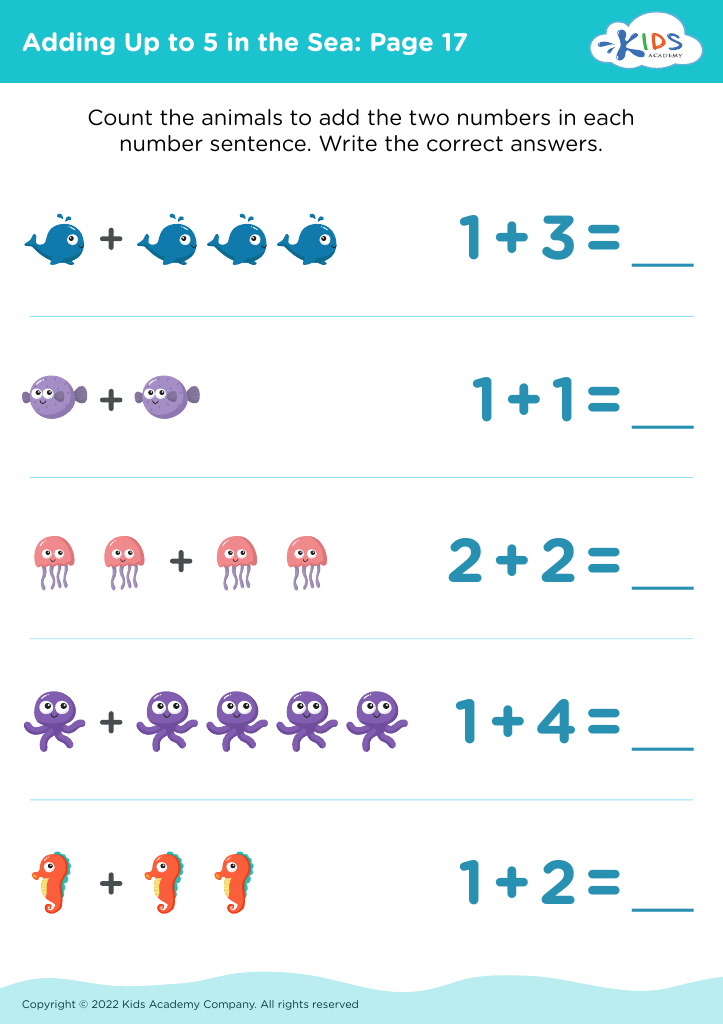
Adding Up to 5 in the Sea: Page 17
Worksheet
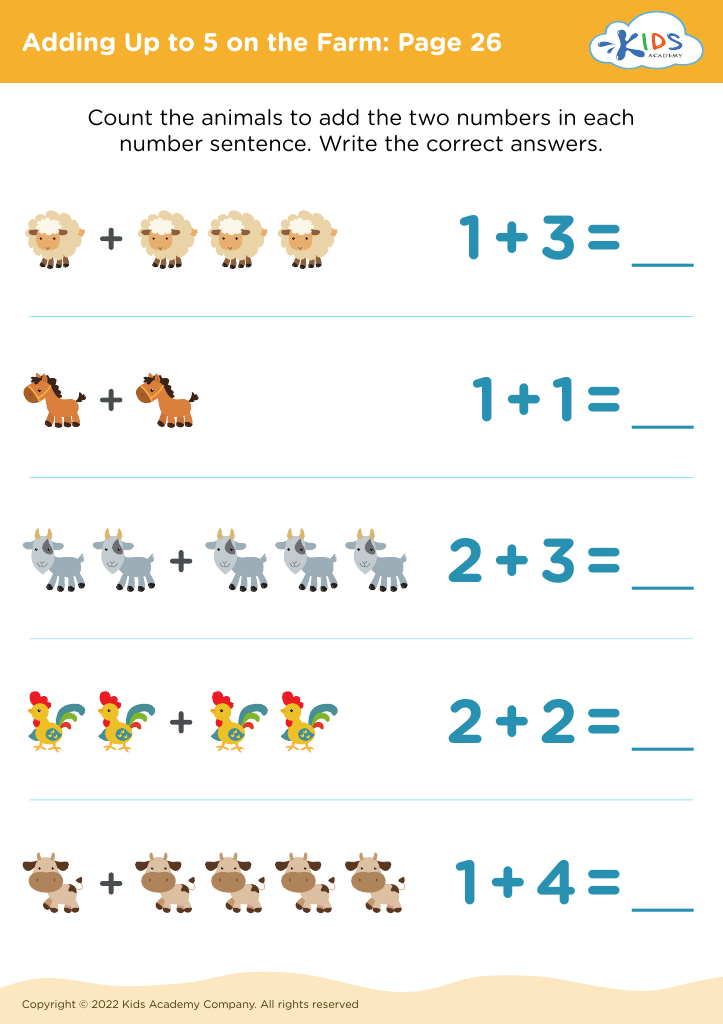
Adding Up to 5 on the Farm: Page 26
Worksheet
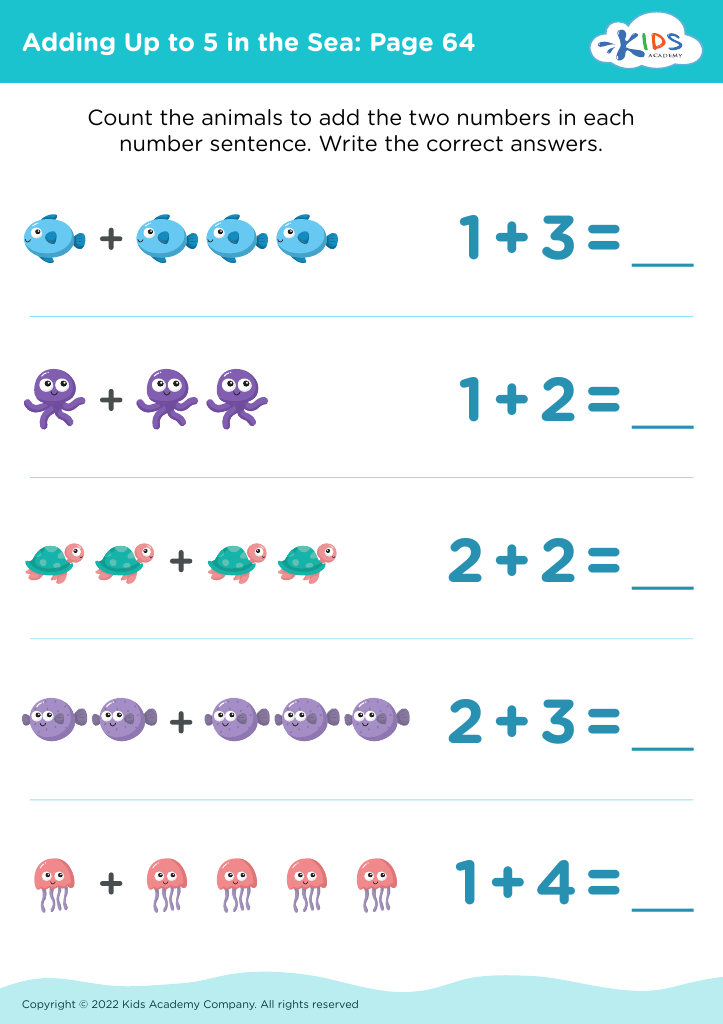
Adding Up to 5 in the Sea: Page 64
Worksheet
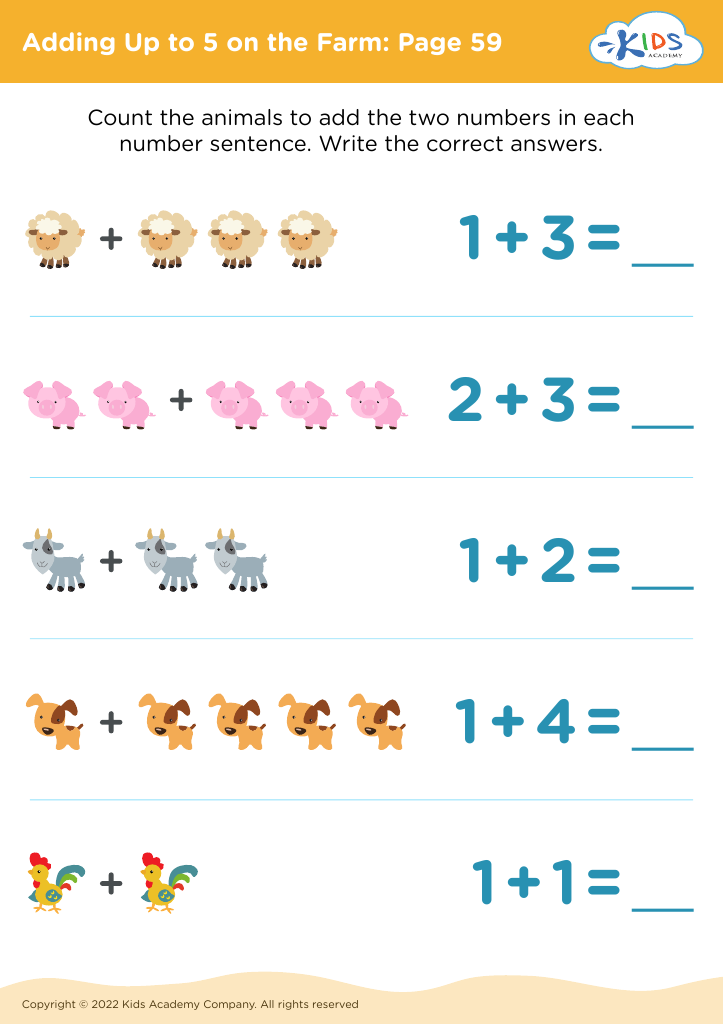
Adding Up to 5 on the Farm: Page 59
Worksheet
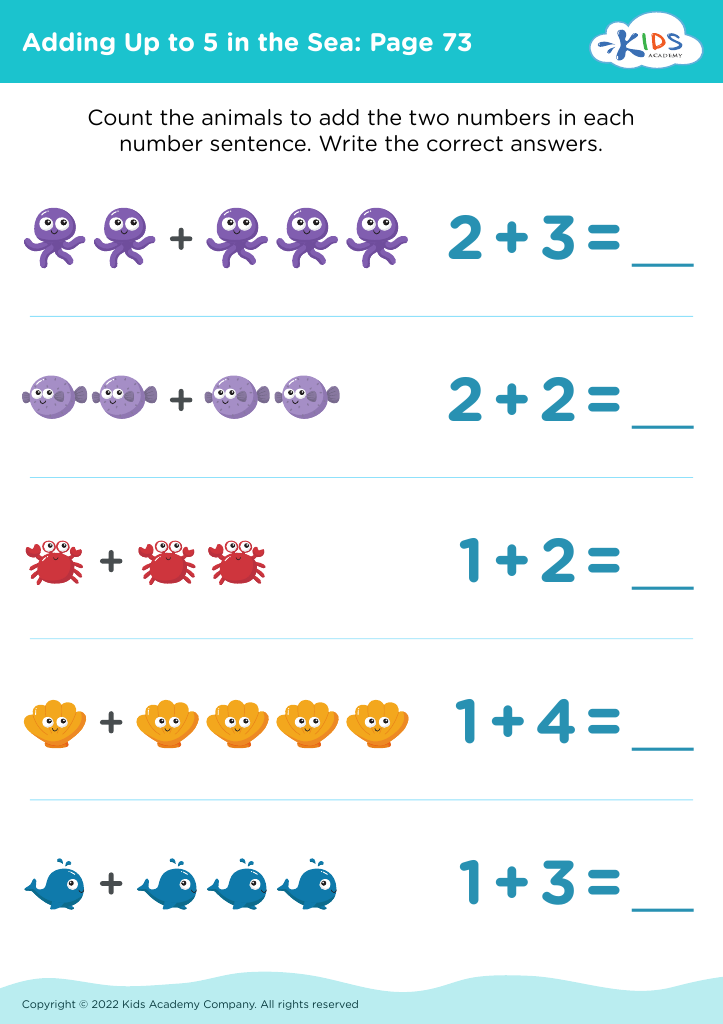
Adding Up to 5 in the Sea: Page 73
Worksheet
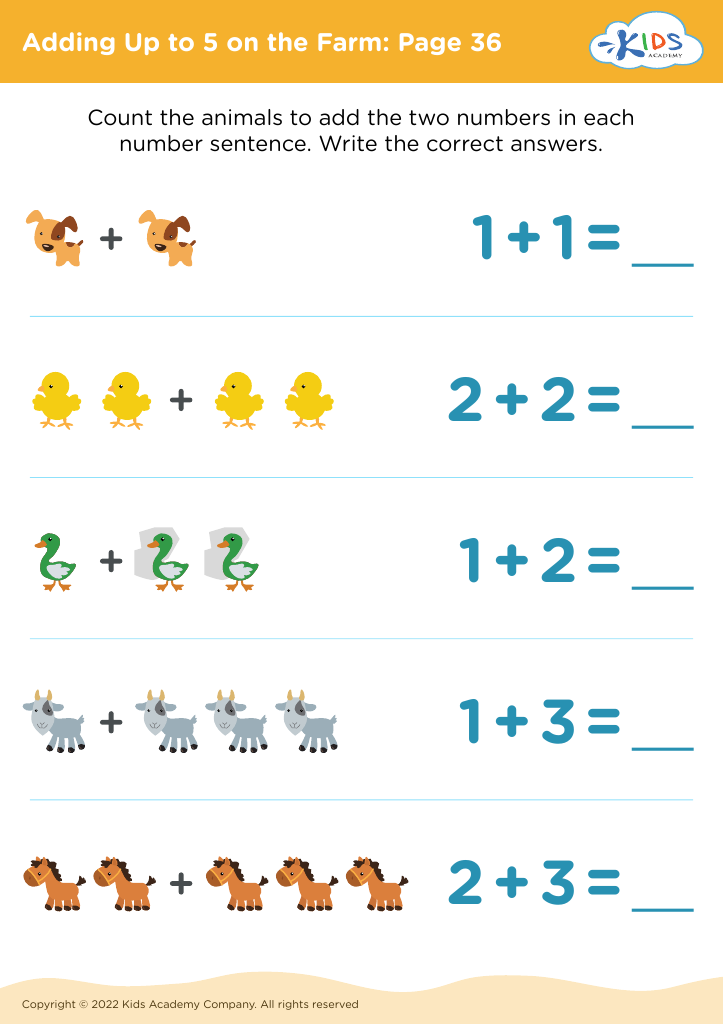
Adding Up to 5 on the Farm: Page 36
Worksheet
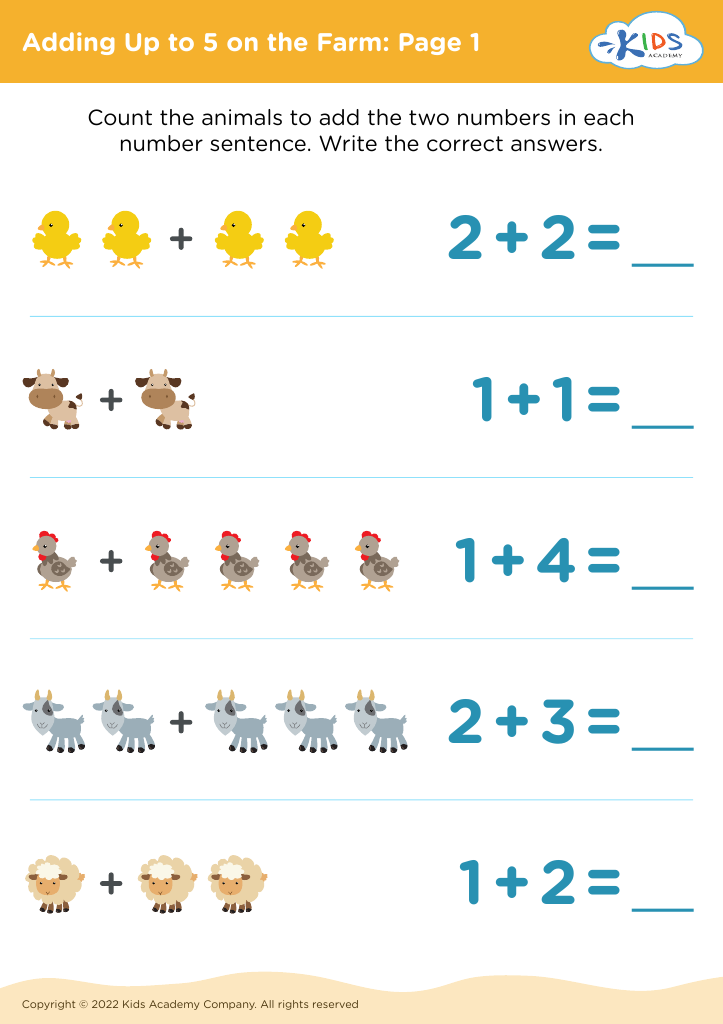
Adding Up to 5 on the Farm: Page 1
Worksheet
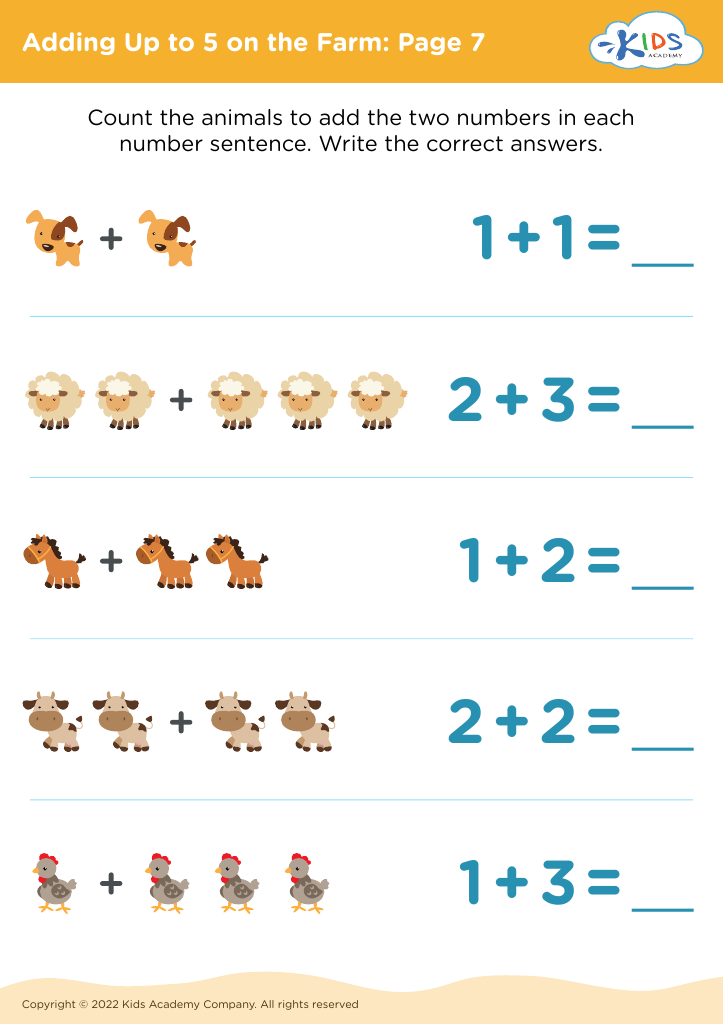
Adding Up to 5 on the Farm: Page 7
Worksheet
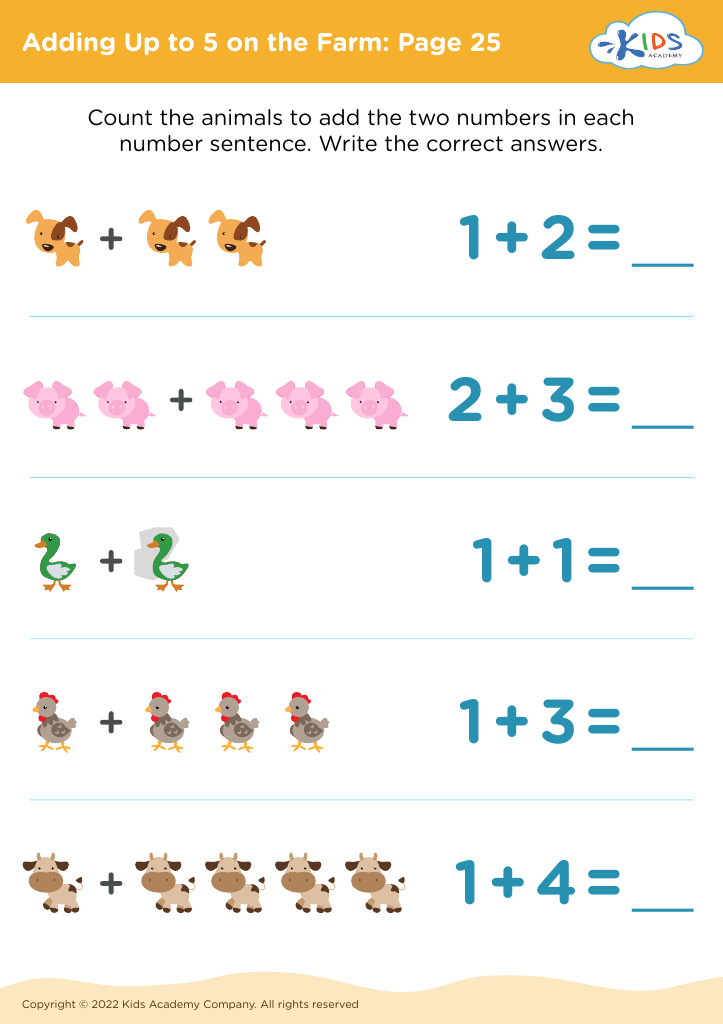
Adding Up to 5 on the Farm: Page 25
Worksheet
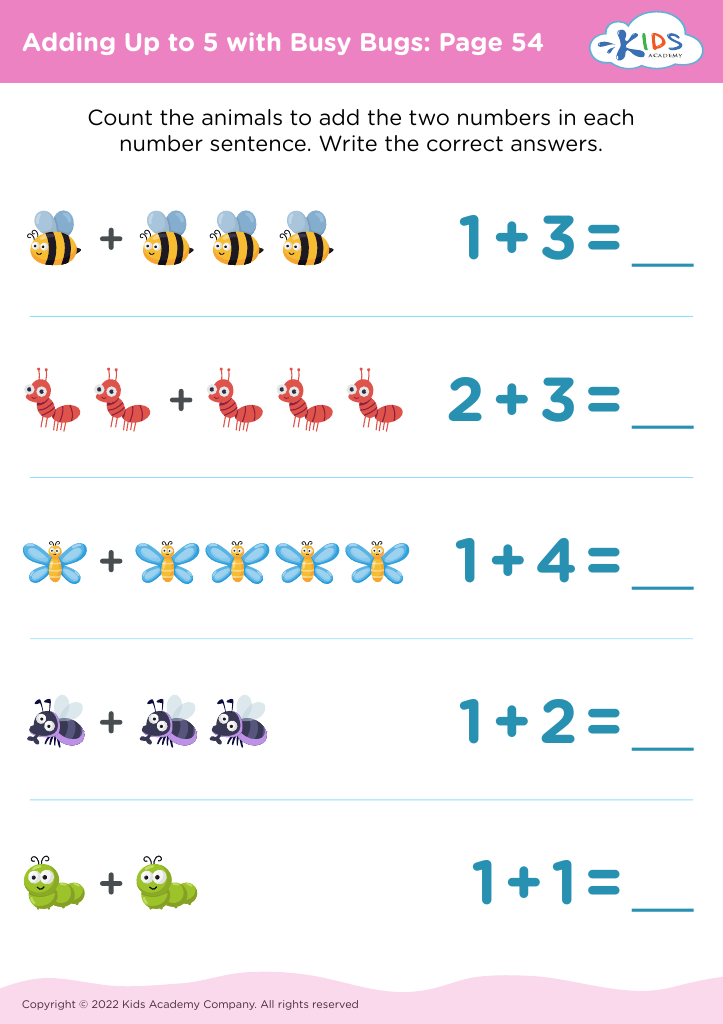
Adding Up to 5 with Busy Bugs: Page 54
Worksheet
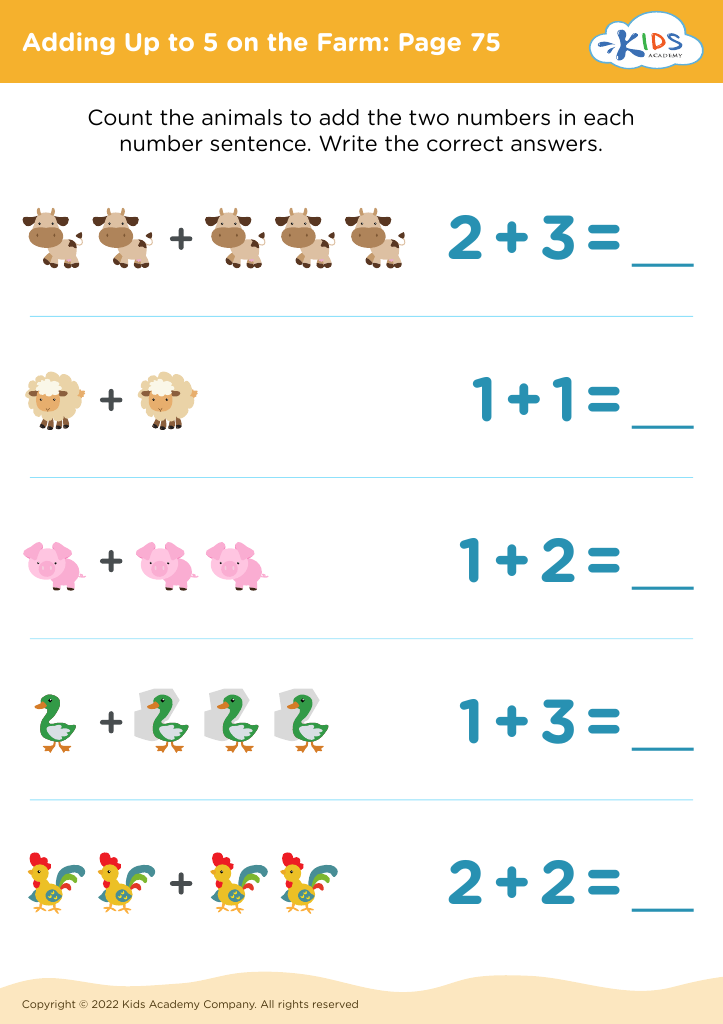
Adding Up to 5 on the Farm: Page 75
Worksheet
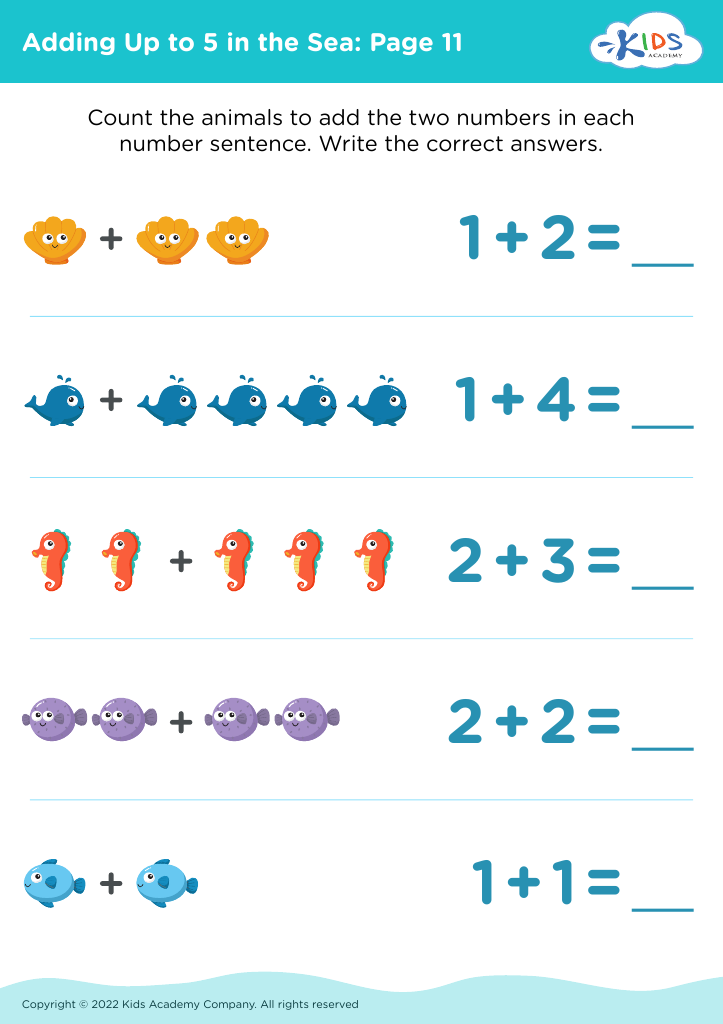
Adding Up to 5 in the Sea: Page 11
Worksheet
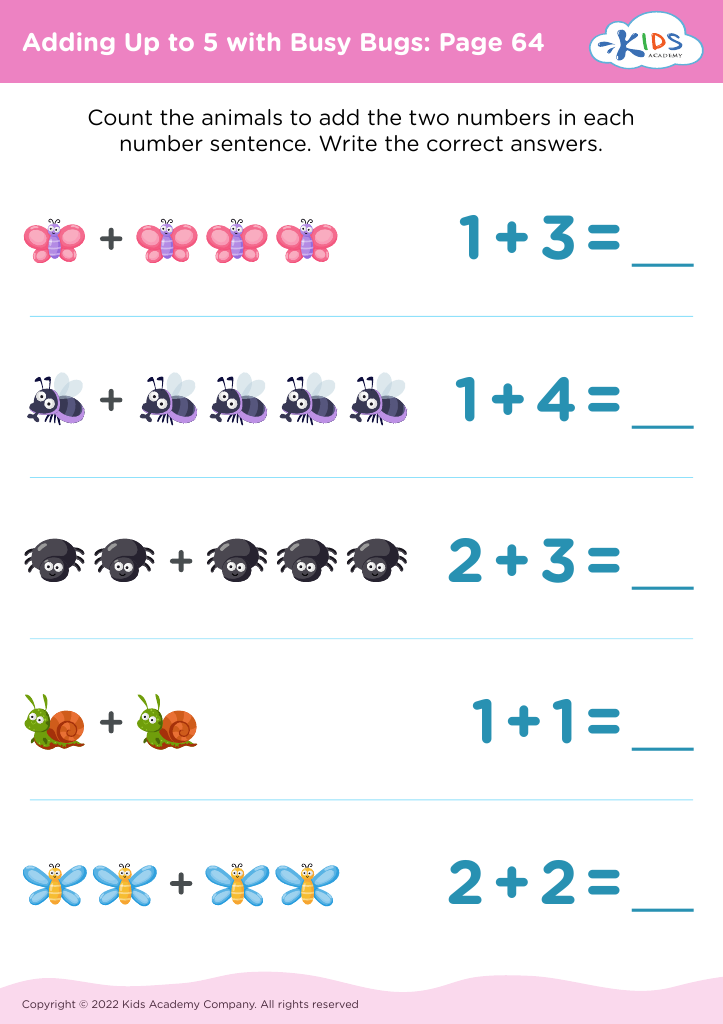
Adding Up to 5 with Busy Bugs: Page 64
Worksheet
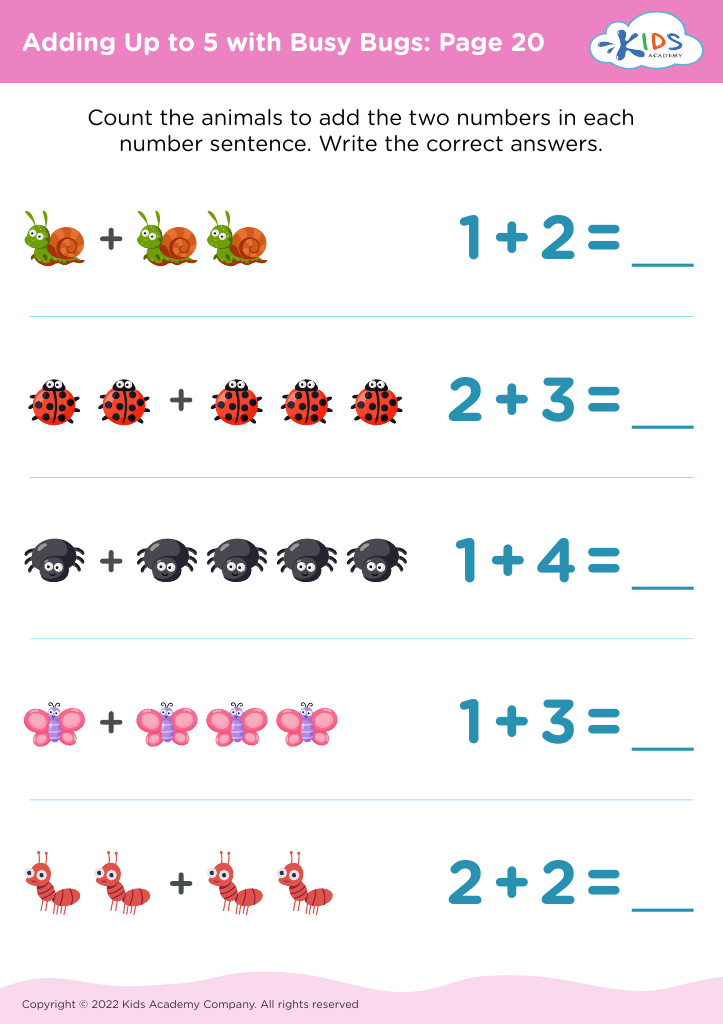
Adding Up to 5 with Busy Bugs: Page 20
Worksheet
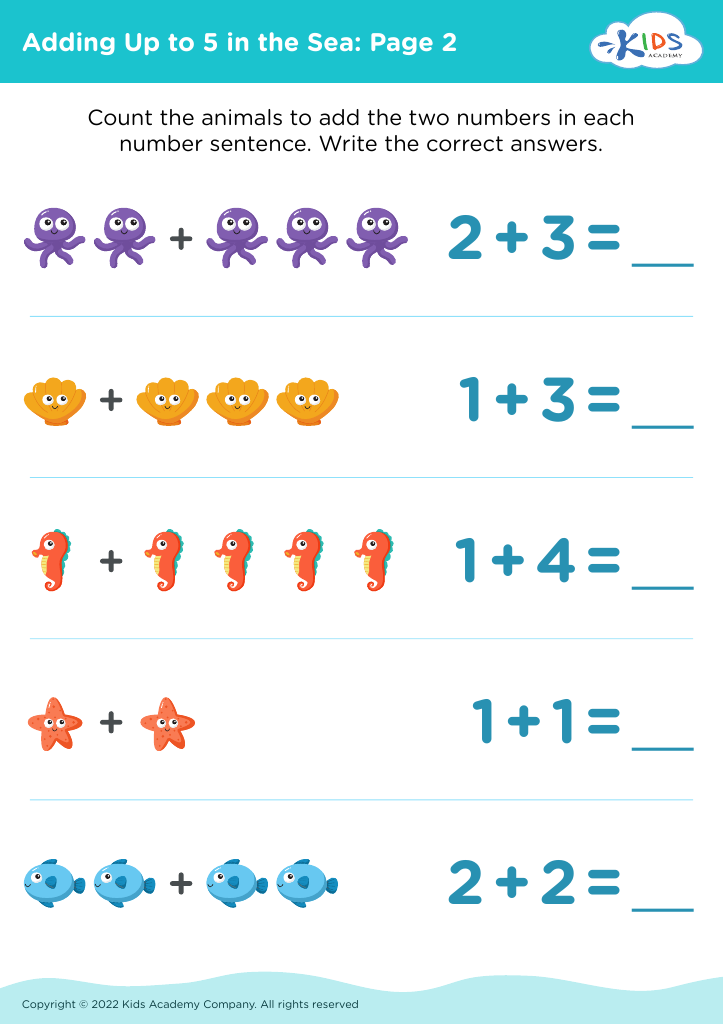
Adding Up to 5 in the Sea: Page 2

Adding Up to 5 in the Sea: Page 2

Adding Up to 5 in the Sea: Page 2
Worksheet
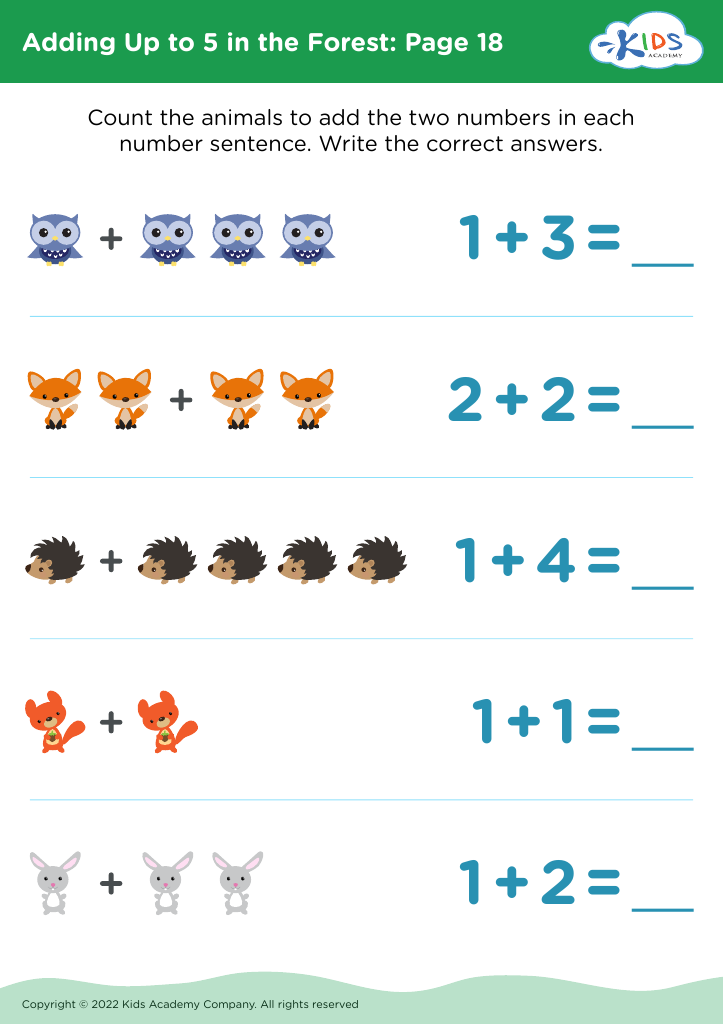
Adding Up to 5 in the Forest: Page 18
Worksheet
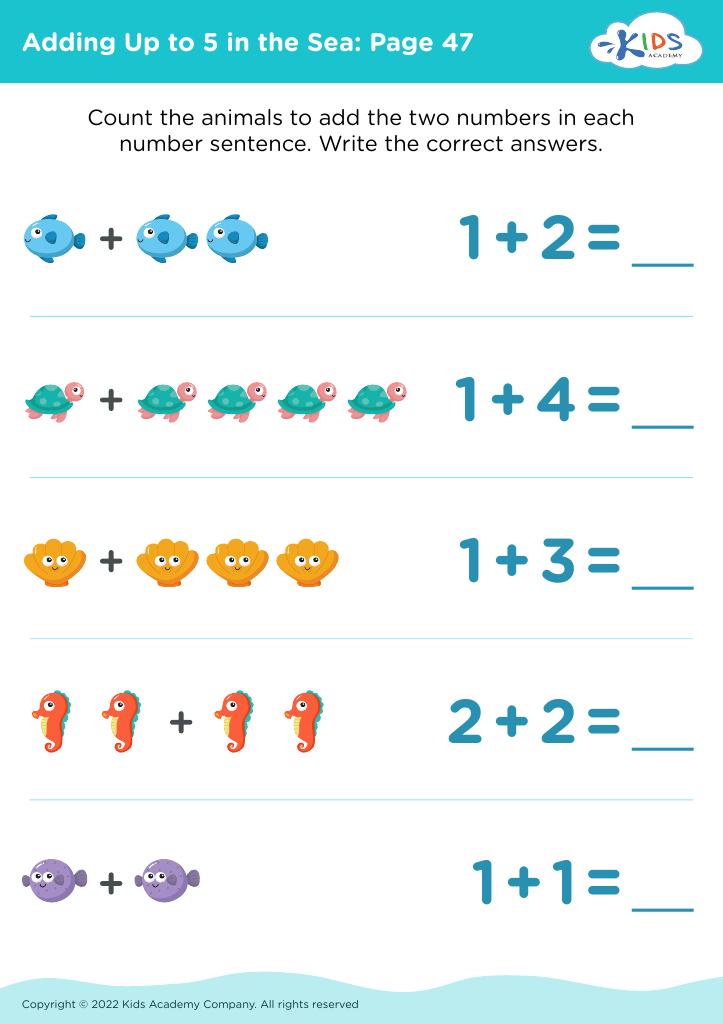
Adding Up to 5 in the Sea: Page 47
Worksheet
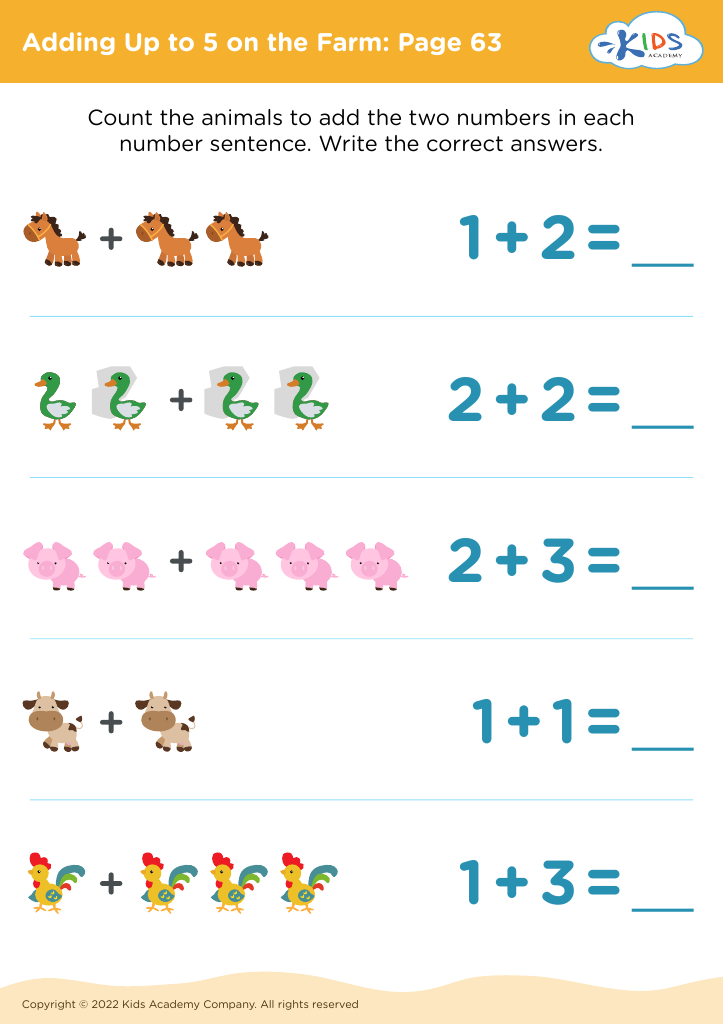
Adding Up to 5 on the Farm: Page 63
Worksheet


Visual Learning Addition for children aged 4-7 is crucial for their foundational understanding of math. At this developmental stage, children learn best through visual and hands-on experiences. Visual learning makes abstract concepts like addition tangible and relatable. Tools such as picture books, number lines, and manipulatives like counters or blocks help early learners see and physically manage the quantities involved in addition, fostering a clearer, deeper understanding.

Early exposure to visual addition reinforces number sense—recognizing what numbers represent, their relationships, and the effects of combining them. This concrete visual framework aids in developing problem-solving skills and critical thinking, which are essential for more complex math concepts later on. Additionally, visual learning caters to diverse learning styles, ensuring all students grasp the basics of addition effectively.

Parents and teachers play a crucial role in facilitating these visual experiences. When children encounter math in context, such as counting apples in a grocery store or blocks during play, they make real-world connections, making learning more meaningful and engaging. Encouraging visual learning in early math sets a strong, positive foundation, promoting confidence and a lifelong interest in STEM fields. Therefore, adopting visual learning strategies in early education is not just beneficial but essential for creating enthusiastic, capable young mathematicians.