Filters

88 filtered results

Clear all filters
Favorites
With answer key
Interactive

88 filtered results

Difficulty Level

Grade


Check out this FREE Trial Lesson on Addition for age 4-7!

Writing Number Sentences for Addition Story Problems

Favorites
With answer key
Interactive
  • 4-7
  • Visual Learning
  • Addition
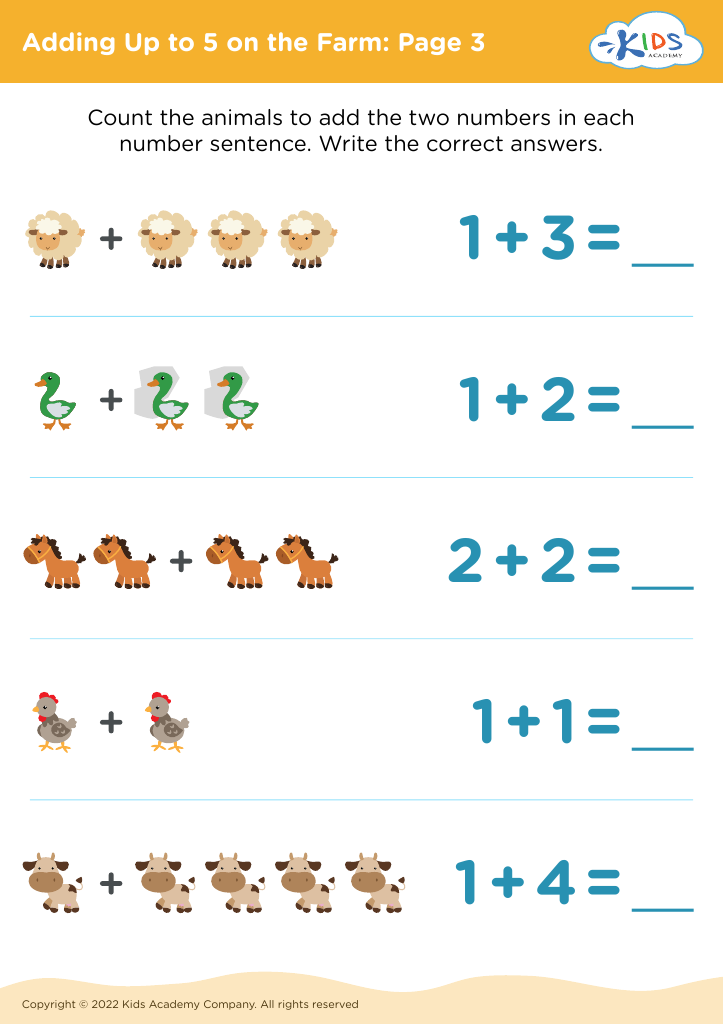
Adding Up to 5 on the Farm: Page 3
Worksheet
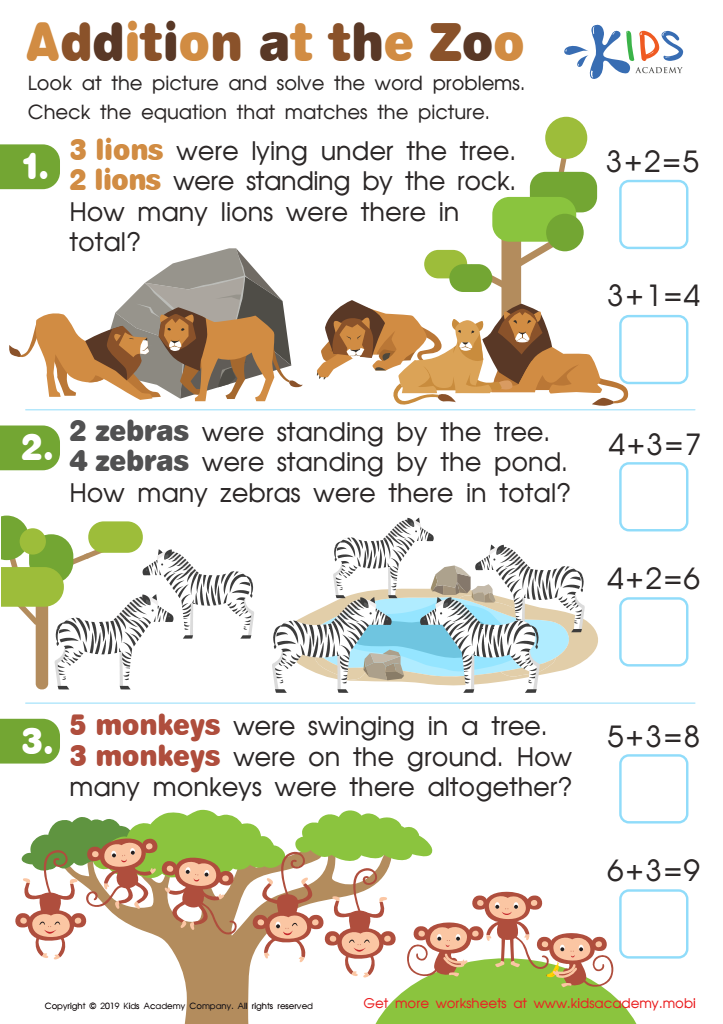
Addition at the Zoo Worksheet

Addition at the Zoo Worksheet

Visit the zoo with your kids and point out all the different animals. Ask them to name their favorites and identify animals on a worksheet. Challenge them to solve word problems related to the pictures. Ask them for the equation that fits the picture and check the answer.
Addition at the Zoo Worksheet
Worksheet
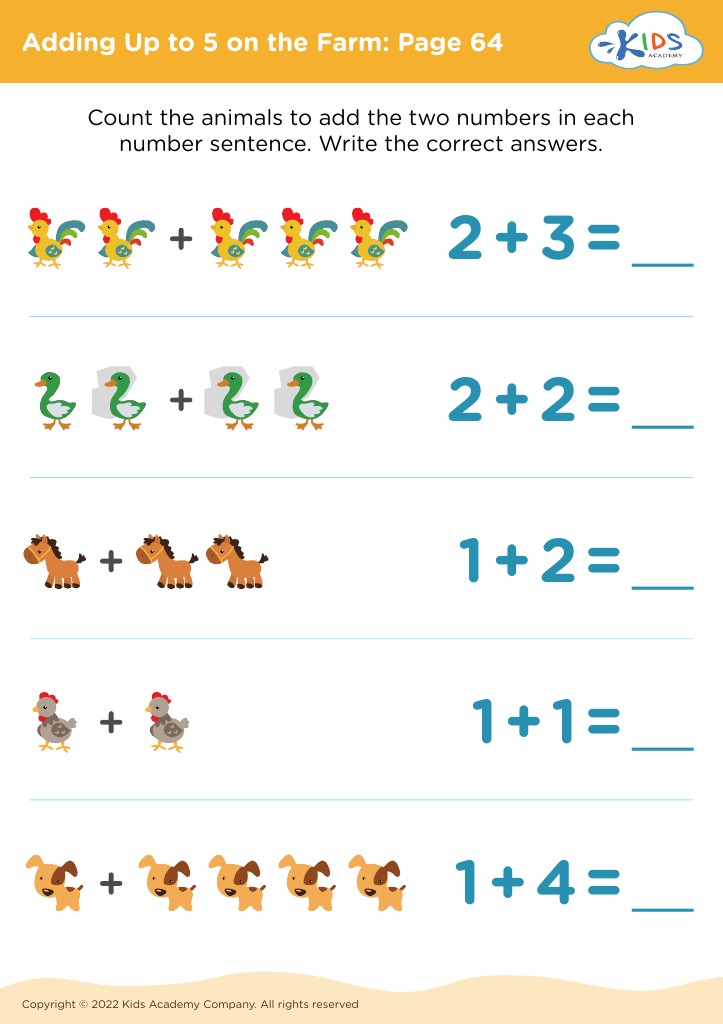
Adding Up to 5 on the Farm: Page 64
Worksheet
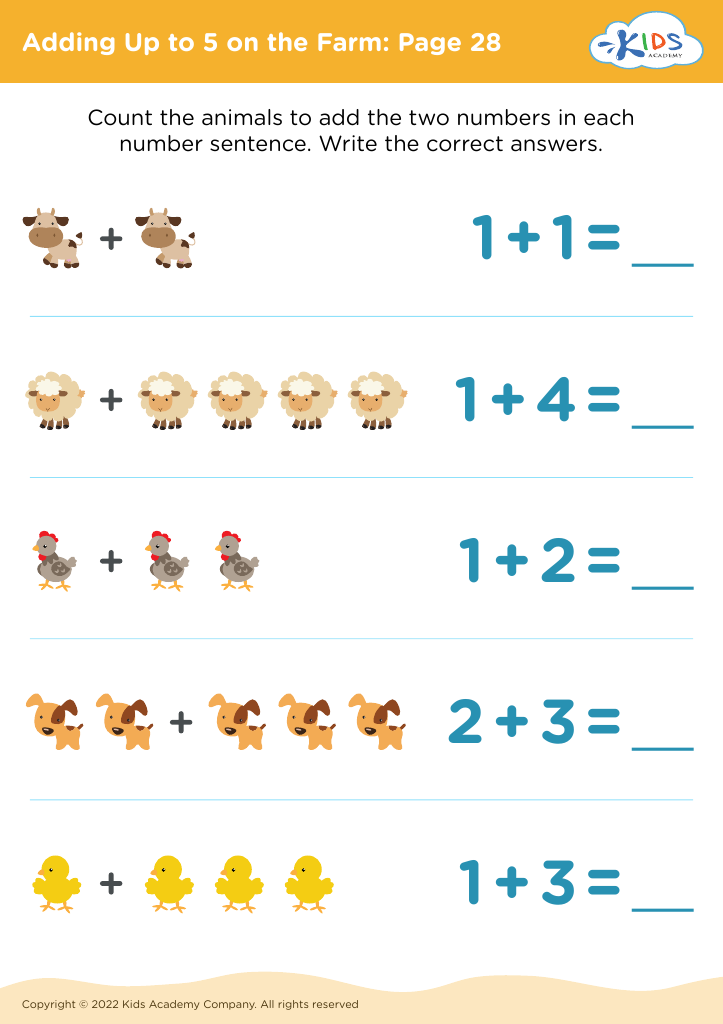
Adding Up to 5 on the Farm: Page 28
Worksheet
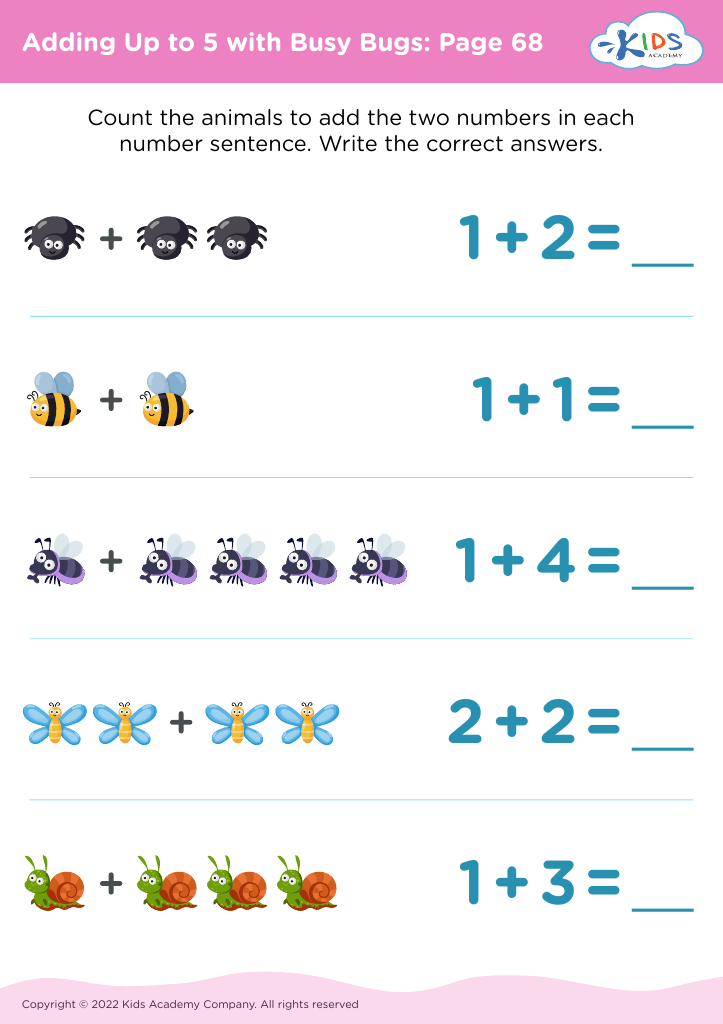
Adding Up to 5 with Busy Bugs: Page 68
Worksheet
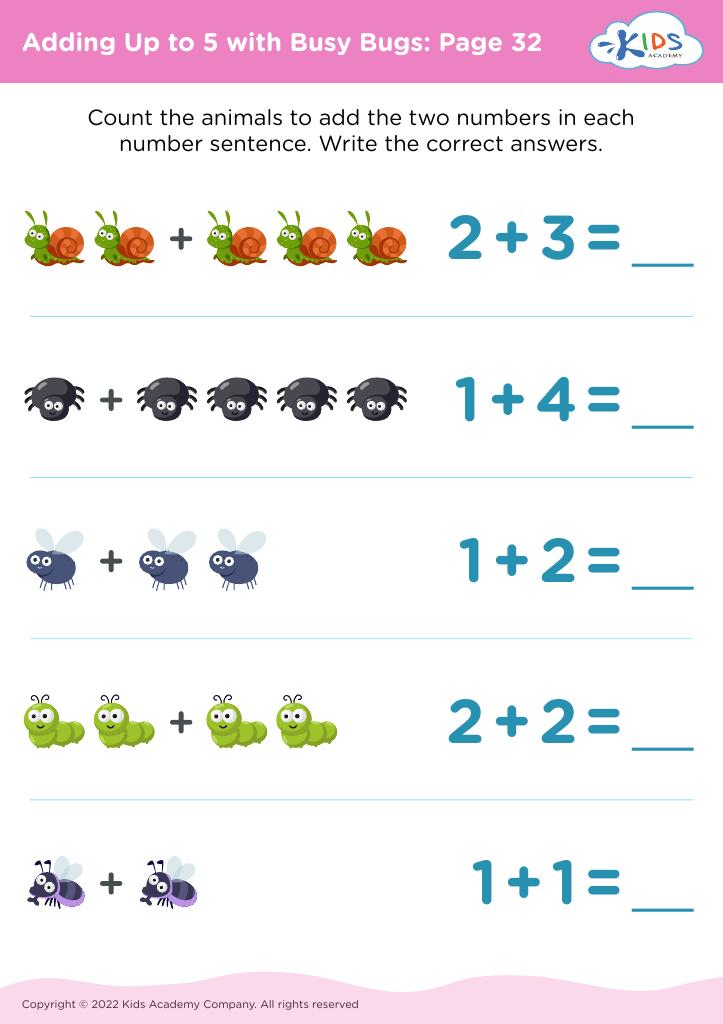
Adding Up to 5 with Busy Bugs: Page 32
Worksheet
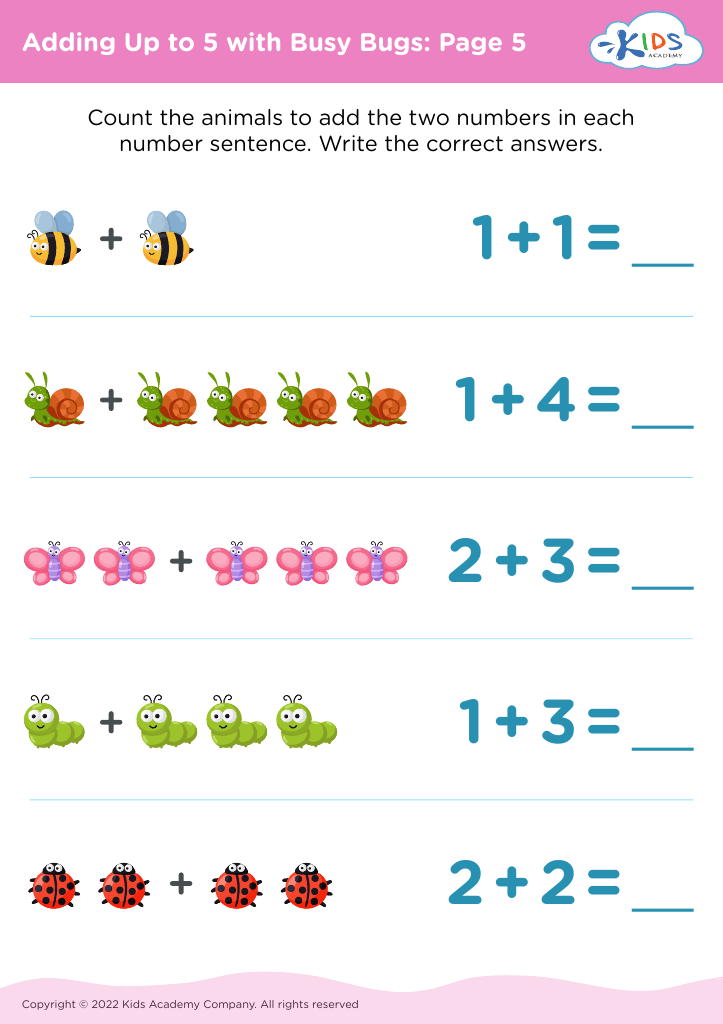
Adding Up to 5 with Busy Bugs: Page 5
Worksheet
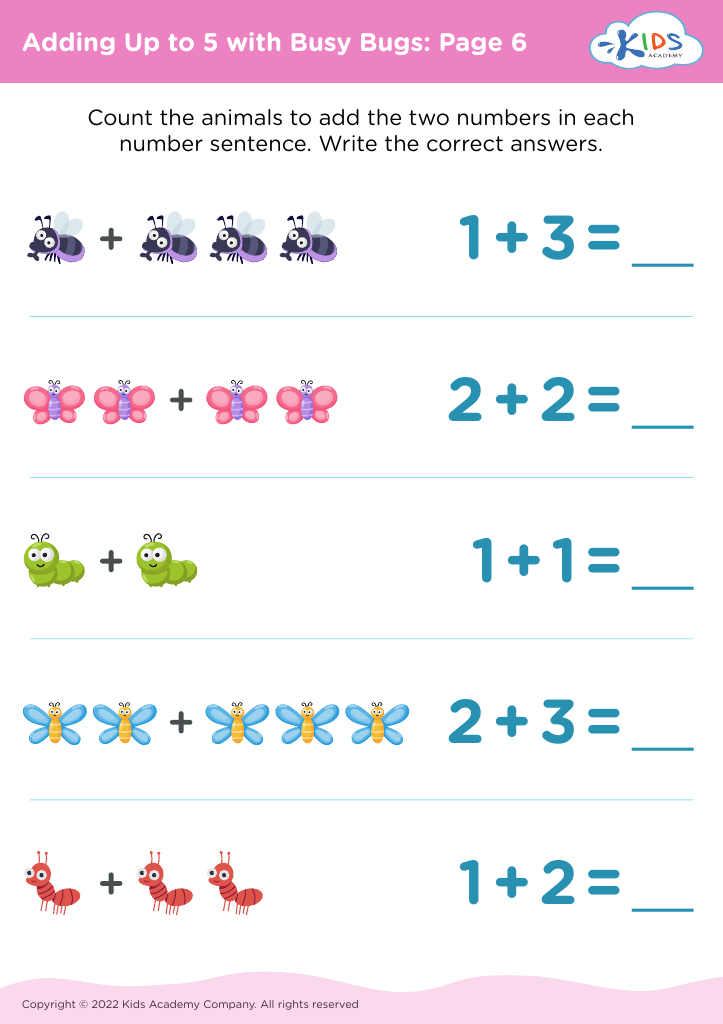
Adding Up to 5 with Busy Bugs: Page 6
Worksheet
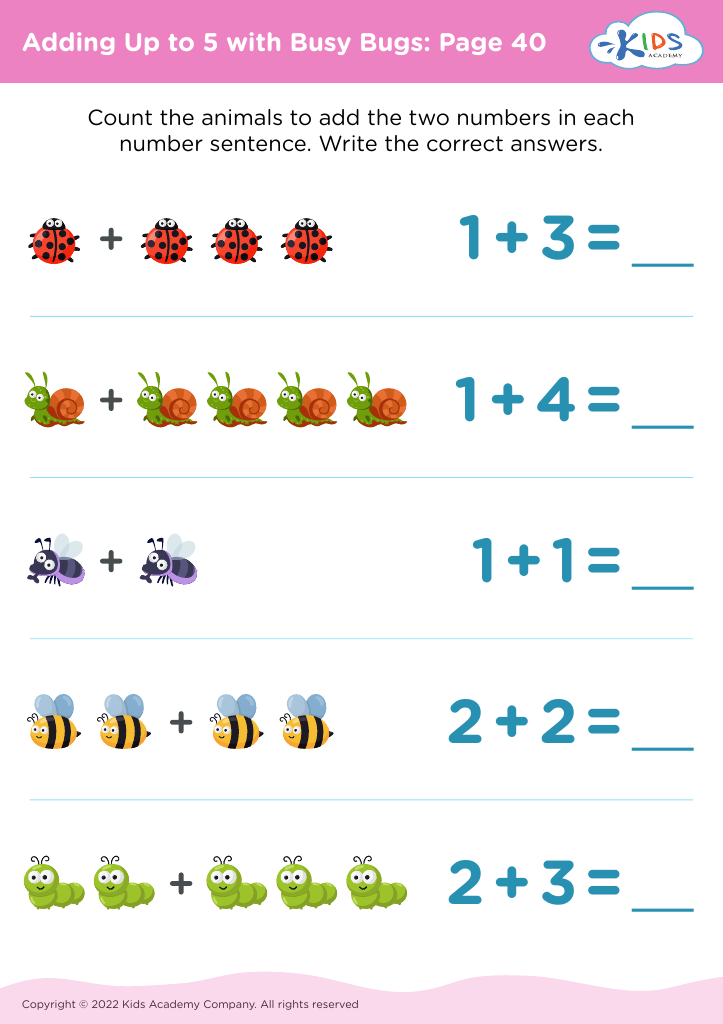
Adding Up to 5 with Busy Bugs: Page 40
Worksheet
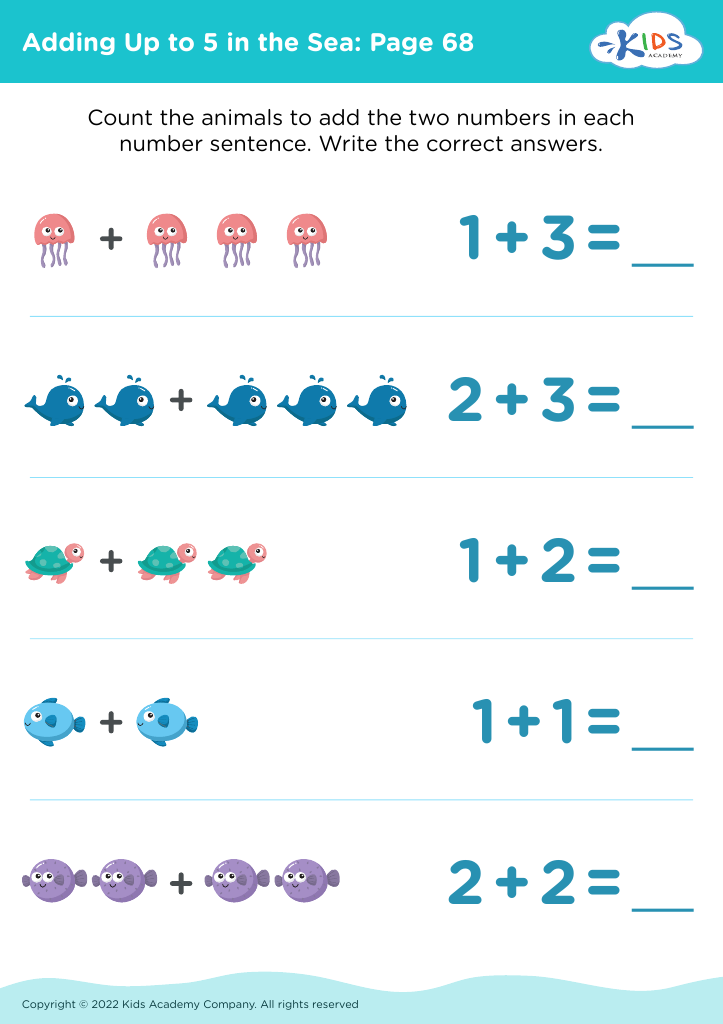
Adding Up to 5 in the Sea: Page 68
Worksheet
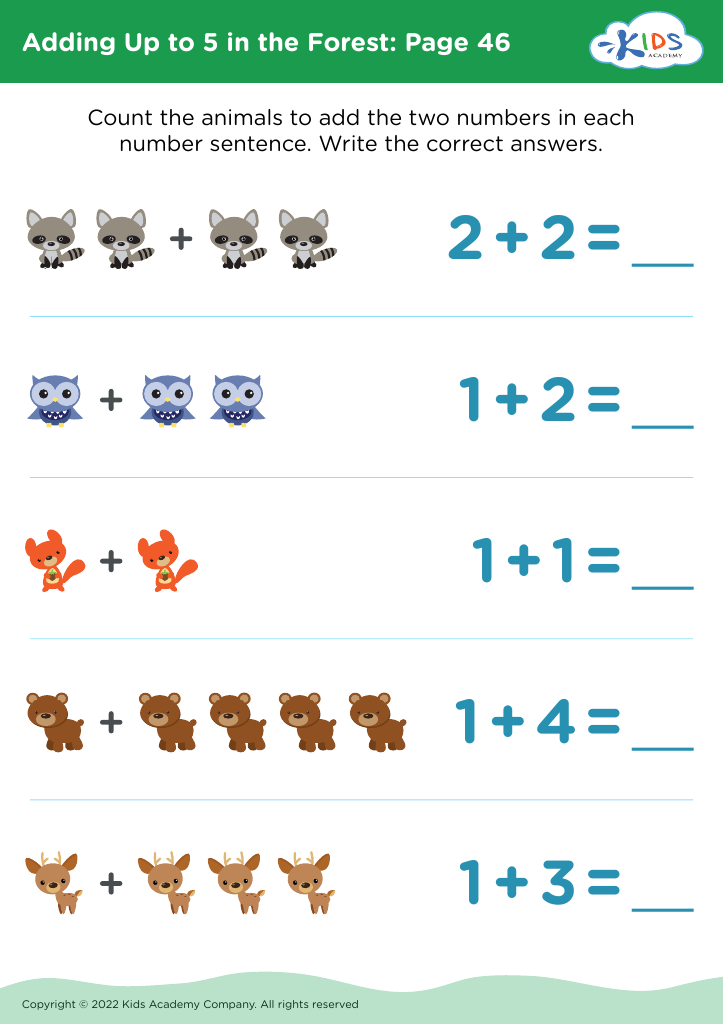
Adding Up to 5 in the Forest: Page 46
Worksheet
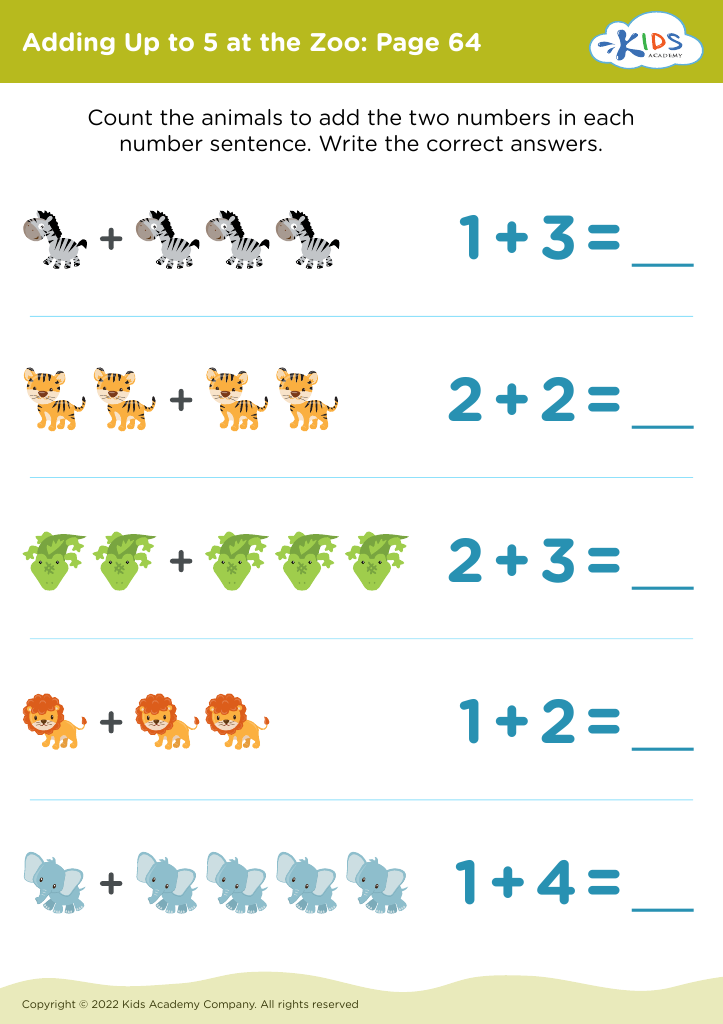
Adding Up to 5 at the Zoo: Page 64
Worksheet
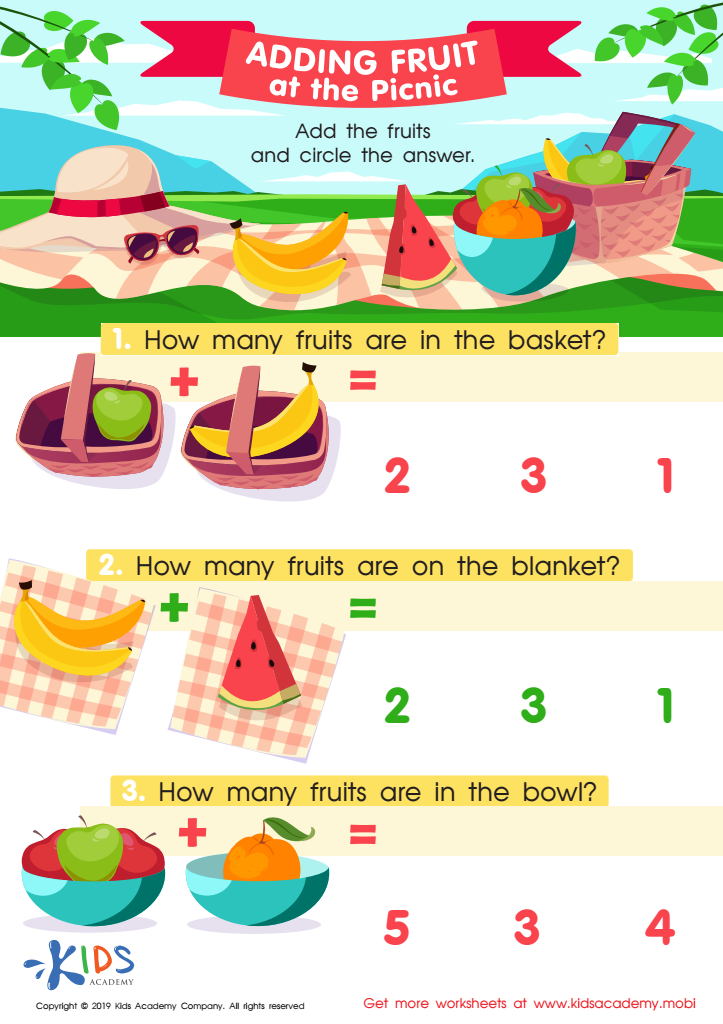
Adding Fruit at the Picnic Worksheet
Adding Fruit at the Picnic Worksheet
Picnics are a great way for the family to enjoy a fun day in the sun! Get your kids involved by having them help load the picnic basket and do this worksheet to practice their math skills while they get ready. Identify the fruits in the picture, add them up, and circle the correct answer.
Adding Fruit at the Picnic Worksheet

Worksheet
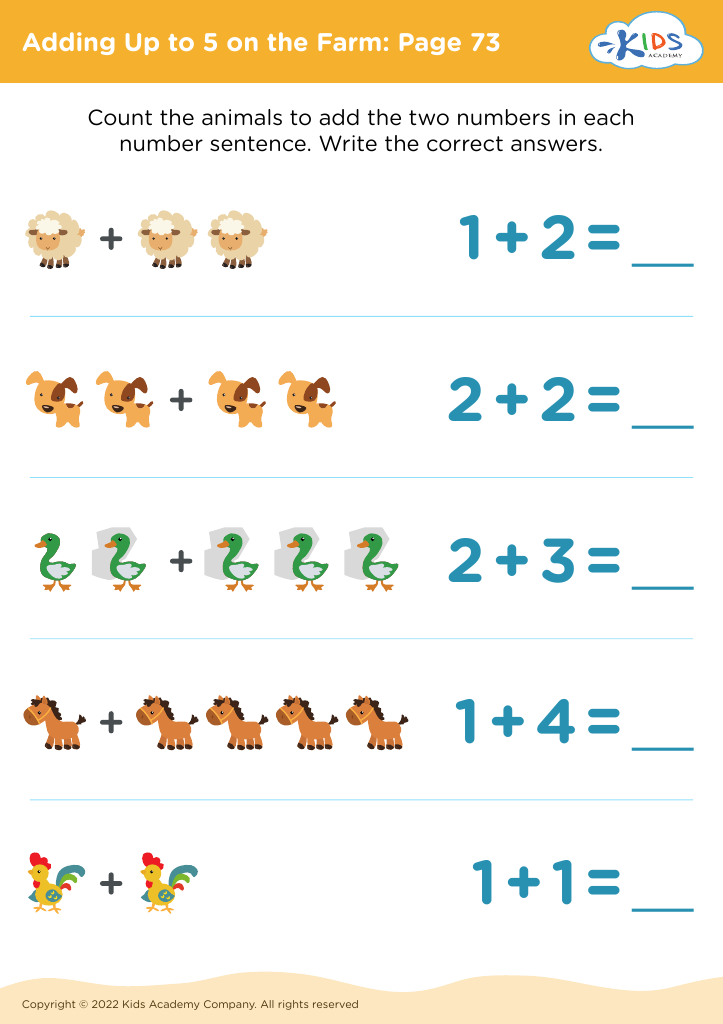
Adding Up to 5 on the Farm: Page 73
Worksheet
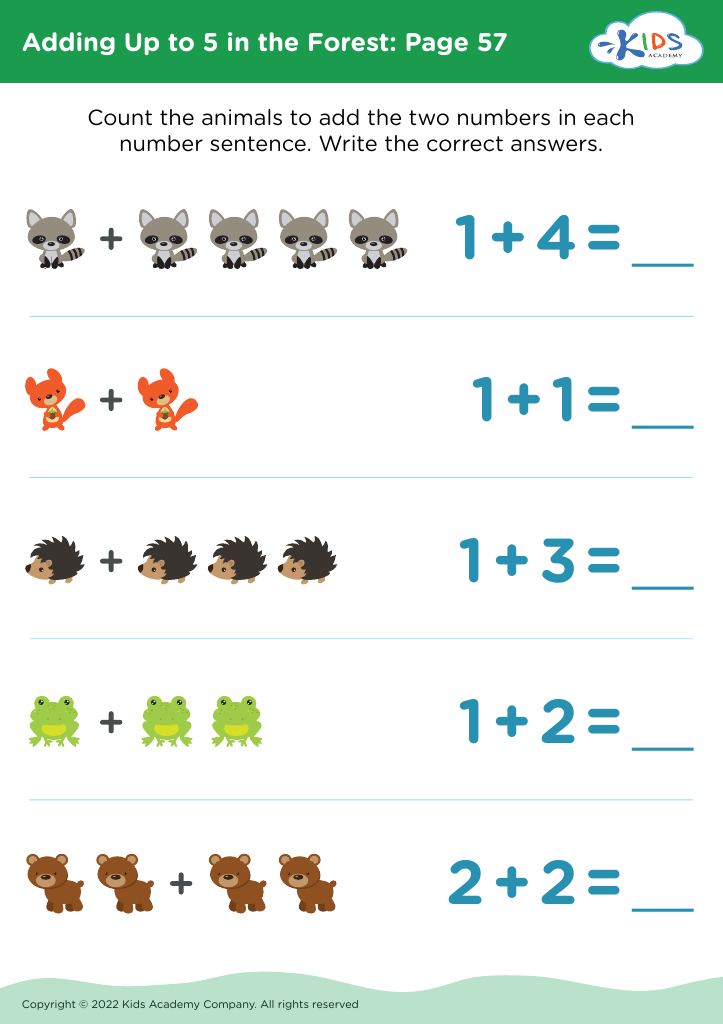
Adding Up to 5 in the Forest: Page 57
Worksheet
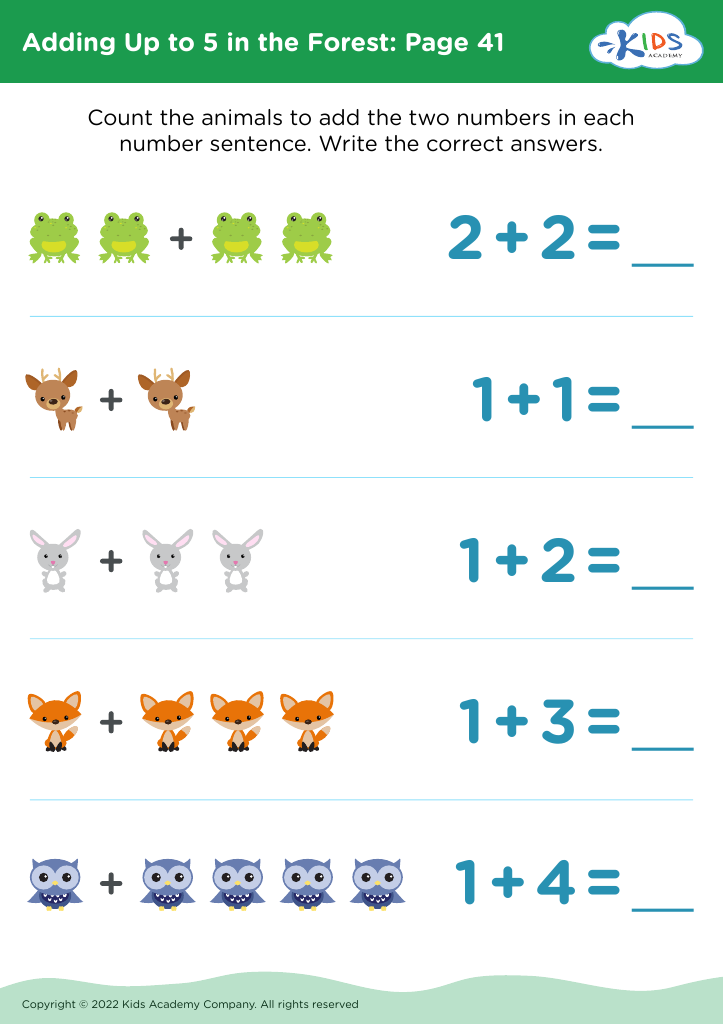
Adding Up to 5 in the Forest: Page 41
Worksheet


... 3 4

Visual Learning Addition for children aged 4-7 is crucial for their foundational understanding of math. At this developmental stage, children learn best through visual and hands-on experiences. Visual learning makes abstract concepts like addition tangible and relatable. Tools such as picture books, number lines, and manipulatives like counters or blocks help early learners see and physically manage the quantities involved in addition, fostering a clearer, deeper understanding.

Early exposure to visual addition reinforces number sense—recognizing what numbers represent, their relationships, and the effects of combining them. This concrete visual framework aids in developing problem-solving skills and critical thinking, which are essential for more complex math concepts later on. Additionally, visual learning caters to diverse learning styles, ensuring all students grasp the basics of addition effectively.

Parents and teachers play a crucial role in facilitating these visual experiences. When children encounter math in context, such as counting apples in a grocery store or blocks during play, they make real-world connections, making learning more meaningful and engaging. Encouraging visual learning in early math sets a strong, positive foundation, promoting confidence and a lifelong interest in STEM fields. Therefore, adopting visual learning strategies in early education is not just beneficial but essential for creating enthusiastic, capable young mathematicians.