Basic Math Skills Comparison Worksheets for Ages 4-7
3 filtered results
-
From - To
Enhance your child's early math abilities with our Basic Math Skills Comparison Worksheets for ages 4-7. These meticulously designed worksheets focus on foundational concepts such as greater than, less than, and equal to. Fun and engaging activities help young learners compare quantities and develop their number sense in an enjoyable way. Each worksheet is designed to promote critical thinking and foster a love for learning by presenting math in an accessible format. Perfect for home or classroom use, these resources support early education goals, providing children the tools they need for success in their academic journey. Start building essential skills today!
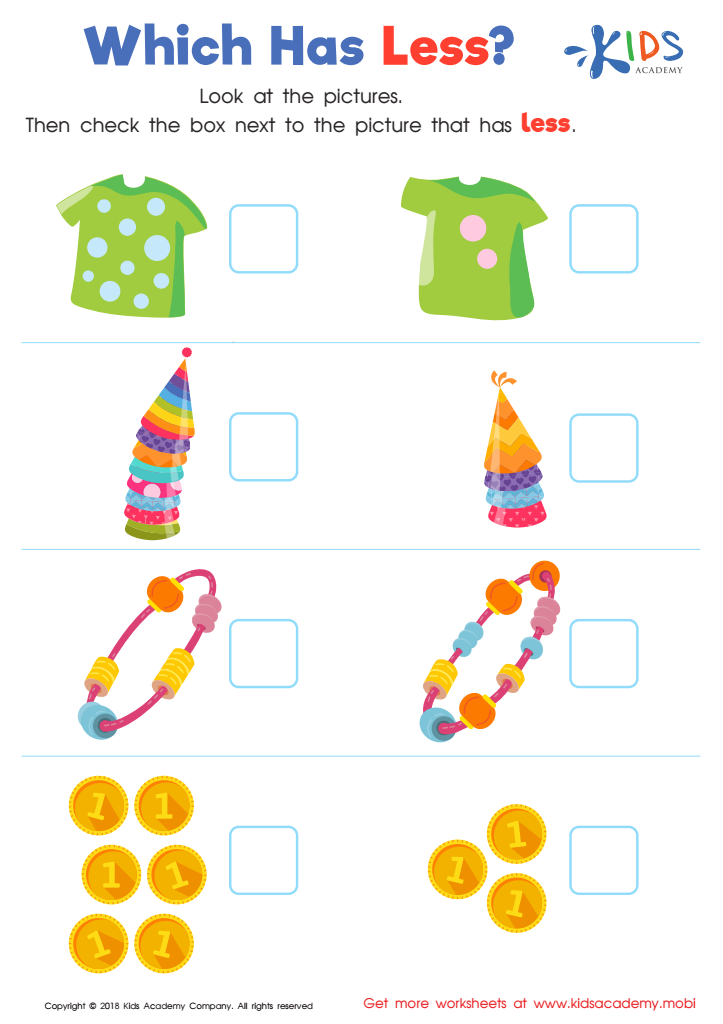
Which Has Less? Worksheet
 Assign to My Students
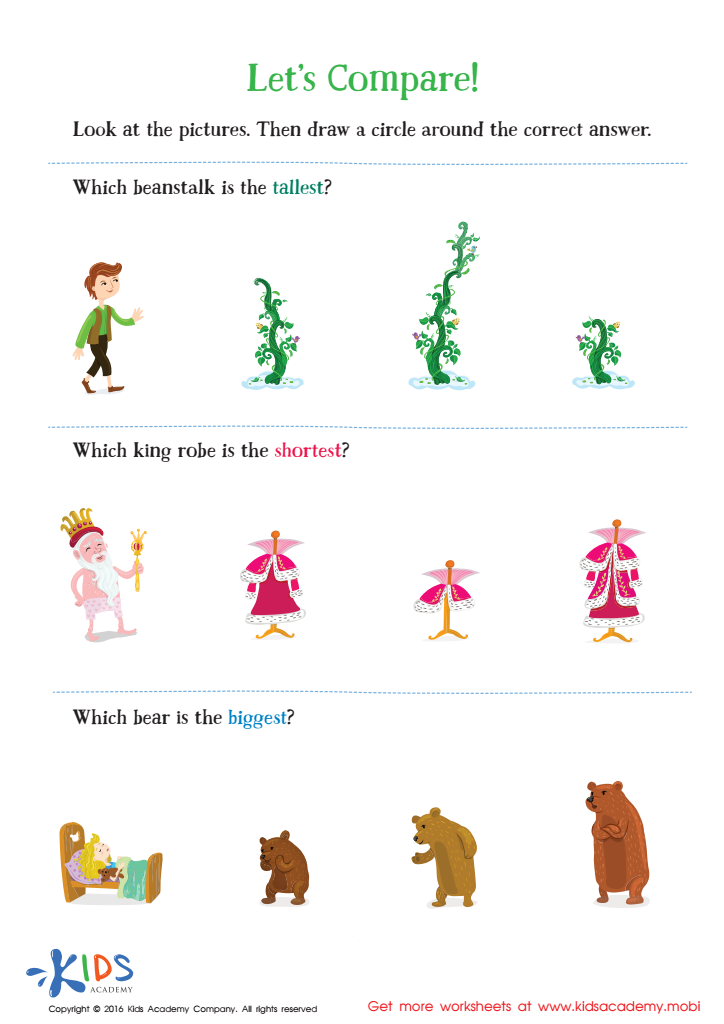
Fairy Tale Worksheet: Let's Compare
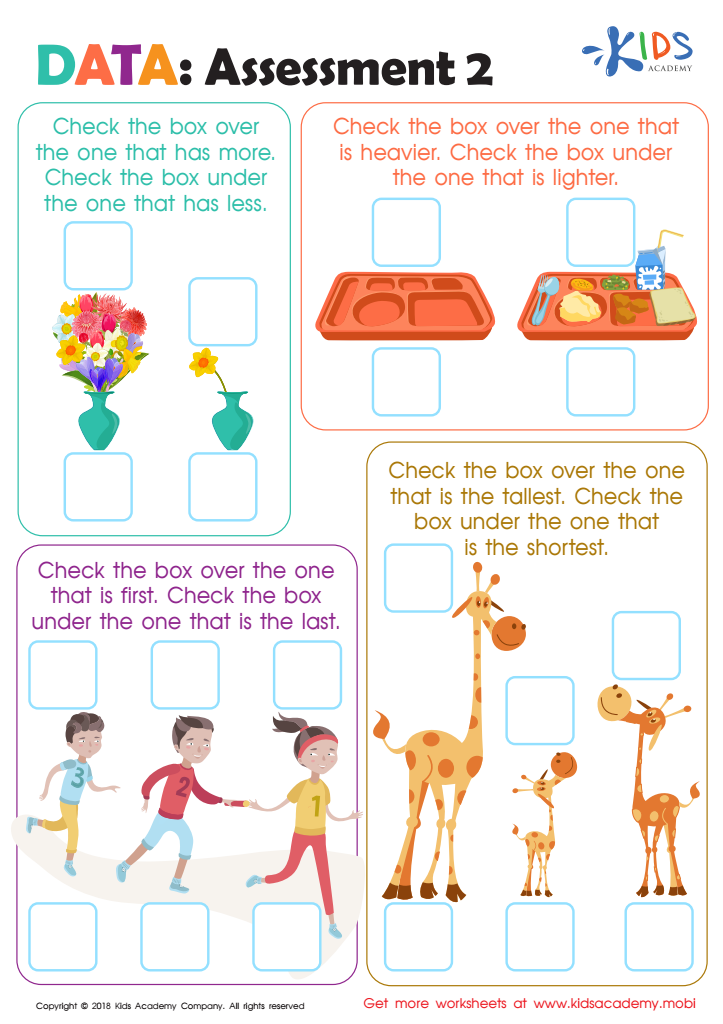
Data: Assessment 2 Worksheet





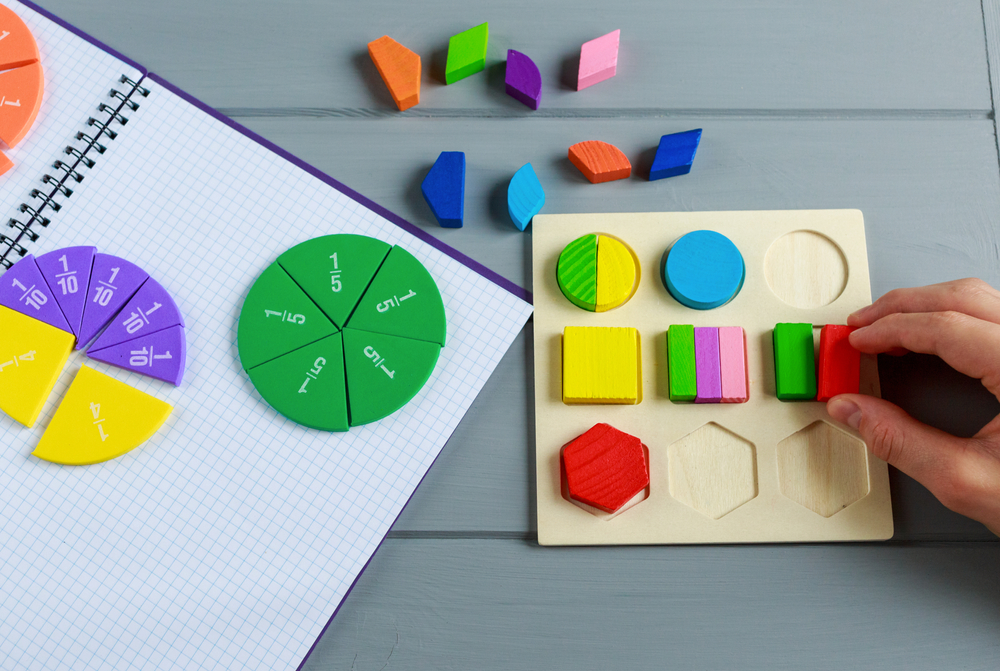


Parents and teachers should prioritize understanding the development of basic math skills in children ages 4-7 because early math proficiency lays the foundation for future academic success. During these formative years, children develop critical cognitive abilities including number concepts, counting, and basic arithmetic. Engaging with simple math helps promote logical thinking and problem-solving skills.
Research consistently shows that early math skills are a strong predictor of later achievement, not only in mathematics but across subjects, including reading and science. When educators and parents compare the math skills of children within this age group, they can identify developmental milestones and catch learning gaps early on. This allows for timely interventions and tailored instruction to meet individual learning needs.
Moreover, fostering a positive attitude toward math during these years encourages lifelong learning and confidence. Early engagement—with games, hands-on activities, and real-life applications—makes math relevant and enjoyable.
By caring about these comparisons, parents and teachers can support a child’s holistic development, build essential skills, and empower learners to confidently tackle more complex concepts in the future. Overall, promoting math at this stage is an investment in a child's educational journey and overall cognitive growth.








