Fraction comparison Geometry Worksheets for Ages 4-7
3 filtered results
-
From - To
Explore our engaging Fraction Comparison Geometry Worksheets designed specifically for children aged 4-7. With vibrant illustrations and interactive activities, these worksheets help young learners grasp the concepts of fractions while enhancing their geometry skills. Students will enjoy comparing fractions through fun exercises that introduce them to shapes and measurements, fostering a solid mathematical foundation. Ideal for both classroom and home learning environments, these worksheets promote critical thinking and problem-solving abilities. Each worksheet is tailored to cater to different learning levels, ensuring that every child can understand and master the comparison of fractions with confidence. Start your math journey today!
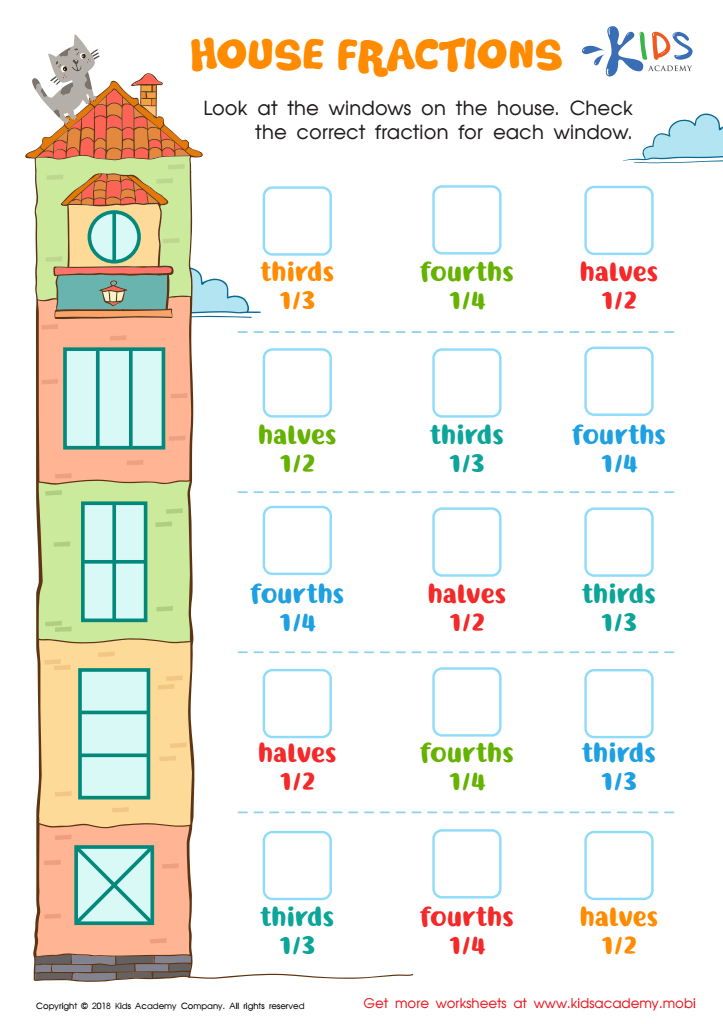
House Fractions Worksheet
 Assign to My Students











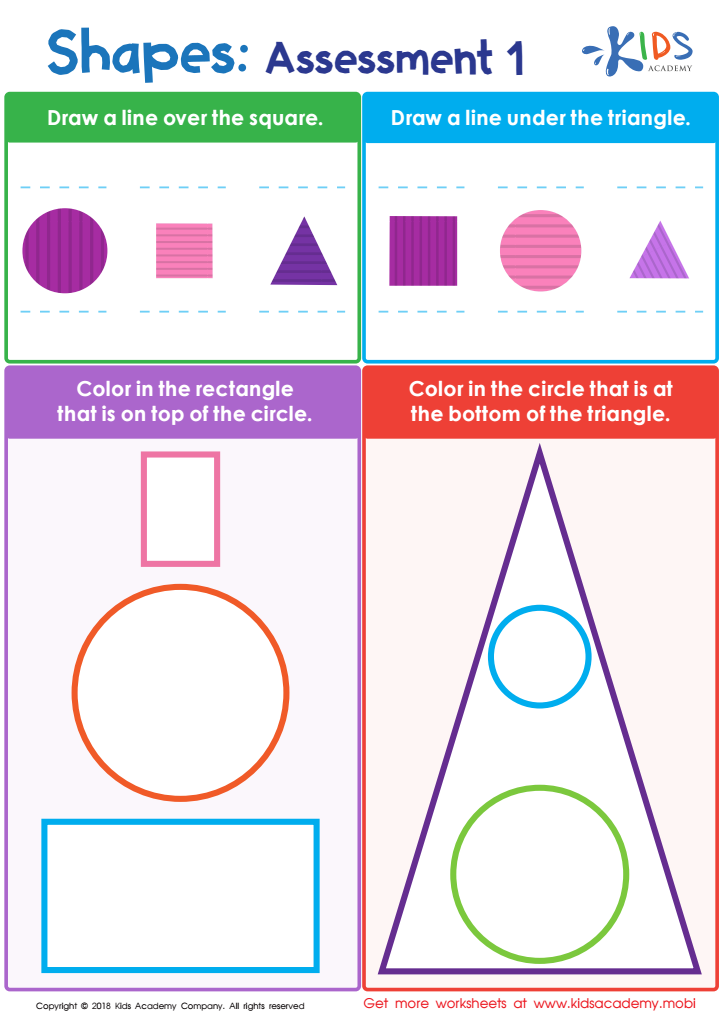
Shapes: Assessment 1 Worksheet
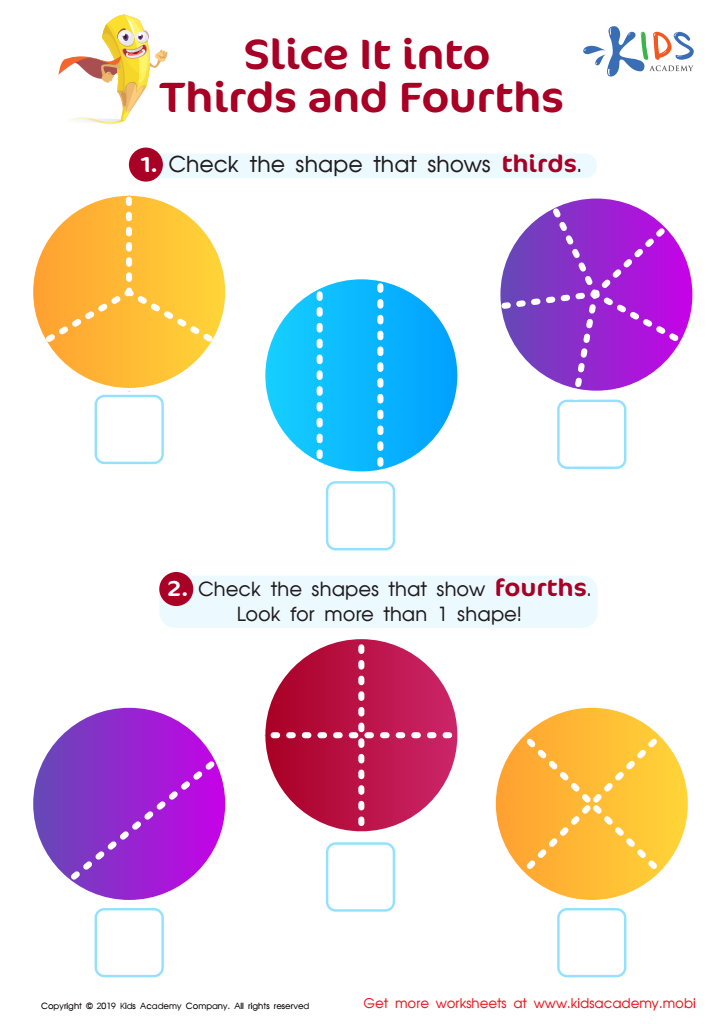
Slice in Thirds Fourths Worksheet








Understanding fraction comparison and geometry is fundamental for children aged 4-7 as it lays the groundwork for critical mathematical skills needed throughout their education. At this early stage, children are naturally curious and eager to explore concepts such as size, shape, and quantity, which makes it an ideal time for them to engage with fractions and geometry.
Teaching children how to compare fractions helps them develop an intuitive grasp of relative size and proportion. For instance, when they compare 1/2 and 1/4 using visual aids like pie charts or actual food items, they can see firsthand how different fractions represent parts of a whole. This not only promotes number sense but also enhances reasoning skills.
Additionally, introducing basic geometric concepts such as shapes, symmetry, and spatial relationships allows children to recognize patterns and build visual literacy. By connecting fractions to geometry—for example, dividing shapes into equal parts—children start to see the connections between different mathematical concepts, promoting a holistic understanding.
For parents and teachers, fostering competency in these areas can ignite a child's interest in mathematics, paving the way for more advanced topics in later years. Thus, equipping young learners with these foundational skills is crucial for their academic success and confidence.








