Spatial Orientation Geometry Worksheets for Ages 4-7
3 filtered results
-
From - To
Explore our engaging Spatial Orientation Geometry Worksheets designed specifically for children ages 4-7! These worksheets provide a fun and interactive way for young learners to develop essential spatial awareness and geometry skills. Through colorful illustrations and age-appropriate exercises, kids will learn to recognize shapes, understand spatial relationships, and improve their ability to visualize objects in space. Perfect for homeschooling or classroom settings, our worksheets encourage critical thinking and problem-solving in a playful environment. Foster your child's love for learning and help them build a strong math foundation with our expertly crafted resources. Download your worksheets today for an exciting learning experience!
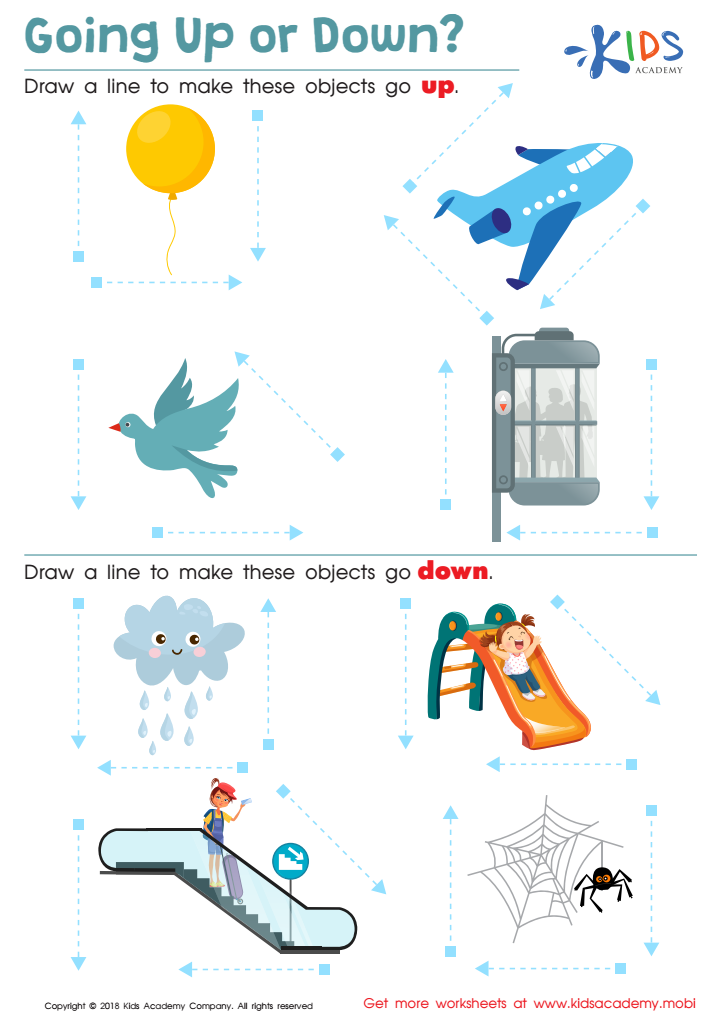
Going up or Down? Worksheet
 Assign to My Students











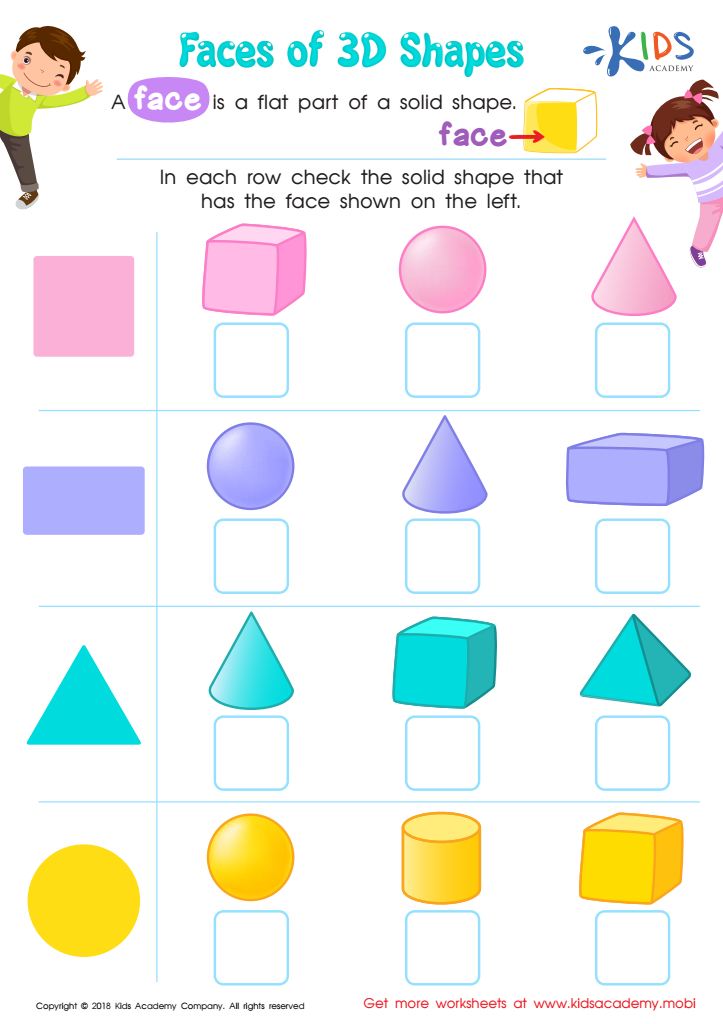
Faces of 3D Shapes Worksheet
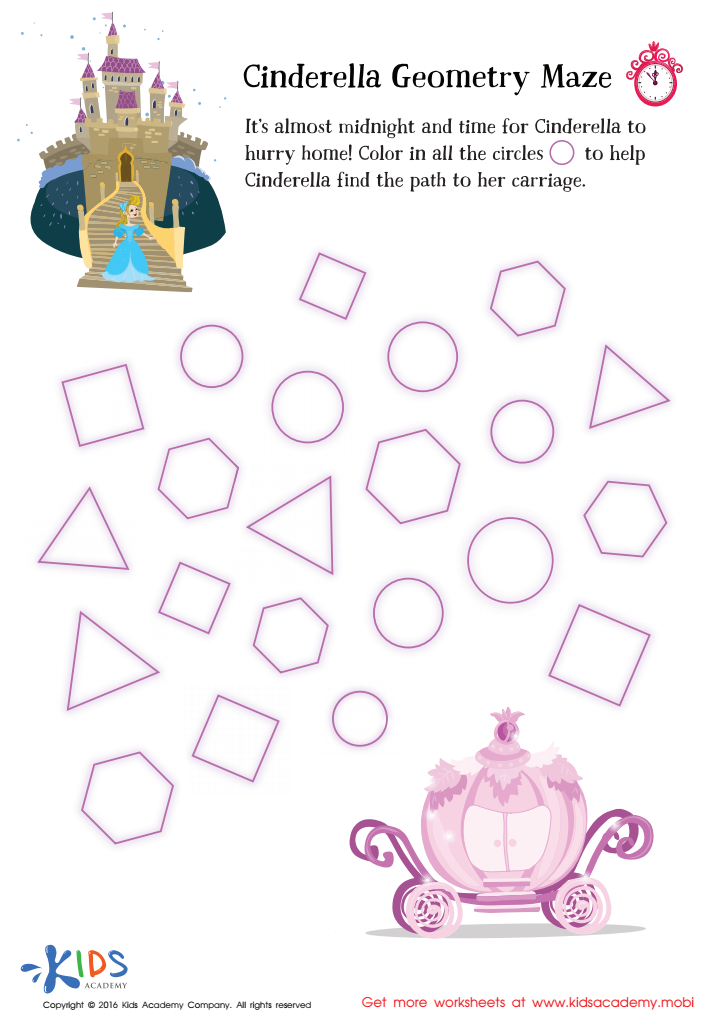
Cinderella Geometry Maze Worksheet








Spatial Orientation Geometry is an essential foundation for young children's cognitive development, particularly in the ages of 4-7. At this critical stage, children are naturally curious and eager to explore their surroundings. By introducing spatial orientation concepts, parents and teachers equip children with vital skills that transcend mathematics; they foster critical thinking, problem-solving, and visual-spatial reasoning.
Understanding spatial orientation helps children navigate their physical world, enhancing their ability to comprehend positions, directions, and movements. These skills contribute to their success not only in geometry but also in other subjects such as science and art, where spatial awareness is crucial. Engaging in activities involving shapes, sizes, and spatial relationships aids in the development of fine motor skills and boosts confidence in problem-solving.
Moreover, a strong grasp of spatial orientation lays the groundwork for future learning in mathematics and diverse fields, including architecture, engineering, and even technology. As they grow and encounter more complex ideas, early exposure to spatial concepts will reflect positively in their academic journeys. Therefore, parents and teachers should prioritize spatial orientation activities, ensuring children cultivate a love for learning and a robust intellectual toolkit for the future.








