Visual Learning Geometry Worksheets for Ages 4-7
4 filtered results
-
From - To
Explore our engaging Visual Learning Geometry Worksheets designed specifically for children ages 4-7! These worksheets provide a fun and interactive approach to mastering basic geometric concepts through vibrant visuals and hands-on activities. Young learners will develop essential skills in shape recognition, spatial reasoning, and problem-solving, all while enhancing their creativity. Perfect for classroom settings or at-home learning, our worksheets encourage exploration and foster a love for math through colorful illustrations and playful exercises. Whether you’re a teacher or a parent, these resources are ideal for making geometry enjoyable and accessible for early learners. Start your child’s geometric adventure today!
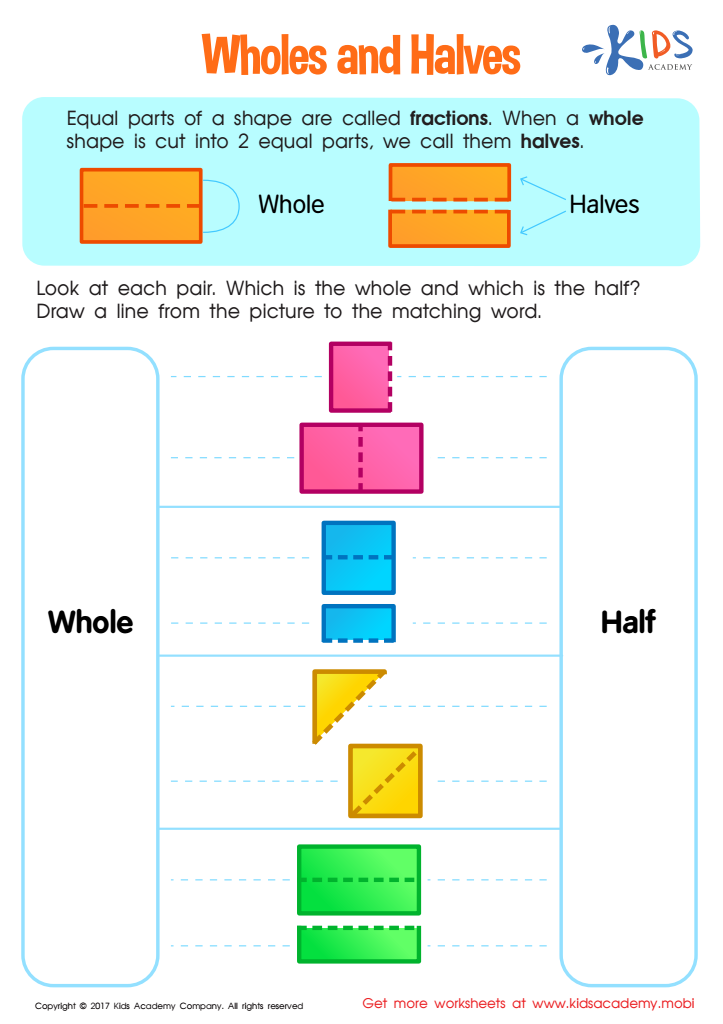
Wholes and Halves Worksheet
 Assign to My Students











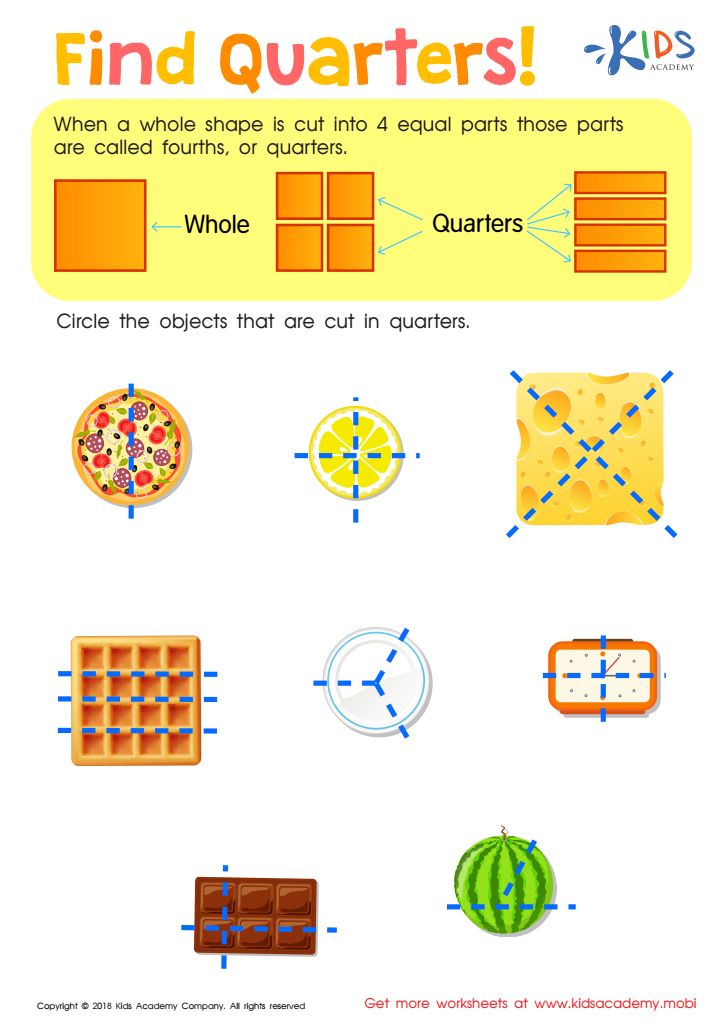
Find Quarters Worksheet
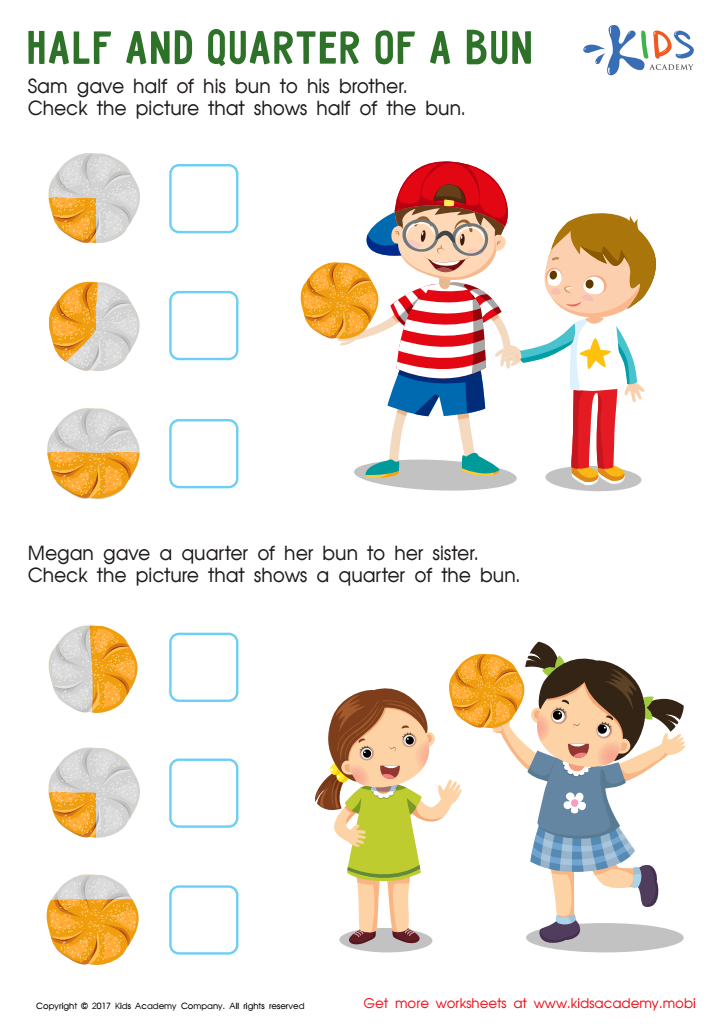
Half and Quarter of a Bun Worksheet
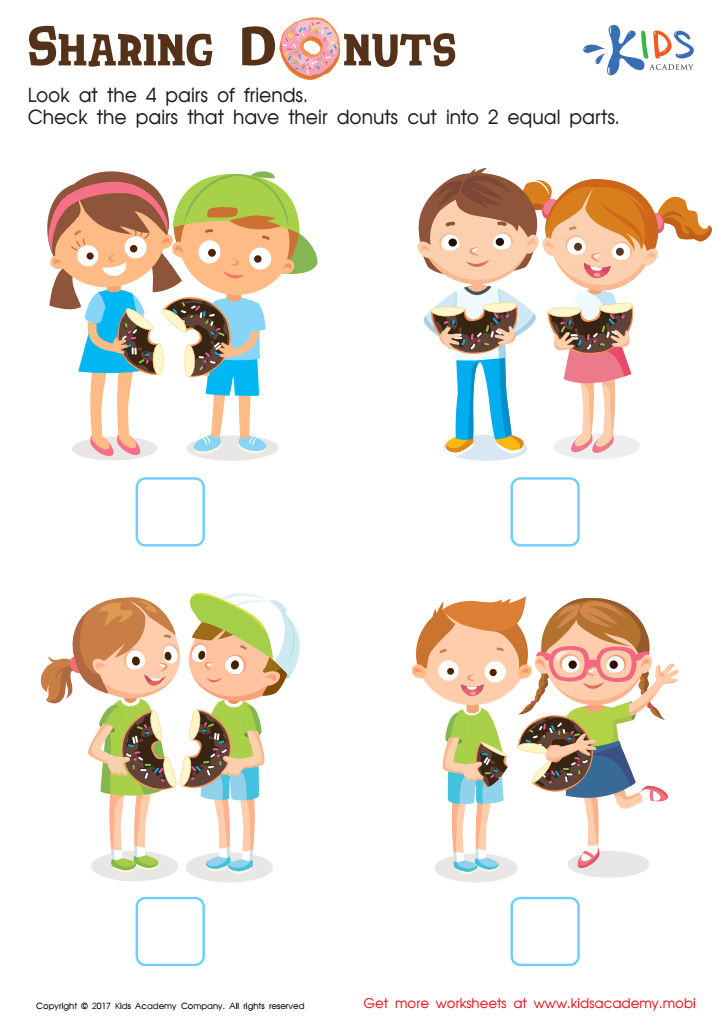
Sharing Donuts Worksheet








Visual learning in geometry is crucial for children ages 4-7 because it lays the foundation for spatial awareness and critical thinking. During these formative years, children are naturally curious and receptive to engaging, hands-on learning experiences. Visual learning integrates diagrams, shapes, and interactive activities, capturing young learners' attention and accommodating different learning styles.
For parents and teachers, fostering visual learning in geometry promotes problem-solving skills and logical reasoning. When children manipulate physical shapes or use visuals like maps and puzzles, they develop a deeper understanding of geometric concepts like symmetry, perimeter, and area. This type of learning helps them make connections between abstract ideas and real-world applications, enhancing their cognitive development.
Additionally, early exposure to visual geometry aids in the development of fine motor skills and hand-eye coordination through activities such as drawing, building, or cutting shapes. As children engage in these experiences, they build confidence in their abilities to explore mathematics and express their ideas. Ultimately, investing in visual learning geometry for young children not only prepares them for future academic success but also instills a lifelong appreciation for mathematics. Thus, parents and teachers should prioritize and support this learning approach.








