Data interpretation Numbers Worksheets for Ages 4-7
5 filtered results
-
From - To
Welcome to our Data Interpretation Numbers Worksheets designed for children ages 4 to 7! These engaging worksheets are crafted to help young learners develop essential math skills by interpreting simple data through fun activities. Children will explore diagrams, charts, and visual aids, making learning interactive and enjoyable. With age-appropriate exercises that promote critical thinking and number recognition, your child will build a solid foundational understanding of data interpretation. Perfect for at-home practice or classroom use, these worksheets will inspire confidence in young mathematicians and foster a love for learning. Dive into the world of numbers and data interpretation today!
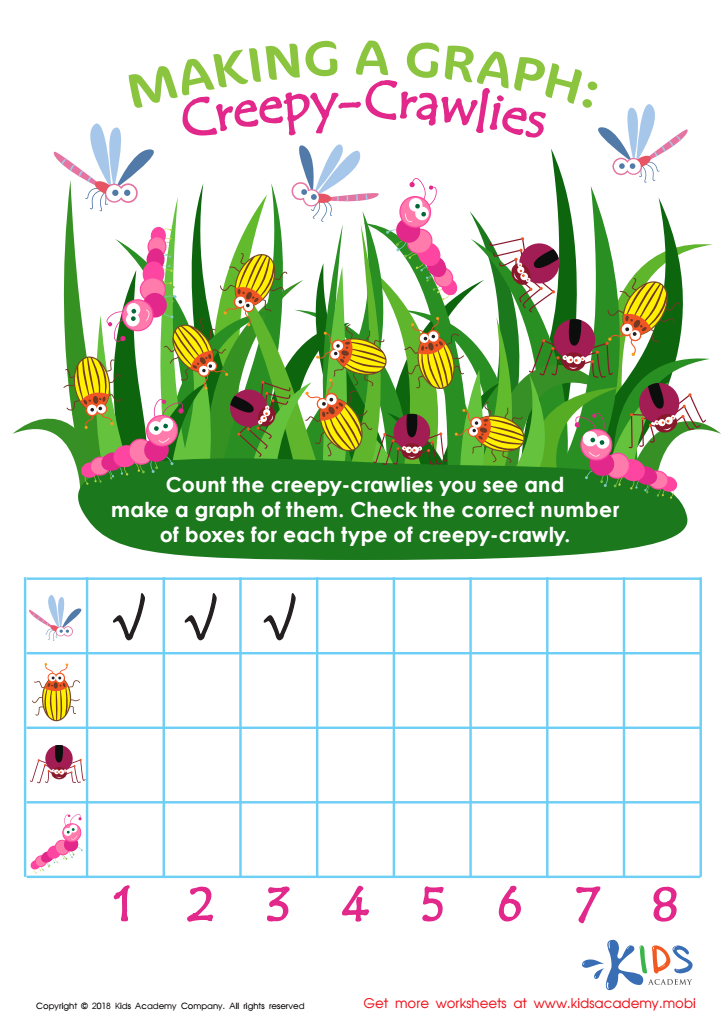
Making a Graph: Creepy Crawlies Worksheet
 Assign to My Students
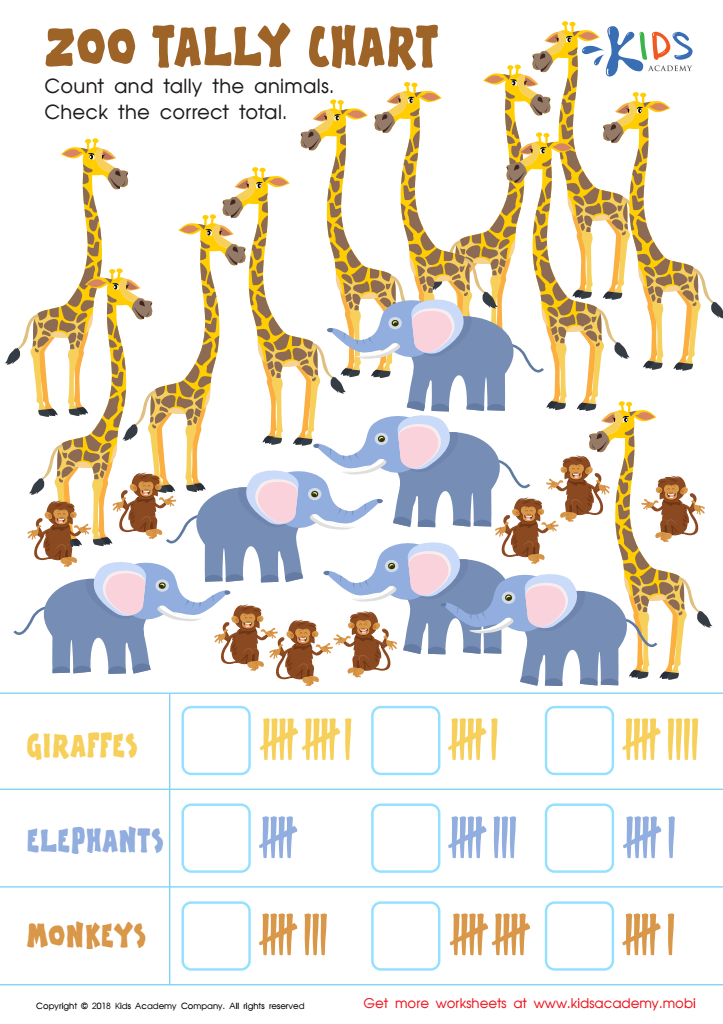
Zoo Tally Chart Worksheet
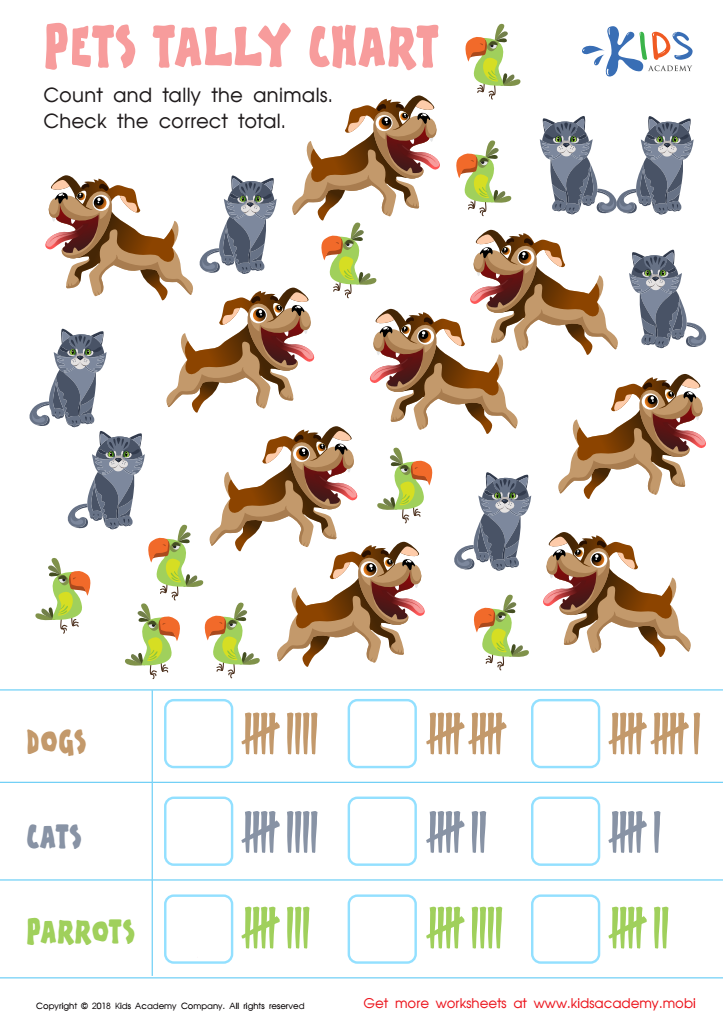
Pets Tally Chart Worksheet
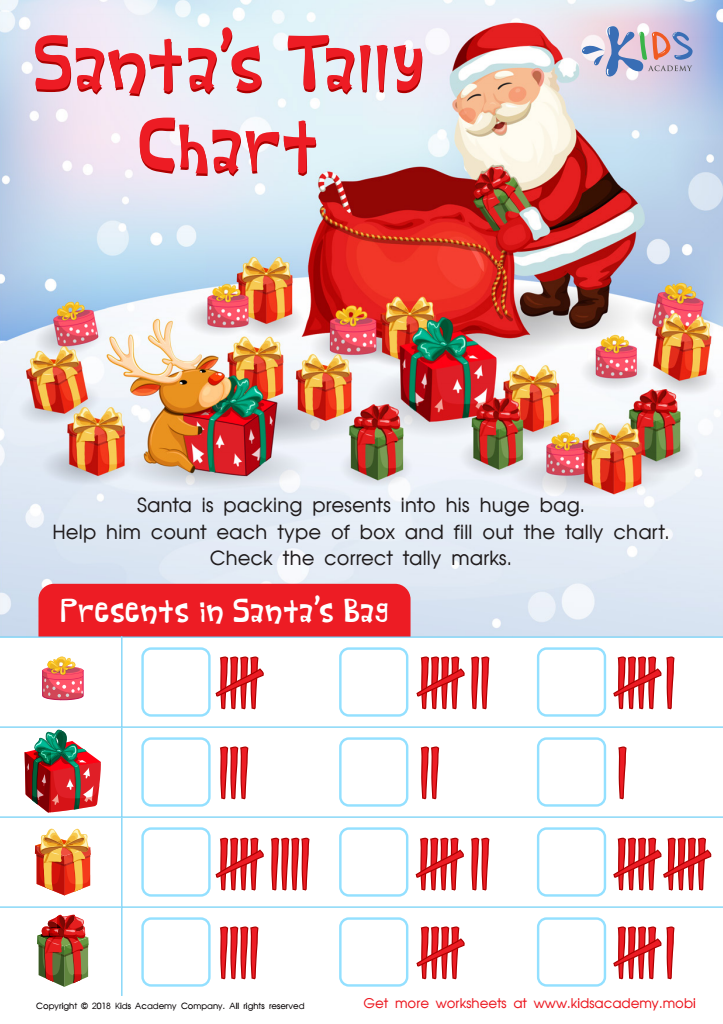
Santa Tally Chart Worksheet
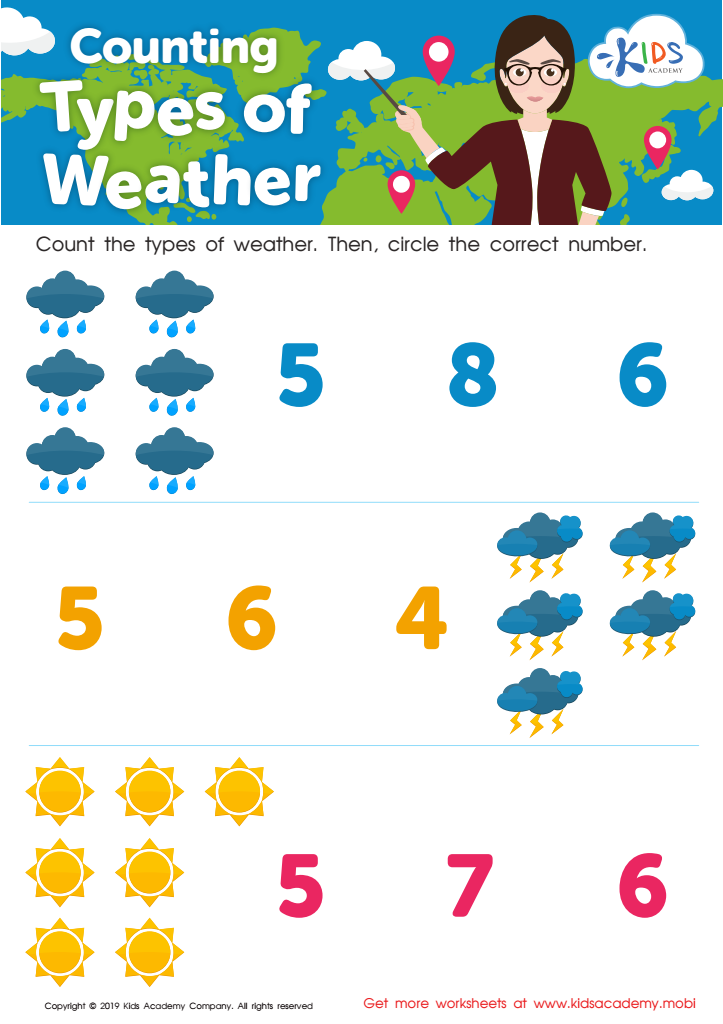
Counting Types of Weather Worksheet







Data interpretation is a fundamental skill that parents and teachers should prioritize for children ages 4-7 because it lays the groundwork for critical thinking and decision-making. At this age, children are naturally curious about their surroundings, and introducing them to basic concepts of data can transform that curiosity into analytical skills.
Engaging young learners with numbers and simple data categorization helps them to recognize patterns and understand relationships. Whether through colorful charts, fun surveys about their favorite snacks, or counting objects, children begin to grasp how to make sense of information. This foundational knowledge fosters problem-solving skills, allowing children to draw conclusions based on their observations.
Moreover, data interpretation enhances communication skills. When children talk about their findings, they learn to articulate thoughts and ideas clearly, which is crucial for future academic success. Facilitating early experiences with numbers and data not only aligns with their developmental stage but also makes learning engaging through play.
Lastly, these skills are applicable beyond the classroom; as children grow, they will encounter data in various forms—whether in math, science, or everyday life. Building these competencies early on empowers them to confidently analyze information and navigate the world around them.








