Fruit identification Numbers Worksheets for Ages 4-7
4 filtered results
-
From - To
Discover our engaging Fruit Identification Numbers Worksheets designed for children ages 4-7! These interactive worksheets promote number recognition while introducing kids to a variety of fruits. Each fun activity helps young learners identify and count fruits, reinforcing their math skills in an enjoyable way. With vibrant illustrations and simple exercises, children can match numbers to pictures, count fruit quantities, and enhance their vocabulary. Our resources encourage critical thinking, fine motor skills, and a love for learning through colorful, playful approaches. Perfect for home or classroom use, these worksheets make recognizing numbers as delightful as the fruits themselves! Explore now!
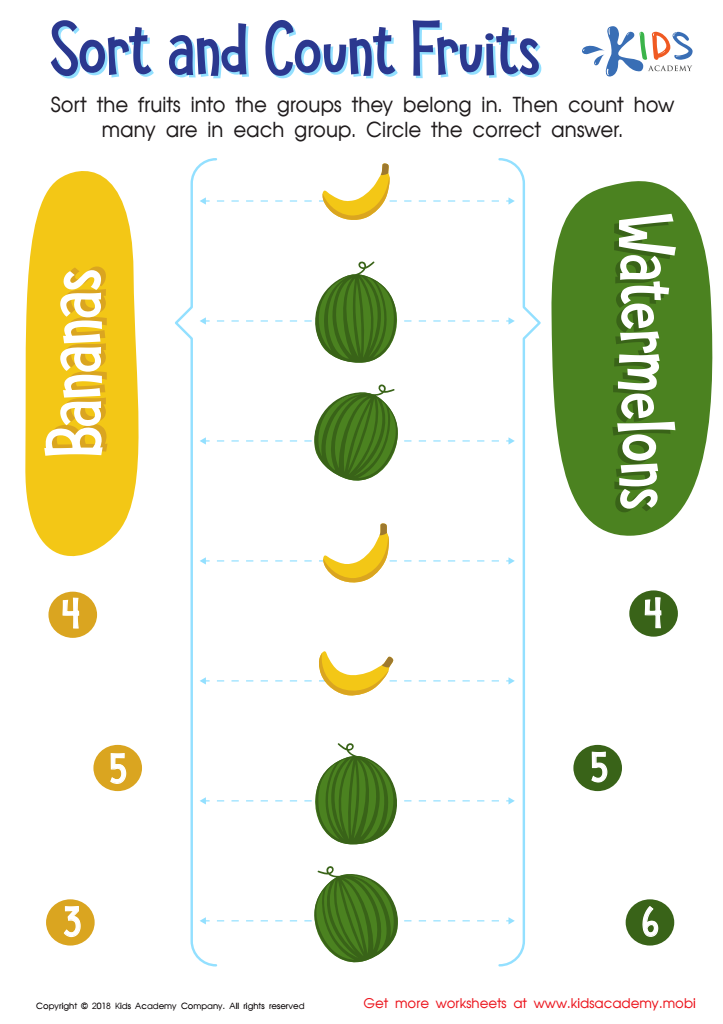
Sort and Count Fruits Worksheet
 Assign to My Students
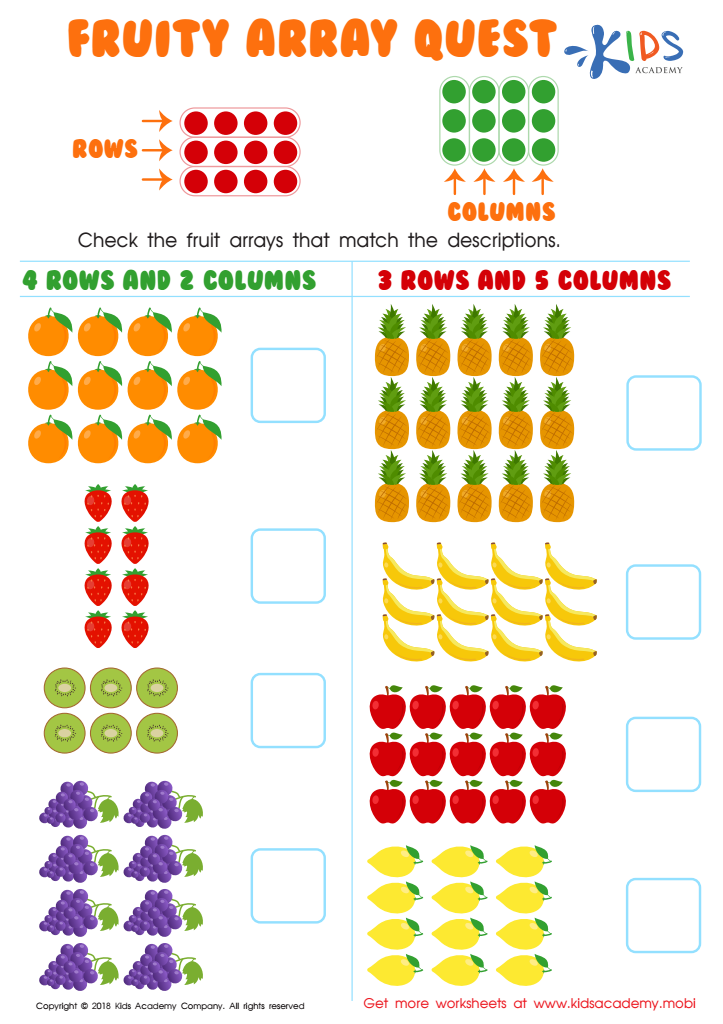
Fruity Array Quest Worksheet
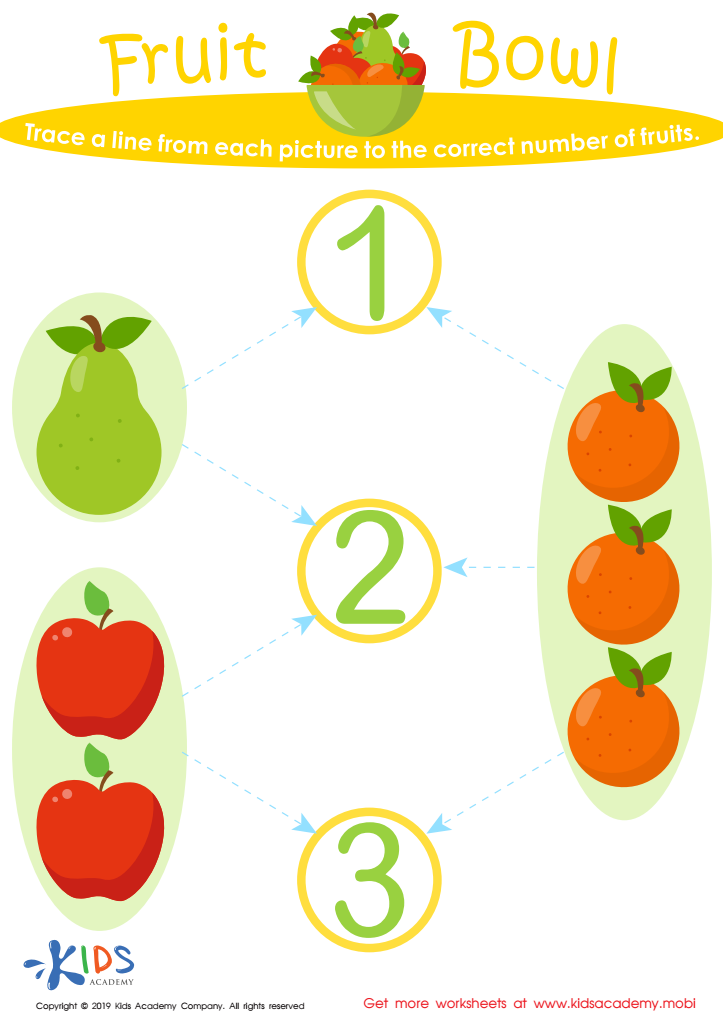
Fruit Bowl Worksheet
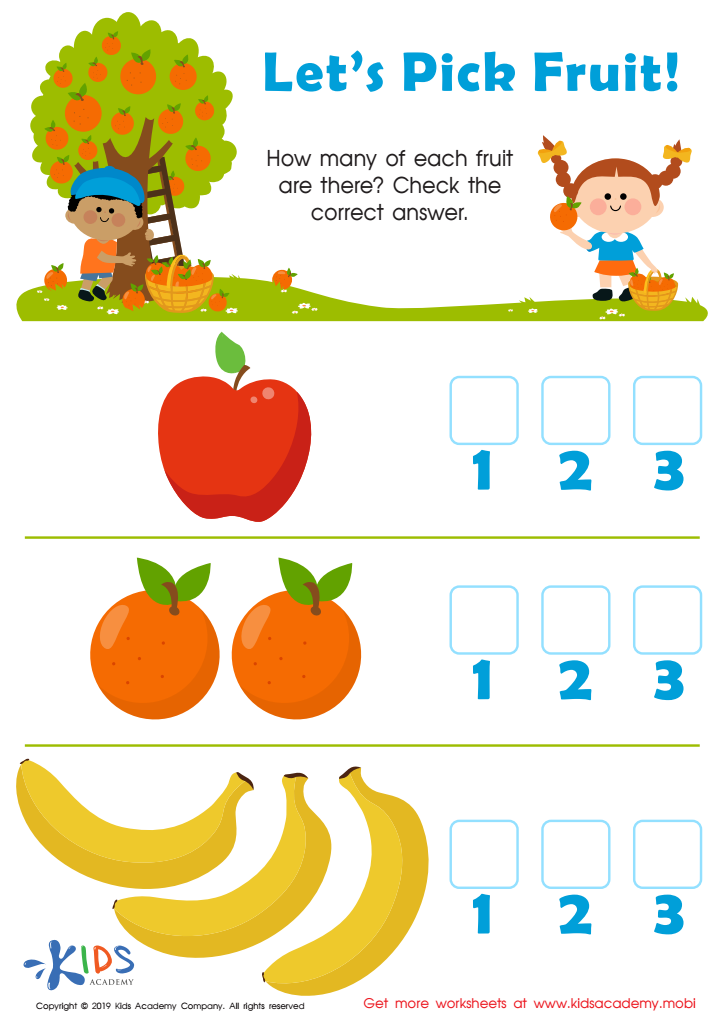
Let's Pick Fruit Worksheet








Fruit Identification Numbers (FINs) are vital for parents and teachers of young children, especially those aged 4-7, to understand the significance of healthy eating. Educating children on recognizing various fruits promotes nutritional awareness and encourages healthy dietary choices early on. When children learn to identify fruits, they become more excited about trying new foods, which can foster better eating habits that last a lifetime.
Additionally, engaging with FINs can be a learning opportunity. It allows parents and teachers to incorporate fun activities, such as fruit-themed games and art projects, helping children develop cognitive skills. This process enhances their vocabulary by introducing new words and concepts related to nutrition.
Understanding FINs also enables adults to guide children in making discerning snack choices. By providing information about the benefits of specific fruits, parents and teachers can help instill an appreciation for nature’s offerings and the importance of balanced nutrition.
Moreover, teaching fruit identification aligns with broader educational goals, such as social development through sharing and discussing preferences. Overall, emphasizing fruit identification numbers in early education fosters essential life skills and nurtures healthy lifestyles among young children, making it a crucial area of focus for both parents and teachers.








