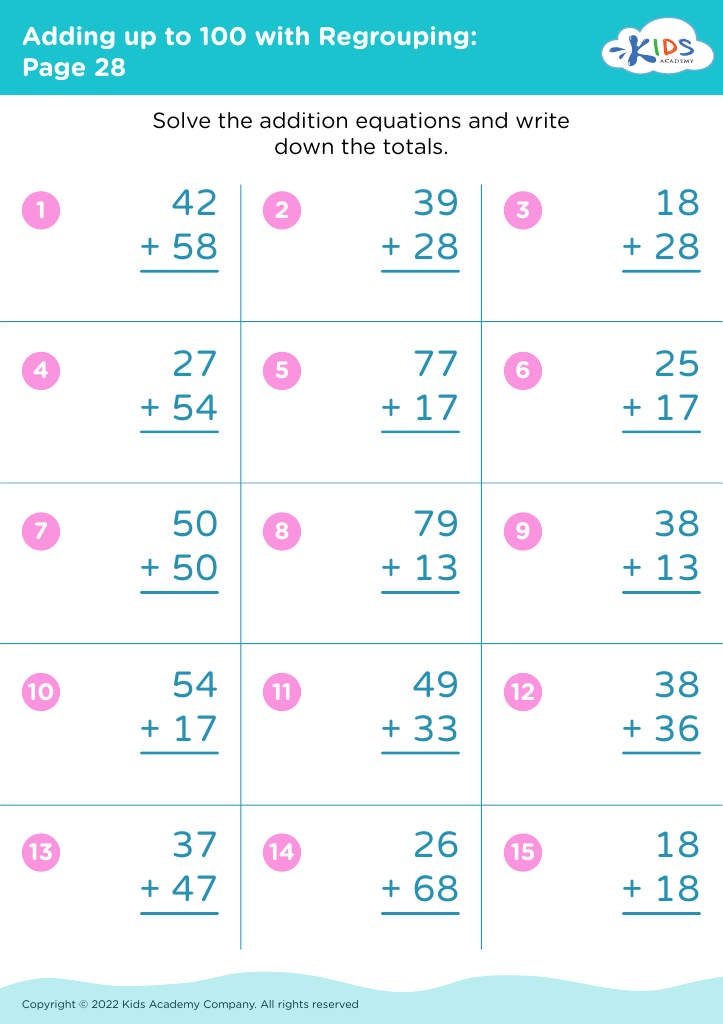








Parents and teachers should prioritize developing basic arithmetic skills in children ages 4-7 because these foundational years are critical for setting the stage for future academic success. Arithmetic skills serve as the building blocks for all higher-level math and are crucial for daily life, supporting activities like simple counting, making change, understanding time, and measuring. By fostering these skills early, children develop a sense of numbers, patterns, and logical thinking, which enhances their problem-solving abilities.
Research indicates that early proficiency in math predicts later academic achievement not only in mathematics but also in reading and other areas, showcasing the versatility and importance of these skills. Moreover, early mastery of basic arithmetic boosts children's confidence, encouraging a positive attitude towards learning and resilience in facing academic challenges. Interactive and engaging activities, such as counting games and simple addition and subtraction exercises, can make learning enjoyable and motivate continual improvement.
Involving parents in the learning process creates an environment where learning is valued and supported beyond the classroom. Teachers, through structured lessons, and parents, through everyday interactions and practices, can collaborate to provide a consistent and enriching mathematical foundation, thus promoting cognitive development and lifelong learning skills.








