Check out this FREE Trial Lesson on Math for age 4-7!

Exactly the Same, or Not

Favorites
With answer key
Interactive
  • 4-7
  • Comparing Fractions
  • Math
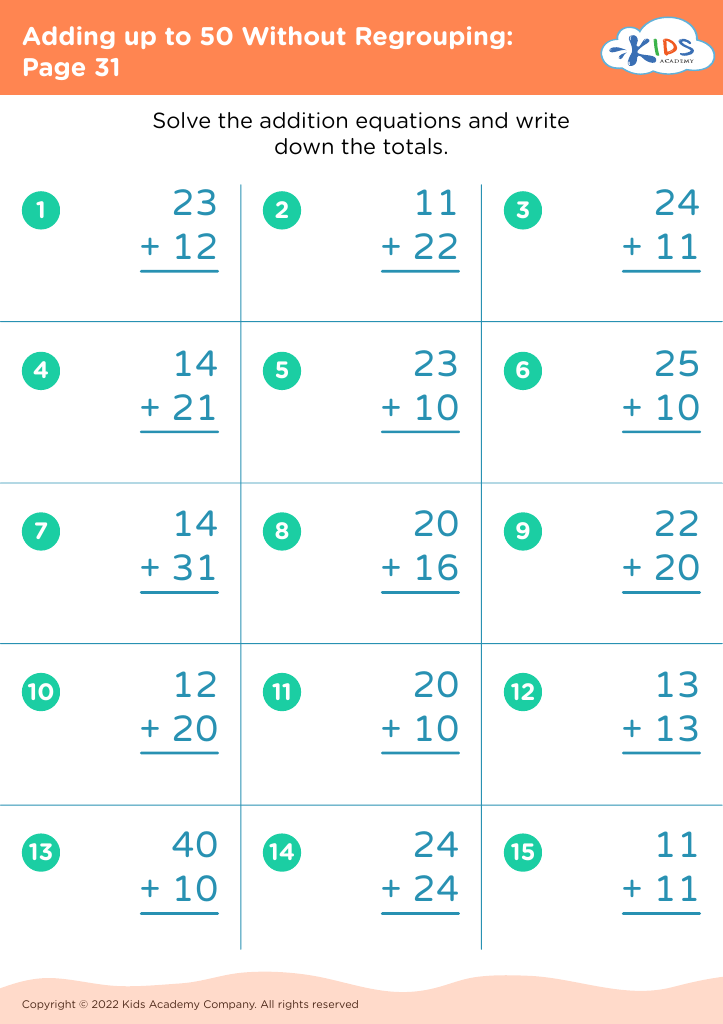
Adding up to 50 Without Regrouping: Page 31
Worksheet
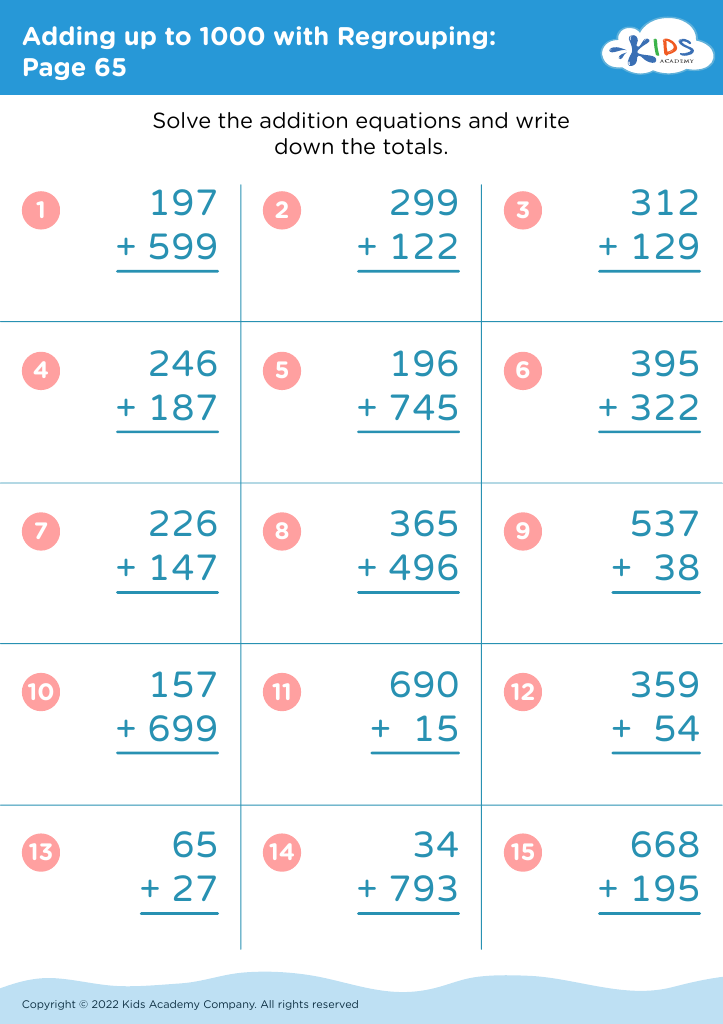
Adding up to 1000 with Regrouping: Page 65
Worksheet
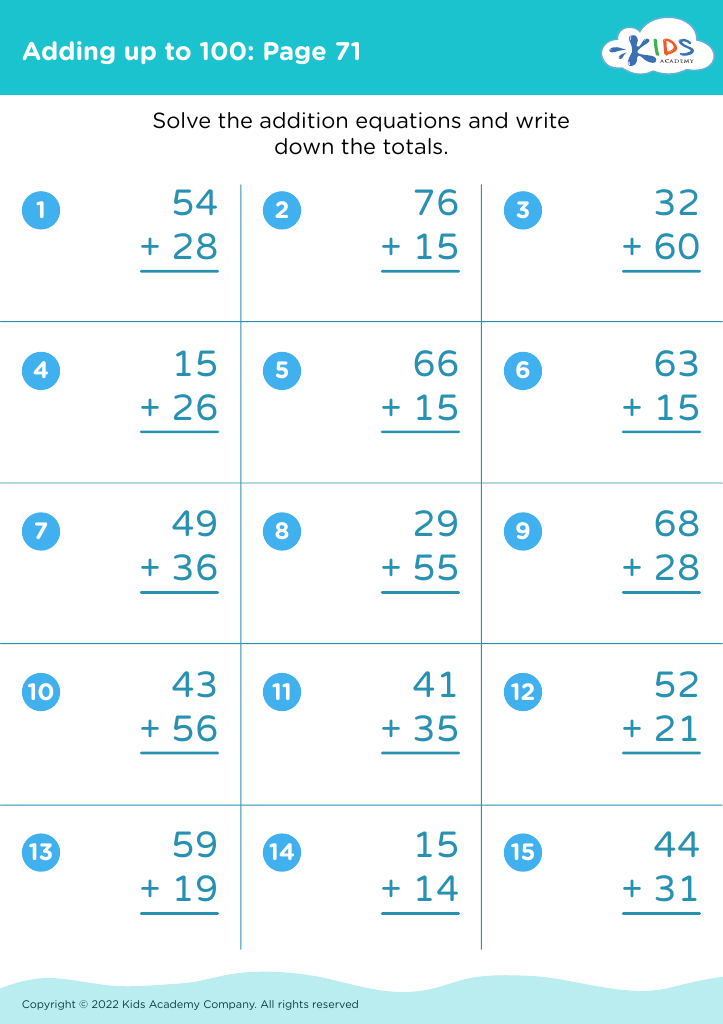
Adding up to 100: Page 71

Adding up to 100: Page 71

Adding up to 100: Page 71
Worksheet
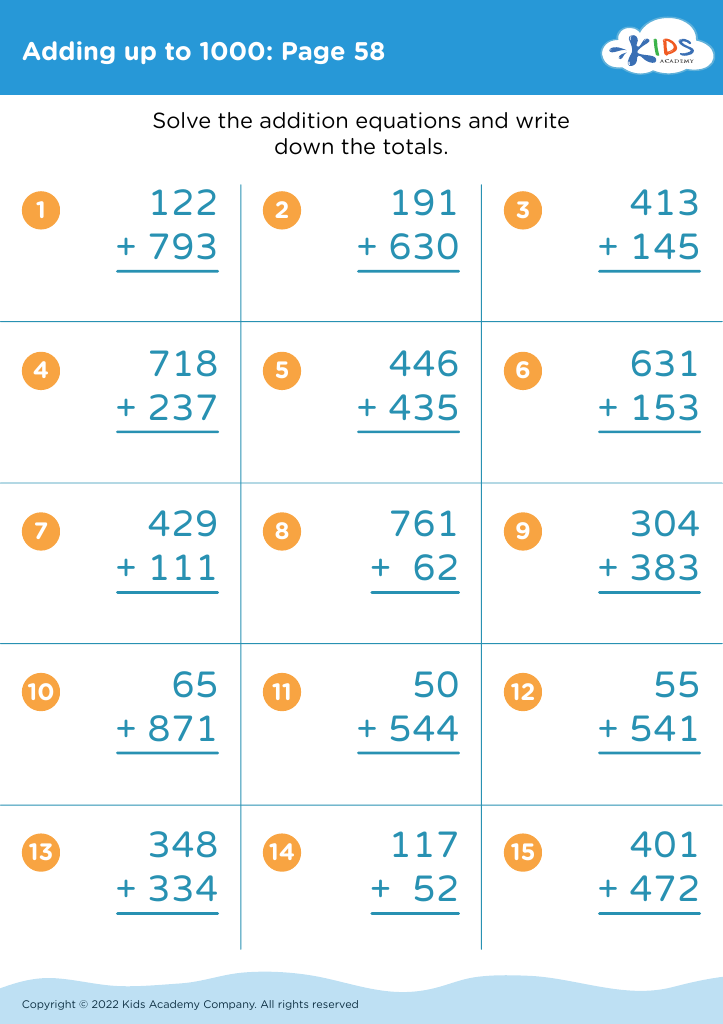
Adding up to 1000: Page 58

Adding up to 1000: Page 58

Adding up to 1000: Page 58
Worksheet
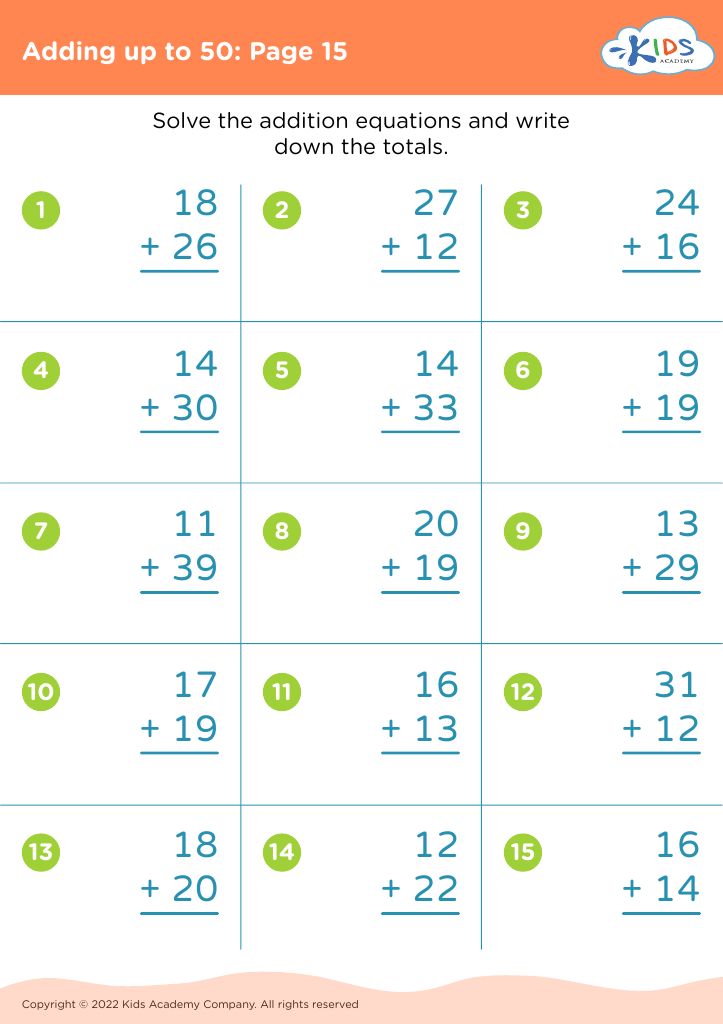
Adding up to 50: Page 15

Adding up to 50: Page 15

Adding up to 50: Page 15
Worksheet
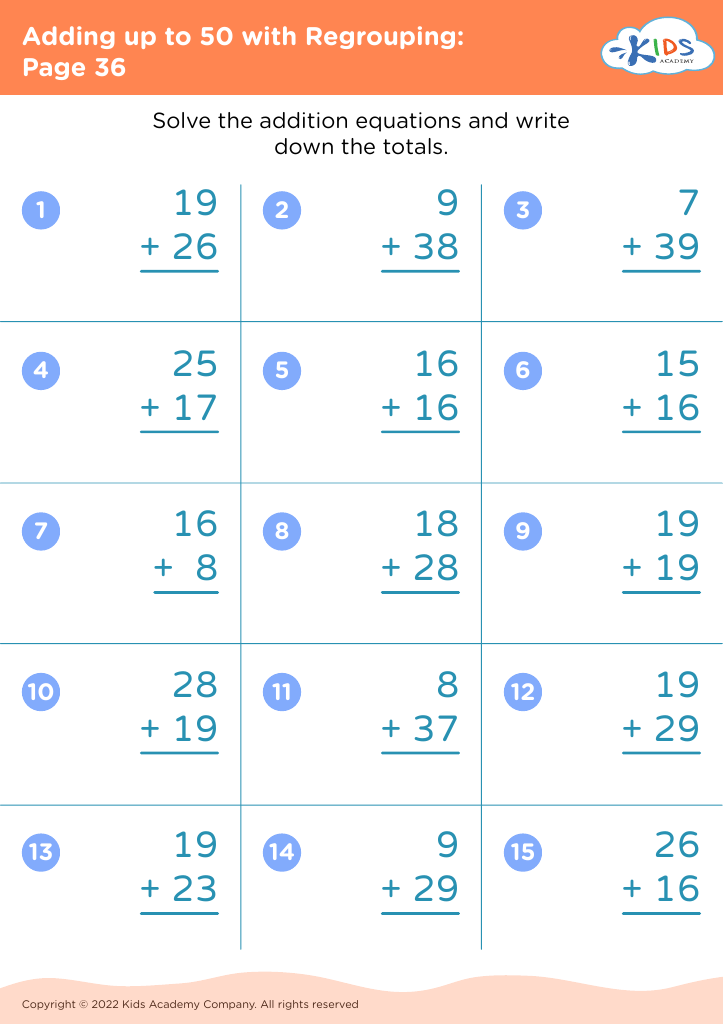
Adding up to 50 with Regrouping: Page 36
Worksheet
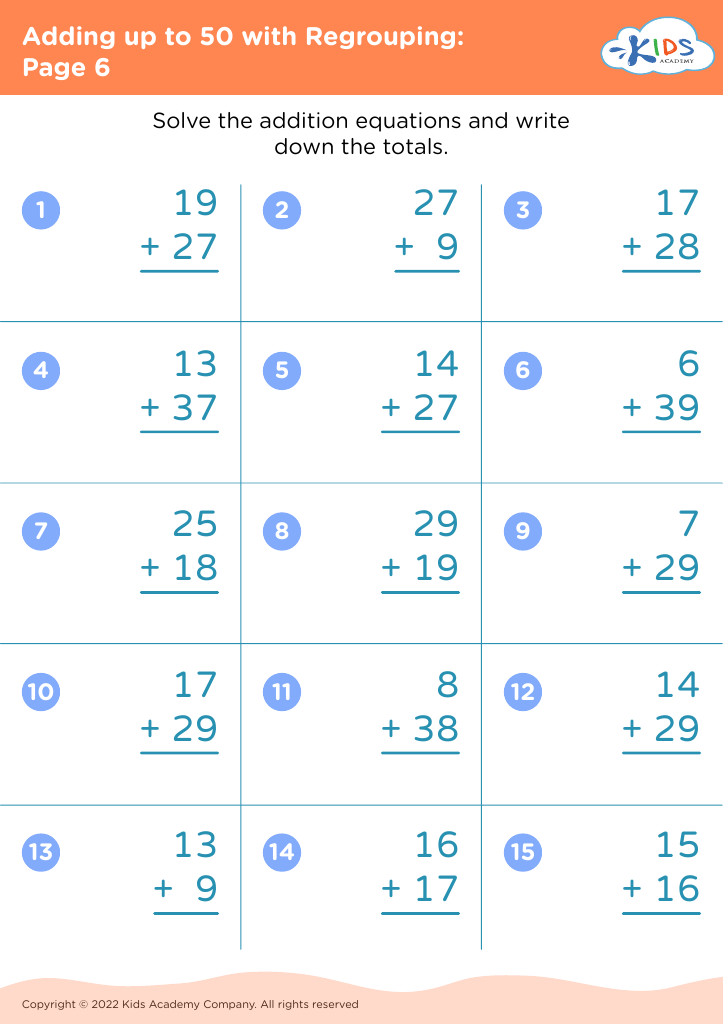
Adding up to 50 with Regrouping: Page 6
Worksheet
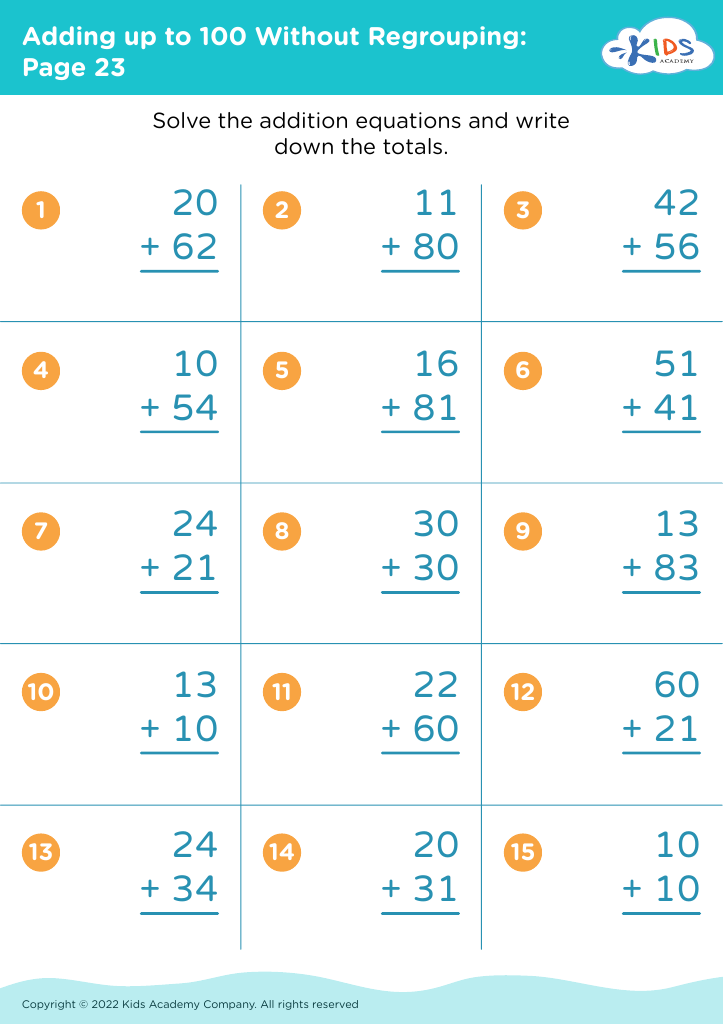
Adding up to 100 Without Regrouping: Page 23
Worksheet
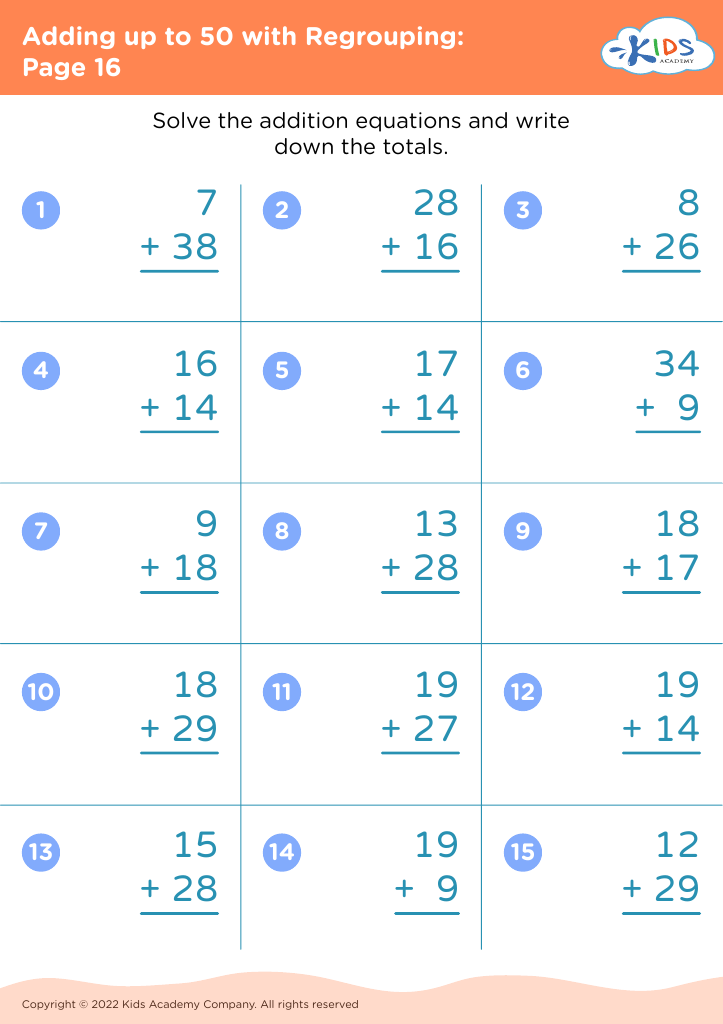
Adding up to 50 with Regrouping: Page 16
Worksheet
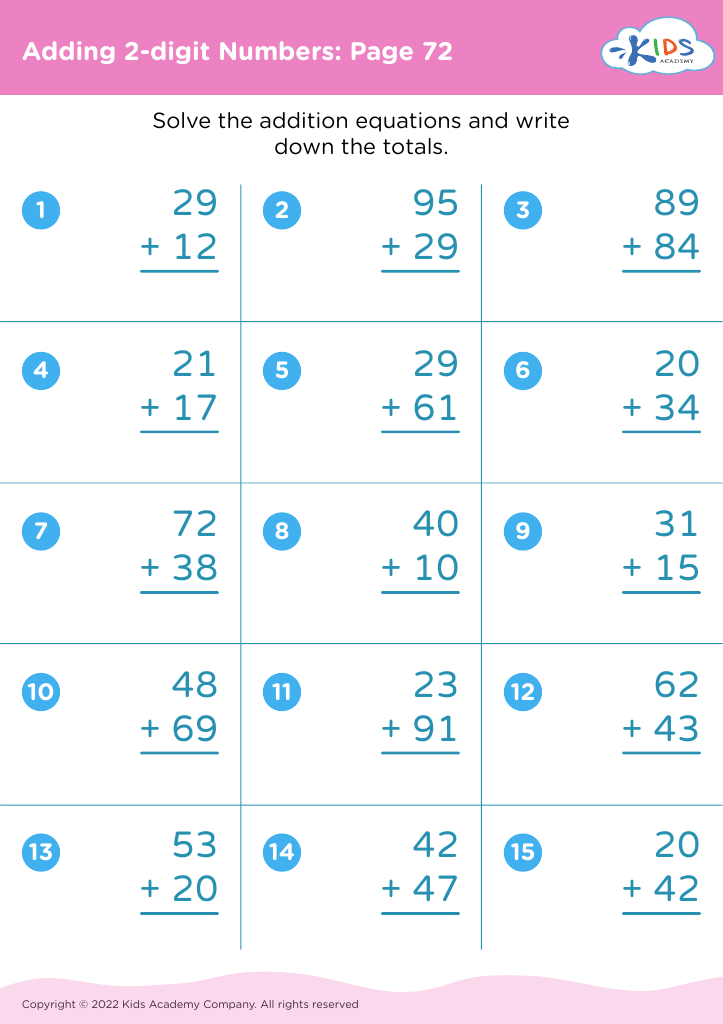
Adding 2-digit Numbers: Page 72

Adding 2-digit Numbers: Page 72

Adding 2-digit Numbers: Page 72
Worksheet
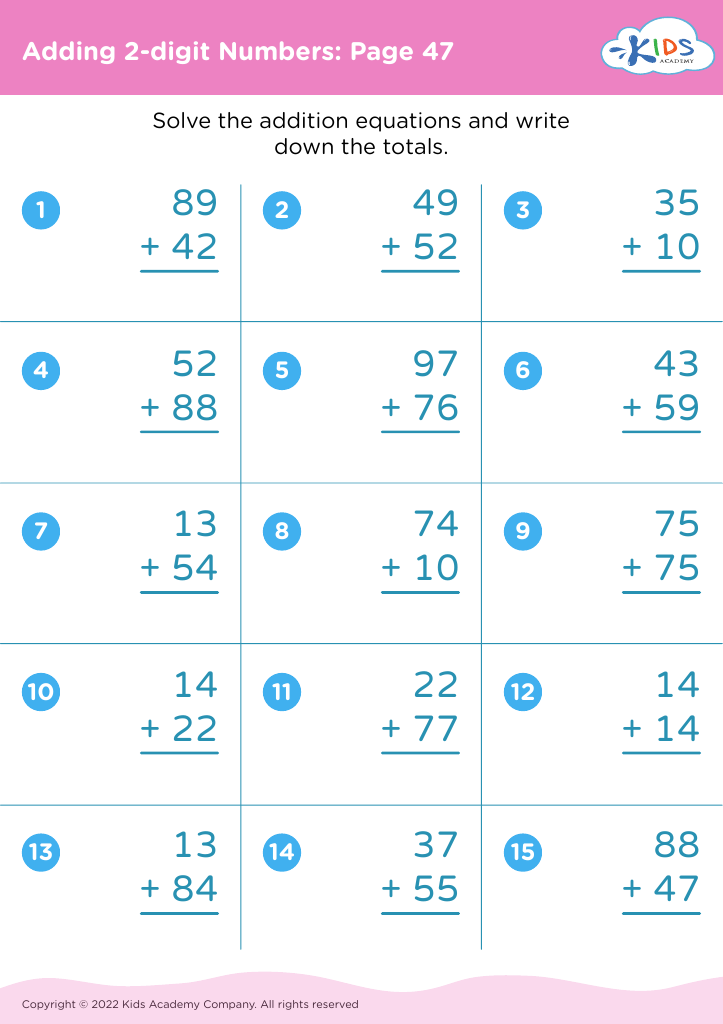
Adding 2-digit Numbers: Page 47

Adding 2-digit Numbers: Page 47

Adding 2-digit Numbers: Page 47
Worksheet
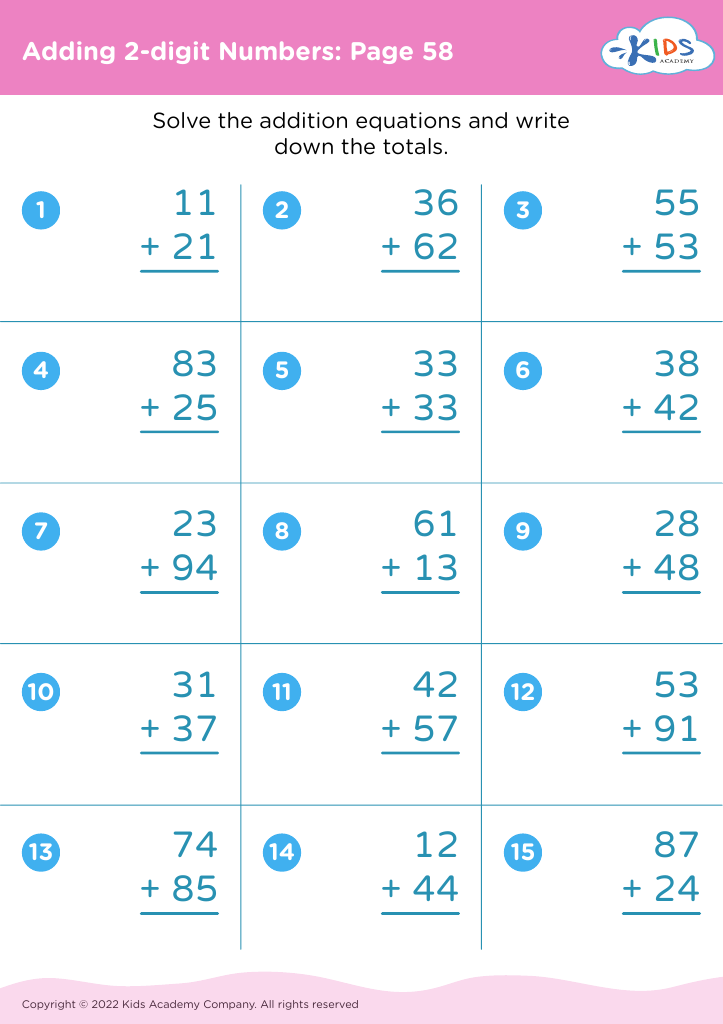
Adding 2-digit Numbers: Page 58

Adding 2-digit Numbers: Page 58

Adding 2-digit Numbers: Page 58
Worksheet
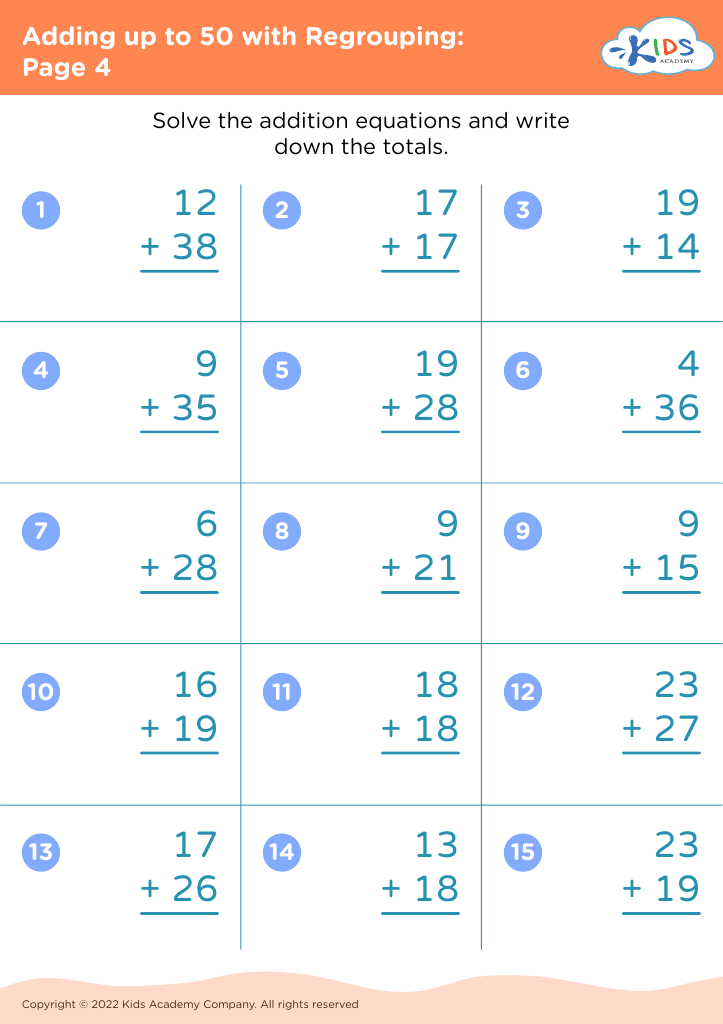
Adding up to 50 with Regrouping: Page 4
Worksheet
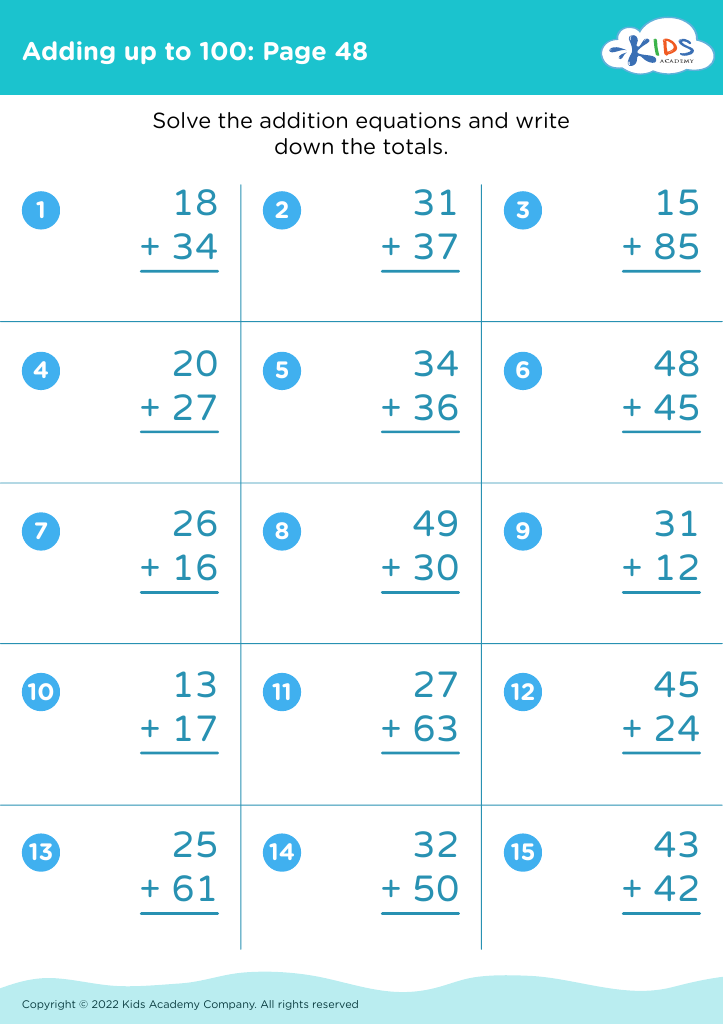
Adding up to 100: Page 48

Adding up to 100: Page 48

Adding up to 100: Page 48
Worksheet
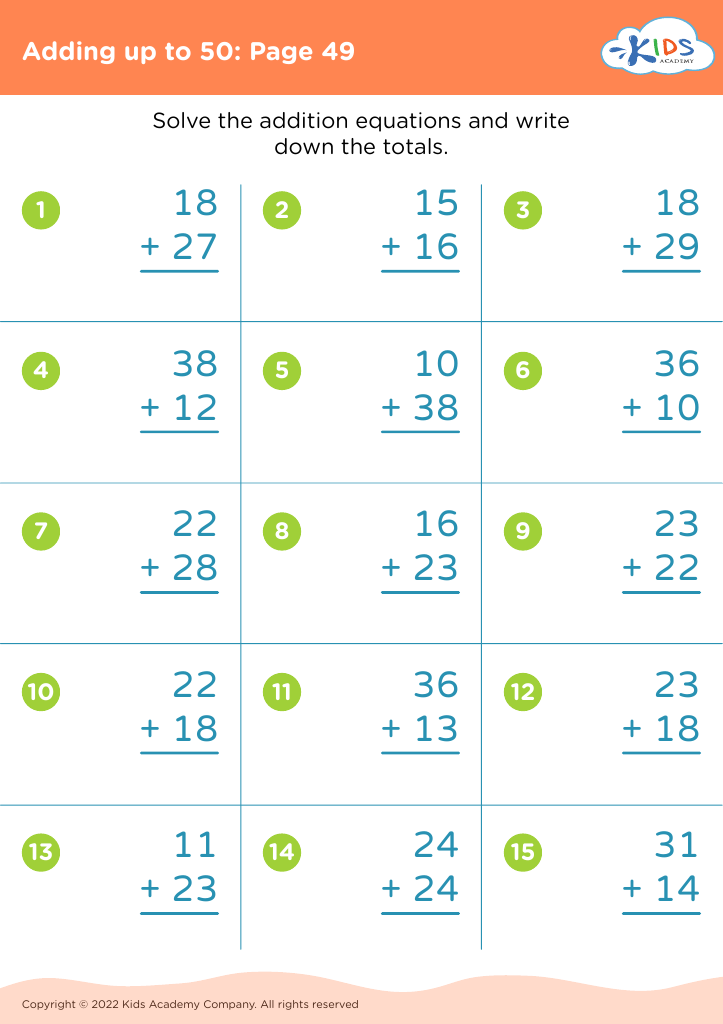
Adding up to 50: Page 49

Adding up to 50: Page 49

Adding up to 50: Page 49
Worksheet
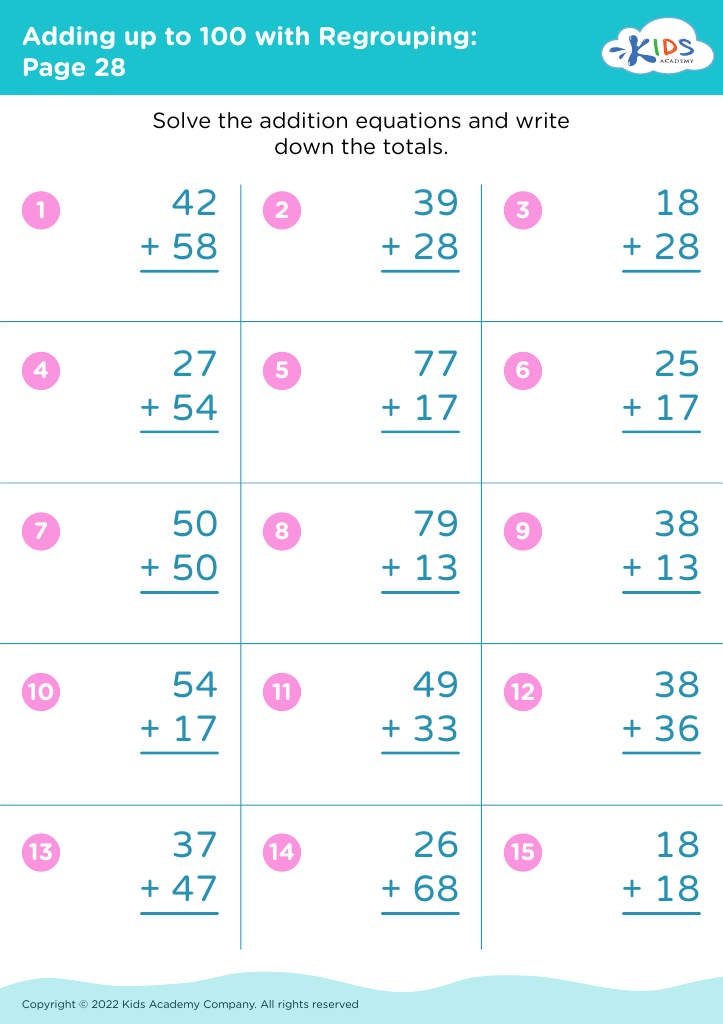
Adding up to 100 with Regrouping: Page 28
Worksheet
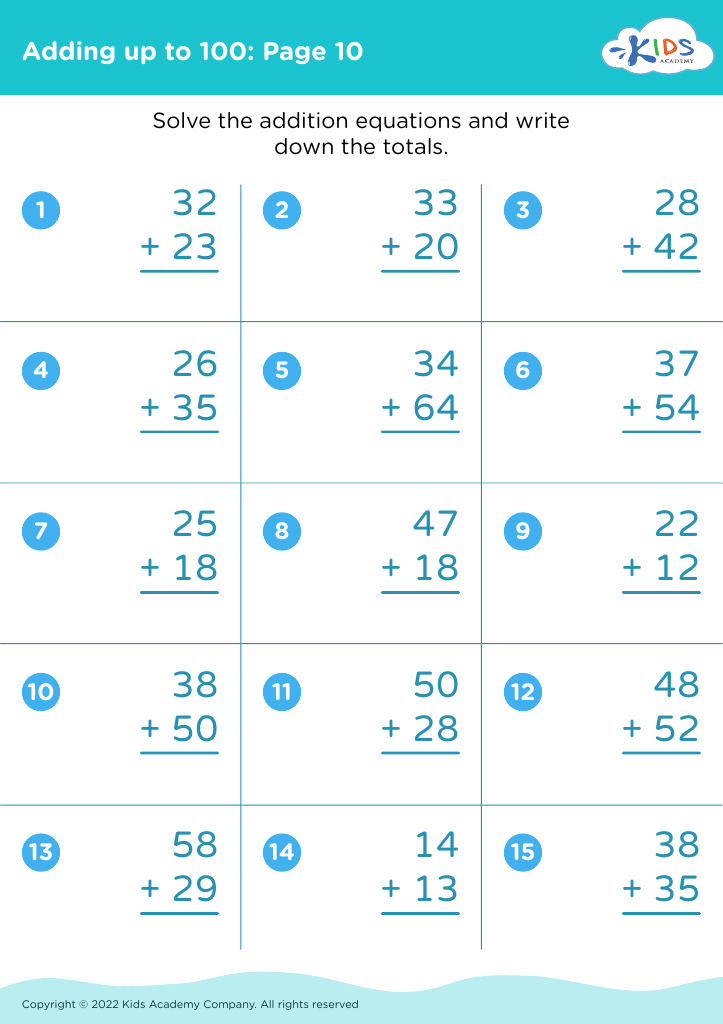
Adding up to 100: Page 10

Adding up to 100: Page 10

Adding up to 100: Page 10
Worksheet
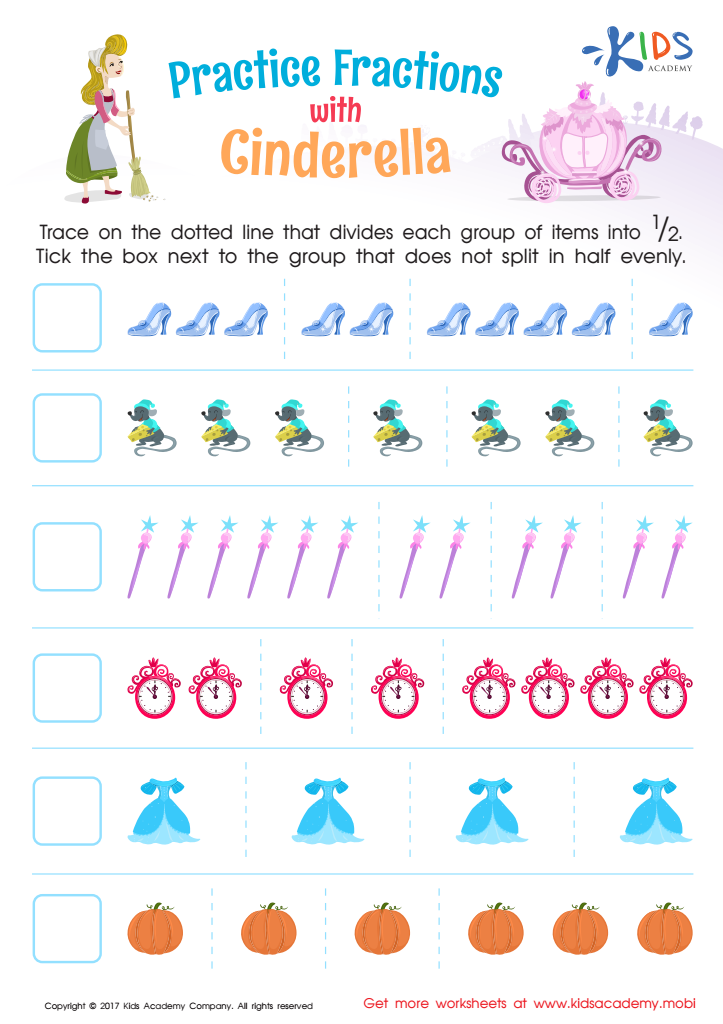
Cinderella Fraction Practice

Fractions: Cinderella Printable

Cinderella and ½ are the perfect pair to excite your child about learning fractions.
Fractions: Cinderella Printable
Worksheet
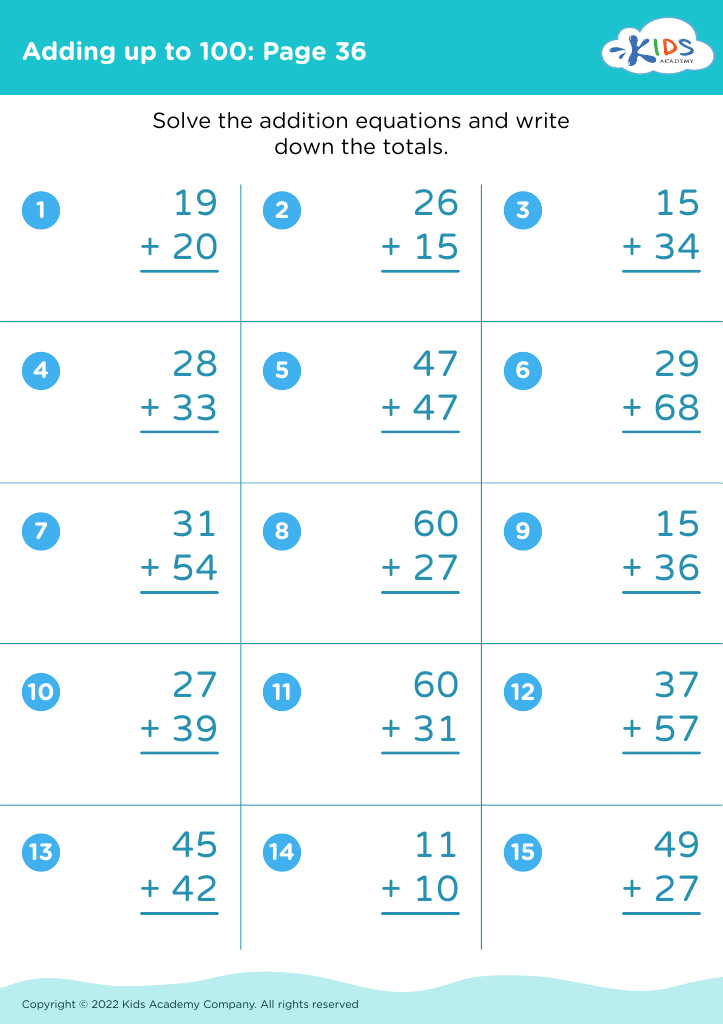
Adding up to 100: Page 36

Adding up to 100: Page 36

Adding up to 100: Page 36
Worksheet
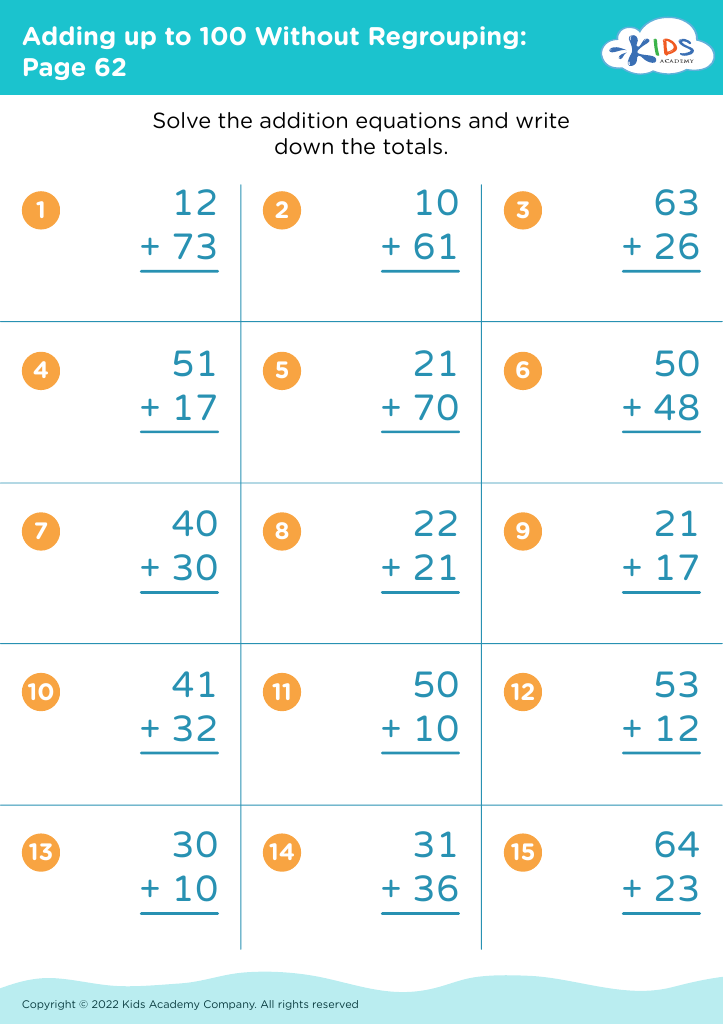
Adding up to 100 Without Regrouping: Page 62
Worksheet
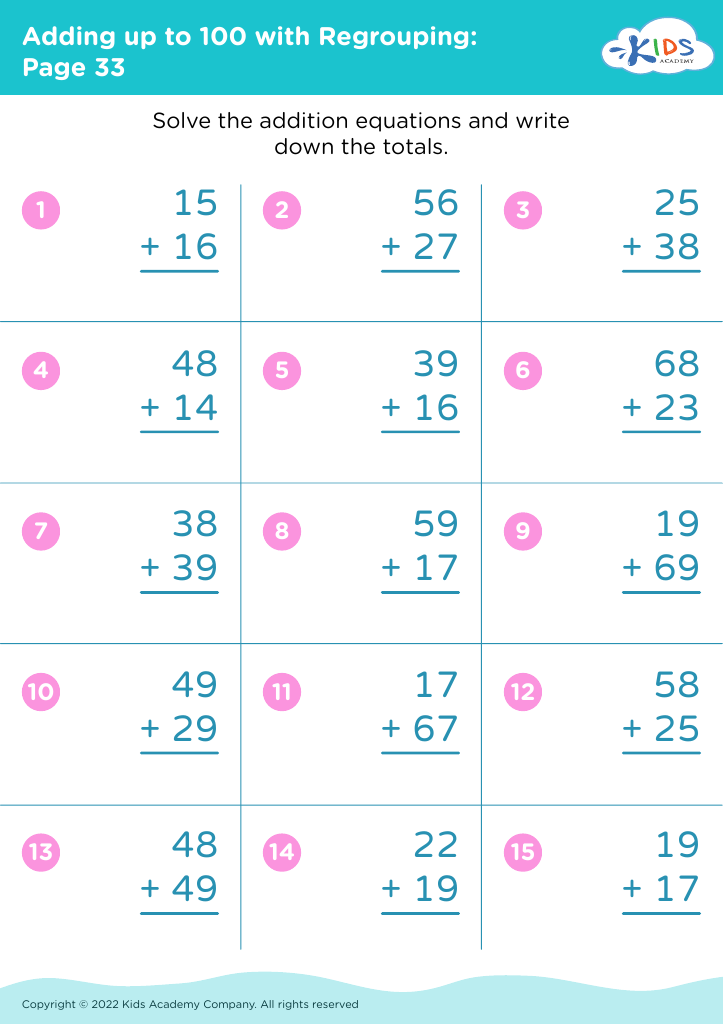
Adding up to 100 with Regrouping: Page 33
Worksheet
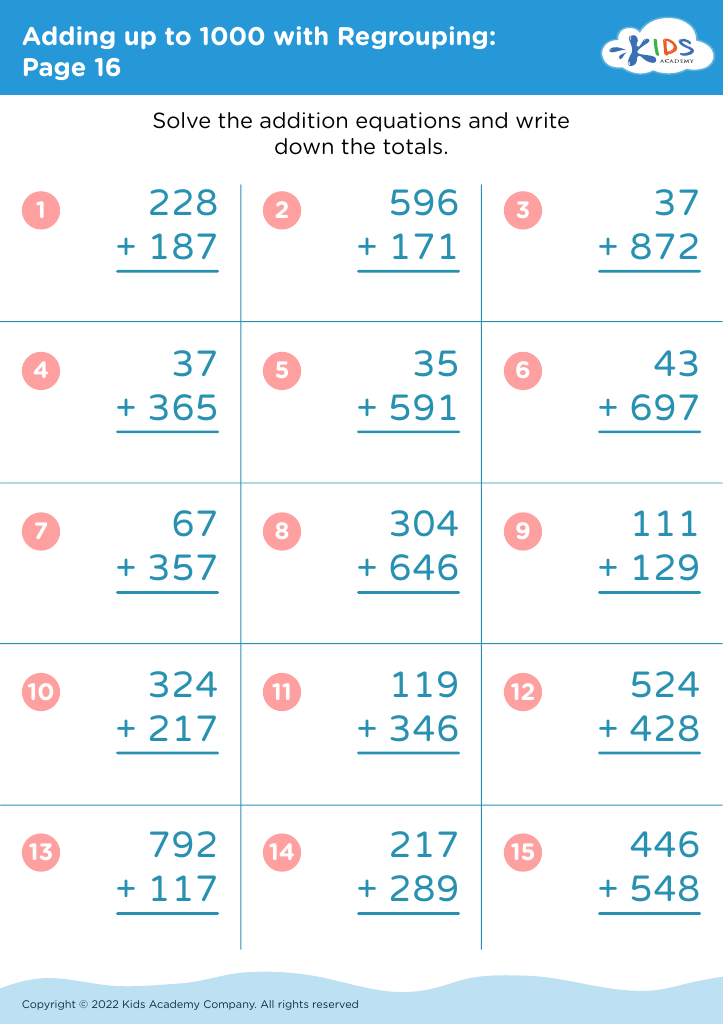
Adding up to 1000 with Regrouping: Page 16
Worksheet
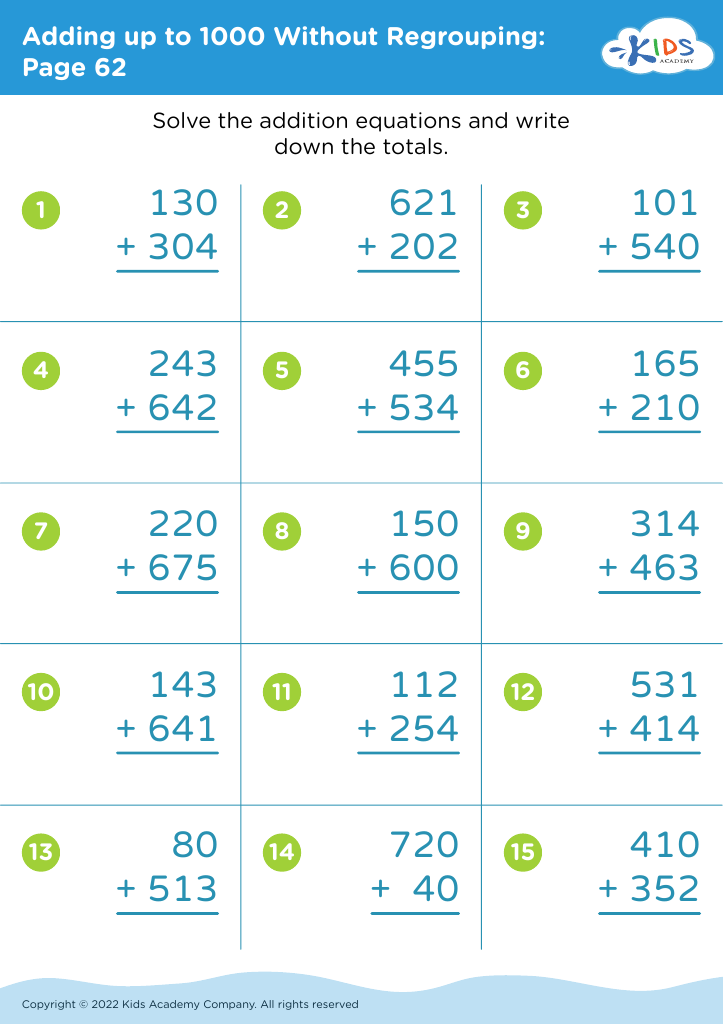
Adding up to 1000 Without Regrouping: Page 62
Worksheet


... 3 4

Understanding comparing fractions is vital for children aged 4-7 as it lays the foundation for critical math skills. At this age, developing numbers sense is crucial, and fractions introduce children to the concepts of parts of a whole, which is essential for their overall mathematical understanding.

When parents or teachers emphasize the importance of comparing fractions, they help children grasp key ideas about equivalency, magnitude, and relationships among numbers, promoting logical thinking. For instance, by using visual aids like pie charts or fraction strips, children can visually see differences, making abstract concepts more tangible.

Engaging with fractions also enhances problem-solving skills and allows children to predict outcomes, skills beneficial in various real-life scenarios such as cooking or sharing materials. Moreover, fostering a strong understanding of fractions prepares children for future topics in math, building upon their confidence and ability to tackle more complex concepts as they progress in their education.

Finally, when parents and teachers foster a supportive learning environment, children are more likely to develop a positive attitude towards math, ensuring they carry this enthusiasm into later schooling, thereby improving their long-term academic performance. Thus, caring about comparing fractions is crucial for early educational success.