Understanding equations Math Worksheets for Ages 4-7
7 filtered results
-
From - To
Discover our engaging "Understanding Equations" Math Worksheets designed specifically for children aged 4-7! These interactive printables are perfect for helping young learners grasp foundational math concepts through fun and colorful activities. Each worksheet introduces basic equations and encourages students to practice addition and subtraction in a playful way. Our thoughtfully created exercises promote critical thinking and problem-solving skills while building confidence in math. Ideal for classroom use or at-home learning, these worksheets ensure kids develop a solid mathematical foundation. Download now to spark your child’s curiosity and set them on a path to math success!
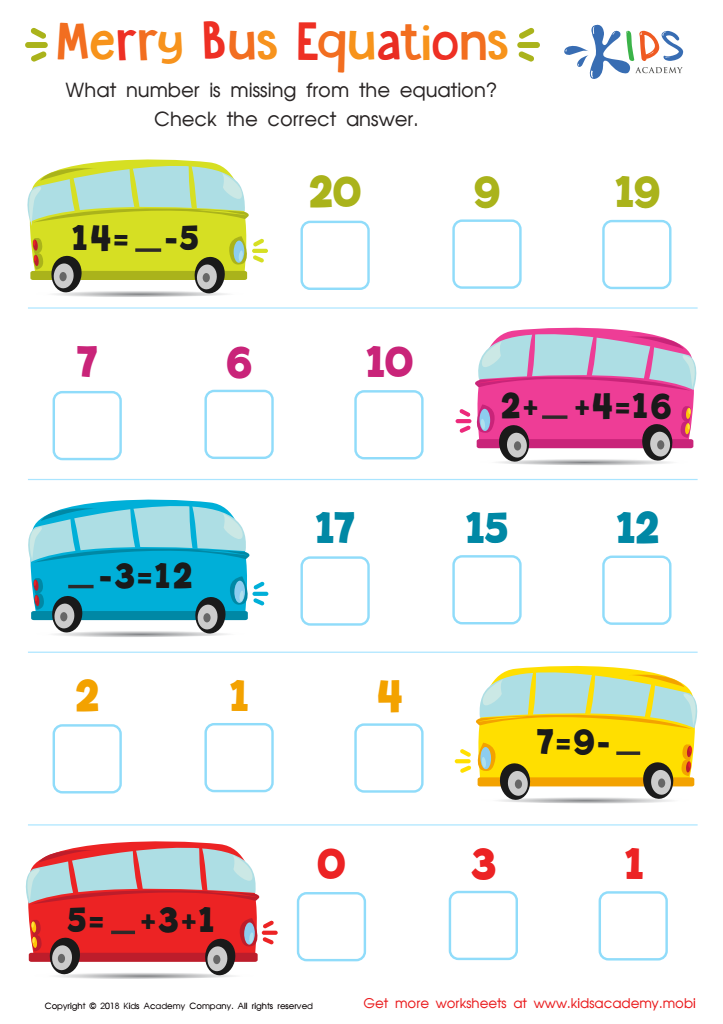
Merry Bus Equations Worksheet
 Assign to My Students
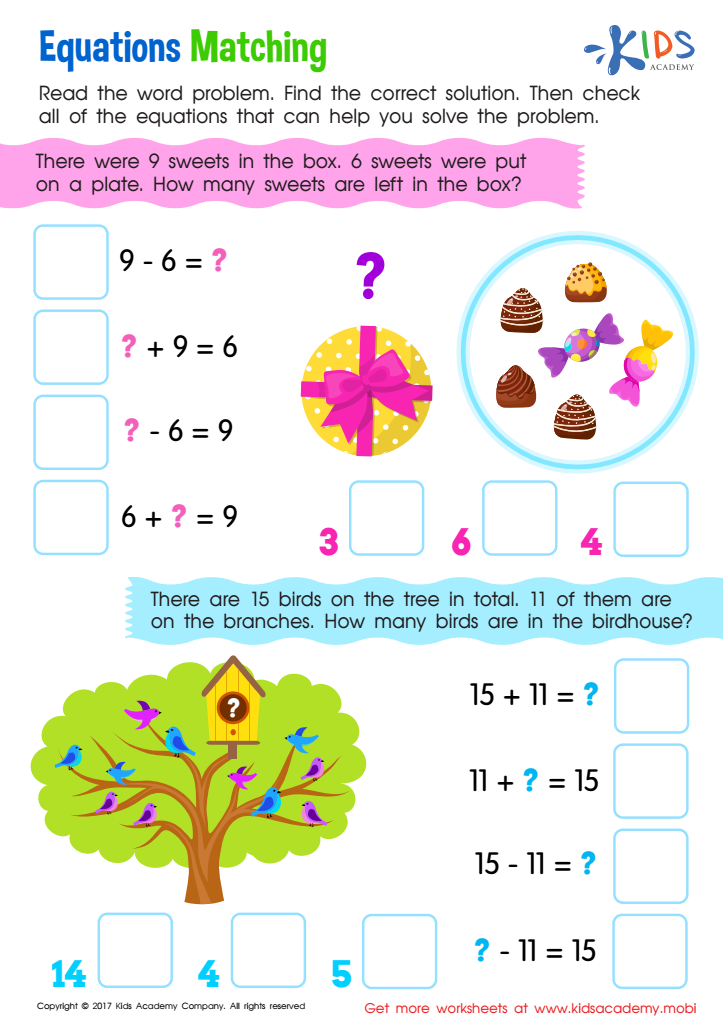
Equations Matching Word Problems Worksheet
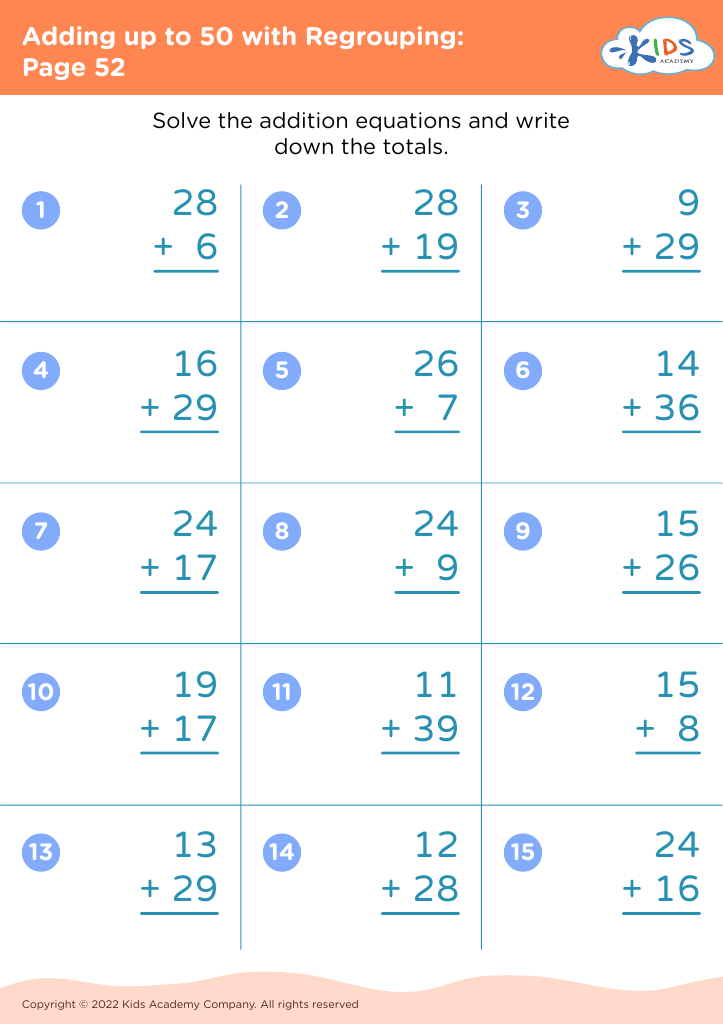
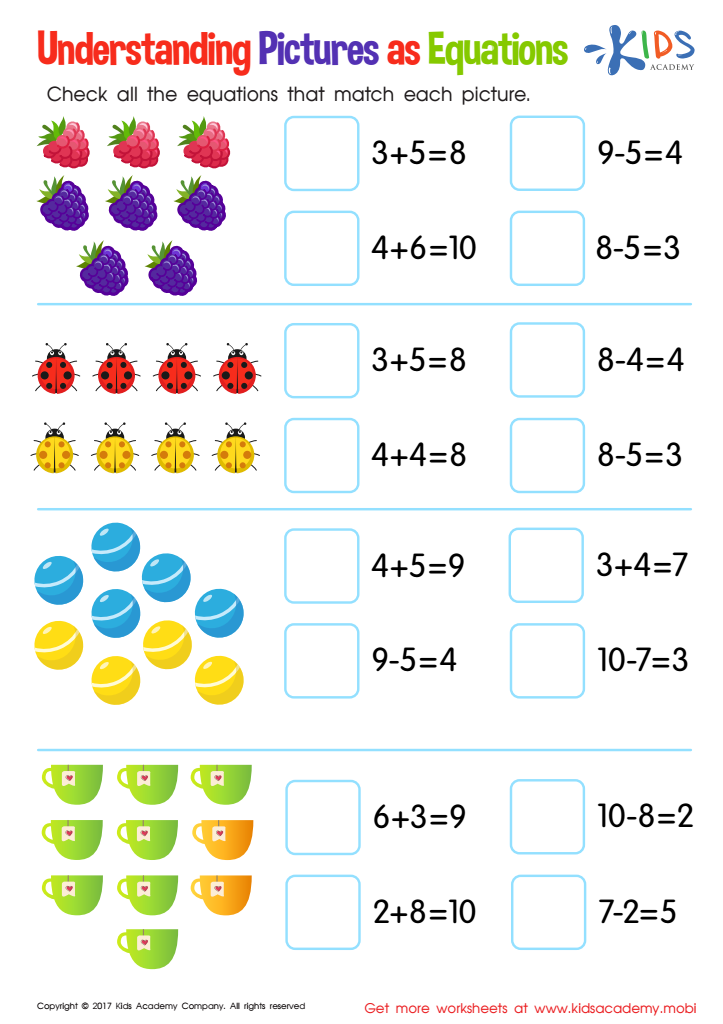
Understanding Pictures as Equations Worksheet
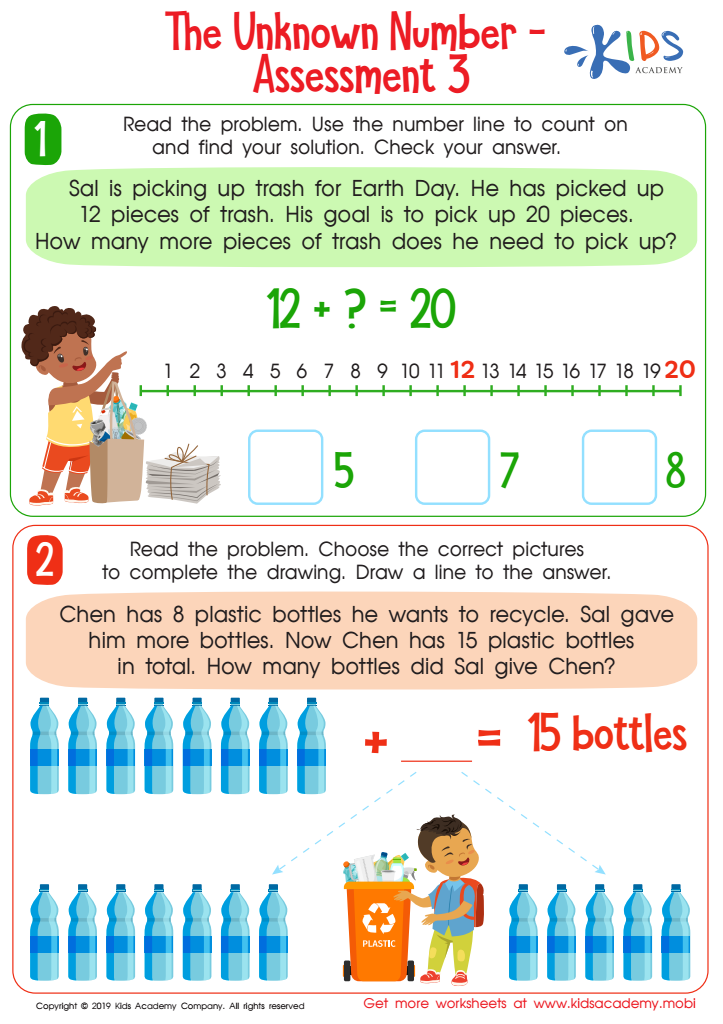
The Unknown Number - Assessment 3 Worksheet




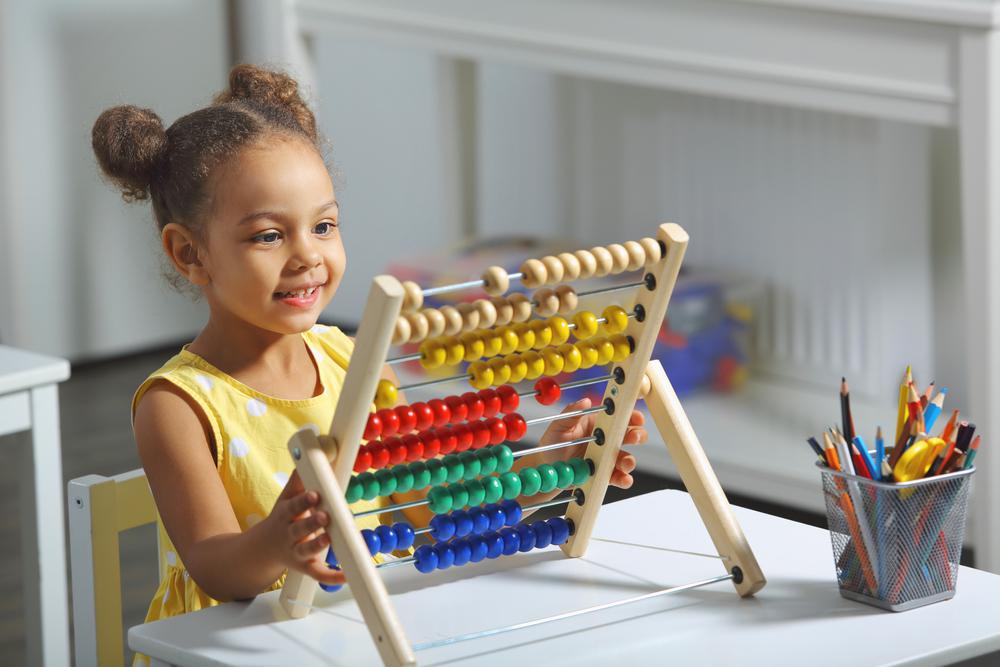


Understanding equations is foundational for young learners aged 4-7, as it sets the stage for their future mathematical abilities. At this age, children are developing critical thinking and problem-solving skills, essential for their overall cognitive growth. When parents and teachers prioritize understanding equations, they help children grasp the relationships between numbers and enhance their ability to reason logically.
Equations provide a framework for understanding mathematical concepts, such as addition, subtraction, and even basic algebra. By engaging with equations, children develop a deeper understanding of how numbers interact, which supports their ability to tackle more complex concepts in later grades. This early exposure fosters confidence and reduces math anxiety, making them more open to learning.
Additionally, understanding equations can help children make connections across various subjects. It encourages logical reasoning, which can improve their skills in subjects like science and even reading comprehension.
Moreover, working on equations together can strengthen the bond between parents, teachers, and children. It creates opportunities for meaningful engagement, turning mathematical learning into a fun and supportive experience. In sum, nurturing an understanding of equations in early childhood lays a vital groundwork for academic success and fosters a love for learning.








