Understanding number sequence Math Worksheets for Ages 4-7
7 filtered results
-
From - To
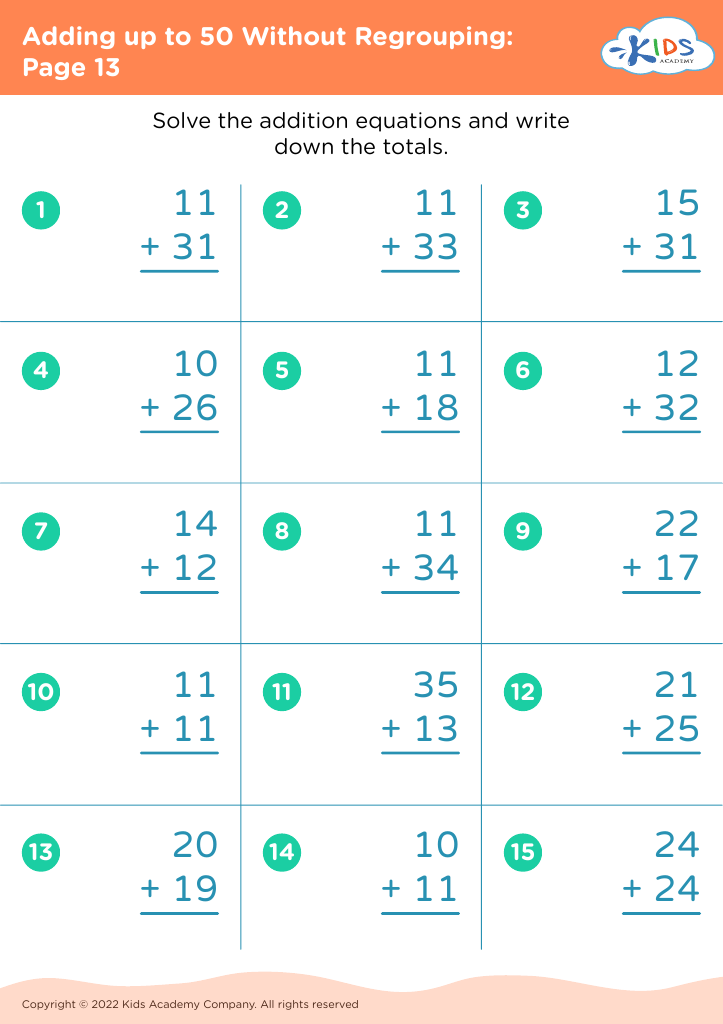
Understanding Number Sequence Math Worksheets for Ages 4-7 are designed to make learning numbers fun and engaging for young learners. These printable worksheets help kids grasp the concept of number order through various activities, including counting, identifying missing numbers, and sequencing. With colorful illustrations and interactive exercises, children aged 4-7 can build a strong foundation in math while developing critical thinking and problem-solving skills. Ideal for preschool and early elementary students, these worksheets are perfect for both classroom use and at-home practice, ensuring that learning number sequences is an enjoyable experience.
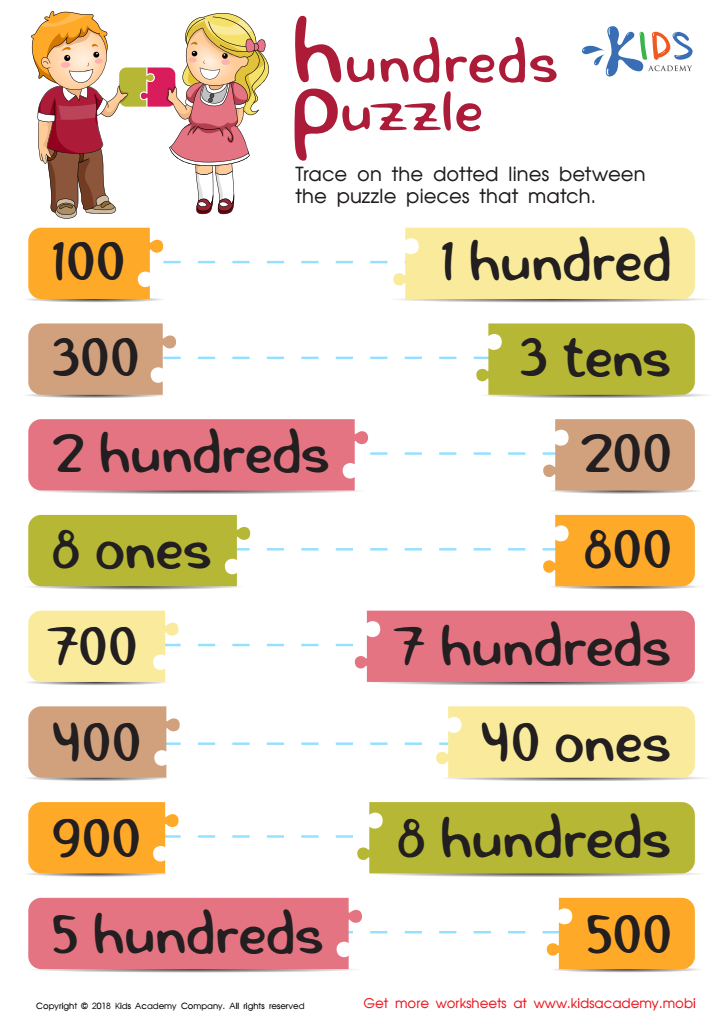
Hundreds Puzzle Worksheet
 Assign to My Students
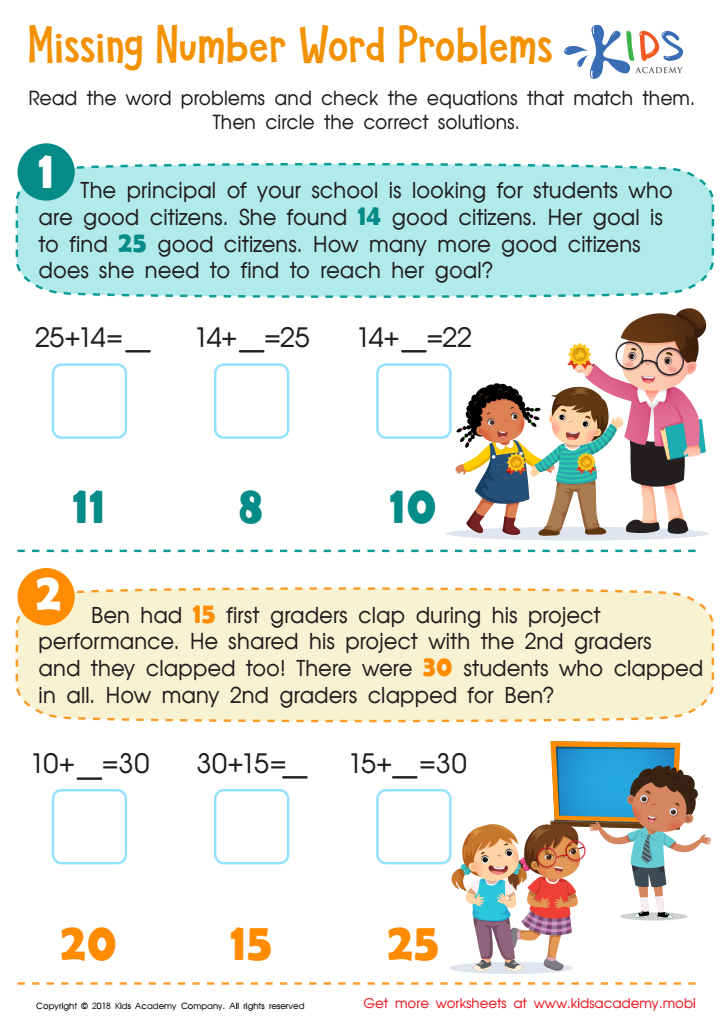
Missing Number Word Problems Worksheet
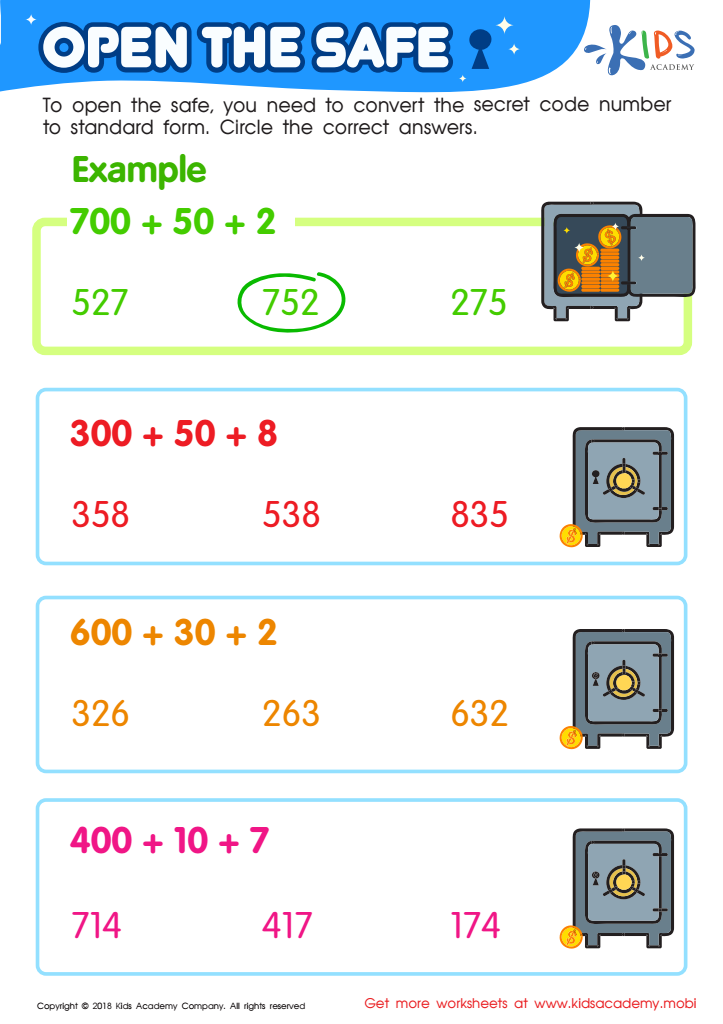
Open the Safe Worksheet
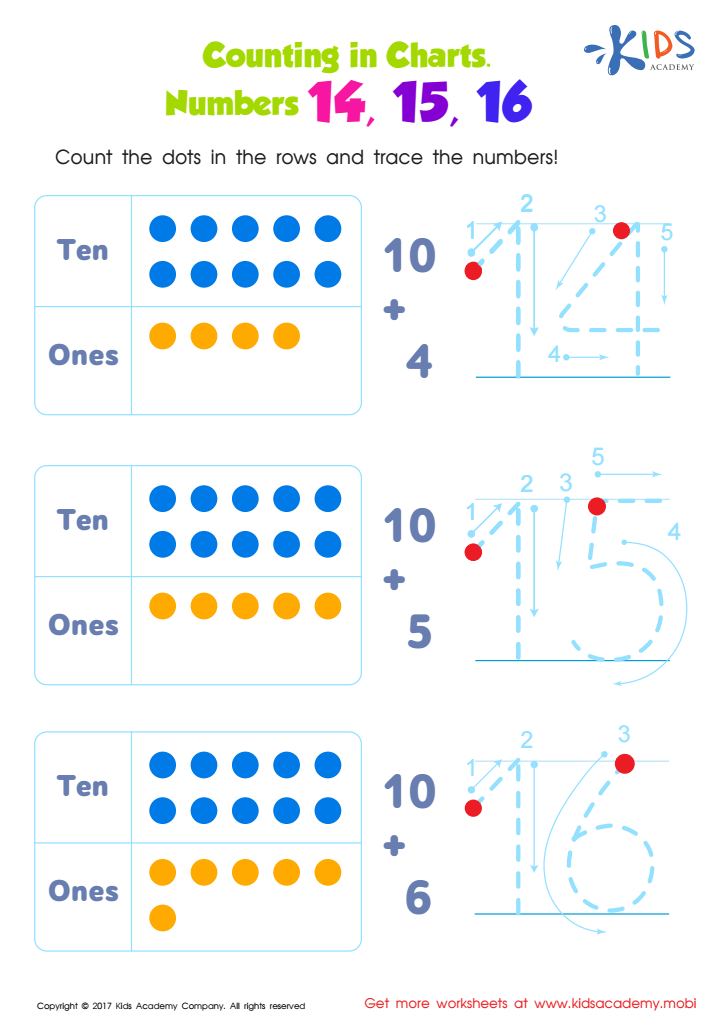
Number Tracing Worksheet




.jpg)


Understanding number sequences is vital for young children, and it plays a pivotal role in developing foundational math skills for ages 4-7. This comprehension sets the groundwork for future mathematical learning and cognitive development. Every number sequence represents a building block from which children learn more complex arithmetic concepts; it’s integral for recognizing patterns, which are fundamental in math.
Early exposure to number sequences—like counting forward or backward and recognizing number patterns—encourages logical thinking and enhances problem-solving skills. Young learners develop the ability to predict and establish a sense of order. This scaffolds further understanding of addition and subtraction, multiplication, division, and even more abstract mathematical concepts.
For teachers, focusing on number sequences allows them to measure understanding and identify potential learning gaps early on. For parents, engaging their children with number sequences through everyday activities helps reinforce classroom learning and makes math a familiar, approachable part of daily life.
Moreover, nurturing this knowledge equips children with confidence and a positive attitude toward math, often considered challenging. Synopsizing, fostering an understanding of number sequences forms the crux of early math education, thereby highlighting its far-reaching importance for long-term academic success.








