Understanding opposites Math Worksheets for Ages 4-7
4 filtered results
-
From - To
Help young learners grasp essential math concepts with our "Understanding Opposites Math Worksheets for Ages 4-7." Designed to be engaging and educational, these worksheets simplify the learning process by visually and interactively introducing opposites. Ideal for preschoolers and early elementary students, each worksheet encourages critical thinking and problem-solving through fun activities. Our age-appropriate exercises cover fundamental math skills and enhance cognitive development. Give your child a head start in their math journey by incorporating these valuable resources into their study routine. Visit Kids Academy for comprehensive tools that make learning opposites enjoyable and effective!
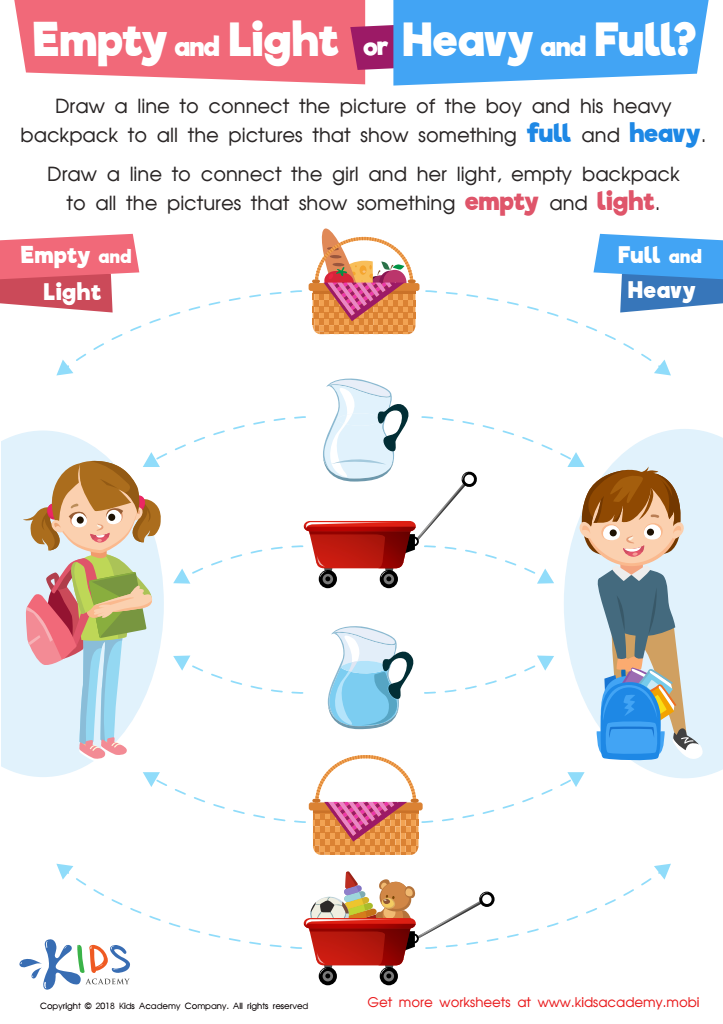
Empty and Light or Heavy and Full? Worksheet
 Assign to My Students
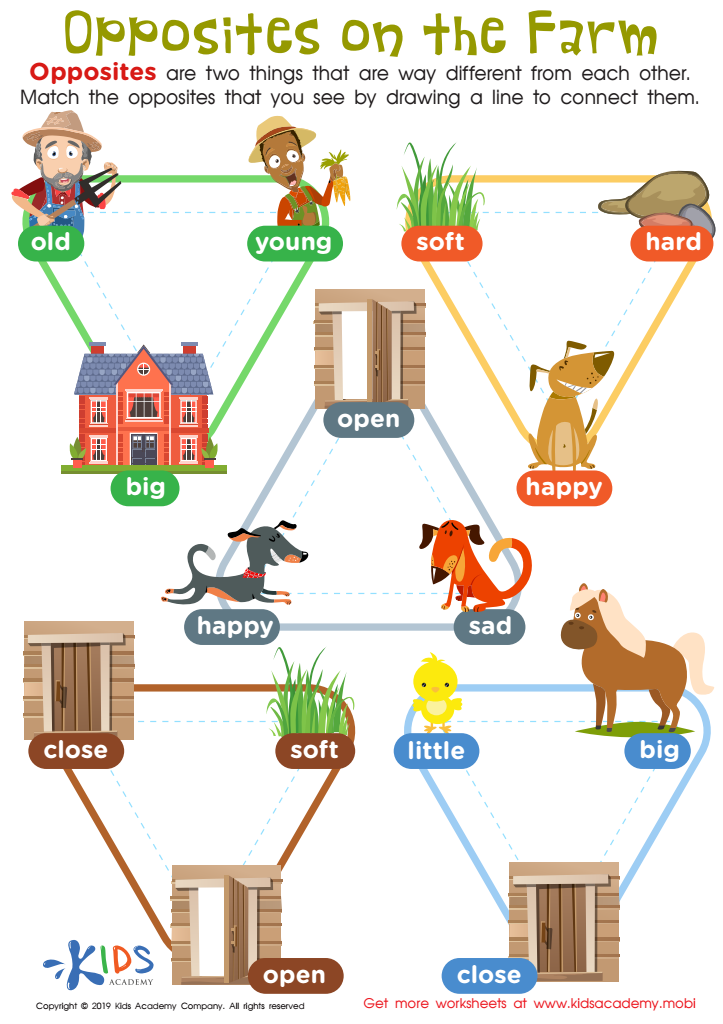
Opposites on the Farm Worksheet
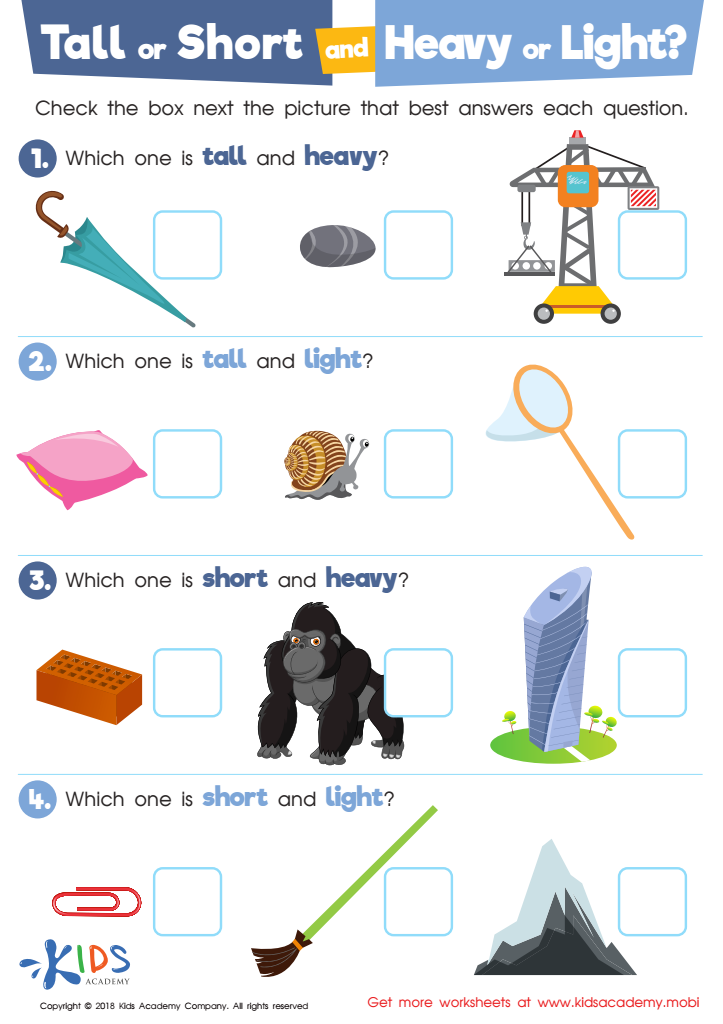
Tall or Short and Heavy or Light? Worksheet
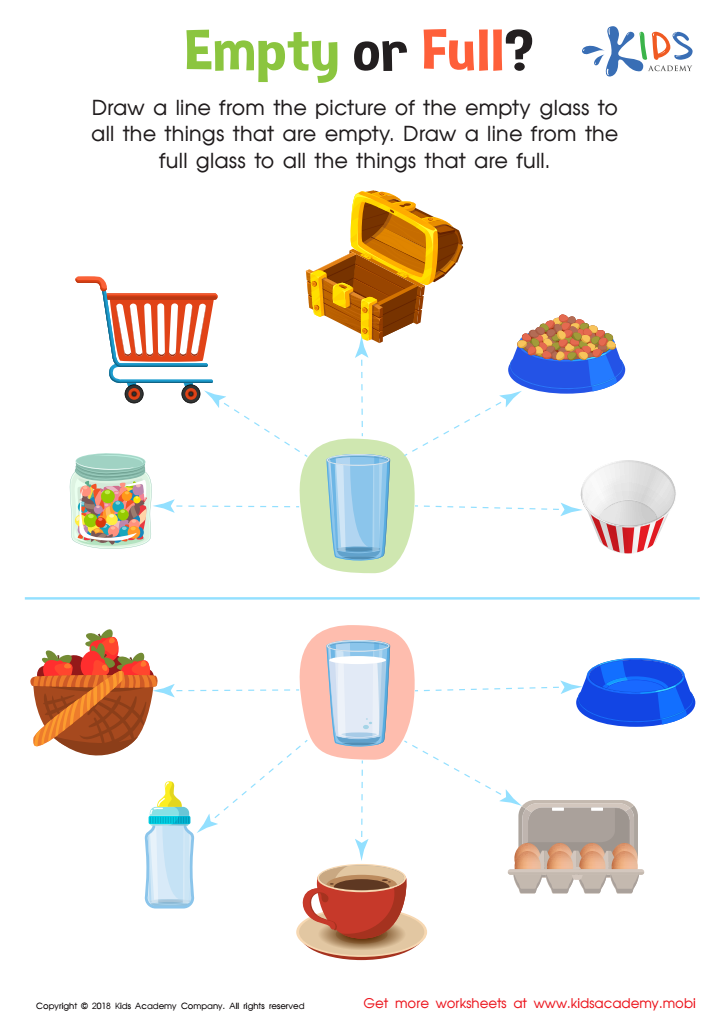
Empty or Full? Worksheet







Understanding opposites in math is crucial for children aged 4-7, laying the foundation for essential cognitive skills and broader mathematical understanding. Opposites in math, such as big-small, long-short, or heavy-light, help children grasp basic concepts of comparison and contrast, which are fundamental for logical thinking. This exercise aids in developing their spatial awareness and understanding of relative sizes and distances, both integral to their mathematical and everyday problem-solving abilities.
Teaching opposites engages young learners in critical thinking and vocabulary enhancement. It enables them to describe and understand the world more clearly, fostering effective communication skills. Knowing that numbers and shapes have opposites enhances their number sense, a fundamental skill for grasping more complex math concepts later on, like subtraction (understanding "taking away" as the opposite of adding).
Additionally, recognizing opposites supports social-emotional development. Children learn to navigate various scenarios by understanding different perspectives and outcomes, improving their adaptability and resilience. Overall, parents and teachers fostering this knowledge cultivate a balanced foundation for future academic pursuits and real-life challenges, reinforcing versatile and competent thinking in young minds.








