Check out this FREE Trial Lesson on Math for age 4-7!

Add within 100 No regrouping

Favorites
With answer key
Interactive
  • 4-7
  • Visual Learning
  • Math
Free 2 digit addition worksheet

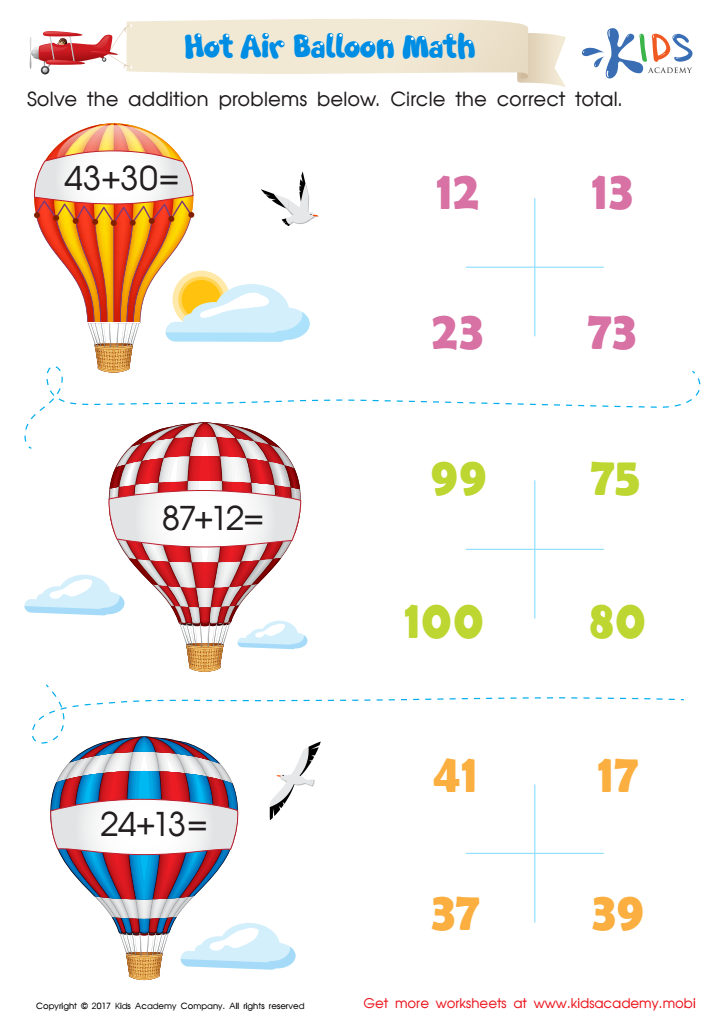
Hot Air Balloon Math Worksheet

It uses engaging pictures and a hot air balloon theme to keep your child interested, and it’s designed to build addition confidence.
Hot Air Balloon Math Worksheet
Worksheet
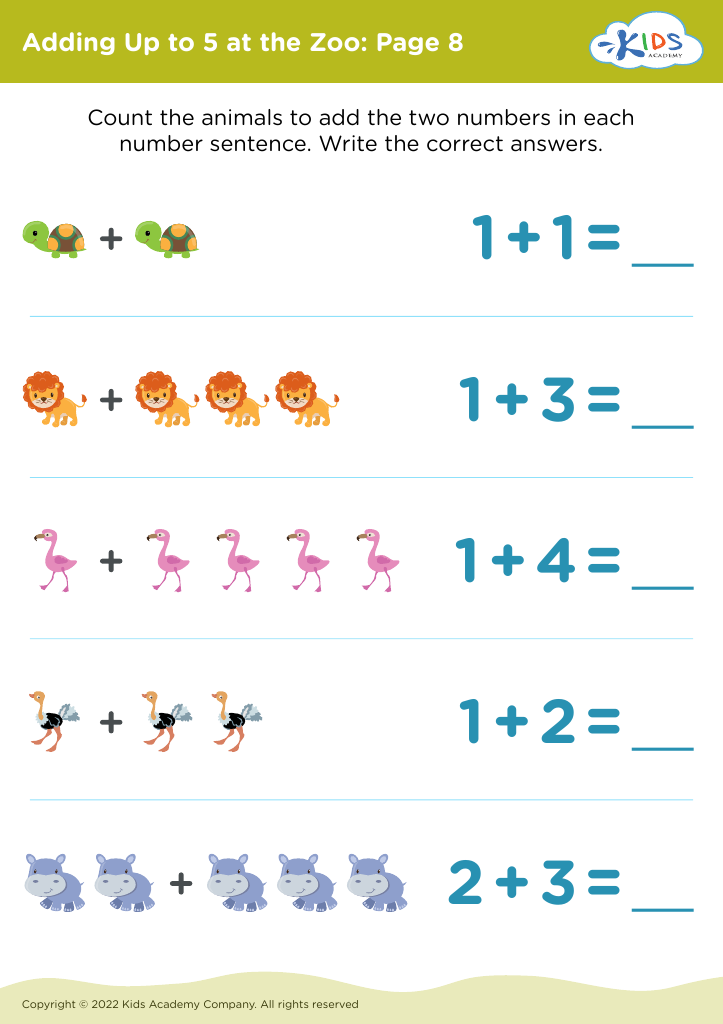
Adding Up to 5 at the Zoo: Page 8

Adding Up to 5 at the Zoo: Page 8

Adding Up to 5 at the Zoo: Page 8
Worksheet
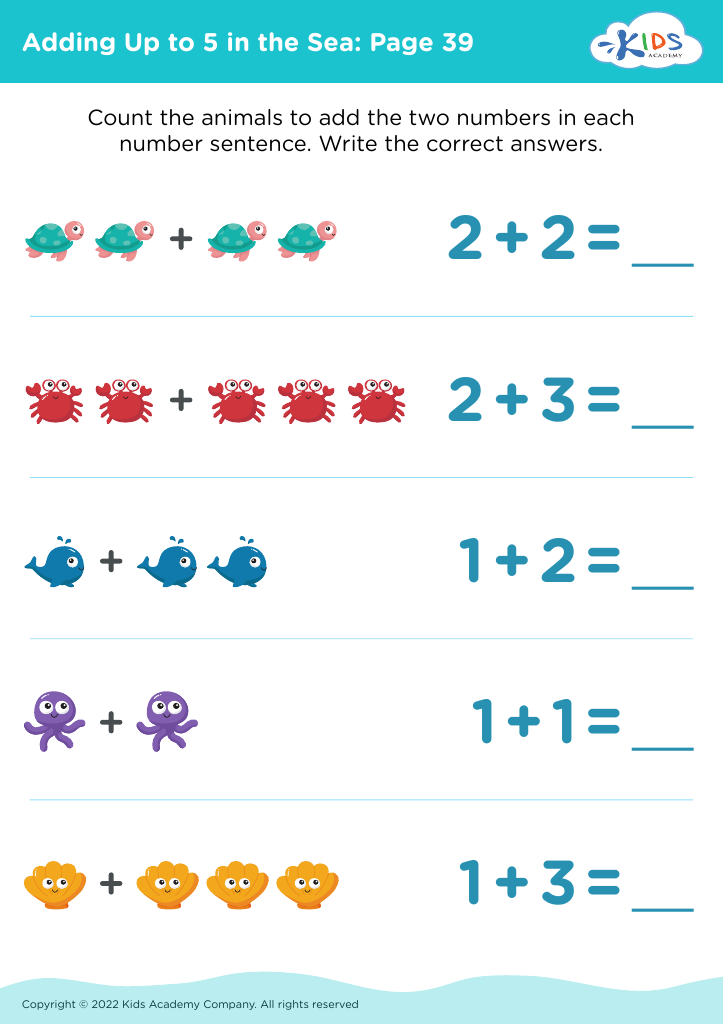
Adding Up to 5 in the Sea: Page 39
Worksheet
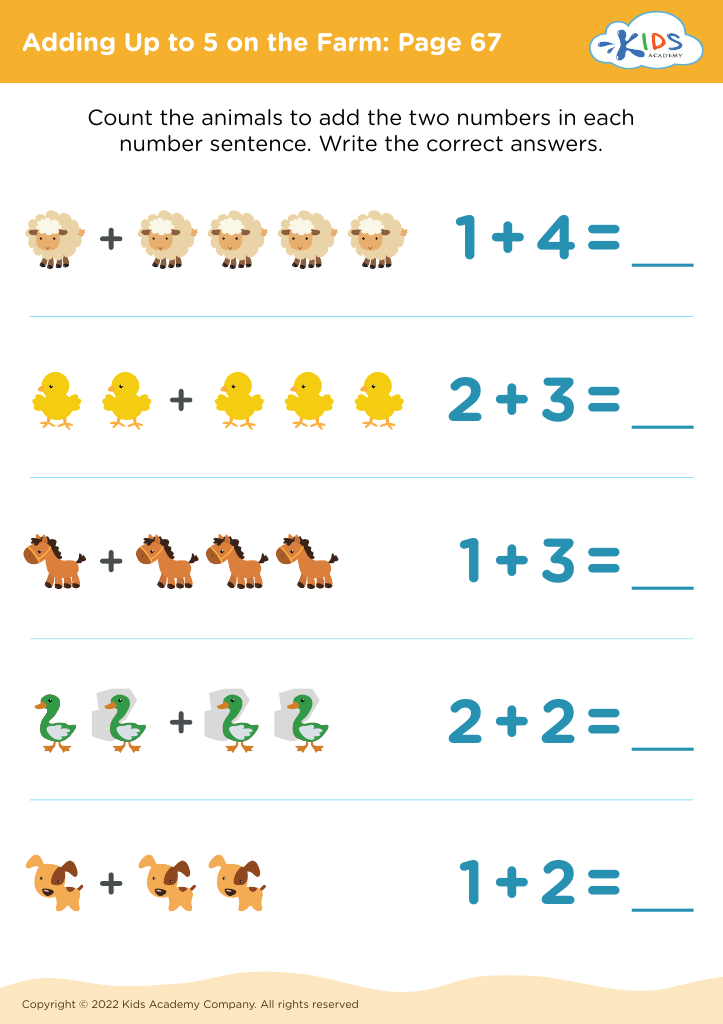
Adding Up to 5 on the Farm: Page 67
Worksheet
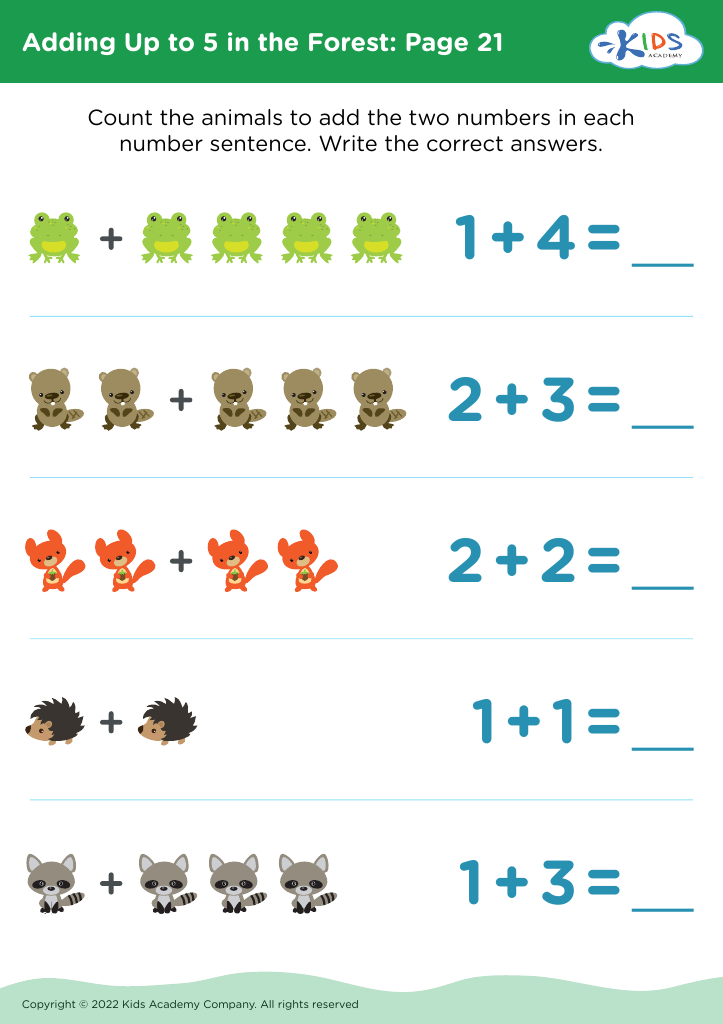
Adding Up to 5 in the Forest: Page 21
Worksheet
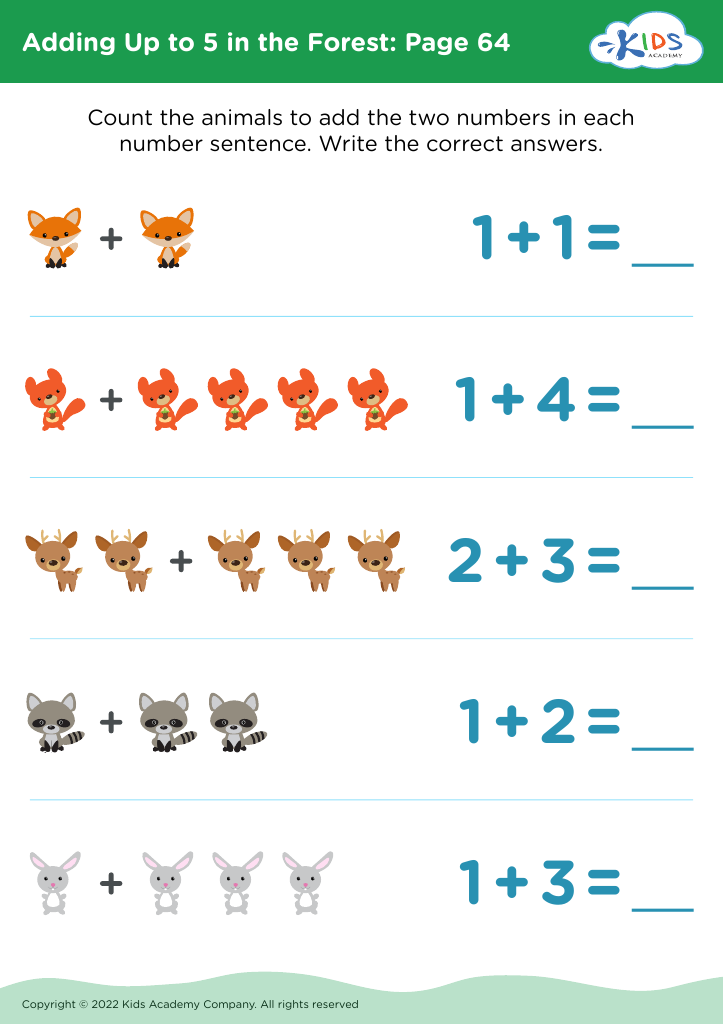
Adding Up to 5 in the Forest: Page 64
Worksheet
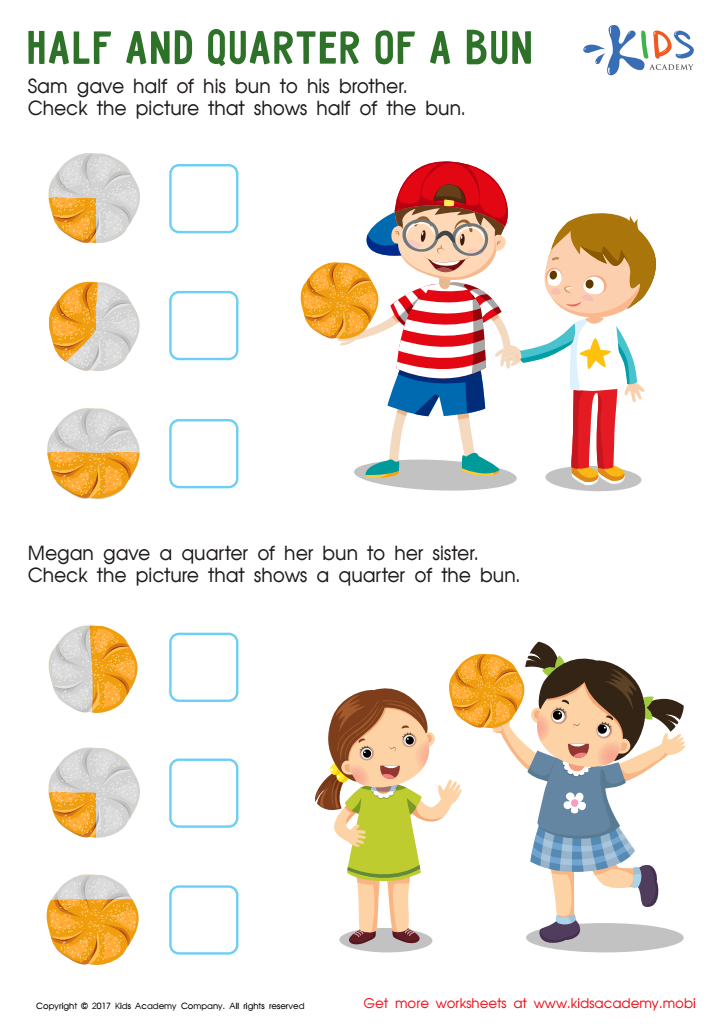
Half and Quarter of a Bun Worksheet
Half and Quarter of a Bun Worksheet
This worksheet introduces Sam, his brother and Megan, her sister, who are sharing buns. Show kids the picture of half and quarter to help them understand. Ask if they know what half and quarter of a shape is before progressing. Help them check the picture showing half and quarter of a bun.
Half and Quarter of a Bun Worksheet
Worksheet
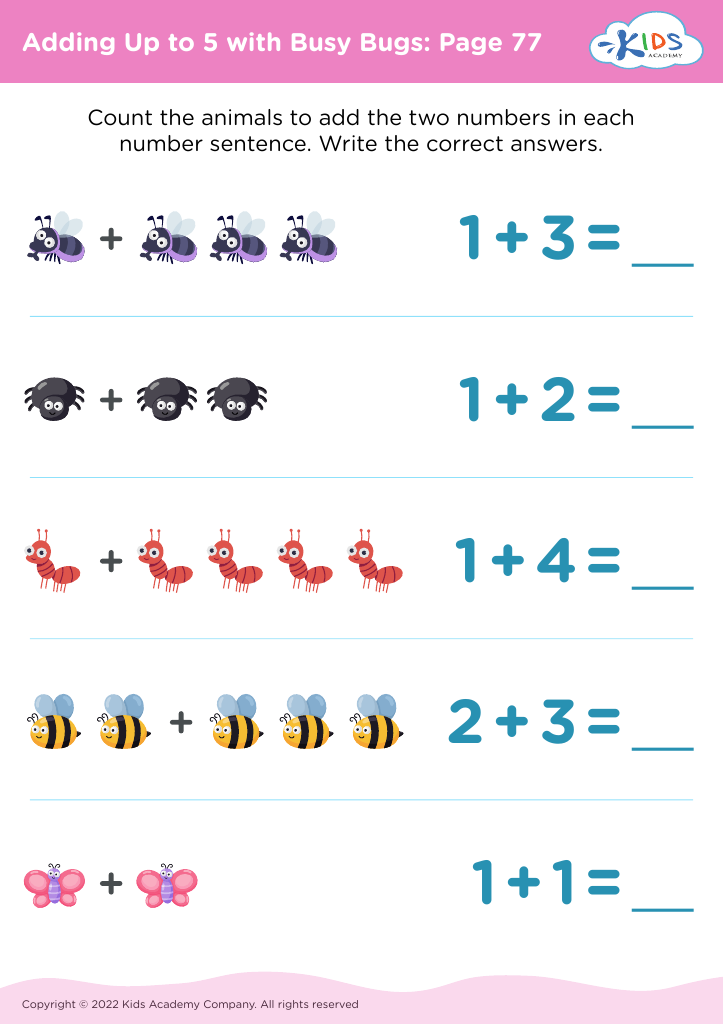
Adding Up to 5 with Busy Bugs: Page 77
Worksheet
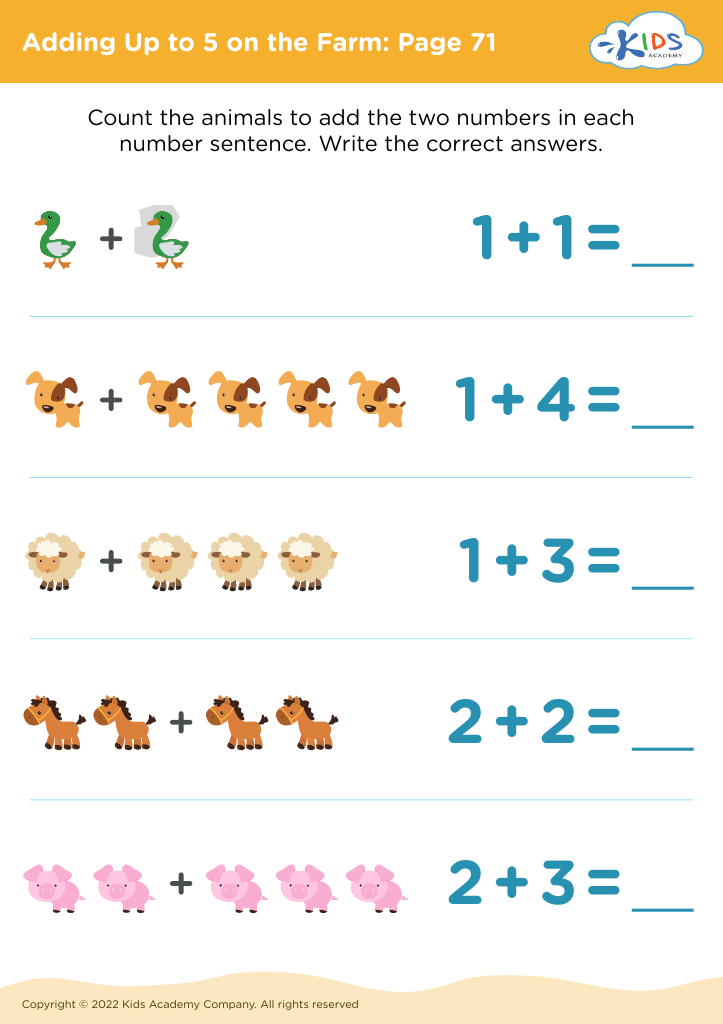
Adding Up to 5 on the Farm: Page 71
Worksheet
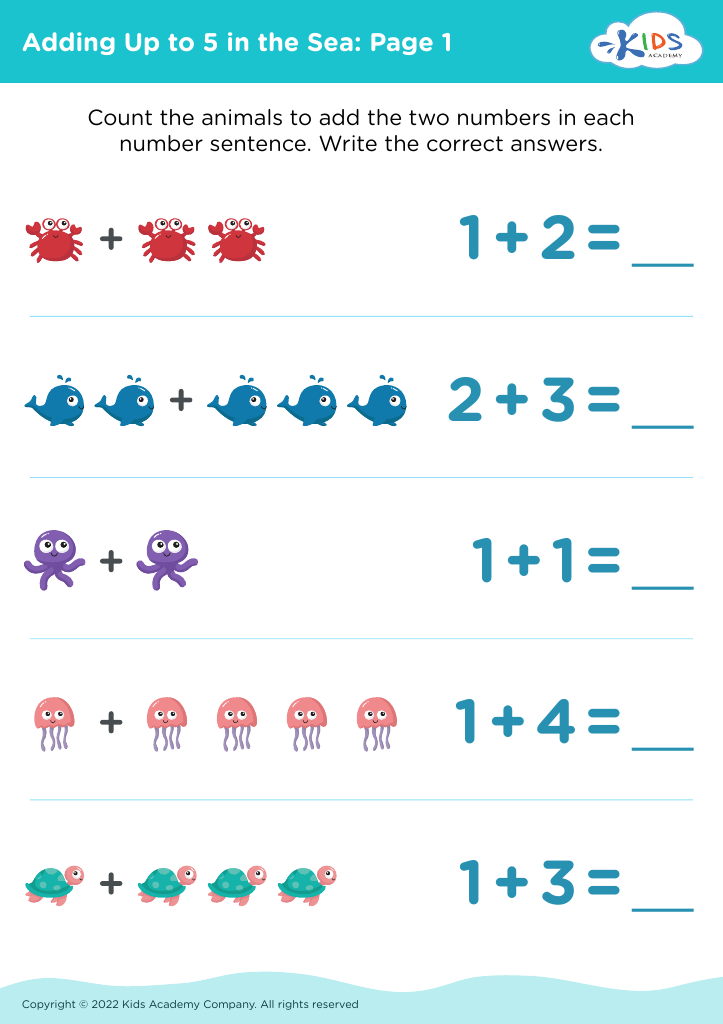
Adding Up to 5 in the Sea: Page 1

Adding Up to 5 in the Sea: Page 1

Adding Up to 5 in the Sea: Page 1
Worksheet
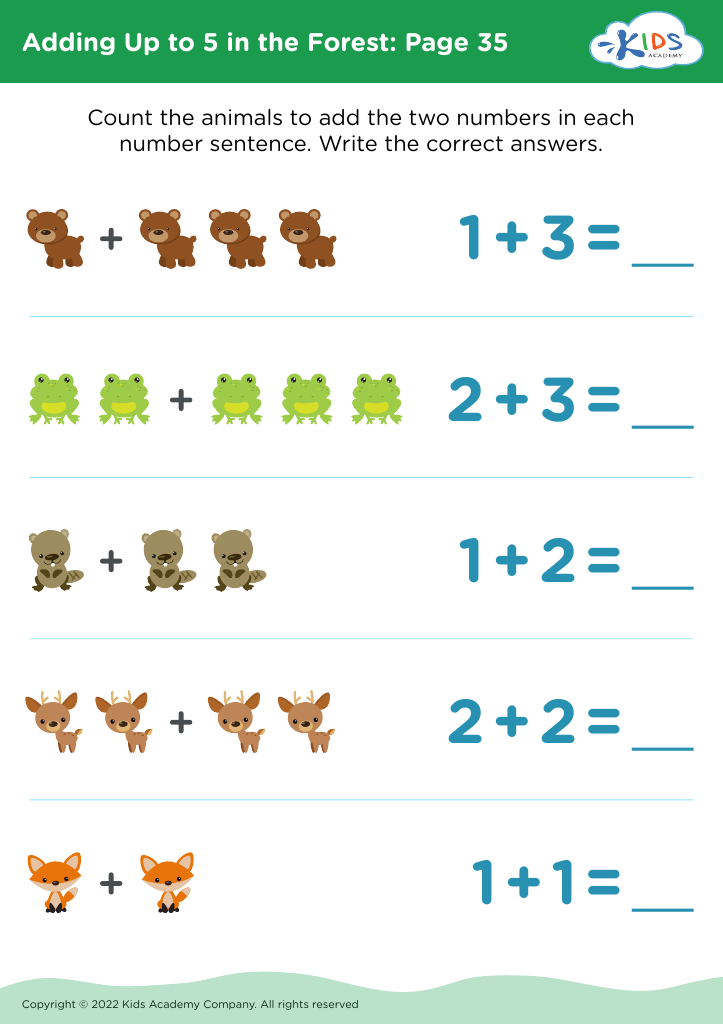
Adding Up to 5 in the Forest: Page 35
Worksheet
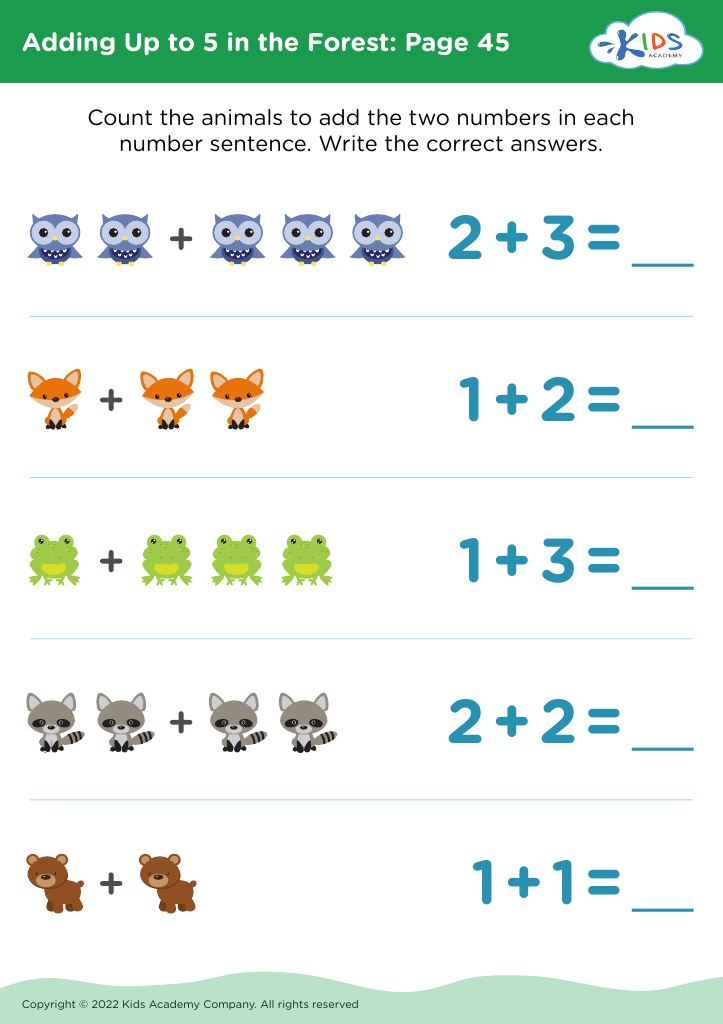
Adding Up to 5 in the Forest: Page 45
Worksheet
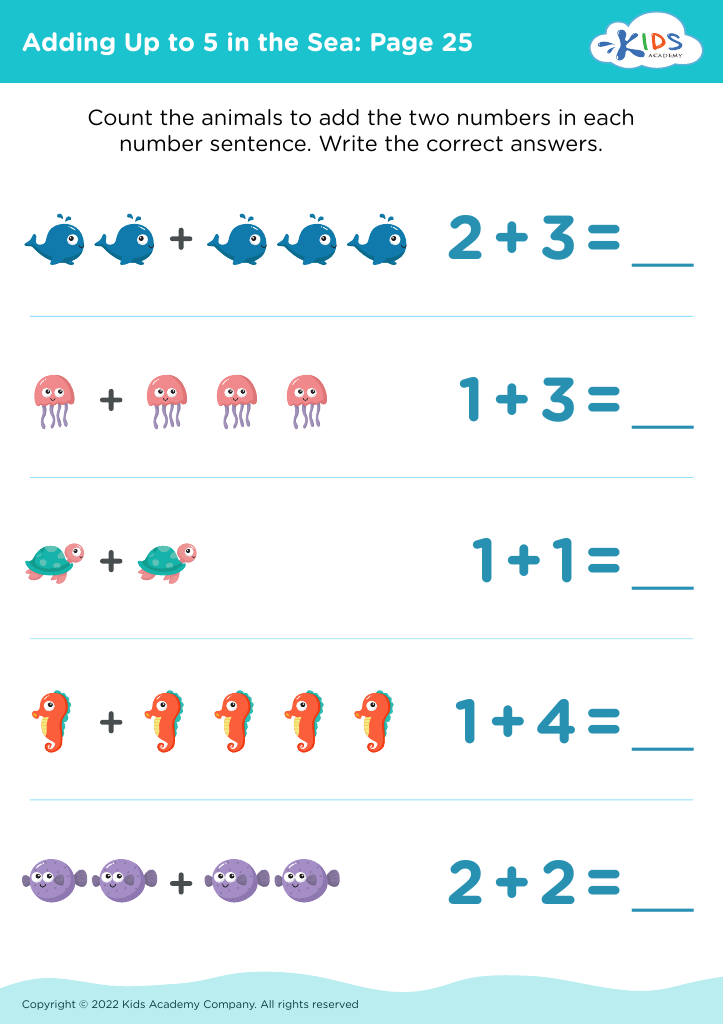
Adding Up to 5 in the Sea: Page 25
Worksheet
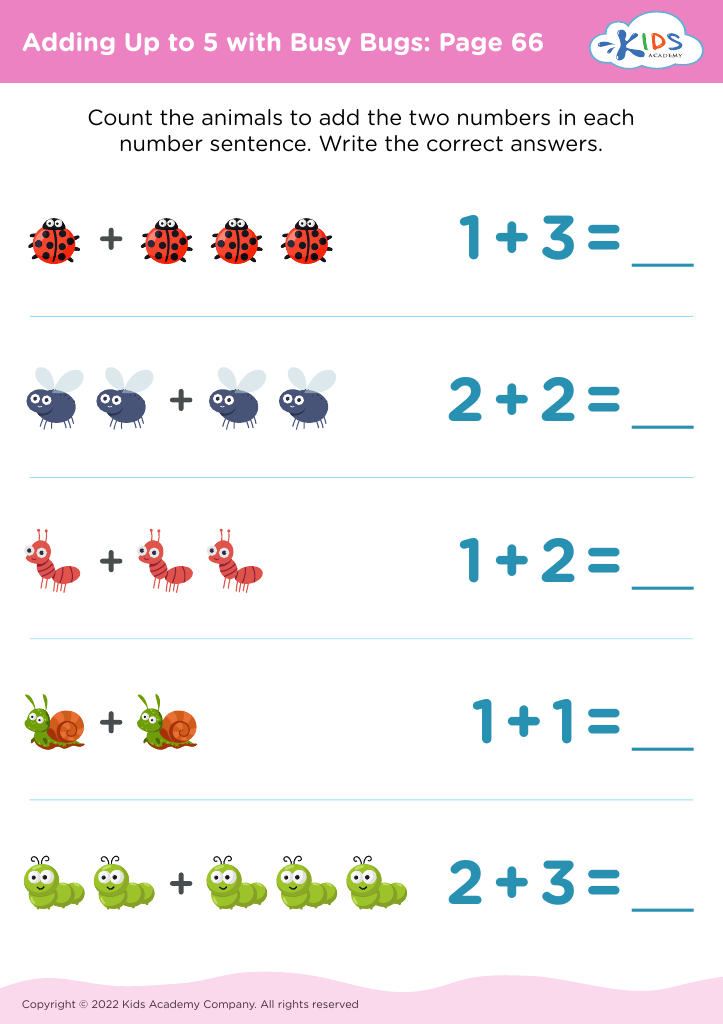
Adding Up to 5 with Busy Bugs: Page 66
Worksheet
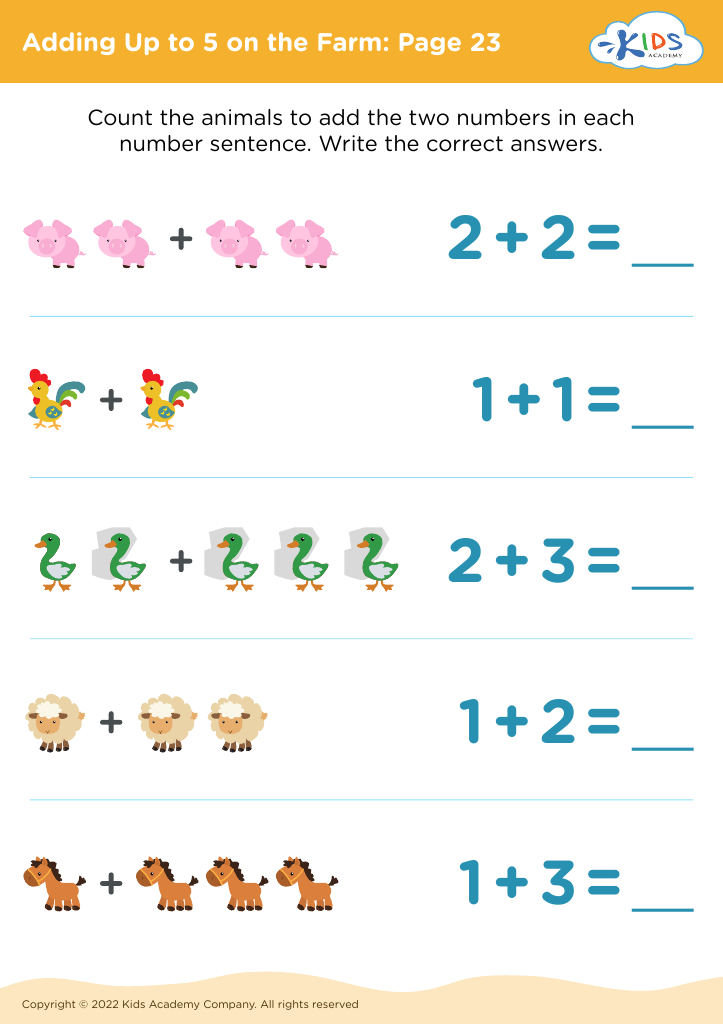
Adding Up to 5 on the Farm: Page 23
Worksheet
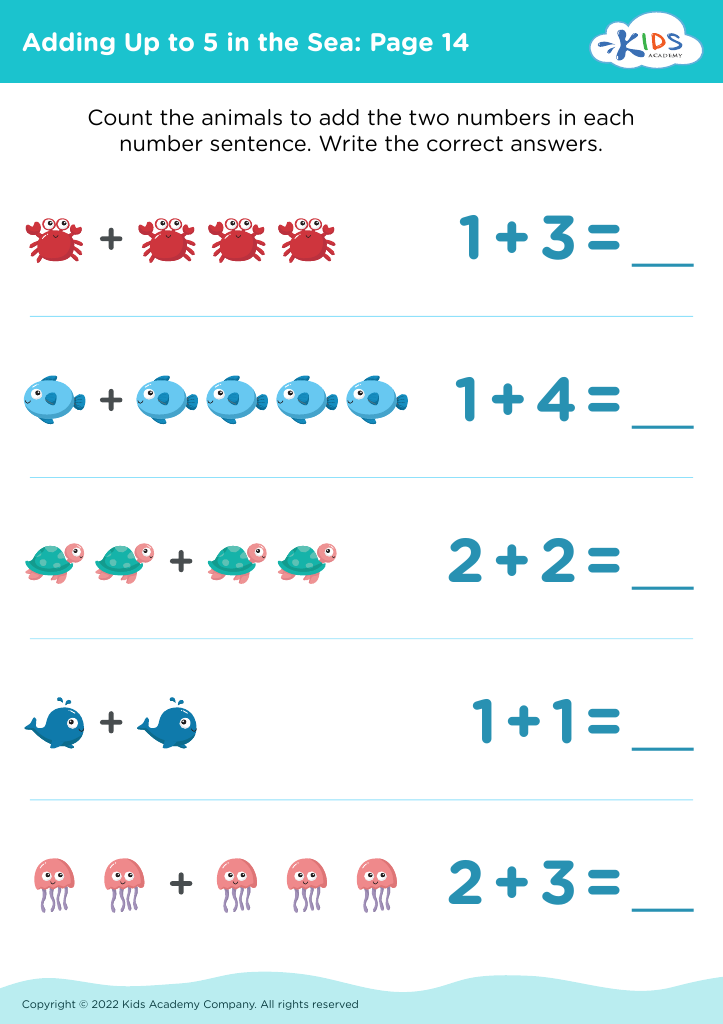
Adding Up to 5 in the Sea: Page 14
Worksheet
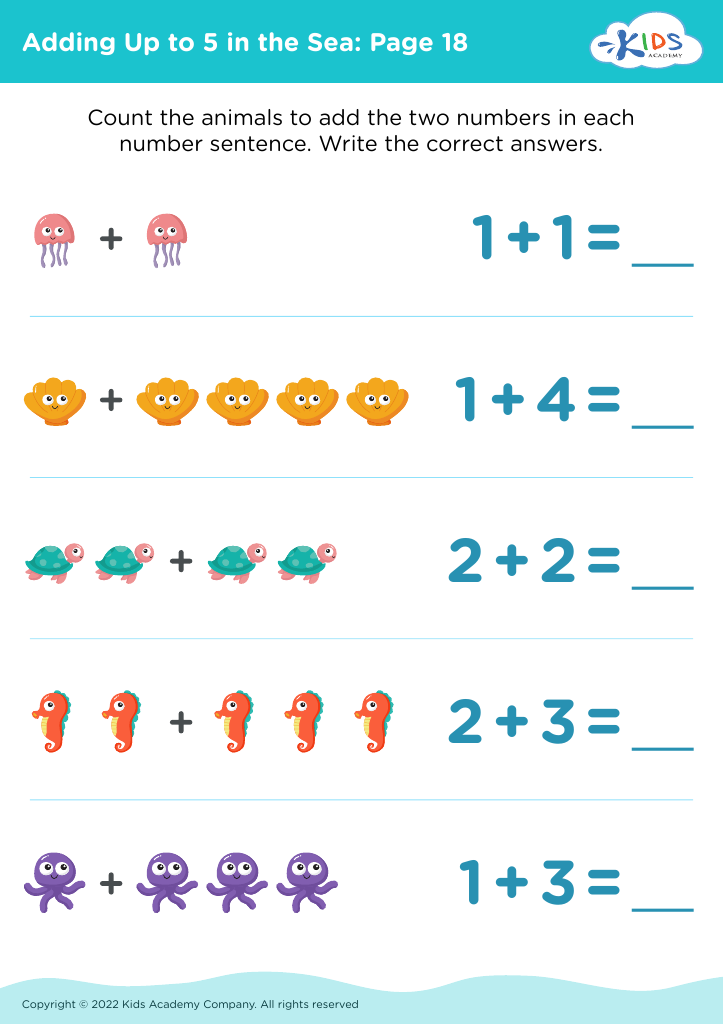
Adding Up to 5 in the Sea: Page 18
Worksheet
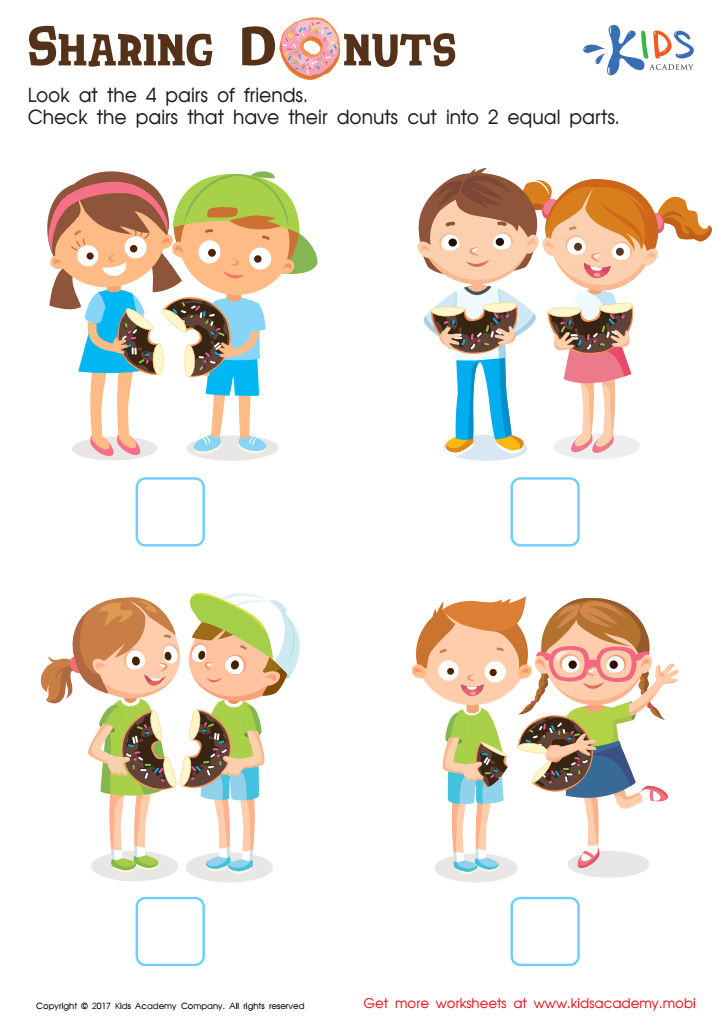
Sharing Donuts Worksheet
Sharing Donuts Worksheet
Get your kids to check which of the 4 pairs of friends in the worksheet have evenly-split donuts. No one likes being cheated out of a treat, so it's important to make sure the donuts are divided fairly. Plus, your kids will love the challenge!
Sharing Donuts Worksheet
Worksheet
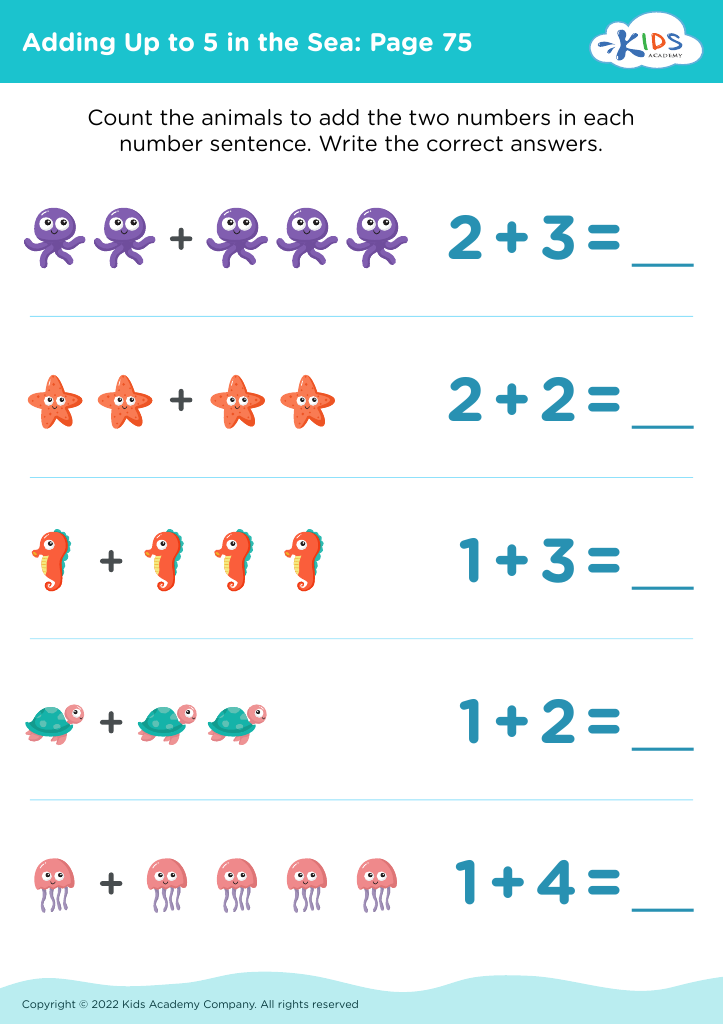
Adding Up to 5 in the Sea: Page 75
Worksheet
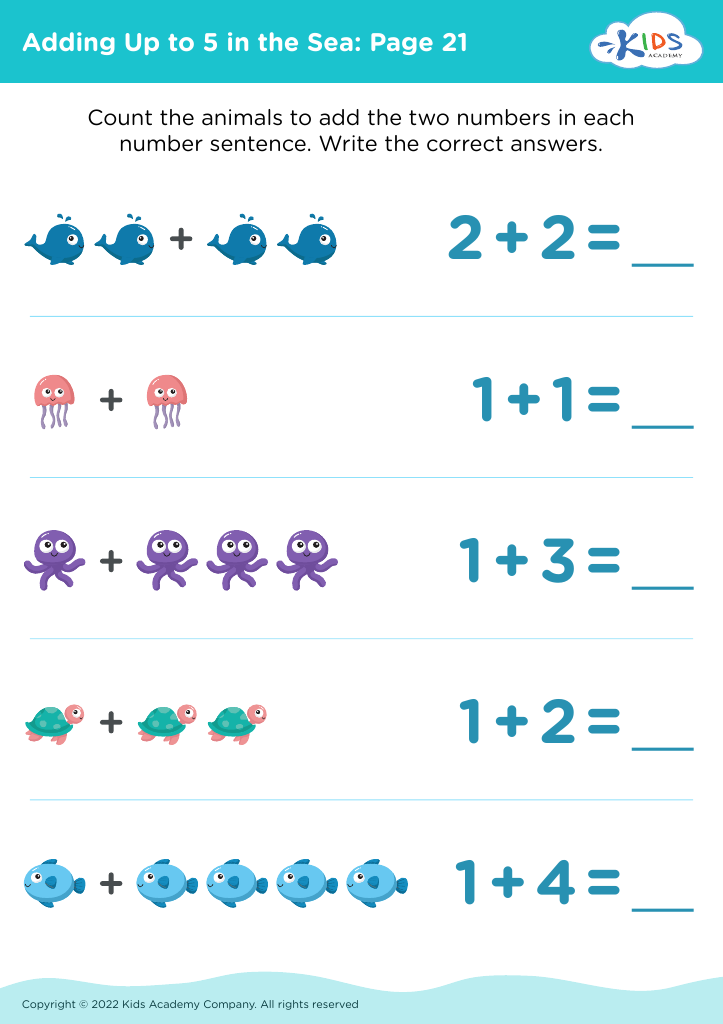
Adding Up to 5 in the Sea: Page 21
Worksheet
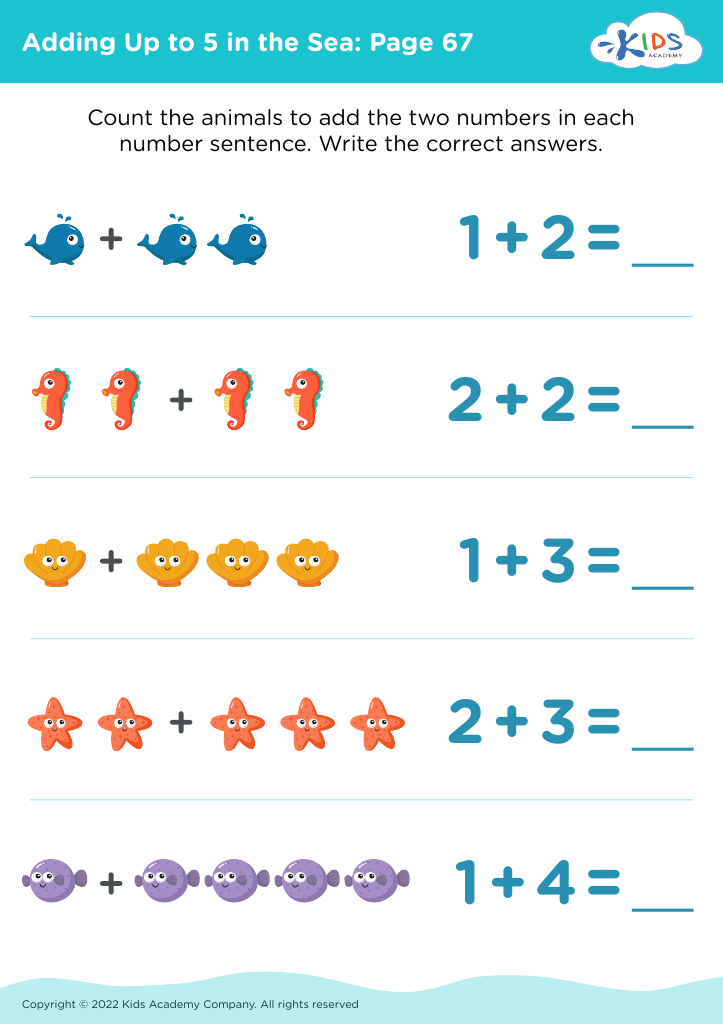
Adding Up to 5 in the Sea: Page 67
Worksheet
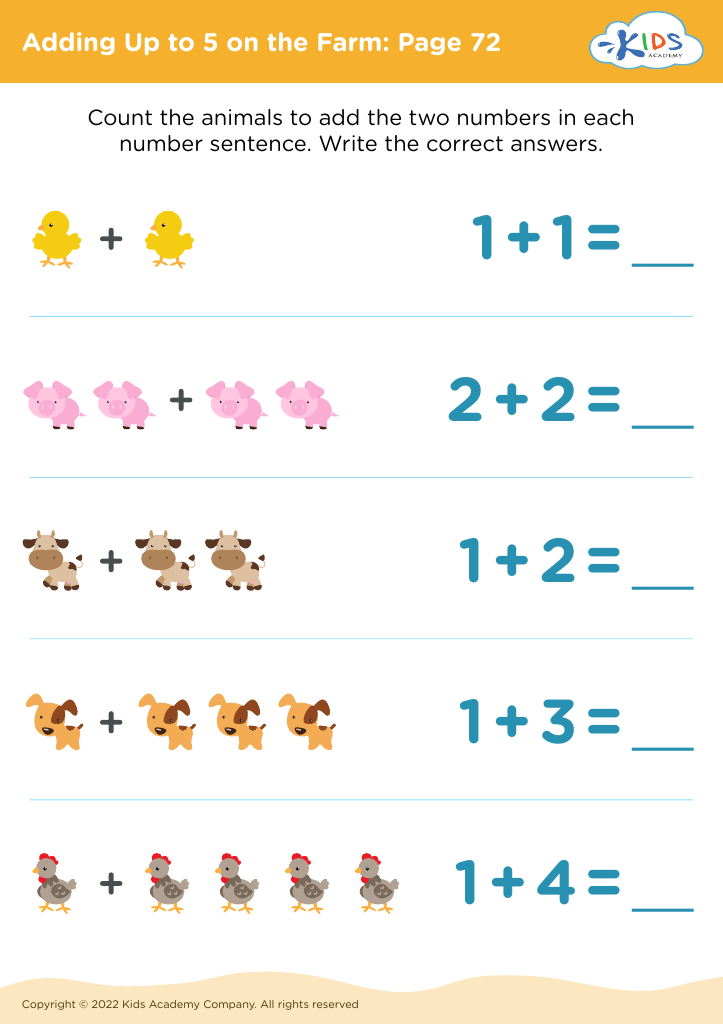
Adding Up to 5 on the Farm: Page 72
Worksheet
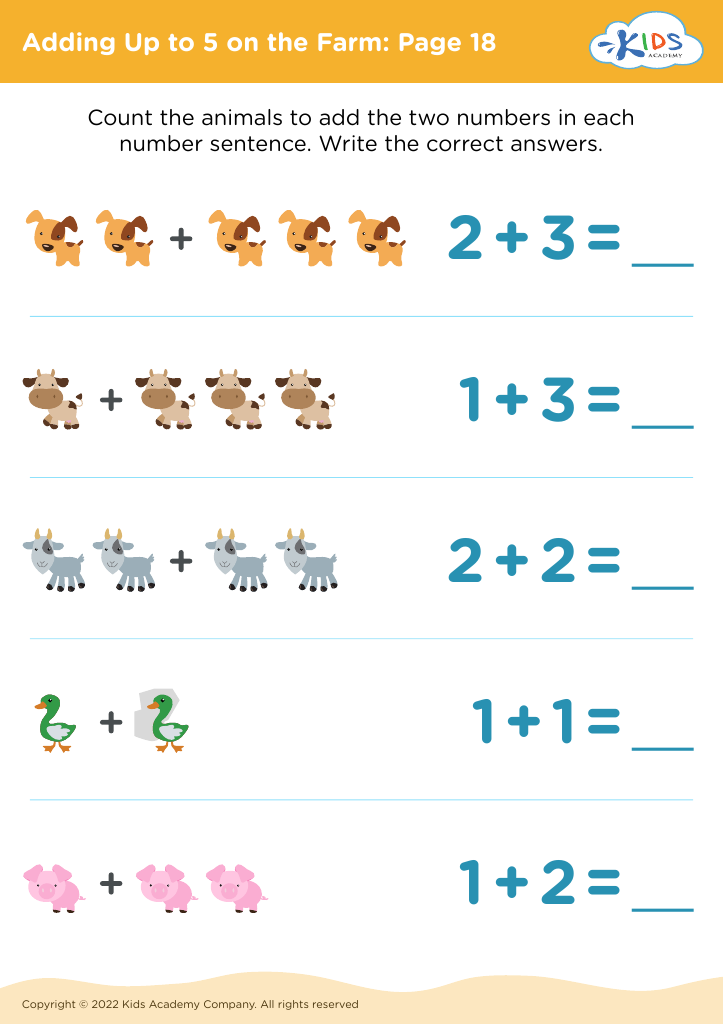
Adding Up to 5 on the Farm: Page 18
Worksheet
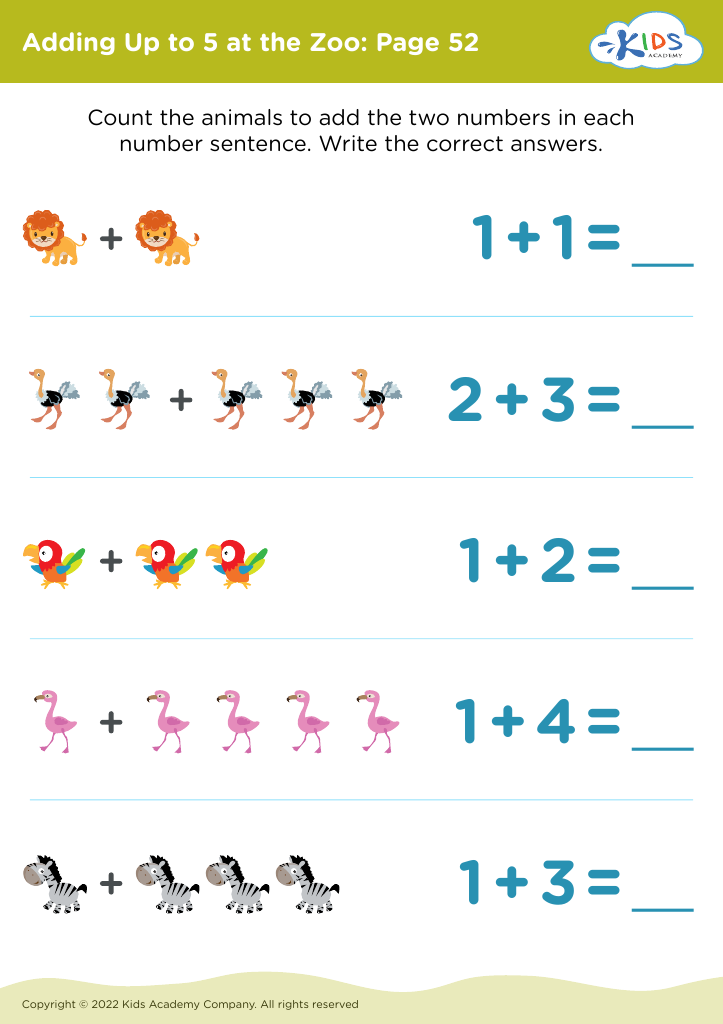
Adding Up to 5 at the Zoo: Page 52
Worksheet


Visual Learning in Math for ages 4-7 is critical for several reasons. First, it caters to the developmental stages of young children, who learn best through images, colors, and hands-on activities. Visual aids like blocks, drawings, and charts help children grasp complex mathematical concepts by presenting them in a tangible, relatable way.

Furthermore, using visual strategies can enhance engagement and motivation, making math enjoyable rather than intimidating. When children can see and manipulate objects, they are more likely to develop a positive attitude toward learning and problem-solving. Visual learning also accommodates different learning styles, ensuring that all students, whether they are visual, auditory, or kinesthetic learners, have an opportunity to excel.

Additionally, visual learning activities help reinforce foundational skills, such as counting, pattern recognition, and spatial awareness. These early competencies are essential for later success in more advanced math. By encouraging visual learning, parents and teachers can foster critical thinking, creativity, and a lifelong love of math. Ultimately, investing time in engaging young learners through visual methods prepares them not only for academic success but also for real-world problem-solving as they grow.