Matching skills Matching Worksheets for Ages 4-7
6 filtered results
-
From - To
Explore our engaging and educational Matching Skills Matching Worksheets for children aged 4-7 on Kids Academy! Our thoughtfully designed worksheets help young learners develop critical thinking, attention to detail, and fine motor skills through fun and interactive matching exercises. With vibrant images and age-appropriate challenges, children can improve their ability to recognize patterns, make connections, and enhance memory. Perfect for both classroom use and at-home practice, our matching worksheets support early childhood development and provide a foundation for future academic success. Visit our website to access these valuable resources and make learning a joyful experience for your child!
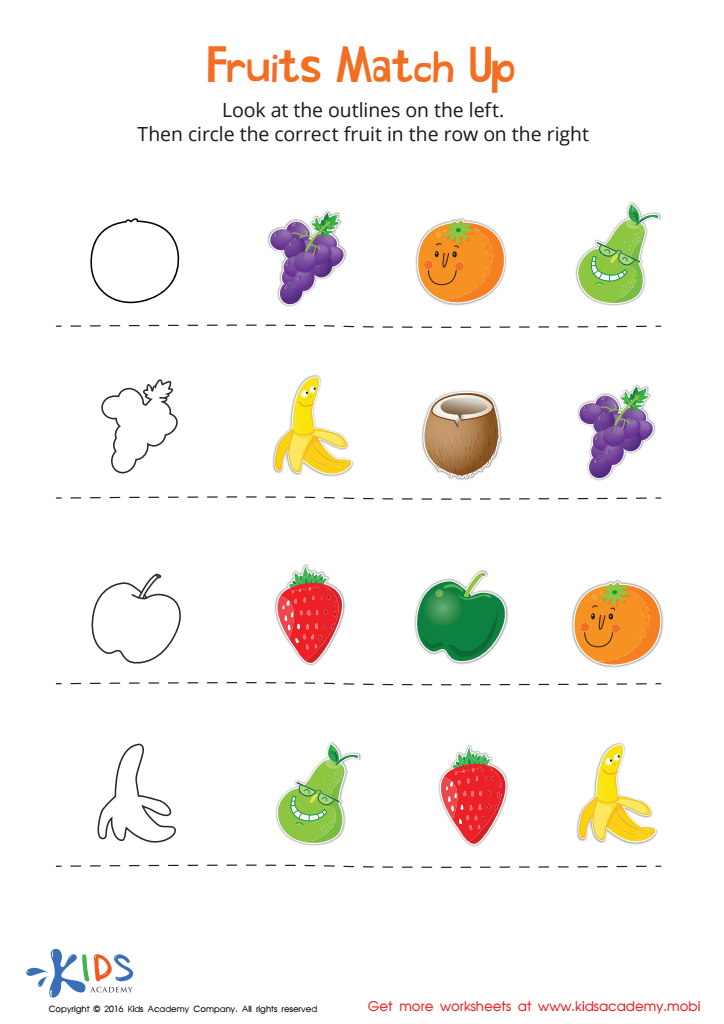
Fruits Match Up Worksheet
 Assign to My Students
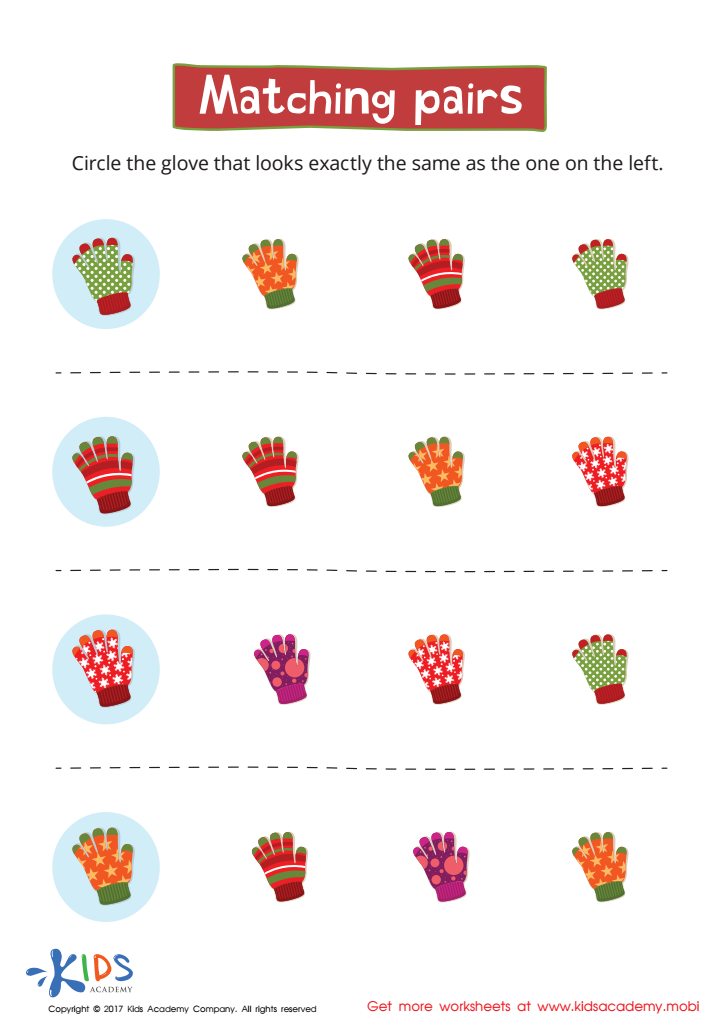
Matching: Matching Pairs Worksheet
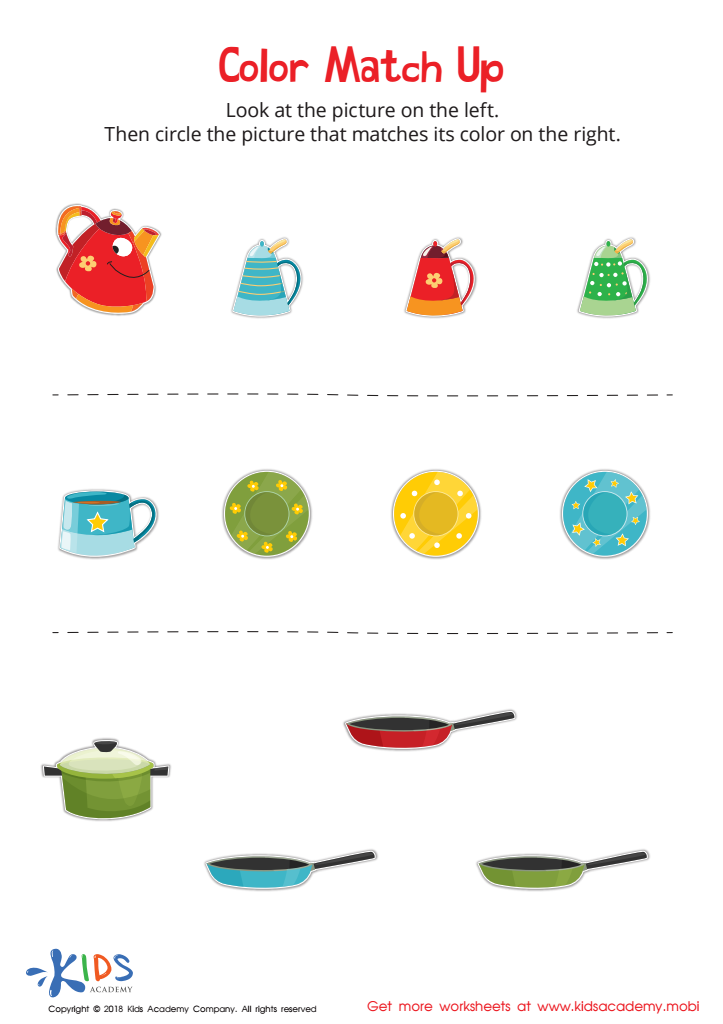
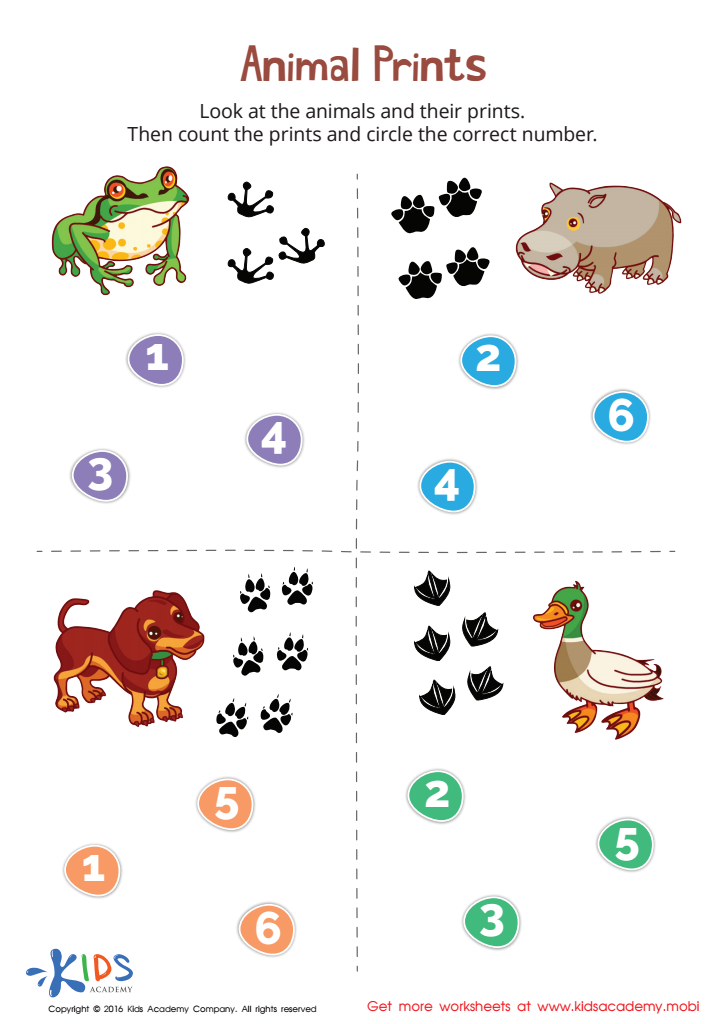
Animal Prints Match-Up Worksheet
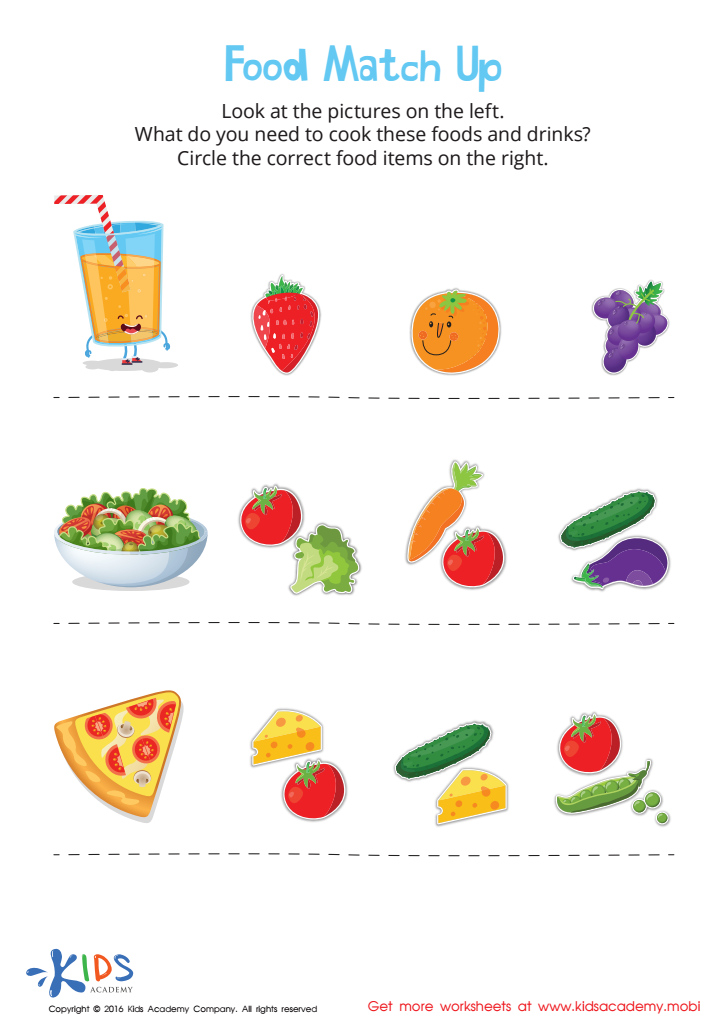
Food Match Up Worksheet
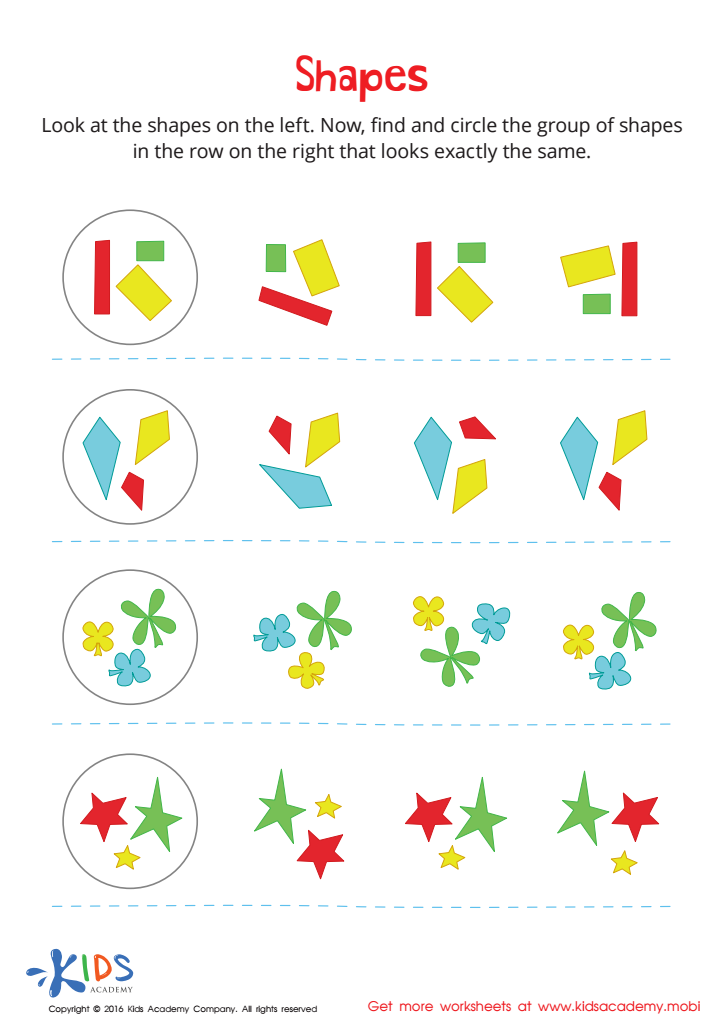
Shapes Worksheet








Matching skills are crucial for children aged 4-7 as they serve as the foundation for various cognitive and academic abilities. These skills involve pairing objects, pictures, or symbols based on specific attributes such as shape, color, size, or quantity. By engaging in matching activities, children enhance their observation and concentration abilities, which are essential for learning.
First, matching activities promote critical thinking and problem-solving skills. Children learn to analyze similarities and differences, make comparisons, and recognize patterns, which are important components of logical reasoning. Second, these activities help in reinforcing memory. As kids recall information to correctly match items, their memory retention is improved, aiding in better academic performance.
Furthermore, matching is integral to developing pre-mathematical skills. Recognizing and categorizing objects form the basis of understanding numbers, sequencing, and basic arithmetic. In terms of language development, matching exercises often involve labeling objects and describing their attributes, thereby expanding vocabulary and communication skills.
Socially and emotionally, matching activities encourage patience, persistence, and the satisfaction of achievement, nurturing a positive attitude toward learning. Lastly, fine motor skills are honed as children manipulate objects to match them correctly, preparing their hands for writing and other detailed tasks.
Overall, fostering matching skills in early childhood sets the stage for a well-rounded educational development, making it essential for teachers and parents to encourage such activities.








