Comparing sizes Measurement Worksheets for Ages 4-7
9 filtered results
-
From - To
Welcome to our "Comparing Sizes Measurement Worksheets" designed for children ages 4-7! These engaging worksheets are perfect for young learners to explore and understand the concept of size comparison in a fun and interactive way. With vibrant illustrations and age-appropriate activities, kids will learn to identify, compare, and order objects based on size. Each worksheet features a variety of exercises that encourage critical thinking and improve fine motor skills. This resource supports early mathematics learning, helping your child gain confidence in their measurement abilities. Dive into the world of sizes and watch their skills grow while having fun!
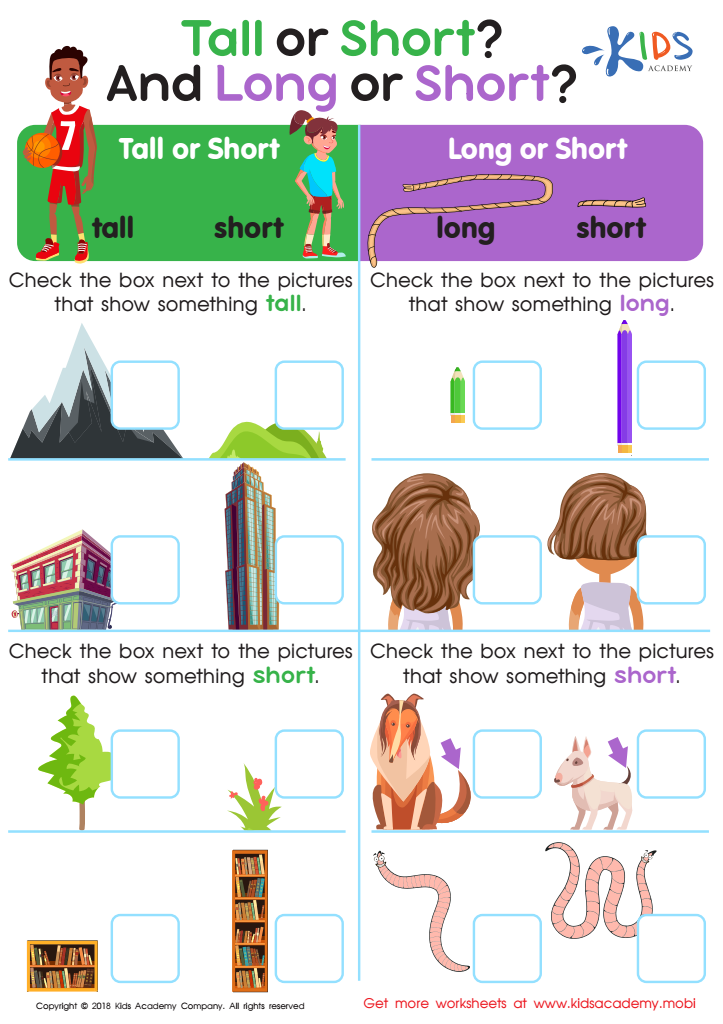
Tall or Short and Long or Short? Worksheet
 Assign to My Students
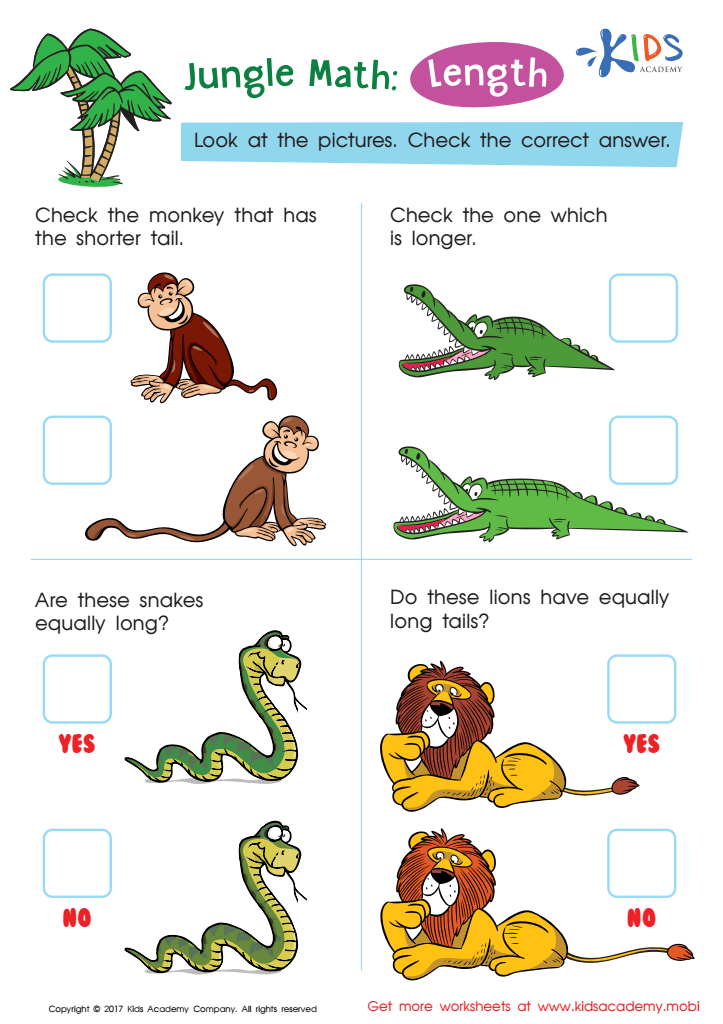
Which One Is Longer - Length Worksheet
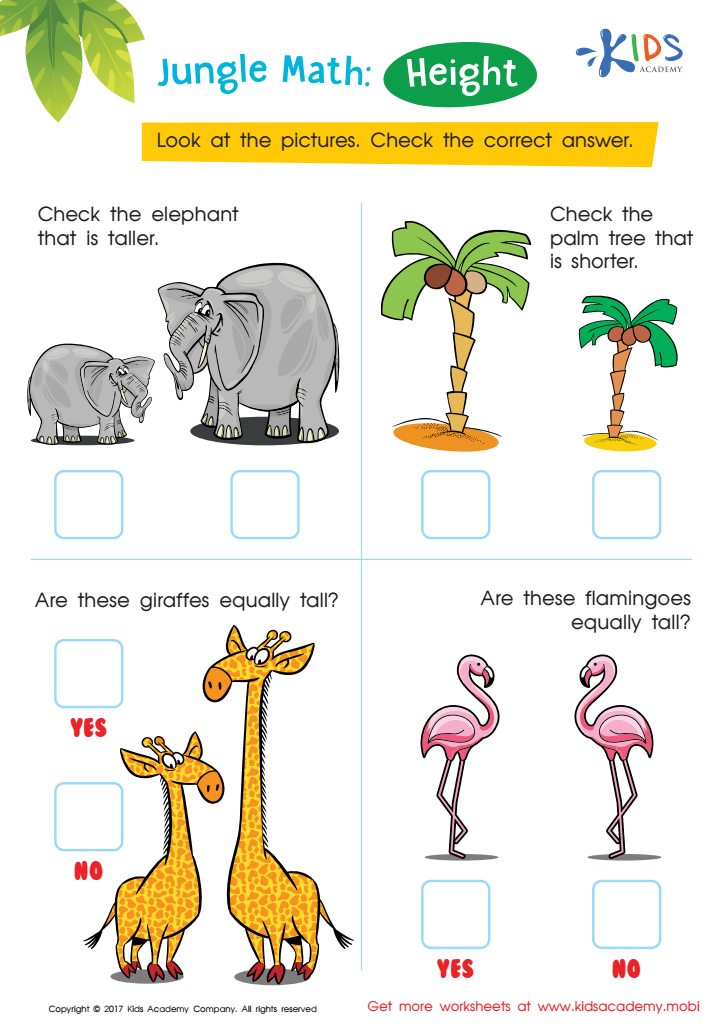
Which Is Taller Worksheet
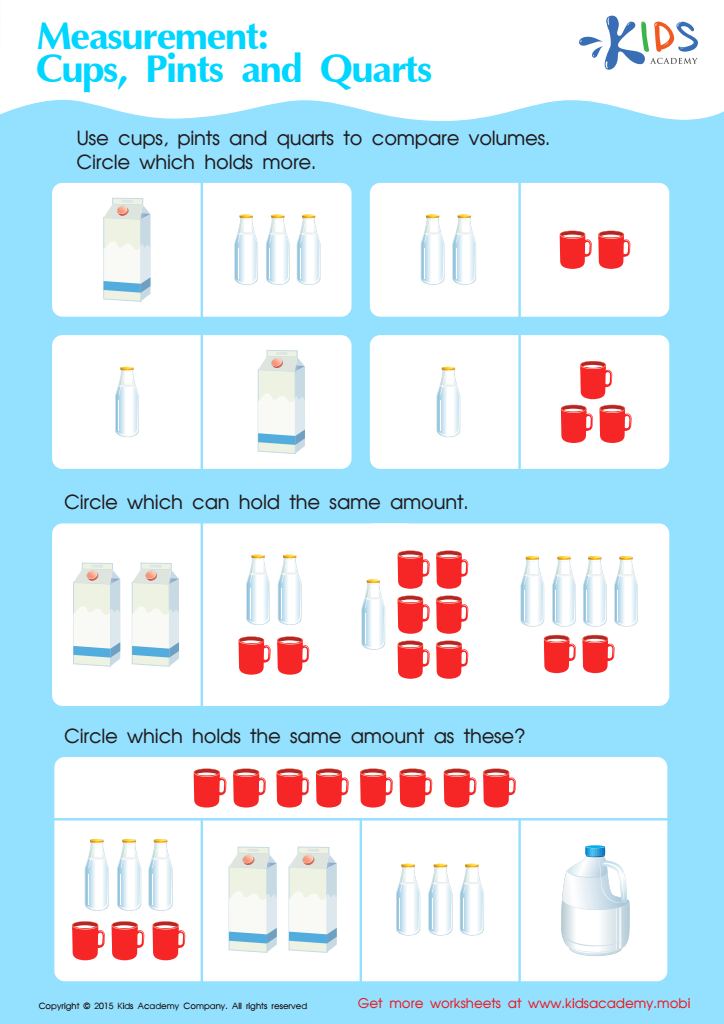
Measurement: Compare Volumes Worksheet
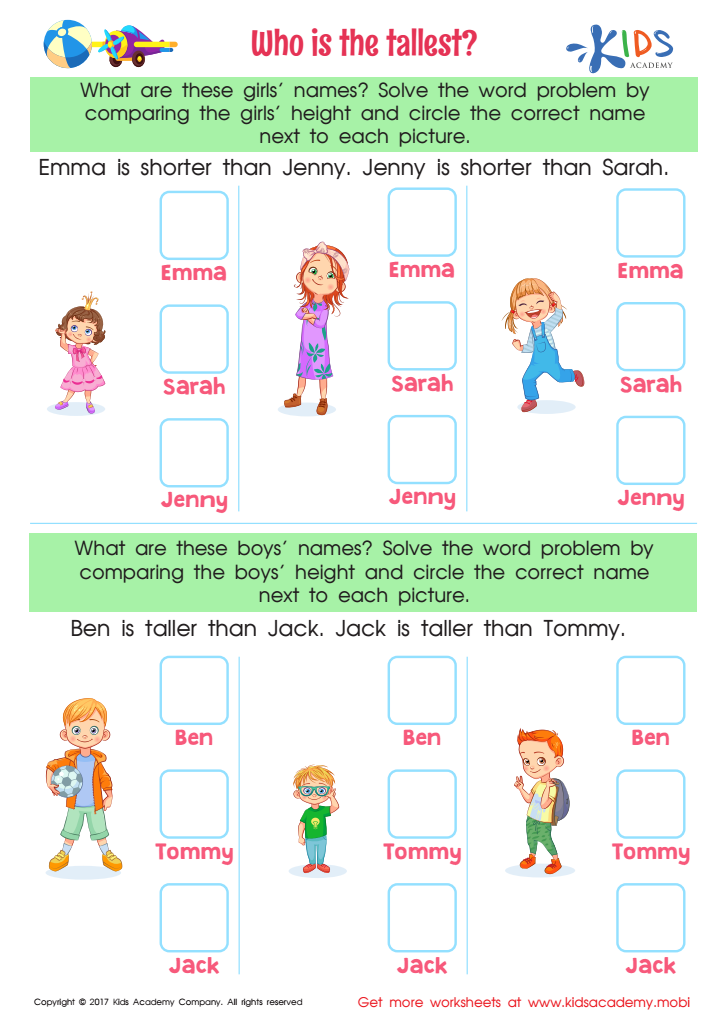
Who Tallest Printable
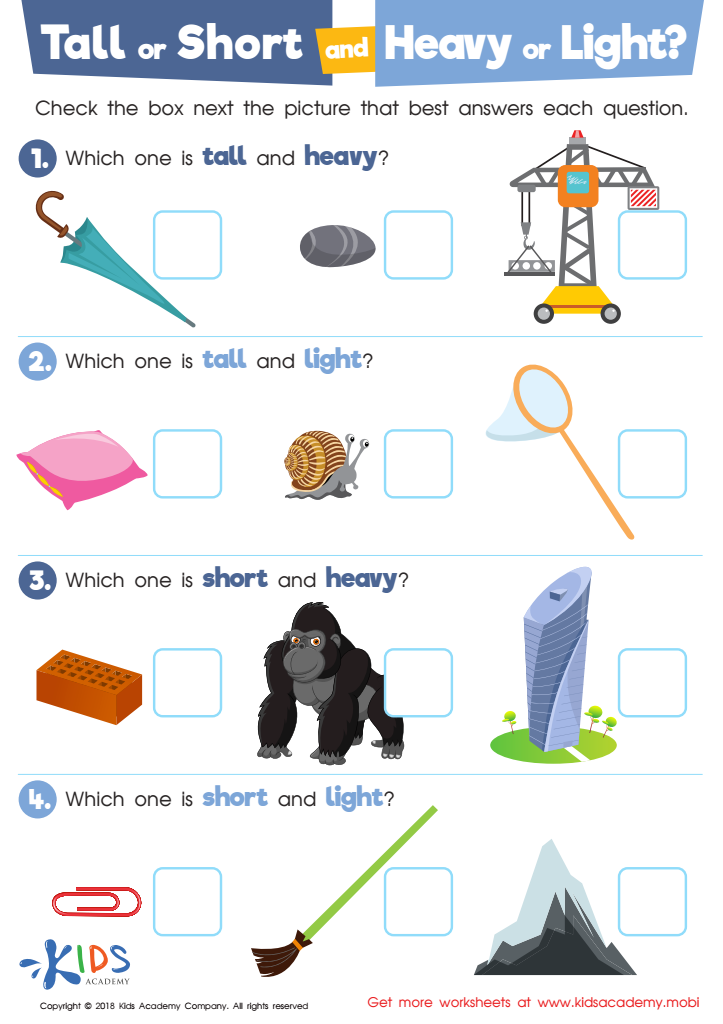
Tall or Short and Heavy or Light? Worksheet
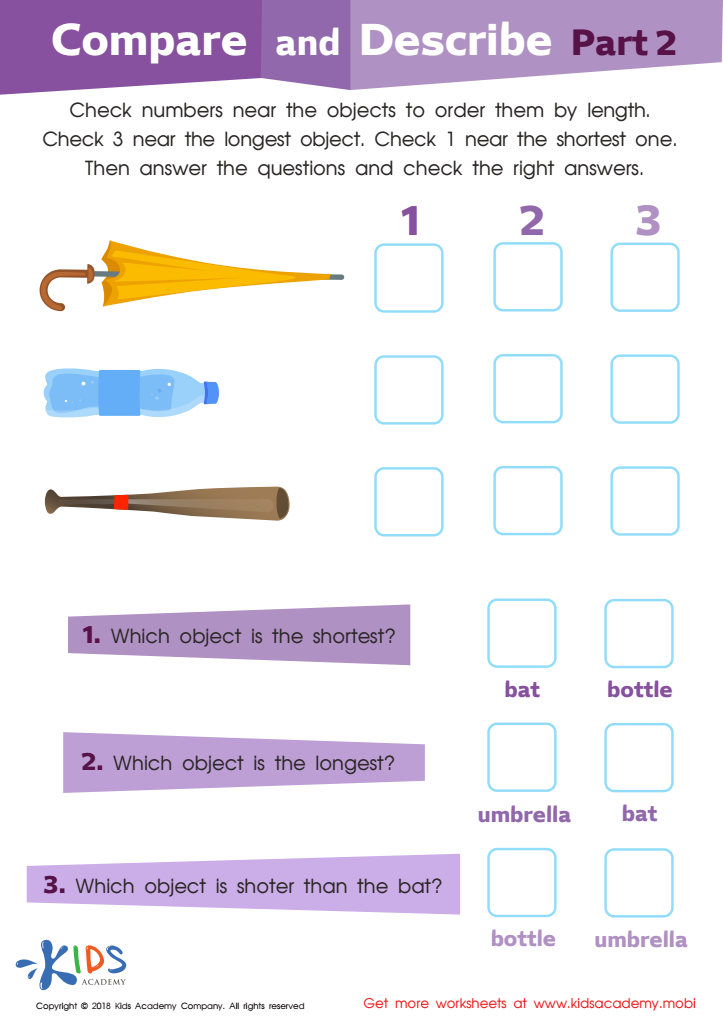
Compare and Describe: Part 2 Worksheet
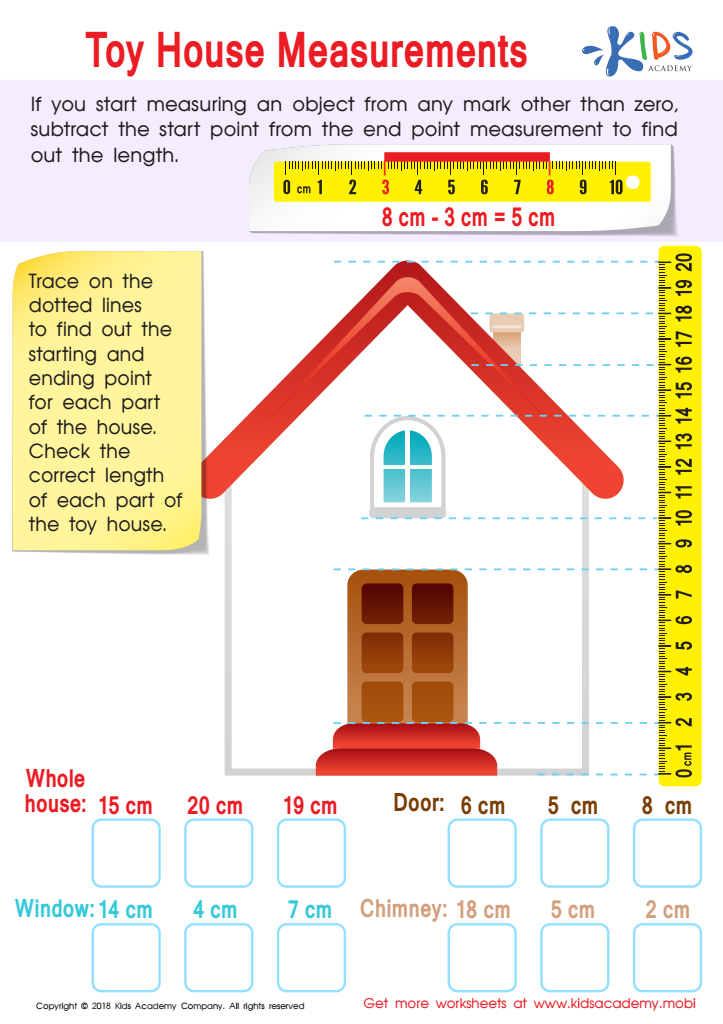
Toy House Measurements Worksheet
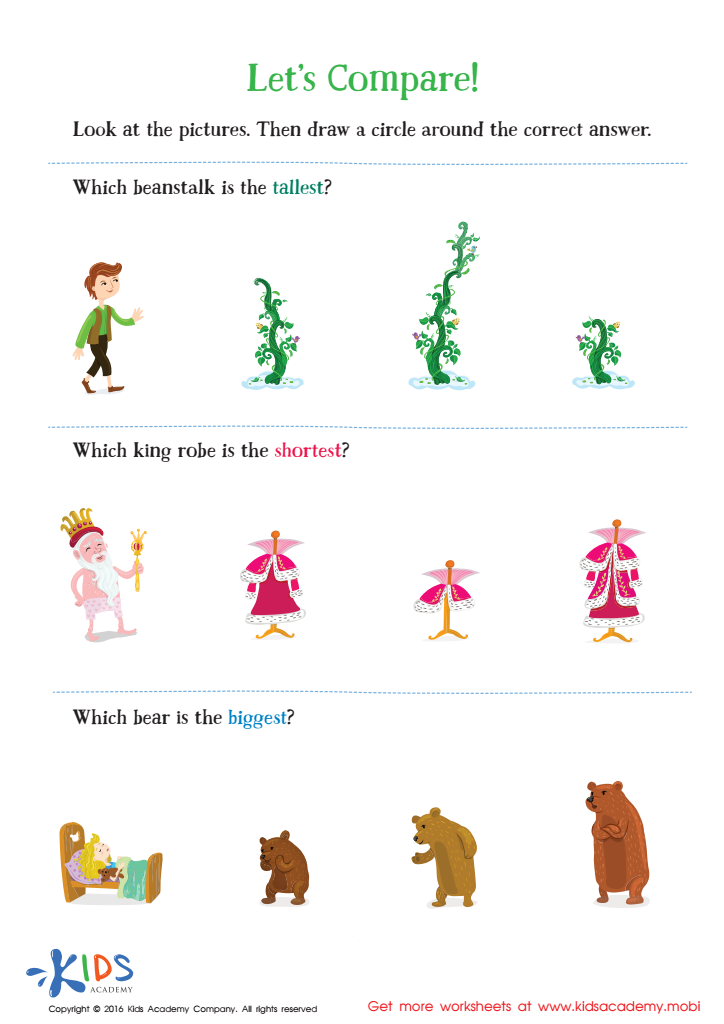
Fairy Tale Worksheet: Let's Compare








Comparing sizes and understanding measurement are foundational skills for children aged 4-7, integral for their cognitive and social development. Engaging with these concepts helps children develop critical thinking and problem-solving skills, which are essential for their overall learning journey.
Firstly, measurement introduces children to mathematical concepts in a tangible way. By comparing sizes, children learn about attributes like length, weight, volume, and area. This basic knowledge forms the groundwork for more complex math skills, such as addition, subtraction, and geometry.
Additionally, size comparisons enhance children's language development and vocabulary as they learn terms like "longer," "shorter," "heavier," and "lighter." It also fosters social skills through group activities where children work together, sharing ideas and understanding different perspectives.
Furthermore, everyday life is filled with opportunities for measurement, from cooking to shopping. By developing these skills early on, children gain confidence and a sense of independence as they navigate the world around them.
Finally, understanding measurement impacts children's ability to understand scientific concepts in later years. Encouraging a fascination with sizes and measurements cultivates curiosity, setting the stage for lifelong learning and success in both academic and real-world contexts.








