Filters

6 filtered results

Clear all filters
Favorites
With answer key
Interactive

6 filtered results

Difficulty Level

Grade


Unlock your child’s potential with our engaging Fine Motor Skills Worksheets designed for ages 4-7, focusing on numbers 11-20. These interactive worksheets combine fun activities with essential skill development, enabling young learners to enhance their hand-eye coordination, grip strength, and dexterity. Through varied exercises such as tracing, coloring, and cutting, children will confidently recognize and write numbers 11-20. Perfect for preschool and kindergarten settings, our resources foster a love for learning while improving fine motor skills critical for future academic success. Explore our collection today and help your child enjoy learning through play!

Check out this FREE Trial Lesson on Numbers 11–20 for age 4-7!

Write 11-20

Favorites
With answer key
Interactive
  • 4-7
  • Fine Motor Skills
  • Numbers 11–20
Сounting from 11 to 20 Worksheet

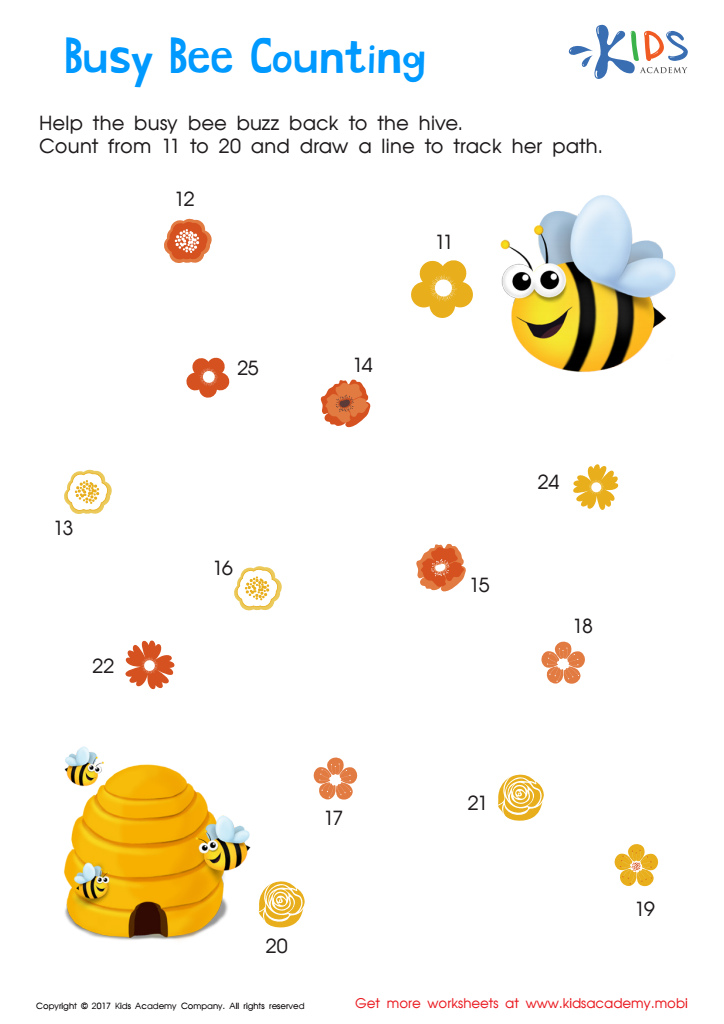
Ordering 11–20: Busy Bee Counting Worksheet

Help your child master counting from 11 to 20 with our connect the dot counting worksheet. Kids will have fun counting, drawing and problem-solving with this vibrant worksheet. With clear directions, adorable pictures and a sense of purpose, your child will develop crucial numeracy skills without even knowing it!
Ordering 11–20: Busy Bee Counting Worksheet
Worksheet
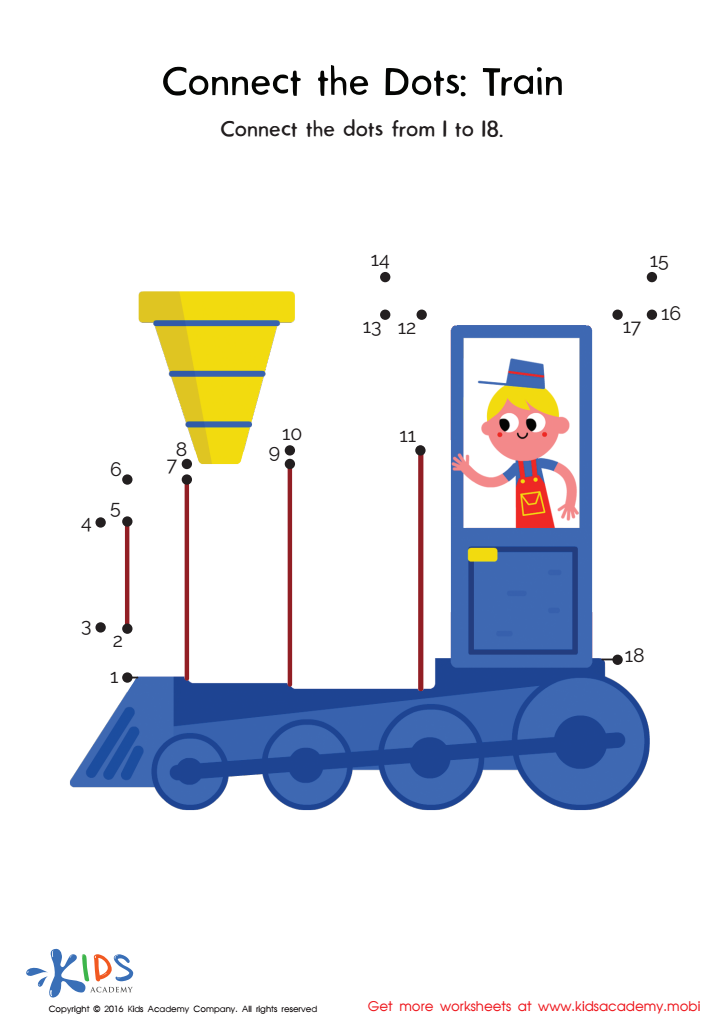
Connect the Dots Printable Worksheet

Train Connect Dots Worksheet

Train Connect Dots Worksheet
Worksheet
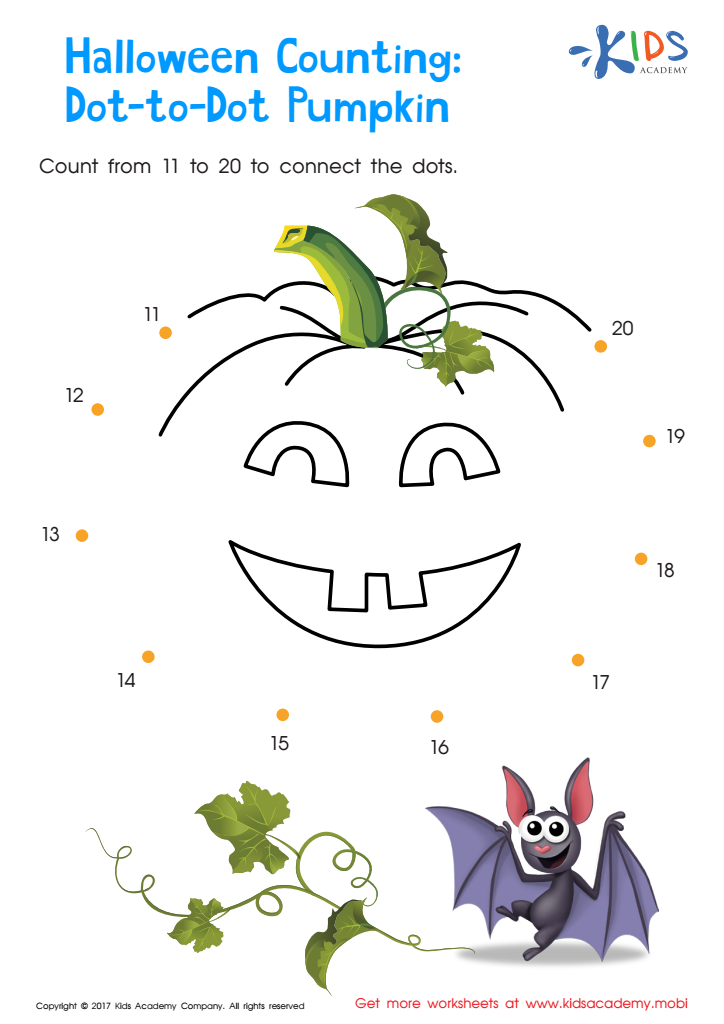
Halloween Counting Worksheet from 11 to 20

Ordering 11–20: Halloween Counting Worksheet
No matter the time of year, help your child get ready for Halloween with this worksheet. They'll practice counting from 11 to 20, recognizing numbers, and using a pencil to draw. By connecting the dots, they'll create a pumpkin picture, while unknowingly strengthening their early math skills. Print it today for an educational and fun experience!
Ordering 11–20: Halloween Counting Worksheet
Worksheet
Dot to Dot Numbers 11-20

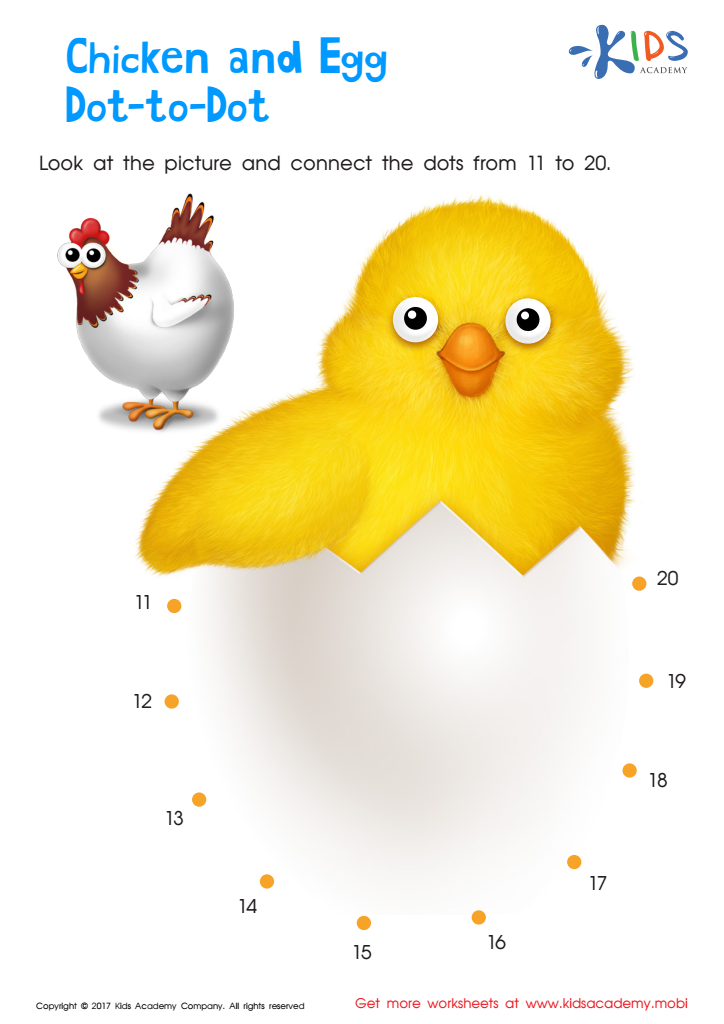
Ordering 11–20: Chicken & Egg Dot–to–dot Worksheet
Help your child hatch the chick and practice their counting skills with this dot to dot worksheet – the chicken came first! Connect the dots 11-20 to have fun and learn at the same time. Experience meaningful practice and gain confidence while drawing great pictures.
Ordering 11–20: Chicken & Egg Dot–to–dot Worksheet
Worksheet
Number tracing worksheet for kindergarten

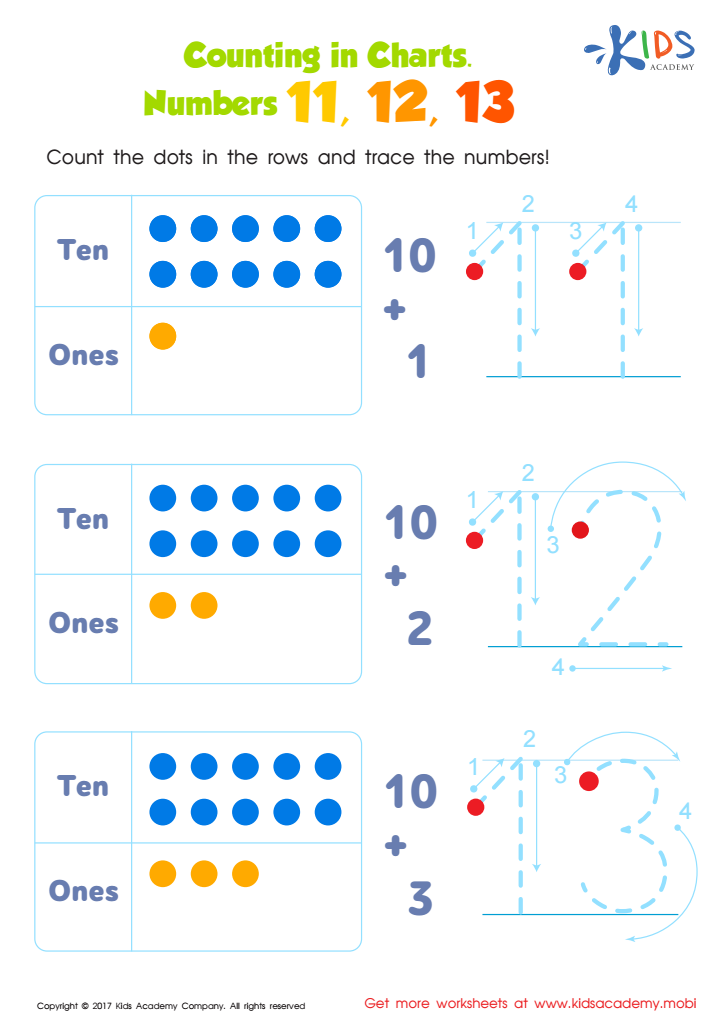
Number Tracing Worksheet For Kindergarten
Help your child develop addition skills and improve number recognition with this easy-to-use worksheet. Have them count the dots and add to solve each problem. Then, trace over the number to complete each row! It's a fun and simple way for kindergarteners to practice their math skills.
Number Tracing Worksheet For Kindergarten
Worksheet
Dot to Dot Worksheets 11 to 20

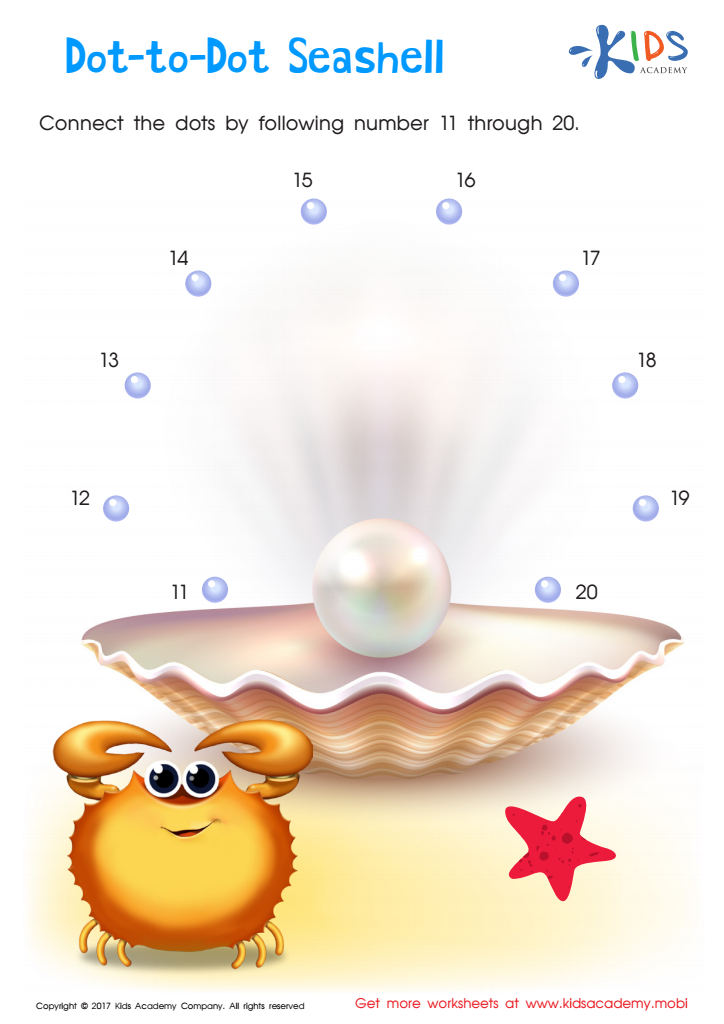
Ordering 11–20: Dot–to–dot Seashell Printable

Connecting the dots 11 to 20 is rewarding for kids, helping them practice counting, identifying numbers and gain cognitive and logical skills. Our worksheet features a vibrant image of a seashell, crab and sea star, and your child will feel rewarded creating it while honing their counting skills!
Ordering 11–20: Dot–to–dot Seashell Printable

Worksheet


Fine motor skills play a crucial role in the development of children aged 4 to 7, especially when it comes to grasping numbers 11 to 20. These skills involve the coordination of small muscles in the hands and fingers, which are essential for tasks such as writing, drawing, and manipulating objects. As children learn to recognize and write numbers, fine motor skills help them translate their understanding of quantity and numerical concepts into practice.

Parents and teachers should be particularly attentive to this developmental stage as strong fine motor skills can significantly enhance a child’s overall academic performance. When children can confidently write and form numbers, they are more likely to engage in mathematical activities and develop a positive attitude toward learning. Neglecting fine motor development at this stage may lead to frustrations, hindering a child’s willingness to participate in math-oriented tasks.

Furthermore, activities that promote fine motor skills, like crafting, coloring, and building, can also foster critical thinking and creativity. By cultivating these skills, parents and teachers can create a more supportive learning environment, ensuring children gain a strong foundational understanding of numbers 11 to 20, which will serve them well as they progress in their education.