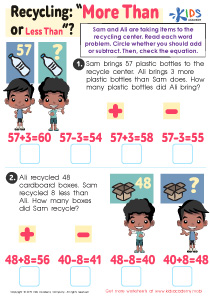
Number Recognition Numbers up to 100 Worksheets for Ages 4-7 - Page 2
27 filtered results
-
From - To
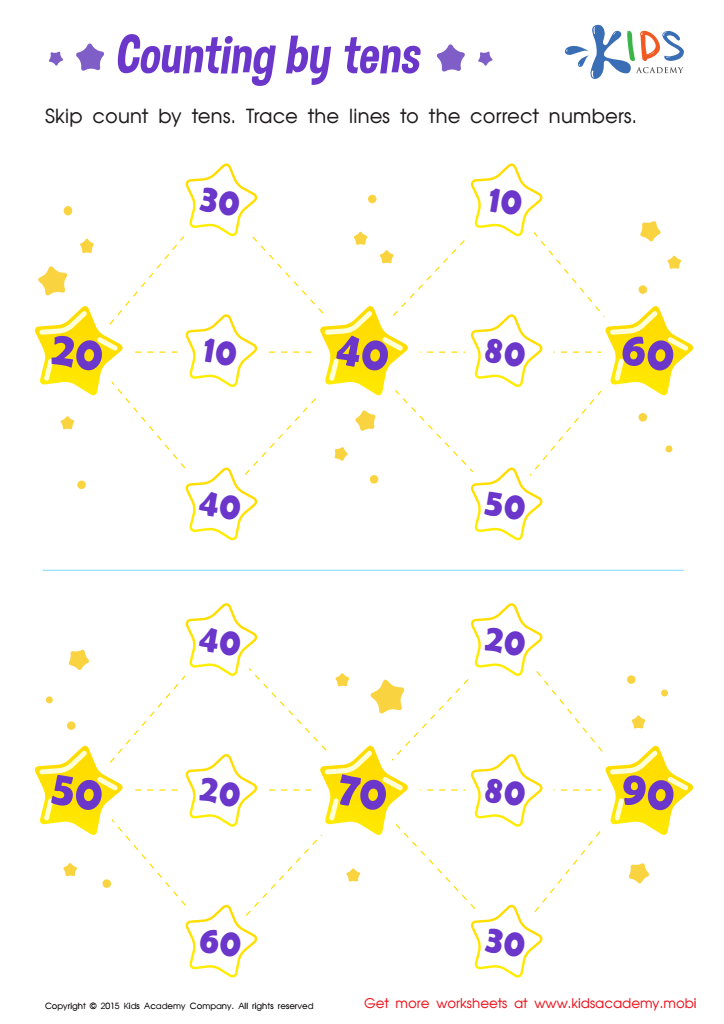
Learn Dozens: Counting by Tens Printable
 Assign to My Students
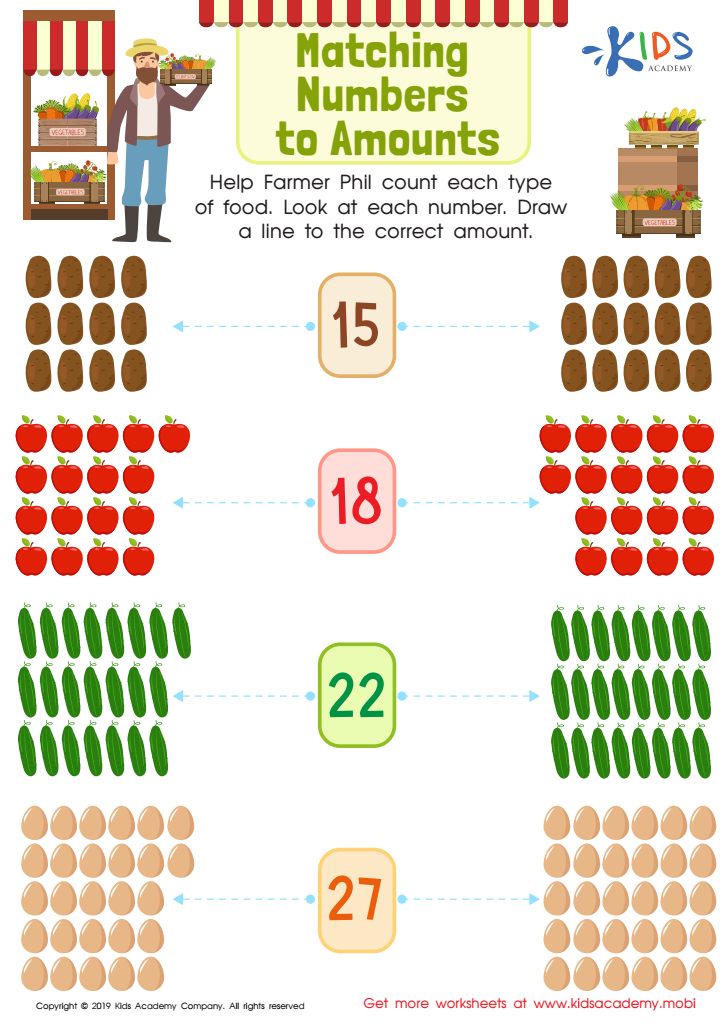
Matching Numbers to Amounts Worksheet

Counting on the City Skyline: Dot-to-Dot Worksheet








Number recognition is a foundational skill for children aged 4-7, serving as a crucial stepping stone in their mathematical development. Parents and teachers should prioritize this skill because it lays the groundwork for understanding basic mathematical concepts, such as addition, subtraction, and number comparisons. Recognizing numbers up to 100 enables children to grasp the relationship between quantities and their corresponding numeric symbols, which is essential for math fluency.
Moreover, number recognition supports cognitive development and early literacy skills. When children can identify numbers, they also gain confidence, leading to positive attitudes toward math. This skill encourages problem-solving and critical thinking, which are valuable tools in all areas of learning.
Additionally, number recognition fosters engagement in everyday activities, like counting objects, telling time, or handling money, reinforcing educational experiences outside the classroom. By emphasizing number recognition, parents and teachers provide children with the skills they need to navigate mathematical challenges, ultimately setting the stage for their future academic success. Caring about this skill illustrates a commitment to early learning and child development, ensuring children build a strong, confident foundation in mathematics.