Vocabulary enhancement Nursery Rhymes Worksheets for Ages 4-7
3 filtered results
-
From - To
Boost your child's vocabulary skills with our engaging Nursery Rhymes Worksheets designed for ages 4-7! At Kids Academy, we understand that learning through fun is crucial for young learners. Our printable worksheets feature beloved nursery rhymes that captivate children's imagination while enhancing their language skills. Each activity encourages word recognition, pronunciation, and comprehension, promoting a love for reading and learning. Interactive exercises involving rhymes make vocabulary acquisition enjoyable and effective. Perfect for classroom use or home learning, these worksheets serve as a delightful resource for parents and educators. Start nurturing your child's linguistic abilities today with our vibrant, colorful activities!
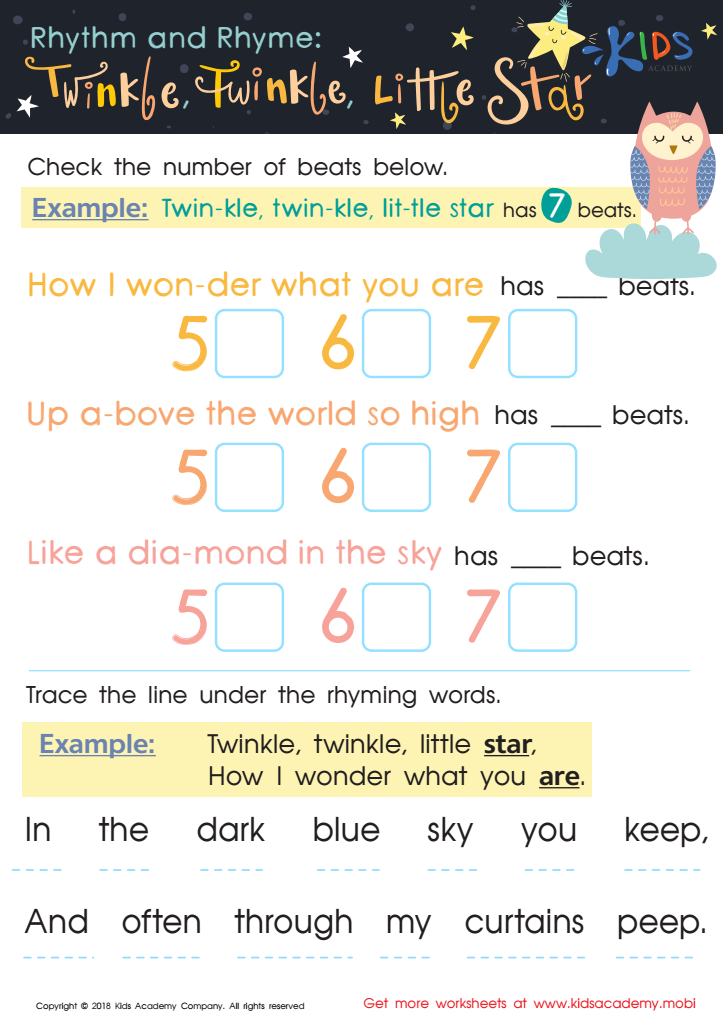
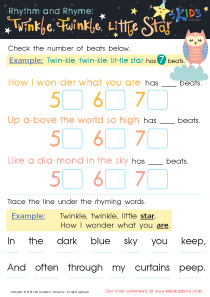
Rhythm and Rhyme: Twinkle, Twinkle, Little Star Worksheet
 Assign to My Students
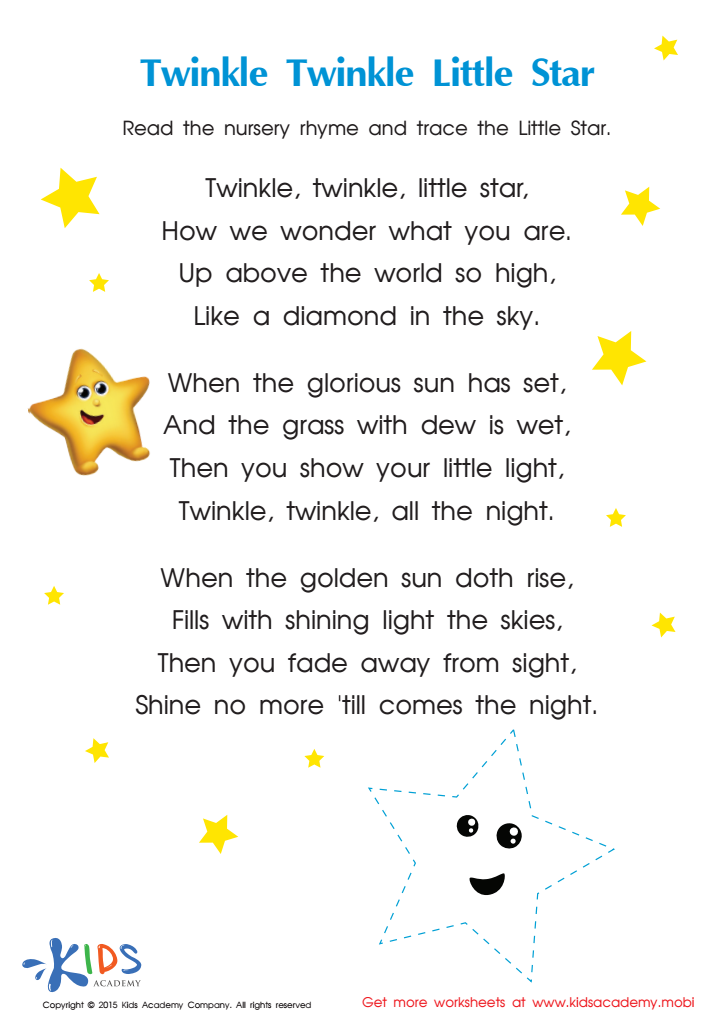
Nursery Rhymes: Twinkle Little Star Worksheet
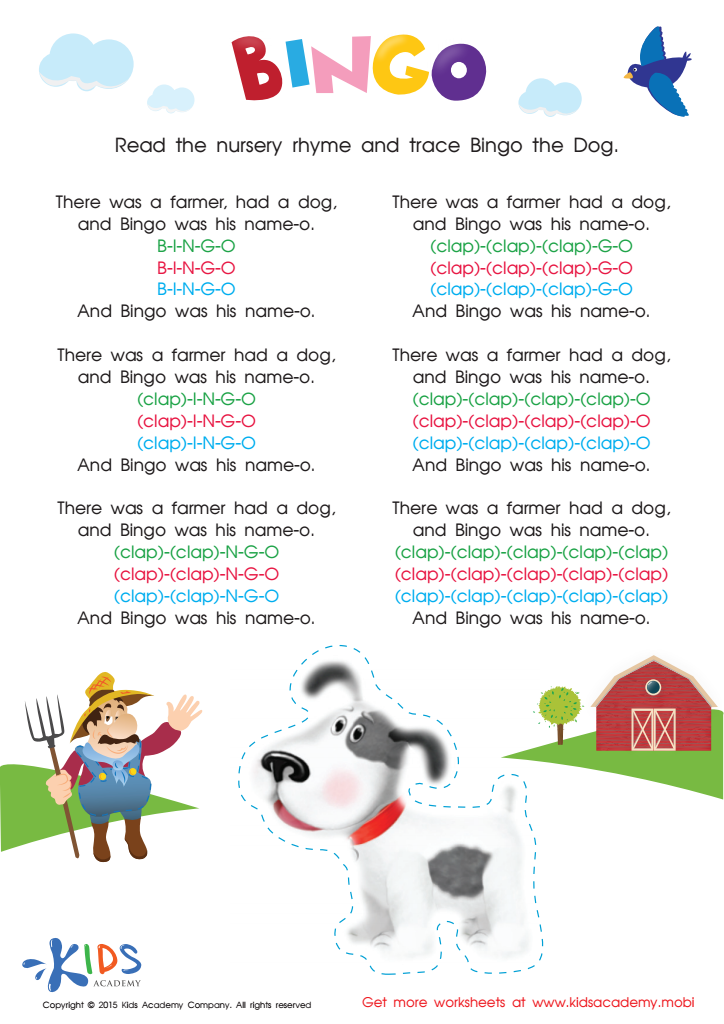
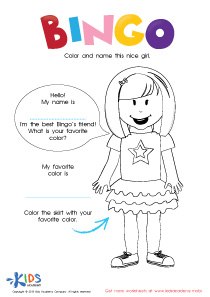
Nursery Rhymes: The Bingo Song Worksheet





.jpg)


Vocabulary enhancement through nursery rhymes is crucial for children aged 4-7 as it lays the groundwork for language development and literacy skills. During these formative years, children are particularly receptive to new words and linguistic structures. Nursery rhymes, with their rhythmic patterns and repetitive phrases, make learning engaging and memorable, helping young learners to naturally acquire vocabulary.
These playful verses introduce children to various themes, emotions, and experiences, broadening their understanding of the world. They also enhance phonemic awareness, which is vital for reading readiness. As children recite and sing along, they improve their pronunciation, intonation, and fluency, crucial components for effective communication.
Furthermore, nursery rhymes foster a love for language and storytelling, promoting creativity and imagination. They encourage listening skills, cooperation during group activities, and social interactions, setting the stage for successful peer relationships and classroom dynamics.
Ultimately, by prioritizing vocabulary development through nursery rhymes, parents and teachers equip children with essential language skills. This foundation not only supports academic achievement but also nurtures self-expression and critical thinking, essential for lifelong learning and personal growth. Emphasizing this fun yet effective method is key to fostering strong communicative competencies in young learners.