Historical Knowledge Reading Worksheets for Ages 4-7
5 filtered results
-
From - To
Immerse your young learners in the captivating world of history with our Historical Knowledge Reading Worksheets for ages 4-7! These engaging, age-appropriate worksheets are designed to introduce children to key historical figures, events, and concepts, fostering a love for the past. Each worksheet combines fun activities with essential reading skills, helping children enhance their comprehension and vocabulary while discovering fascinating stories. Our easy-to-follow designs ensure that learning about history is both enjoyable and educational. Perfect for use at home or in the classroom, these worksheets will inspire curiosity and encourage a lifelong passion for history in your little ones!
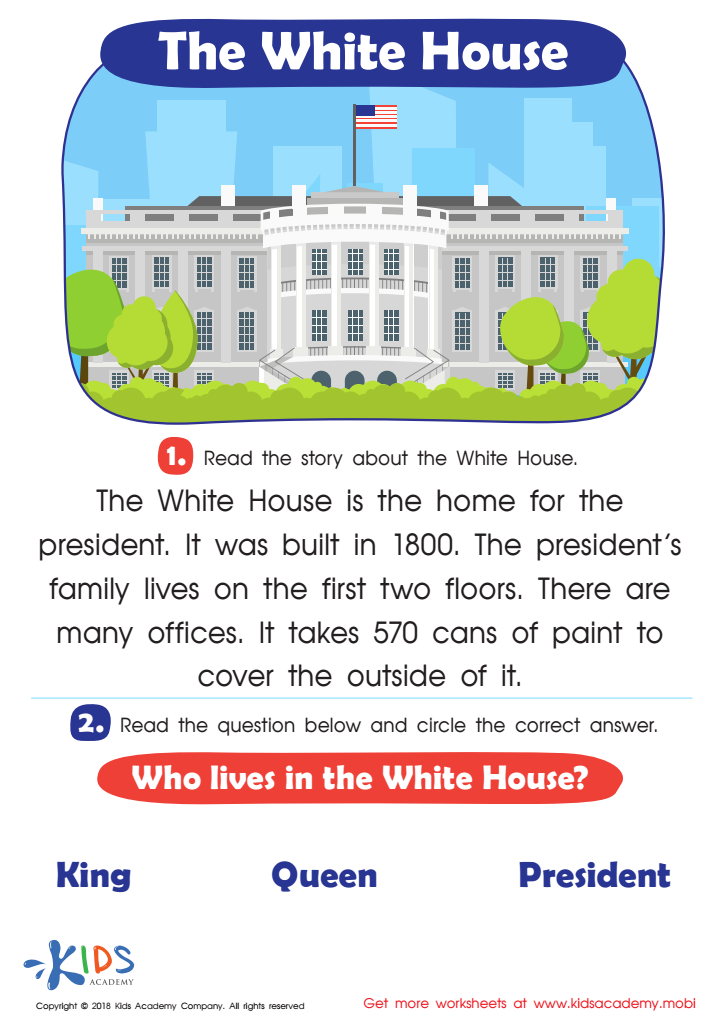
White House Worksheet
 Assign to My Students
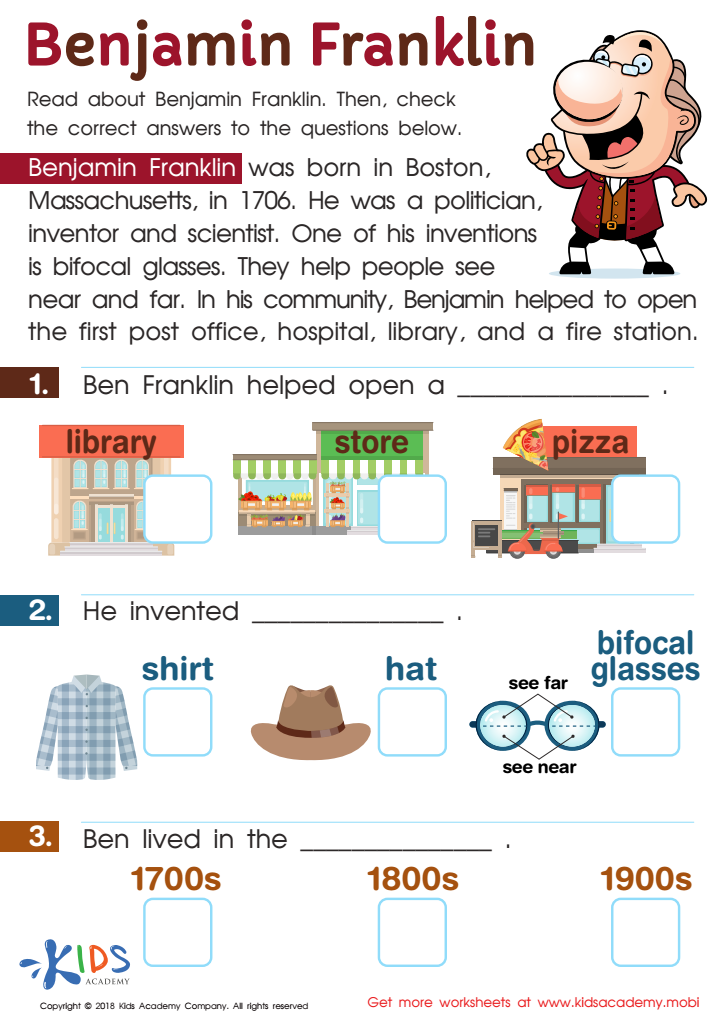
Benjamin Franklin Worksheet
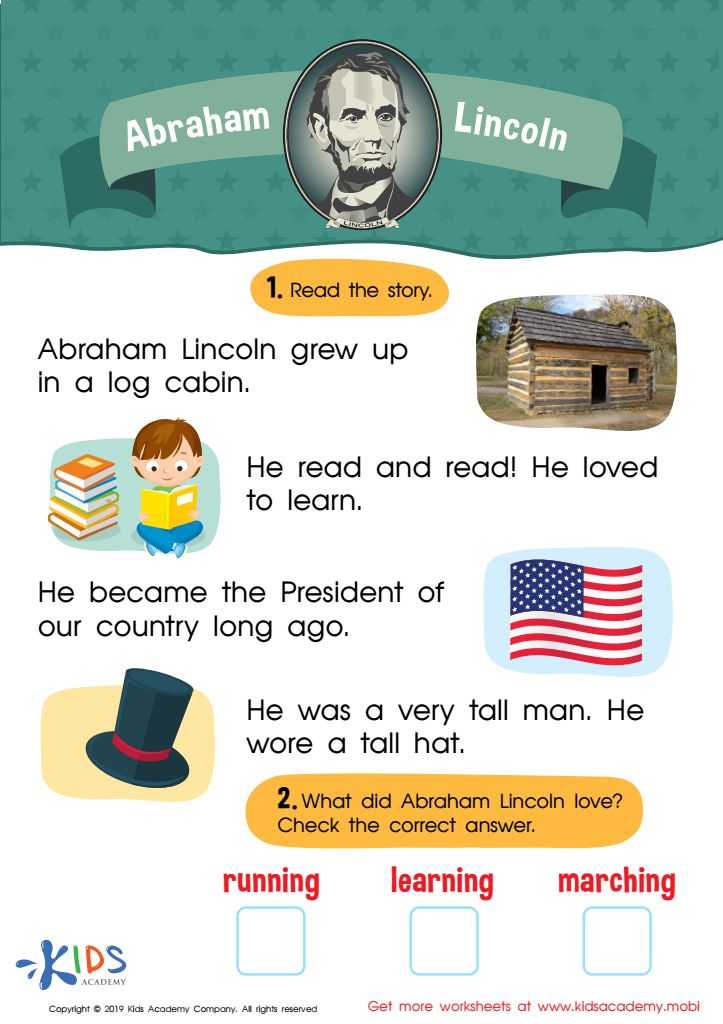
Abraham Lincoln Worksheet
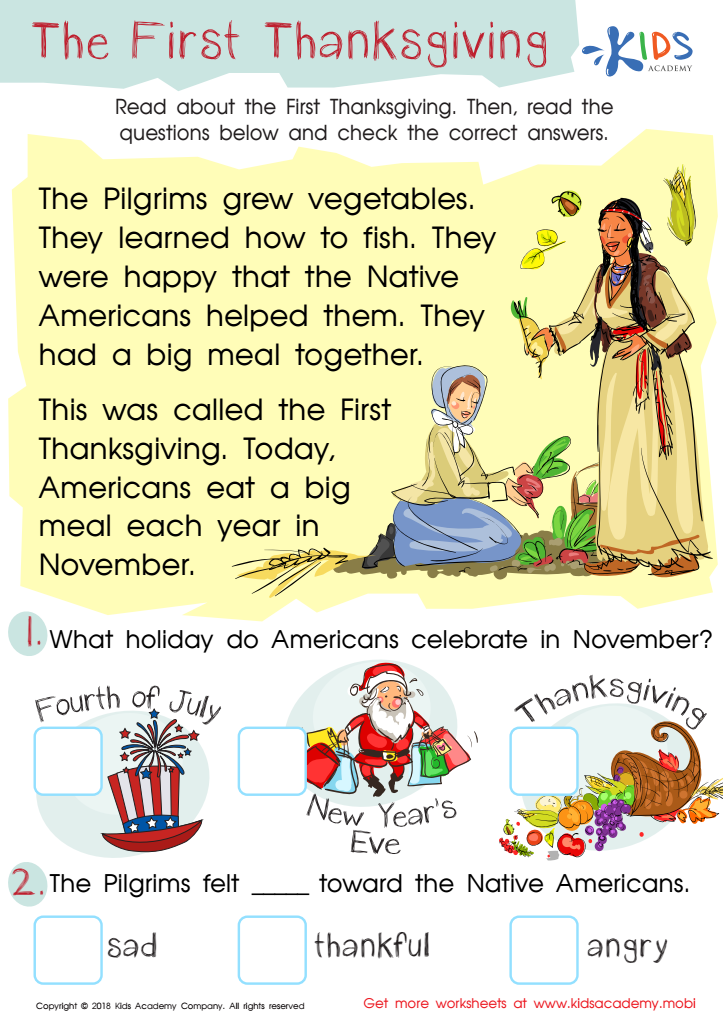
Assessment: First Thanksgiving Worksheet
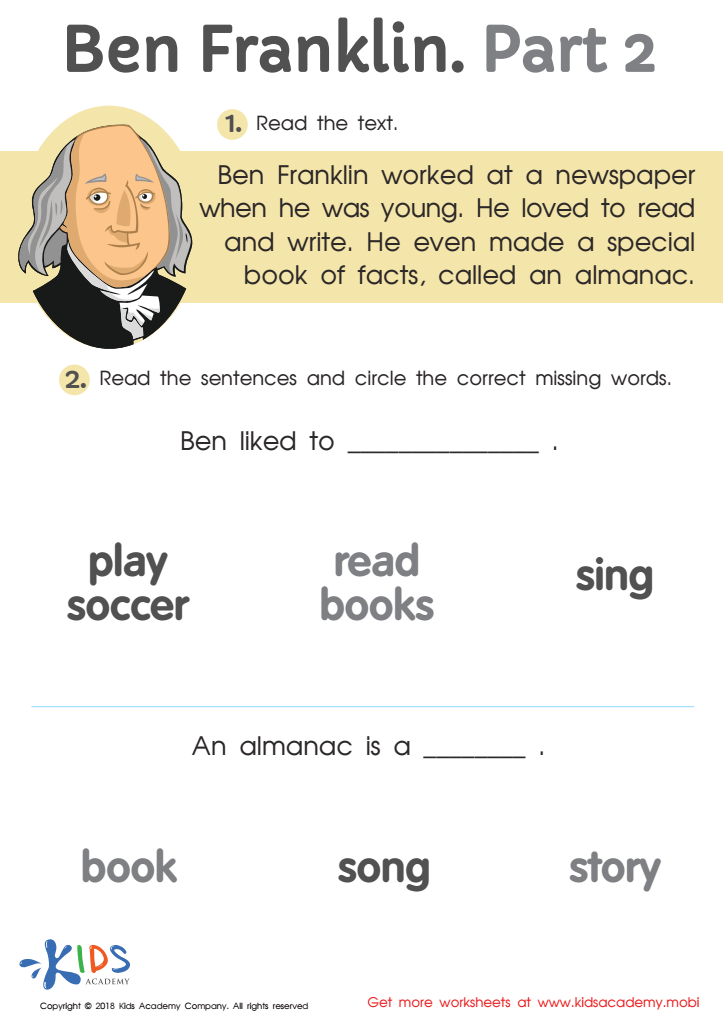
Ben Franklin Part 2 Worksheet








Parents and teachers should prioritize Historical Knowledge Reading for children ages 4-7 because it lays the foundation for critical thinking and cultural awareness. At this young age, children are naturally curious and eager to learn about the world around them. Introducing them to historical narratives, important figures, and key events promotes an understanding of diverse perspectives and the development of empathy.
Reading history cultivates a sense of identity, connecting children to their heritage and instilling pride in their backgrounds. Additionally, historical knowledge fosters essential literacy skills such as vocabulary acquisition and comprehension, providing a springboard into more complex texts as children grow.
Engaging young learners with stories of the past captivates their imaginations and encourages storytelling, speech, and discussion, all of which are paramount to language development. Furthermore, early exposure to history can spark an interest in civic engagement and inspire future exploration of social studies.
By incorporating historical themes into reading, parents and teachers empower children to ask questions about their surroundings, thus nurturing inquisitive minds that will carry a sense of responsibility towards the community and the world, making them informed citizens in the future.








