Information recall Reading Worksheets for Ages 4-7
3 filtered results
-
From - To
Enhance your child's reading comprehension with our Information Recall Reading Worksheets designed for ages 4-7! These engaging, age-appropriate worksheets focus on helping young learners identify and remember key information from texts. Each worksheet encourages critical thinking through fun exercises, enabling children to develop essential skills such as summarizing, inferring, and answering questions based on the reading material. Perfect for both classroom use and at-home learning, our resources provide a great way for kids to practice reading and comprehension in an enjoyable manner. Unlock your child's potential as a confident reader today with our printable worksheets tailored to their developmental stage!
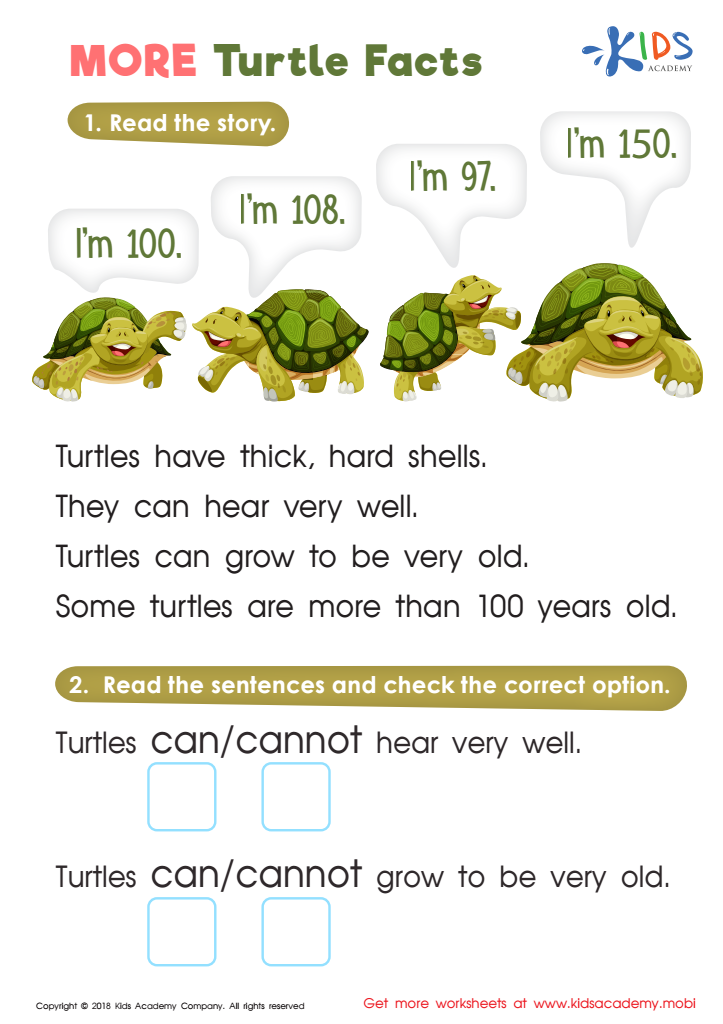
More Turtle Facts Worksheet
 Assign to My Students
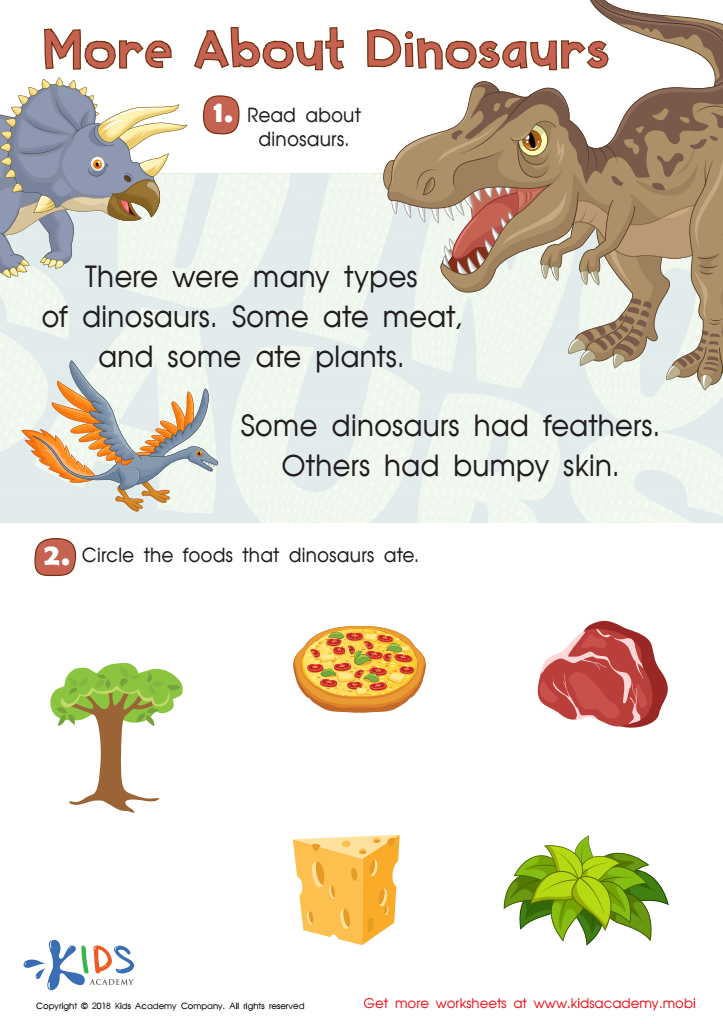
More About Dinosaurs Worksheet
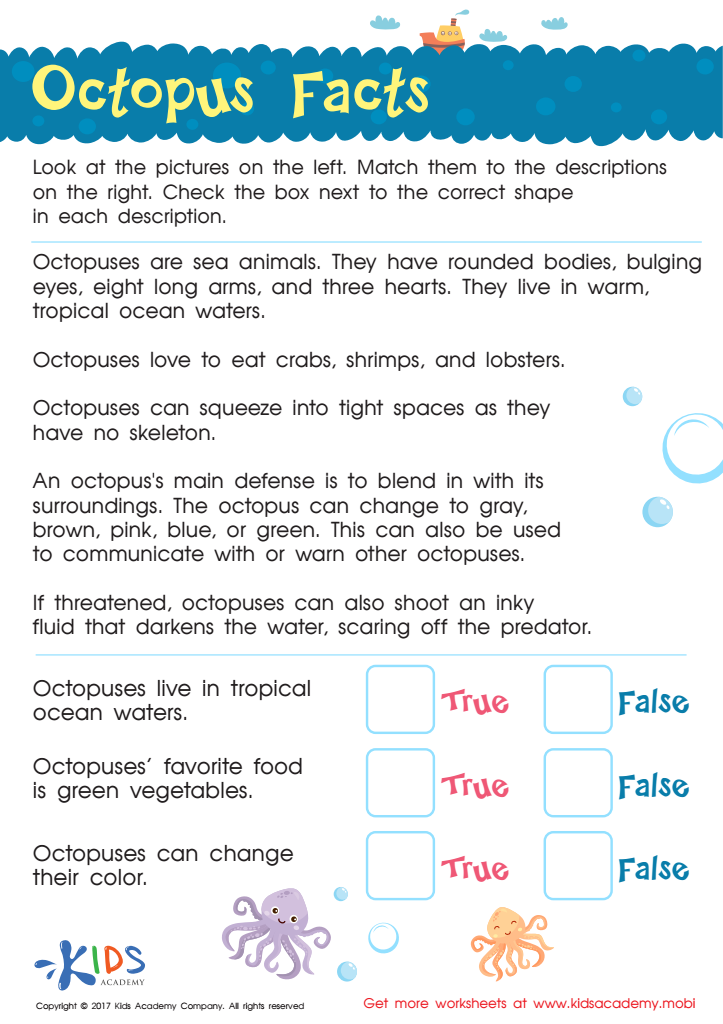
Octopus Facts Worksheet For Kids








Information recall reading is a crucial skill for children aged 4-7 as it significantly impacts their overall cognitive development and academic success. During these formative years, children are developing essential literacy skills, including comprehension, vocabulary, and critical thinking. When young learners engage in information recall activities, they practice retaining and retrieving details from texts, which strengthens their memory capabilities and language processing skills.
For parents and teachers, fostering information recall helps build a solid foundation for more complex reading and learning in the future. It encourages children to connect with the material, enhancing their ability to analyze and retain information. Moreover, it promotes active engagement with texts, stimulating curiosity and encouraging a lifelong love for reading.
Encouraging young learners to recall details about a story or factual content also provides valuable insights into their understanding and areas requiring additional support. This practice helps tailor instruction to meet individual needs, creating a more personalized learning experience. Ultimately, investing in information recall reading is essential for empowering children, boosting their confidence in their abilities, and equipping them for future academic challenges. By prioritizing this aspect of literacy, parents and teachers can help cultivate well-rounded, capable readers.








