Filters

203 filtered results

Clear all filters
Favorites
With answer key
Interactive

203 filtered results

Difficulty Level

Grade


Check out this FREE Trial Lesson on Reading for age 4-7!

Poem Text Features

Favorites
With answer key
Interactive
  • 4-7
  • Reading comprehension
  • Reading
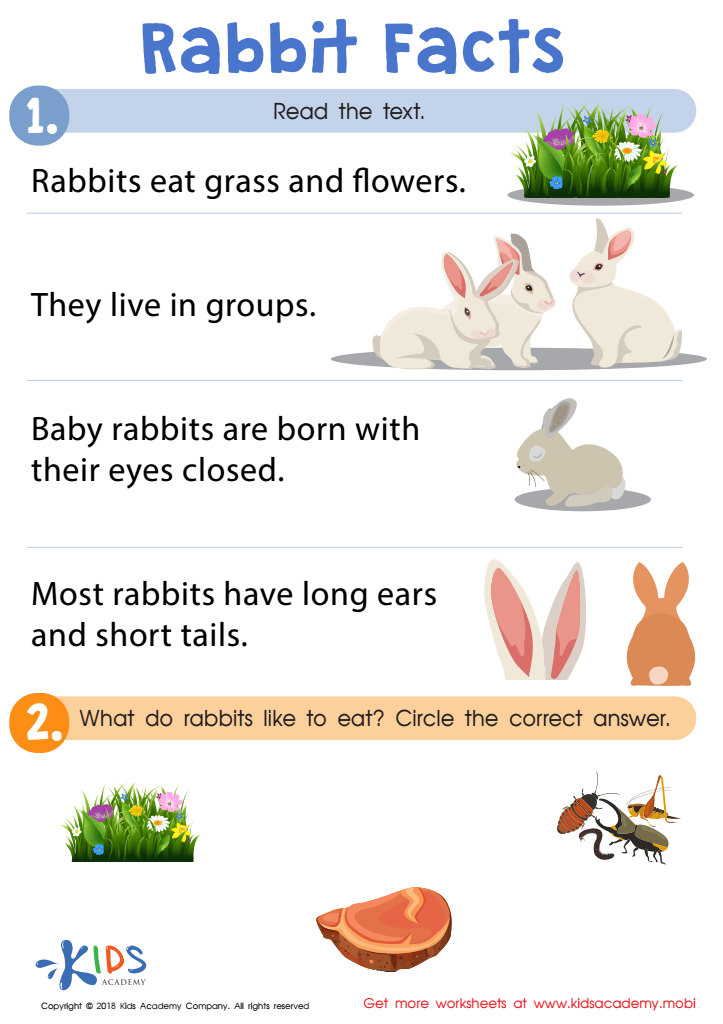
Rabbit Facts Worksheet

Rabbit Facts Worksheet

Informational texts offer great learning opportunities. Kids Academy's reading worksheet helps children read and recall important details from a text about bunnies. Kids will love it! Simply read the rabbit facts and circle the correct pictures to answer the questions.
Rabbit Facts Worksheet
Worksheet
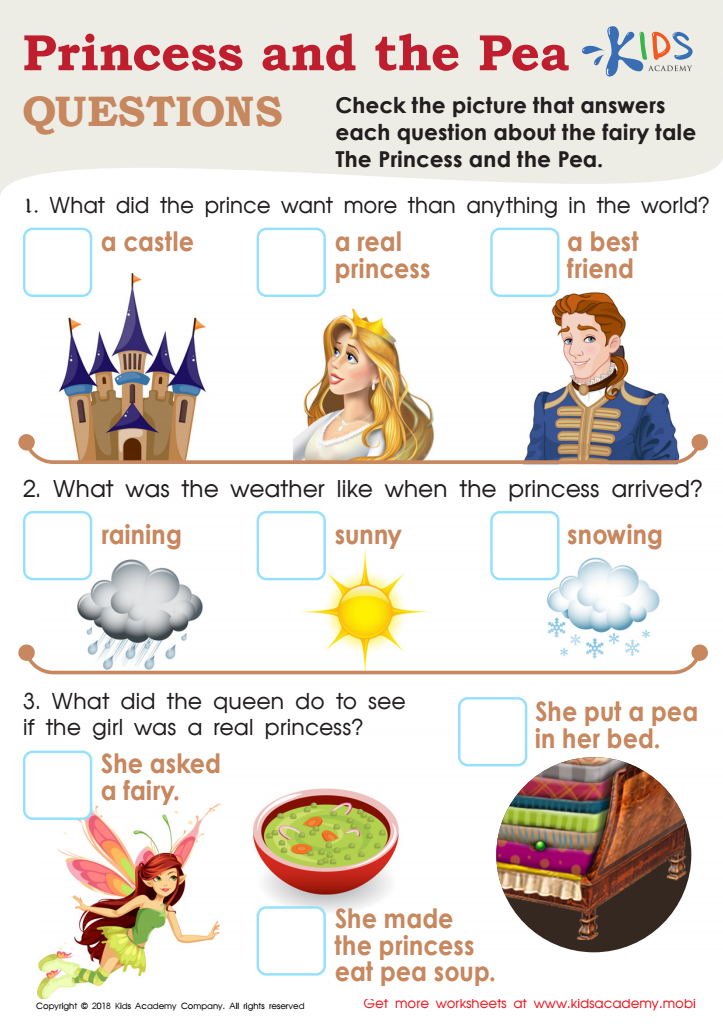
Princess and the Pea Questions Worksheet

Princess and the Pea Questions Worksheet

Your kid knows The Princess and the Pea inside-out? Test their knowledge with this worksheet. Ask your little one to read the questions and match each one to the picture. It's a fun way to see just how much attention they've paid to their bedtime story.
Princess and the Pea Questions Worksheet
Worksheet
Finish Rhyming Poem Worksheet

Finish Rhyming Poem Worksheet

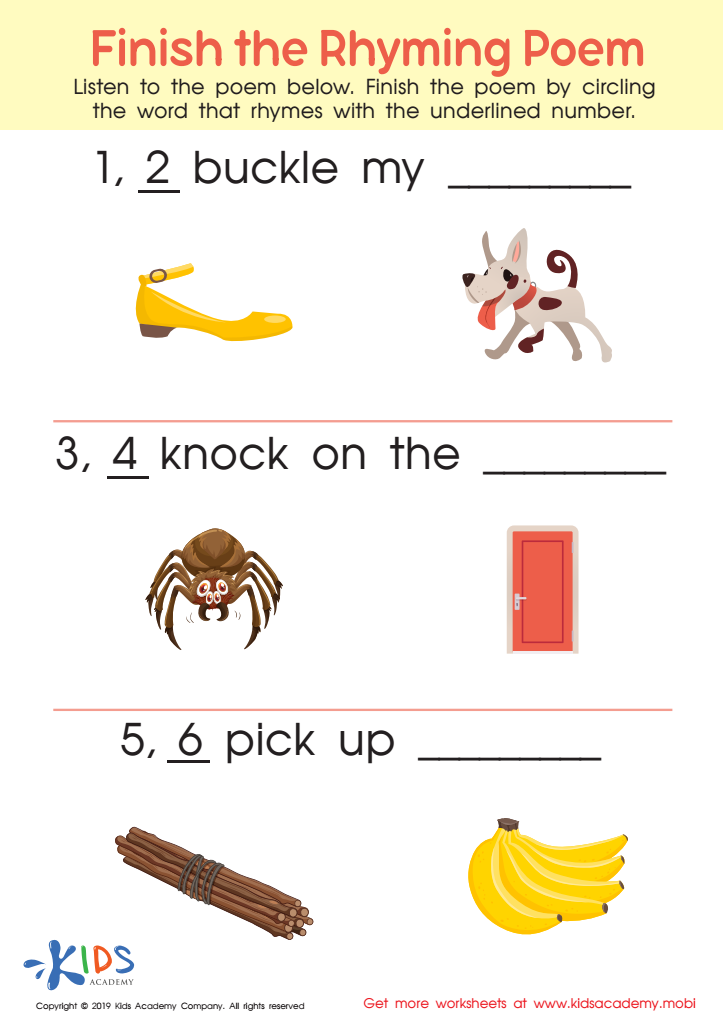
Poems are a great way to express emotions and spark imagination. Does your child enjoy poetry and even have their own creations? If so, they'll love this worksheet. It's a great way to develop their rhyming skills. Challenge them to find and circle the words that rhyme with the ones underlined.
Finish Rhyming Poem Worksheet
Worksheet
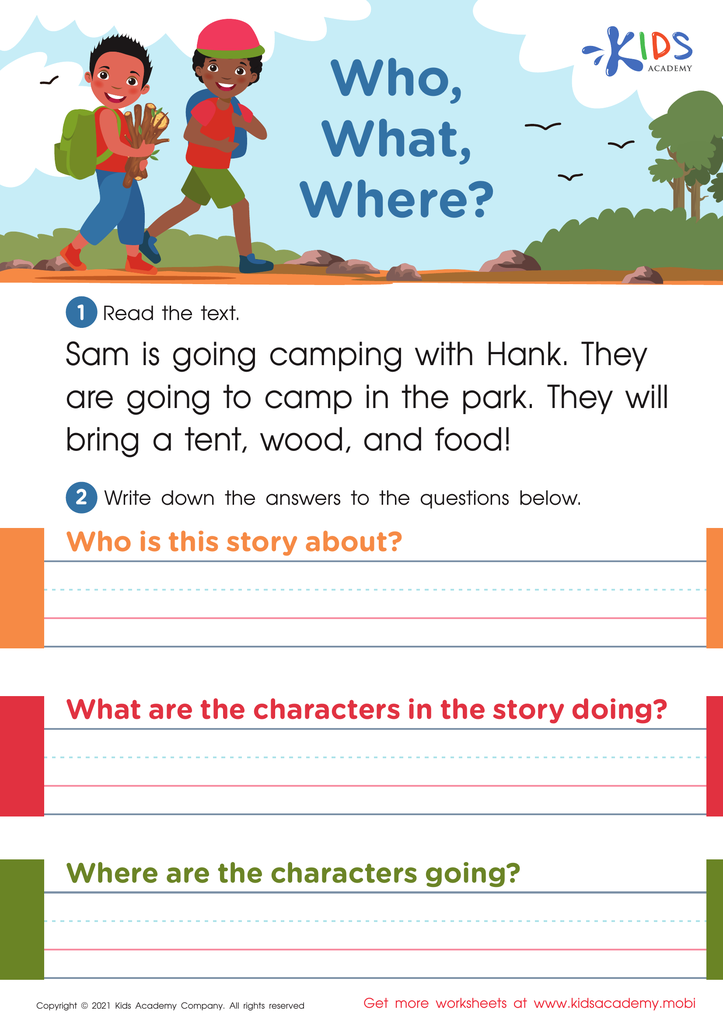
Who, What, Where? Worksheet
Who, What, Where? Worksheet
The availability of technology has changed the way students learn and interact with their environment in a very meaningful way. Technology has revolutionized learning and interaction for students. It offers an array of opportunities to engage with their surroundings, leading to a more meaningful educational experience.
Who, What, Where? Worksheet

Worksheet
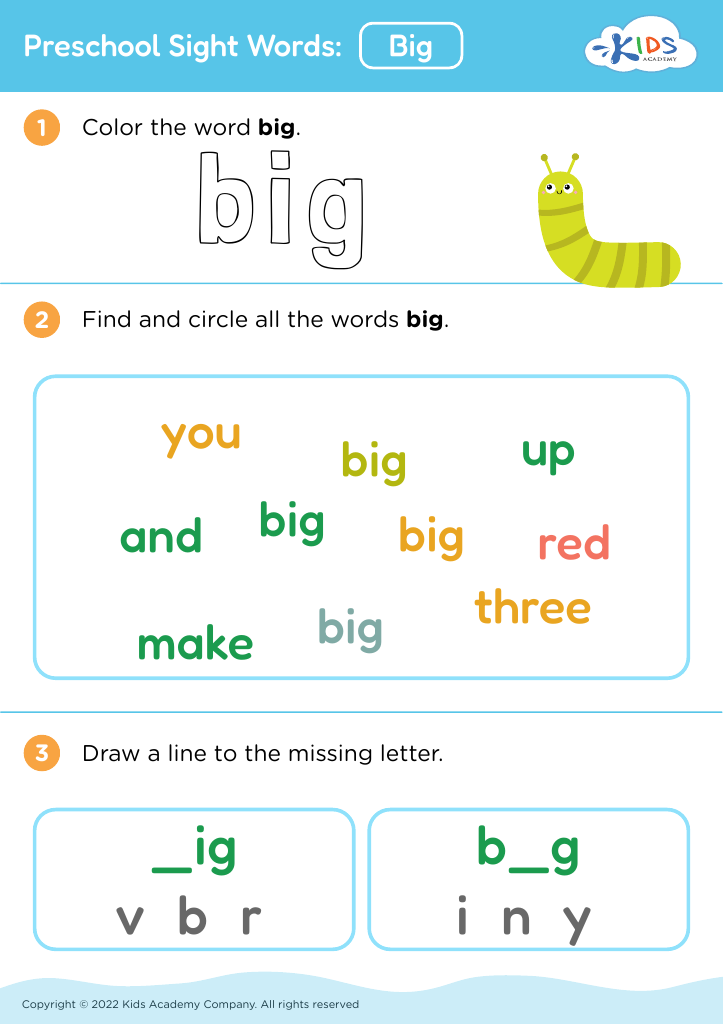
Preschool Sight Words: Big

Preschool Sight Words: Big

Preschool Sight Words: Big
Worksheet
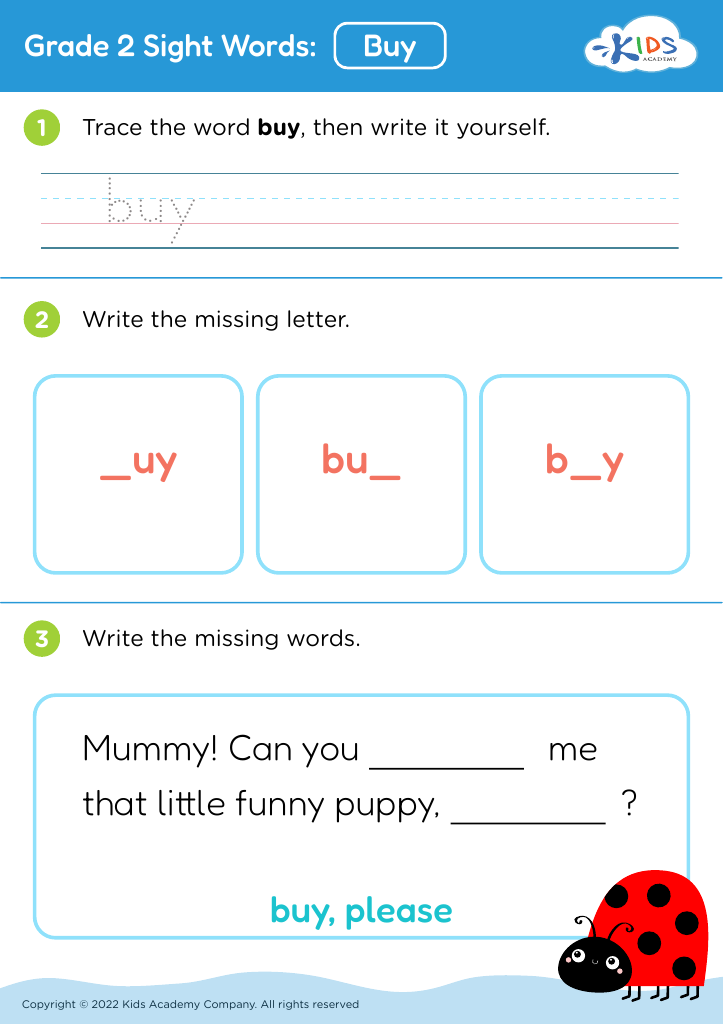
Grade 2 Sight Words: Buy

Grade 2 Sight Words: Buy

Grade 2 Sight Words: Buy
Worksheet
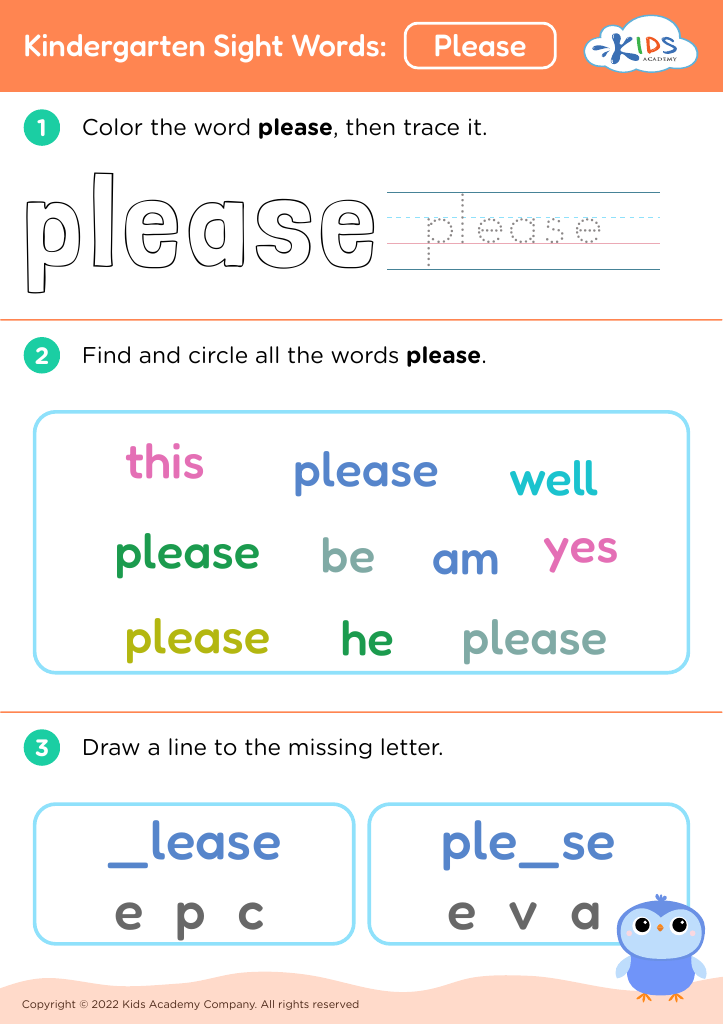
Kindergarten Sight Words: Please

Kindergarten Sight Words: Please

Kindergarten Sight Words: Please
Worksheet
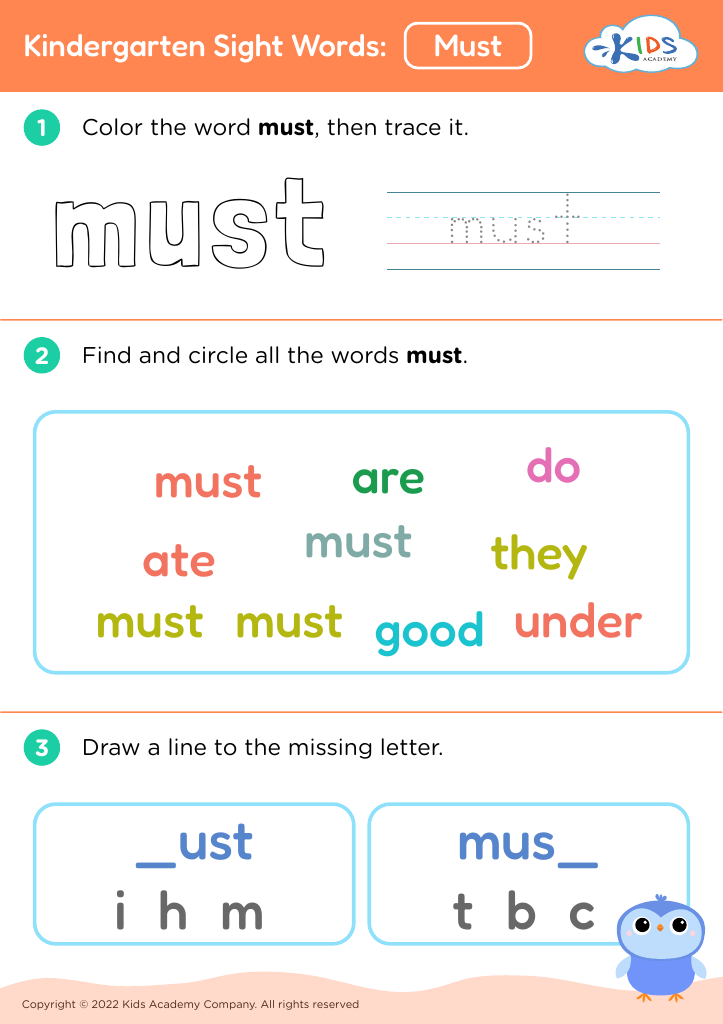
Kindergarten Sight Words: Must

Kindergarten Sight Words: Must

Kindergarten Sight Words: Must
Worksheet
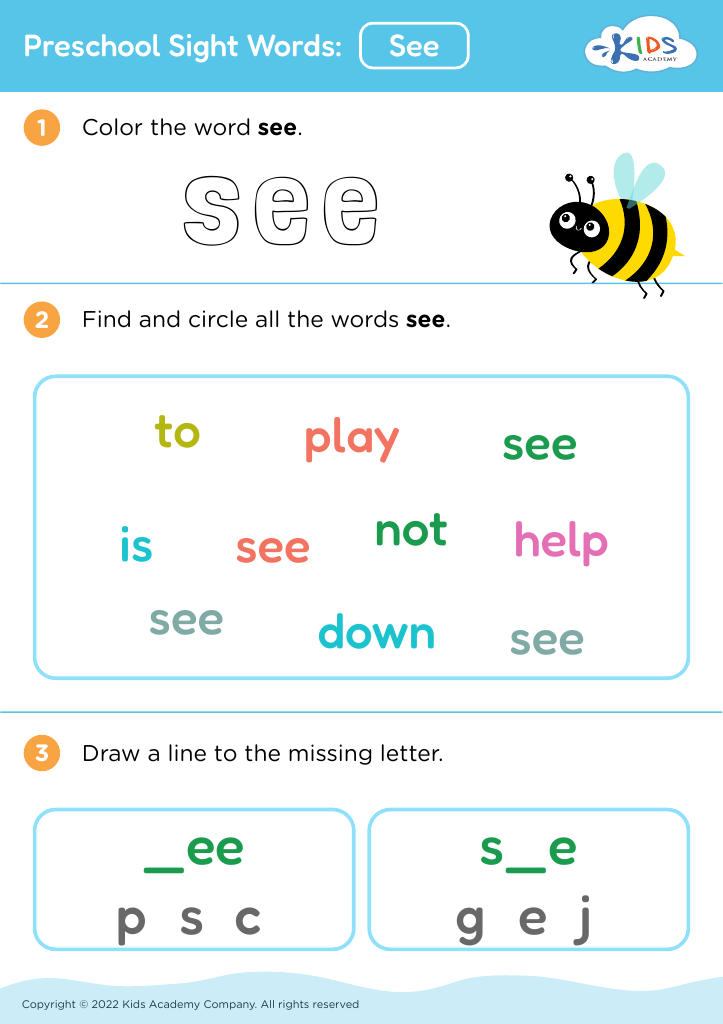
Preschool Sight Words: See

Preschool Sight Words: See

Preschool Sight Words: See
Worksheet
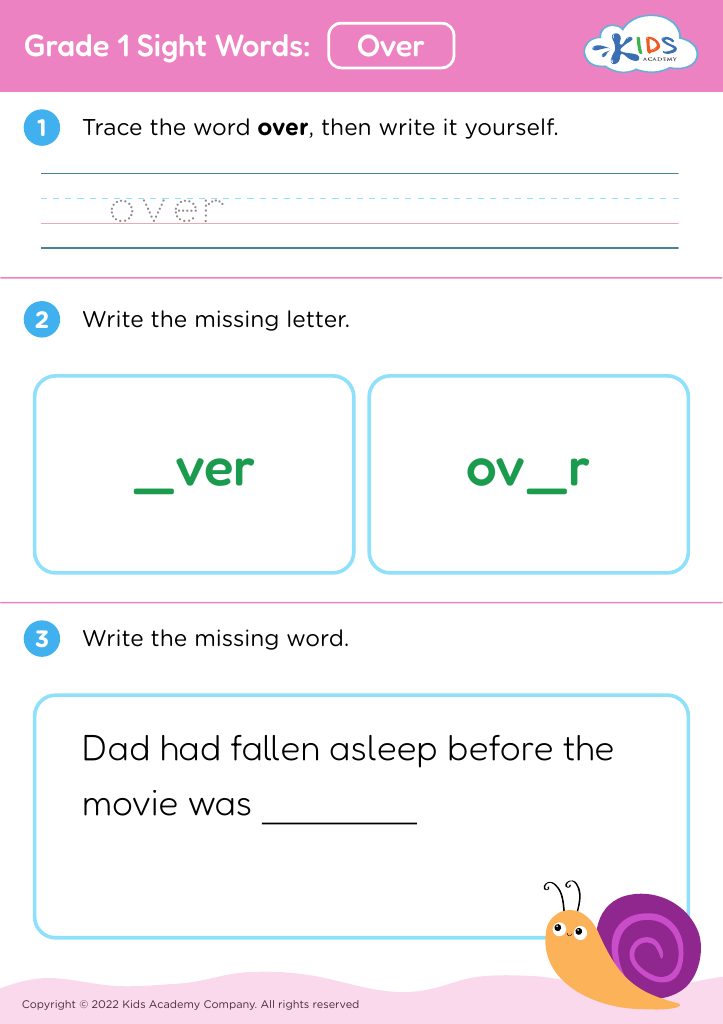
Grade 1 Sight Words: Over

Grade 1 Sight Words: Over

Grade 1 Sight Words: Over
Worksheet
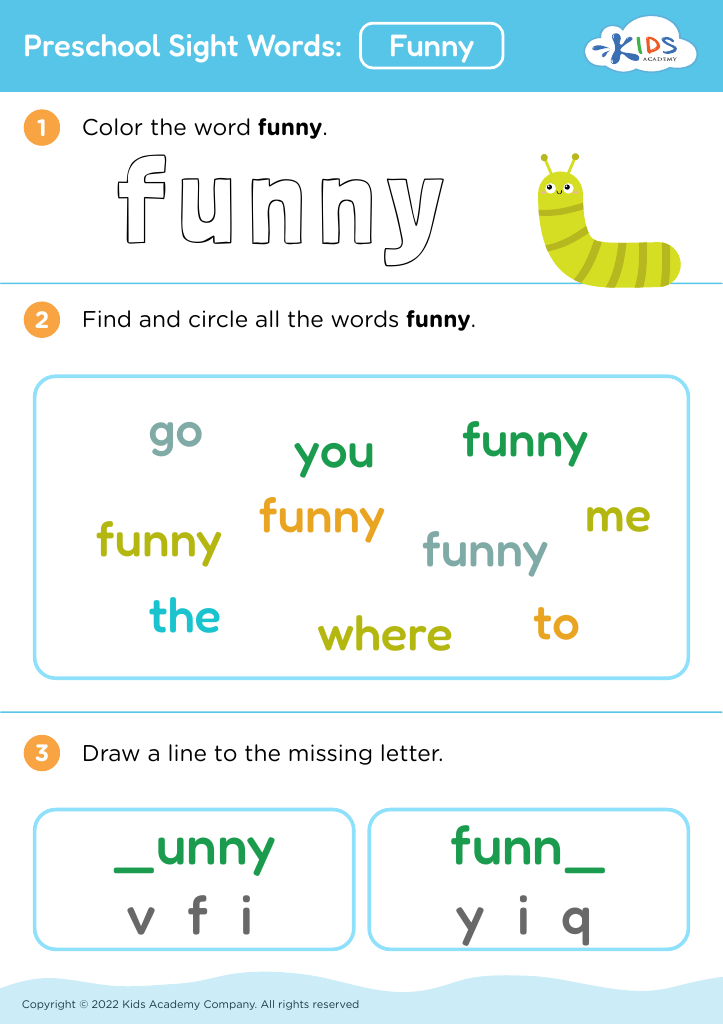
Preschool Sight Words: Funny

Preschool Sight Words: Funny

Preschool Sight Words: Funny
Worksheet


... 8 9

Reading comprehension for ages 4-7 is foundational to a child's overall educational development, and parents and teachers play a crucial role in nurturing this skill. At this budding stage, children are transitioning from merely recognizing words to understanding them within a context, which is essential for their cognitive growth. Comprehension isn't just about reading words correctly; it’s about grasping the meaning behind the text, which fosters critical thinking, vocabulary expansion, and overall knowledge.

Reading comprehension skills developed early have lasting impacts. Children who are strong readers are more likely to excel in all subjects, including math and science, because these disciplines also rely on understanding complex instructions and problem-solving. Furthermore, reading proficiency at an early age helps build confidence and interest in independent learning.

From a socio-emotional perspective, comprehending stories helps children recognize and empathize with different perspectives and situations. It cultivates their imagination, improves their communication skills, and prepares them to navigate the world around them more effectively.

For these reasons, it's essential for parents and teachers to prioritize reading activities, engage children with diverse and age-appropriate books, and interactively discuss stories. This involvement lays a strong foundation, ensuring that young learners are well-equipped for academic success and emotional intelligence as they grow.