Rhyming skills development Reading Worksheets for Ages 4-7
3 filtered results
-
From - To
Discover our engaging Rhyming Skills Development Reading Worksheets designed specifically for children ages 4-7. These printable resources foster essential phonemic awareness and enhance early literacy skills through fun, interactive activities. Our worksheets invite young learners to explore word patterns and sound similarities, helping them develop important rhyming abilities that lay the foundation for successful reading. Perfect for both classroom and home settings, these exciting exercises will keep children motivated while they learn. Encourage creativity and linguistic skills as your child gains confidence in their reading journey. Start nurturing a lifelong love for language with our carefully crafted worksheets today!
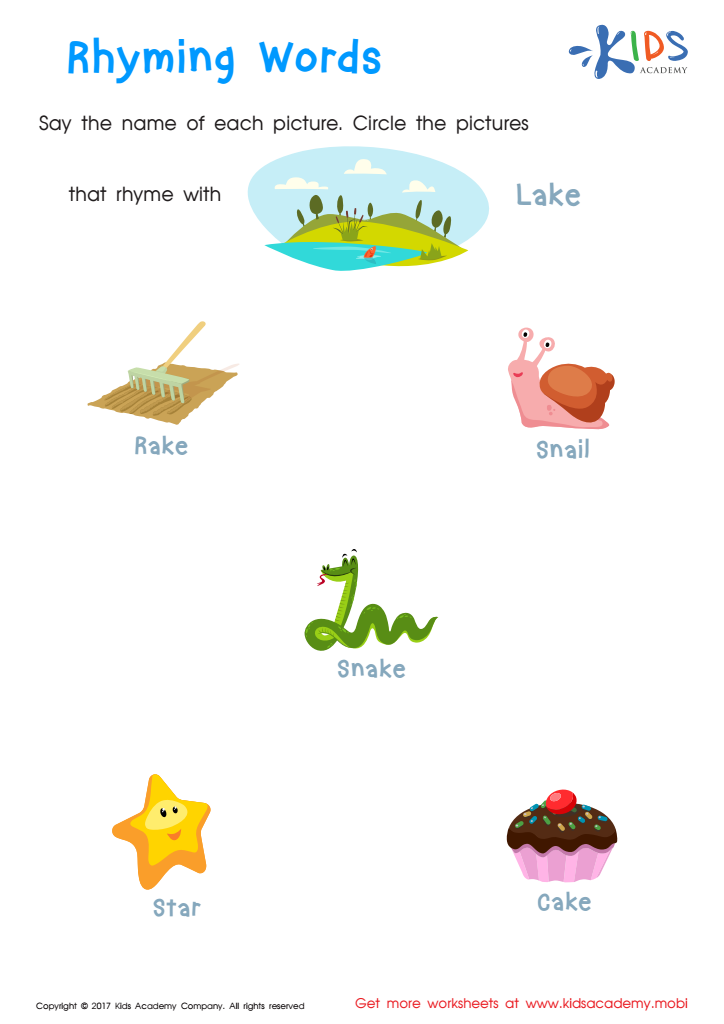
Rhyming Words Rhyming Worksheet
 Assign to My Students
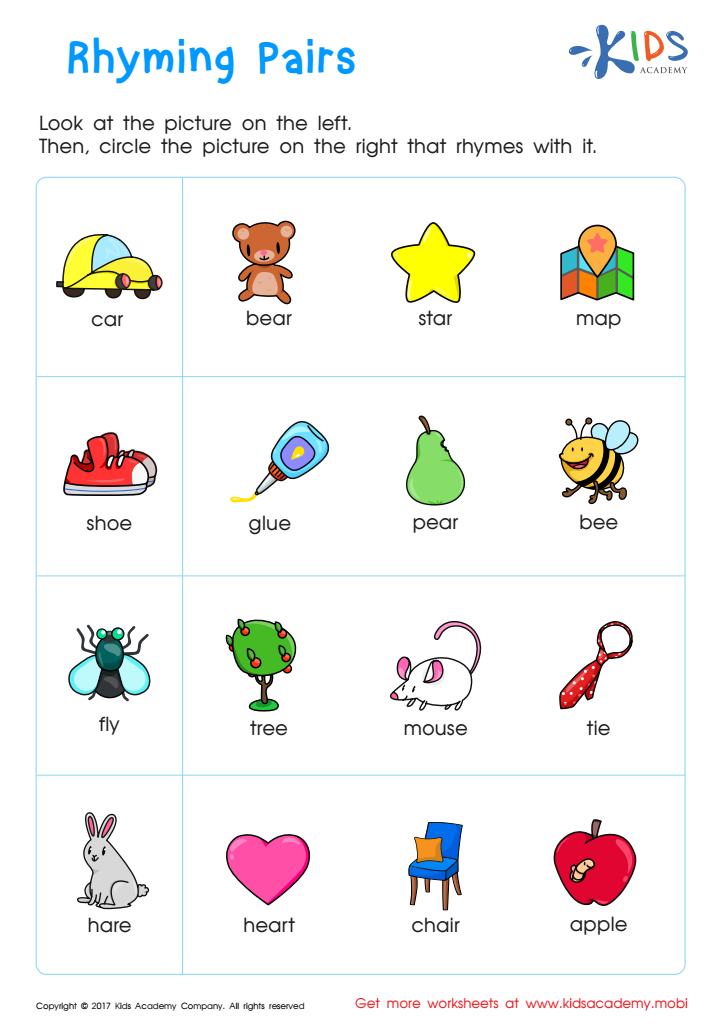
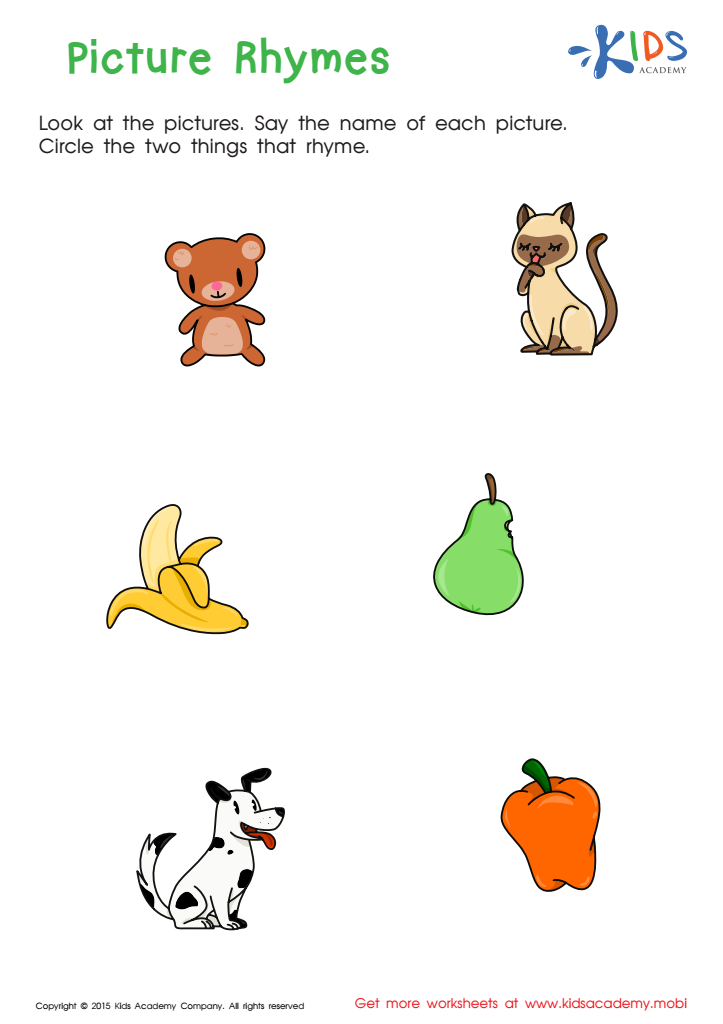
First Words: Picture Rhymes Worksheet







Rhyming skills play a vital role in the reading development of children aged 4 to 7. First, they enhance phonemic awareness, which is the ability to hear and manipulate the individual sounds in words. This foundational skill is crucial for learning to read, as it helps children understand the structure of language. When children engage with rhyming words, they become more adept at recognizing similar sounds, which improves their decoding skills.
Additionally, rhyming activities make learning engaging and enjoyable. Children are naturally drawn to the rhythmic and melodic qualities of rhymes, facilitating a love for language and literature. This enjoyment motivates them to explore reading further, leading to better literacy outcomes.
Furthermore, rhyming helps expand vocabulary. As children encounter new rhymes, they learn about different words and their meanings, enriching their language skills. This is particularly important in early education, as a strong vocabulary significantly correlates with future reading comprehension and overall academic success.
Lastly, rhyming fosters social interaction. Sharing rhymes and participating in group activities promotes listening and collaborative skills, essential for effective communication. For all these reasons, parents and teachers should prioritize rhyming skill development in early literacy programs.








