Sequence Understanding Reading Worksheets for Ages 4-7
3 filtered results
-
From - To
Boost your child's reading skills with our engaging Sequence Understanding Reading Worksheets, designed specifically for ages 4-7. These interactive worksheets help young learners grasp the concept of sequence through fun activities and stories that promote comprehension and critical thinking. By identifying the order of events, children enhance their reading fluency and retain information better. Our carefully crafted exercises cater to different learning styles, ensuring an enjoyable learning experience. Perfect for use at home or in the classroom, these worksheets lay the foundation for essential reading skills while making learning an exciting adventure. Unlock your child's full potential with sequence understanding today!
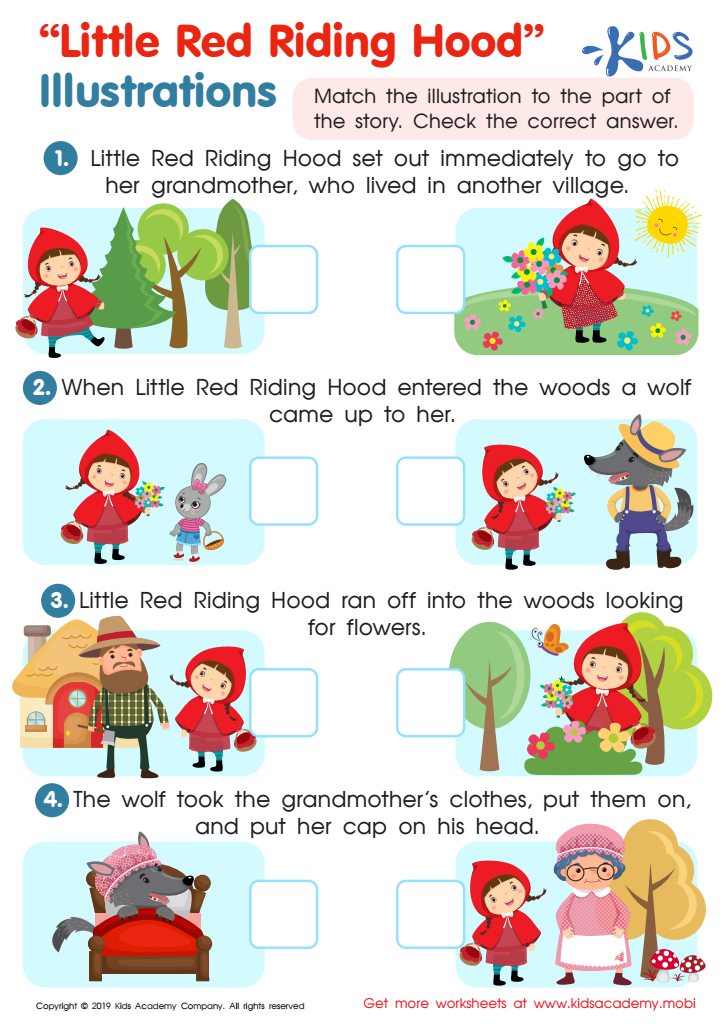
Little Red Riding Hood: Illustrations Worksheet
 Assign to My Students
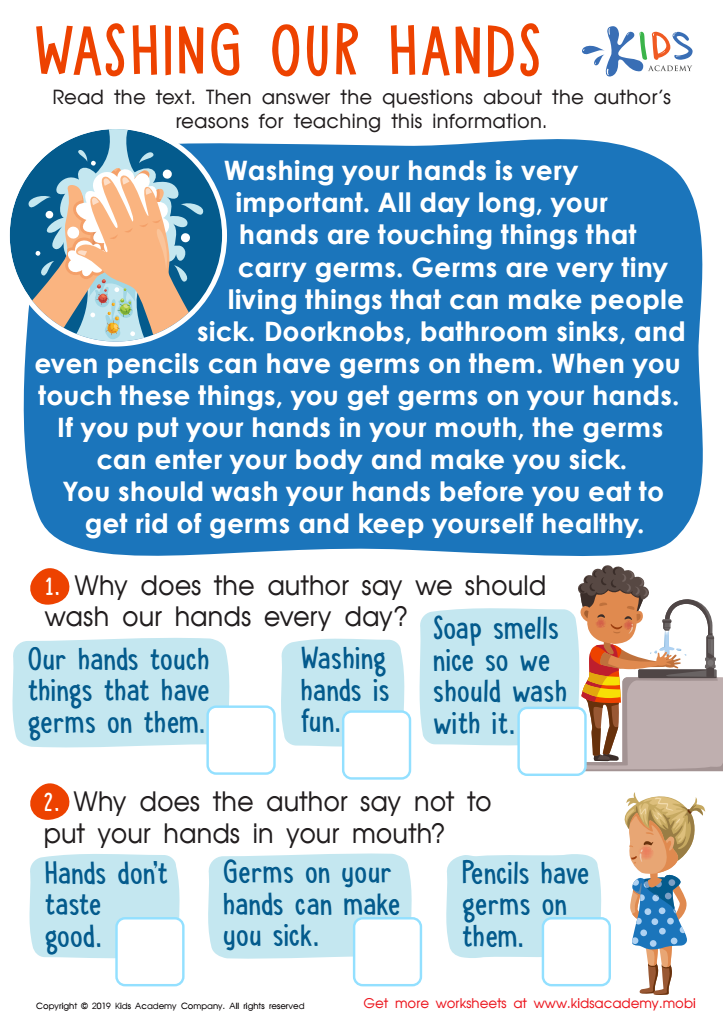
Washing Our Hands Worksheet
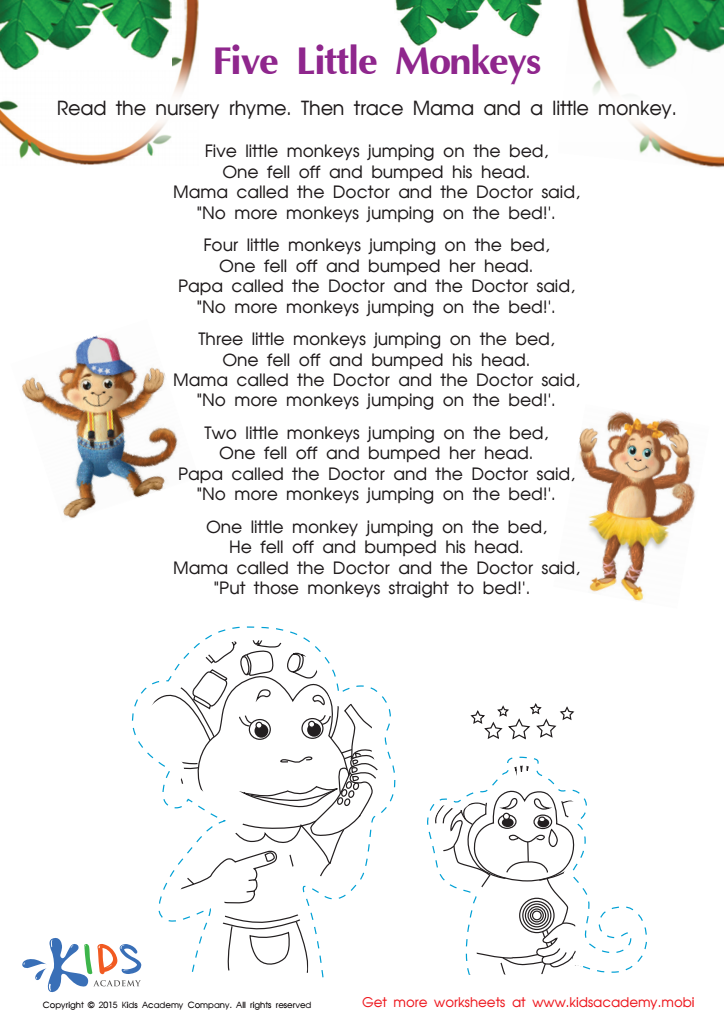
The Five Little Monkeys Nursery Rhyme Worksheet








Sequence understanding in reading is crucial for children aged 4-7 as it lays the foundation for essential literacy skills. At this age, children begin to develop their comprehension abilities and make connections between ideas. When children grasp narrative structures, such as beginning, middle, and end, they become more adept at retelling stories and engaging in discussions about what they've read. This skill empowers them to predict outcomes, understand character motivations, and grasp the overall plot.
For parents and teachers, fostering sequence understanding promotes critical thinking and enhances cognitive development. Engaging children in activities like sequencing pictures from a story encourages creativity and problem-solving while making reading more interactive and enjoyable. When children can identify sequences, they are better equipped to recognize patterns— a skill that extends beyond literacy into math and science.
Furthermore, supporting sequence understanding can boost a child's confidence in reading. As they acquire the ability to navigate storylines independently, they develop a love for reading that fosters lifelong learning. Ultimately, prioritizing this skill involves investing in children’s academic success, preparing them for more complex texts as they progress through their education. Thus, nurturing sequence understanding is a vital component of early literacy development.








