Spatial awareness Reading Worksheets for Ages 4-7
5 filtered results
-
From - To
Boost your child's spatial awareness with our engaging Reading Worksheets designed for ages 4-7! These worksheets help young learners develop critical skills by combining reading comprehension with spatial concepts. Through fun and interactive activities, children will explore essential vocabulary related to position, direction, and relationships between objects. Ideal for both classroom and home use, our worksheets support early literacy while enhancing cognitive abilities. Each worksheet is carefully crafted to captivate young imaginations and foster a love for learning. Perfect for parents and educators looking to enrich their students' understanding of space and relationships, these resources make learning both effective and enjoyable!
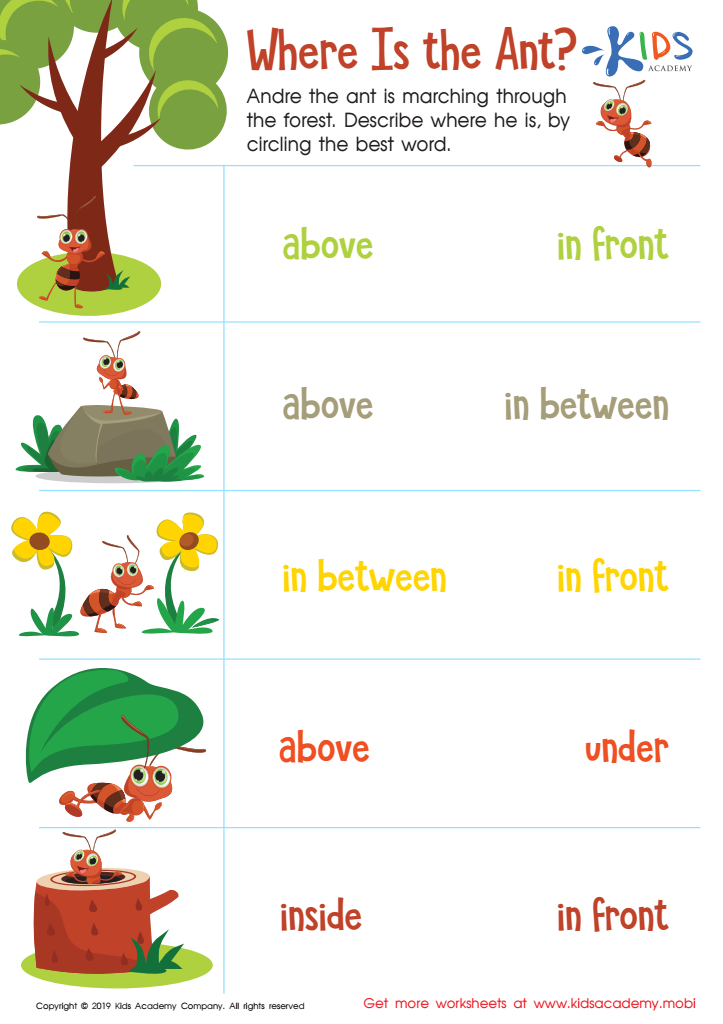
Where Is the Ant? Worksheet
 Assign to My Students
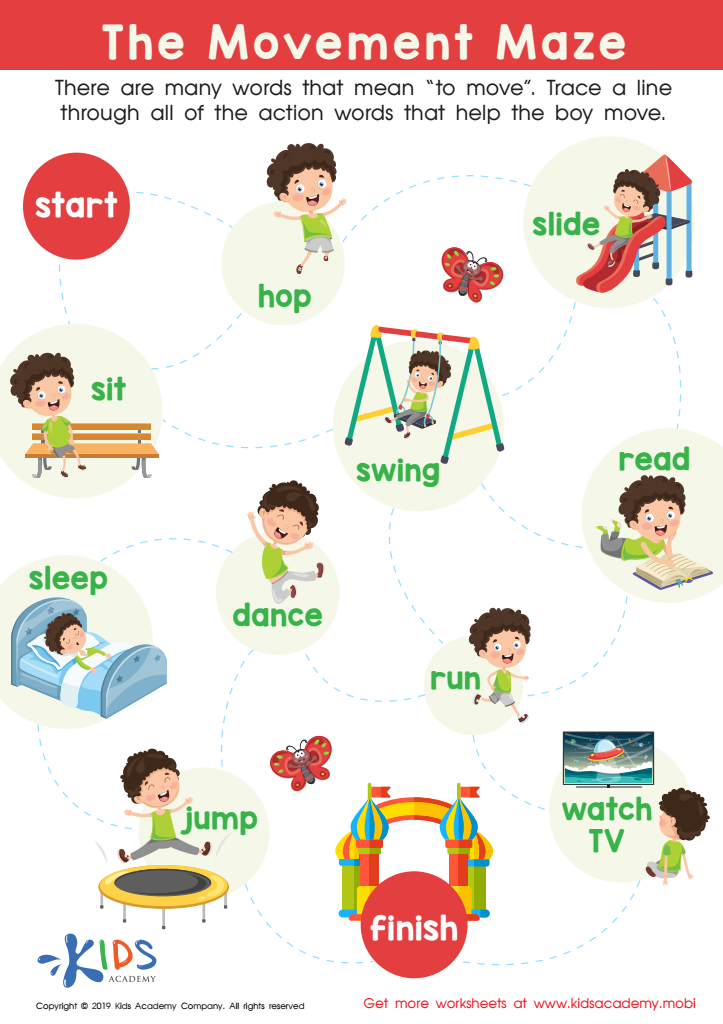
The Movement Maze Worksheet
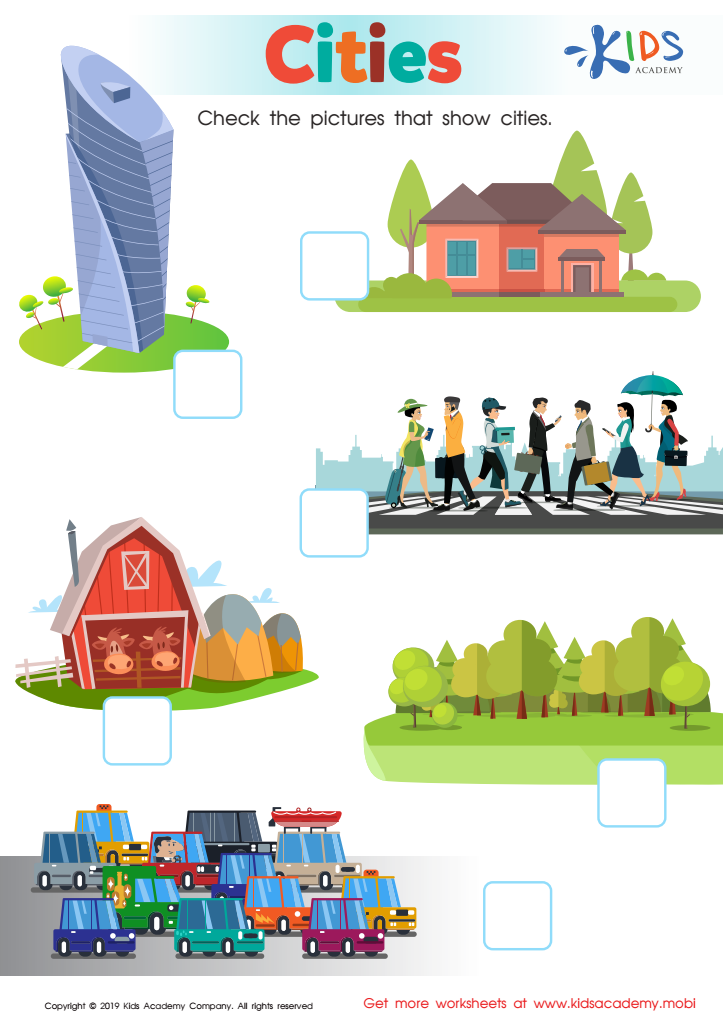
Cities Worksheet
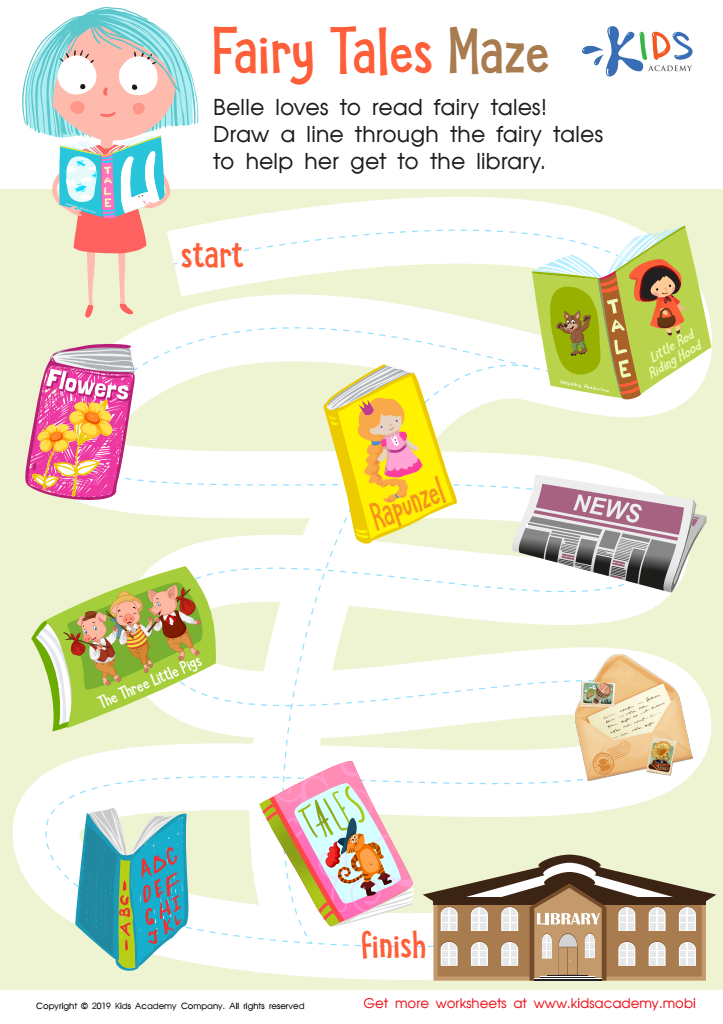
Fairy Tales Maze Worksheet
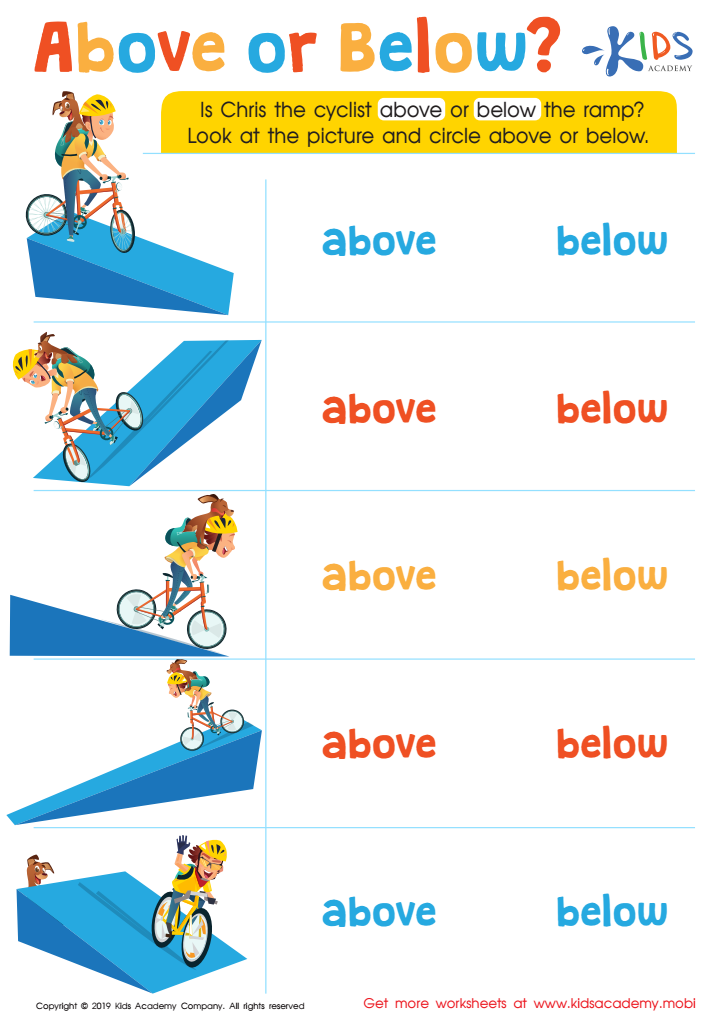
Above or Below? Worksheet





.jpg)


Spatial awareness is an essential cognitive skill that helps children understand their position in space and the relationships between objects. For children aged 4-7, developing spatial awareness through reading and activities can significantly impact their overall learning and development.
Firstly, spatial awareness enhances problem-solving skills and creativity. When children engage with stories that involve spatial concepts—such as direction, size, and perspective—they learn to visualize and manipulate objects mentally, laying a foundation for critical thinking and innovation.
Secondly, strong spatial skills are crucial for success in STEM (Science, Technology, Engineering, and Mathematics) subjects. Research indicates that early spatial skills correlate strongly with future performance in these areas. By fostering spatial awareness through reading, parents and teachers can instill a love for learning in scientific and mathematical contexts.
Moreover, spatial awareness aids in literacy development. Understanding a story's sequence, location, and character movements fosters comprehension and narrative skills.
Lastly, activities that build spatial awareness can also promote physical coordination and balance, essential for daily life and future sports participation. Consequently, parents and educators should prioritize spatial awareness in their teaching strategies to equip children with critical tools for lifelong success.








