
Understanding life cycles Reading Worksheets for Ages 4-7
3 filtered results
Difficulty Level
Grade
Age
-
From - To
Subject
Activity
Standards
Discover the wonders of nature with our "Understanding Life Cycles" reading worksheets specially designed for ages 4-7. These engaging, educational resources introduce young learners to the stages of growth and development of various plants and animals. Through simple text and vivid illustrations, children will explore concepts like germination, metamorphosis, and reproduction. Perfect for home or classroom use, our worksheets enhance reading skills while fostering a love for science and the environment. Help your child or students understand the magic of life cycles and build a solid foundation for future learning with Kids Academy's expertly crafted materials.
Favorites
With answer key
Interactive
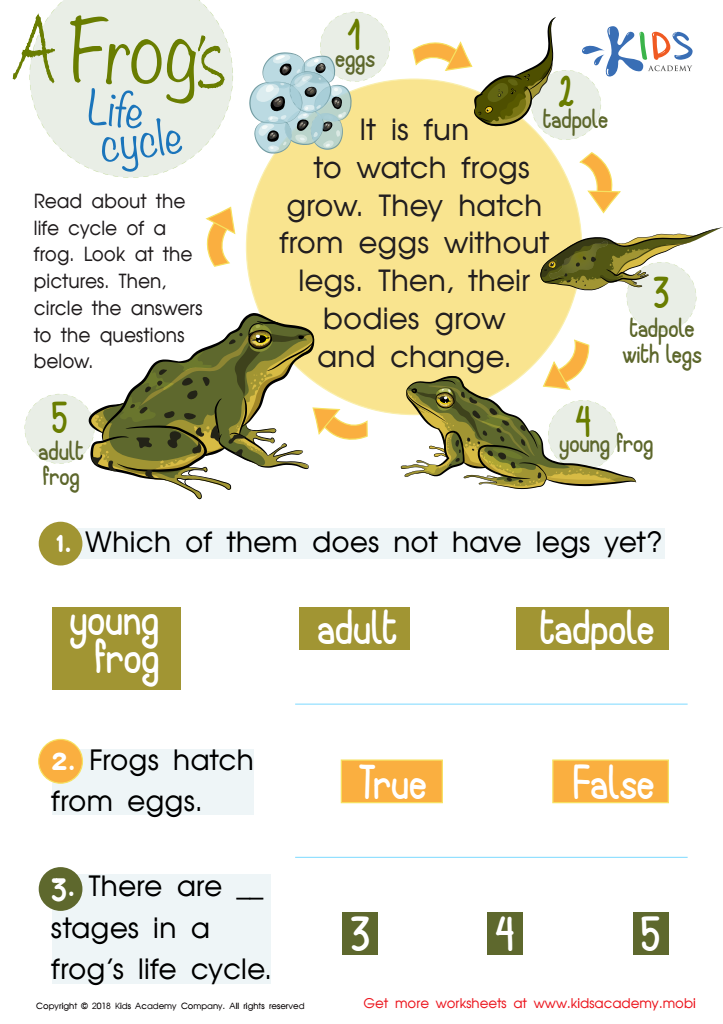
A Frog’s Life Cycle Worksheet
Encourage your kids to learn about frogs! Ask them to tell you some features, then read and discuss the text that explains the frog's life cycle. Show them the pictures to help them visualize it. Finish by helping them answer the questions at the bottom of the worksheet.
 Assign to My Students
A Frog’s Life Cycle Worksheet
Worksheet
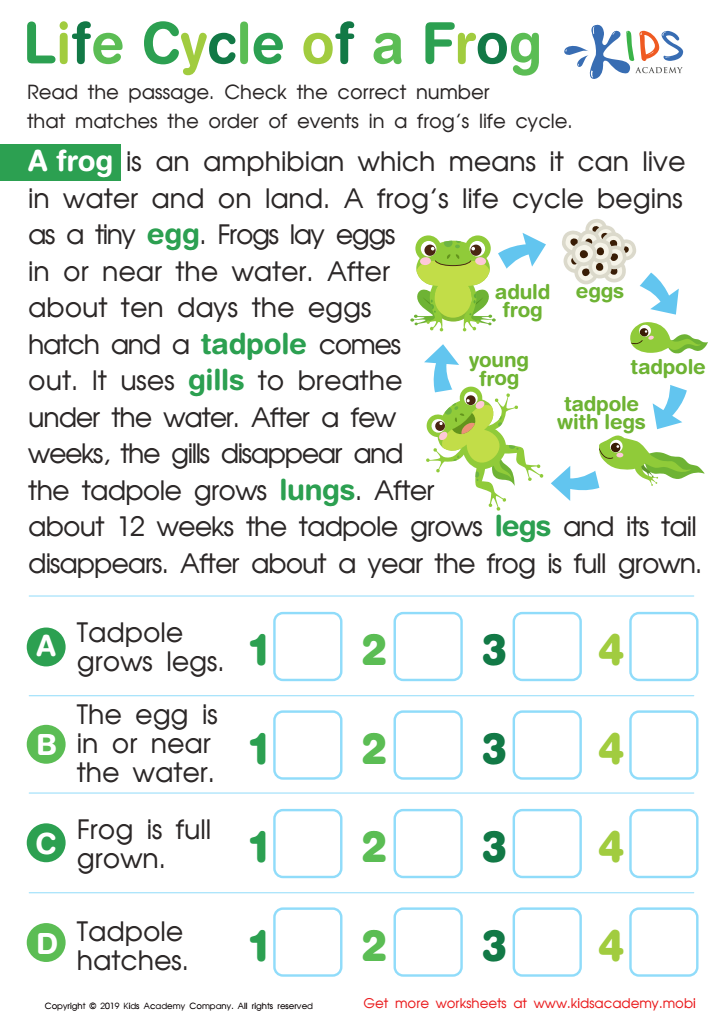
Life Cycle of a Frog Worksheet
Teach your kids to read and open their eyes to new knowledge. Frogs have fascinating life cycles. Show them the worksheet with pictures and guide them as they read the passage about it. Encourage them to check the number that matches the frog's life cycle order.
Life Cycle of a Frog Worksheet
Worksheet
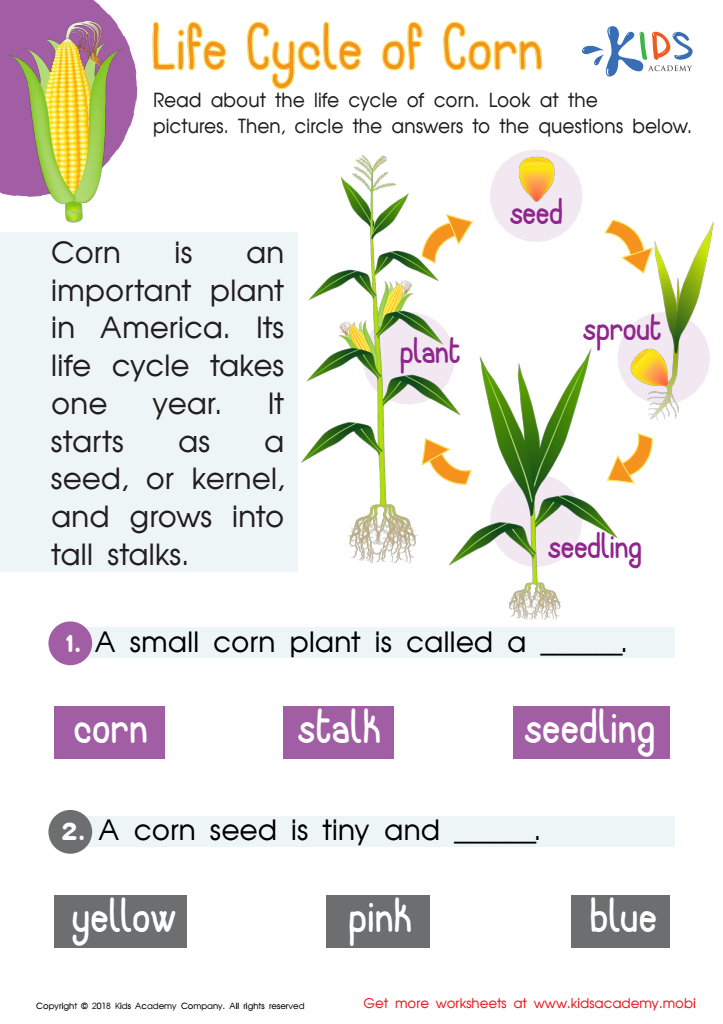
Life Cycle of Corn Worksheet
Help your kids learn about corn! Ask them what foods it's used to make. Read this worksheet and look at the pictures to learn the life cycle of corn. Then, have them circle the answers to the questions at the bottom. Corn is an important crop for farmers, used to make many foods we eat today.
Life Cycle of Corn Worksheet
Worksheet
Join Kids Academy for Free
Who is primarily going to use this learning content?






Understanding life cycles is a crucial aspect of early childhood education that both parents and teachers should prioritize for children aged 4-7. At this developmental stage, children are naturally curious about the world around them, and learning about life cycles—from plants and animals to human beings—satisfies and builds upon that curiosity. This foundational knowledge fosters a child's cognitive development by helping them comprehend processes and sequences, promoting critical thinking and observational skills.
Moreover, learning about life cycles aids in the development of empathy and appreciation for living organisms. For example, understanding how a caterpillar transforms into a butterfly can spark a sense of wonder and respect for nature. It teaches children that growth and change are natural parts of all life forms, embedding early lessons in science and biology in an engaging and relatable way.
Additionally, reading about life cycles enhances literacy skills. Children expand their vocabulary, learn new concepts, and improve their ability to understand and follow narratives. Educational activities related to life cycles—such as storytelling, drawing, or participating in simple experiments—can stimulate intellectual curiosity and expand interdisciplinary learning. Engaging with this topic sets a foundation for future scientific exploration and fosters a lifelong passion for learning and understanding the natural world.








