
Word association skills Reading Worksheets for Ages 4-7
3 filtered results
Difficulty Level
Grade
Age
-
From - To
Subject
Activity
Standards
Enhance your child's reading journey with our engaging Word Association Skills Worksheets, specially designed for ages 4-7! These vivid and interactive worksheets focus on developing crucial word association skills, helping young learners connect words with related images and concepts. By engaging in fun activities like matching and recognition exercises, children strengthen their vocabulary and comprehension abilities, laying a solid foundation for future reading success. Perfect for home or classroom use, our worksheets make learning enjoyable and effective. Unlock your child's potential and foster a love for reading today with our captivating Word Association Skills Worksheets! Explore our collection now!
Favorites
With answer key
Interactive
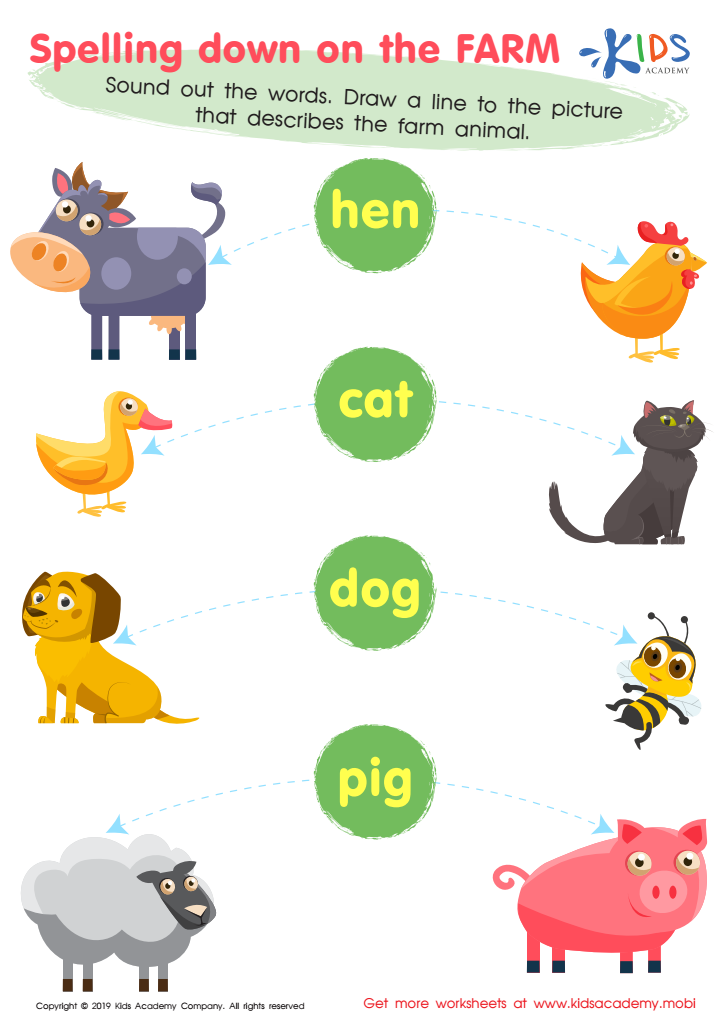
Spelling Down on the Farm Worksheet
Want to help your kids nail their spelling? Introduce them to this farm animal worksheet! Get them to look at the animals in the tracing sheet, name them and then sound out the words. Have them draw a line to the picture that describes it. You'll be surprised at how quickly their skills improve.
 Assign to My Students
Spelling Down on the Farm Worksheet
Worksheet
Join Kids Academy for Free
Who is primarily going to use this learning content?








Word association skills are crucial for children aged 4-7 as they lay the foundation for reading and language development. At this age, children's brains are highly receptive to learning, and improving their word association abilities can significantly enhance their vocabulary, comprehension, and communication skills.
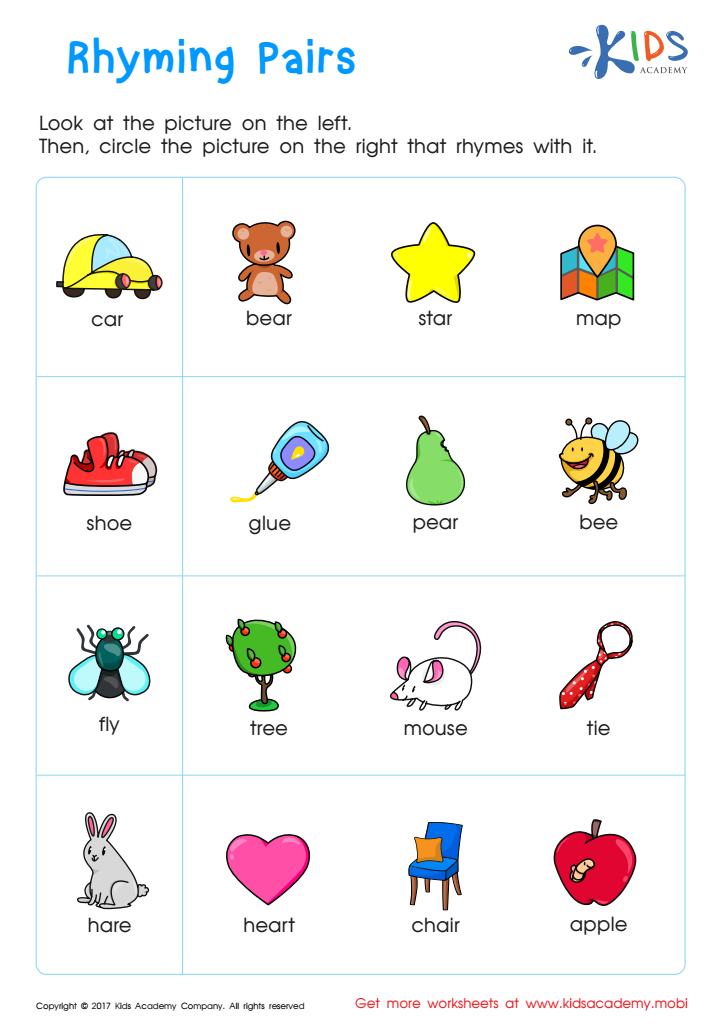
When children engage in word association activities—such as matching words with pictures, categorizing words, or playing rhyming games—they learn to make connections between words and their meanings. This not only boosts their language fluency but also helps them to think critically about language use and context.
Furthermore, strong word association skills contribute to better reading comprehension. As children encounter new words in texts, their ability to associate those words with prior knowledge aids in decoding and understanding. This skill also empowers children to express themselves more effectively, fostering confidence in their writing and speaking.
Encouraging word association through play and interactive activities encourages a love for learning. Parents and educators can nurture these skills in an enjoyable manner, making it an essential part of early literacy education. Engaging in word association not only prepares children for academic success but also supports their overall cognitive development, setting them up for lifelong learning.








