Visual Perception Skills Reading Comprehension Worksheets for Ages 4-7
3 filtered results
-
From - To
Enhance your child's reading comprehension with our engaging Visual Perception Skills Worksheets, specially designed for ages 4-7. These printable resources focus on key skills that support young readers in understanding and interpreting text. Through fun activities and colorful illustrations, children will develop their ability to recognize shapes, patterns, and details, essential for grasping the nuances of reading. Each worksheet promotes critical thinking and encourages independent learning, making it an ideal supplement to classroom lessons or home education. Foster a love for reading while strengthening visual perception skills with these interactive worksheets that prepare your child for academic success!
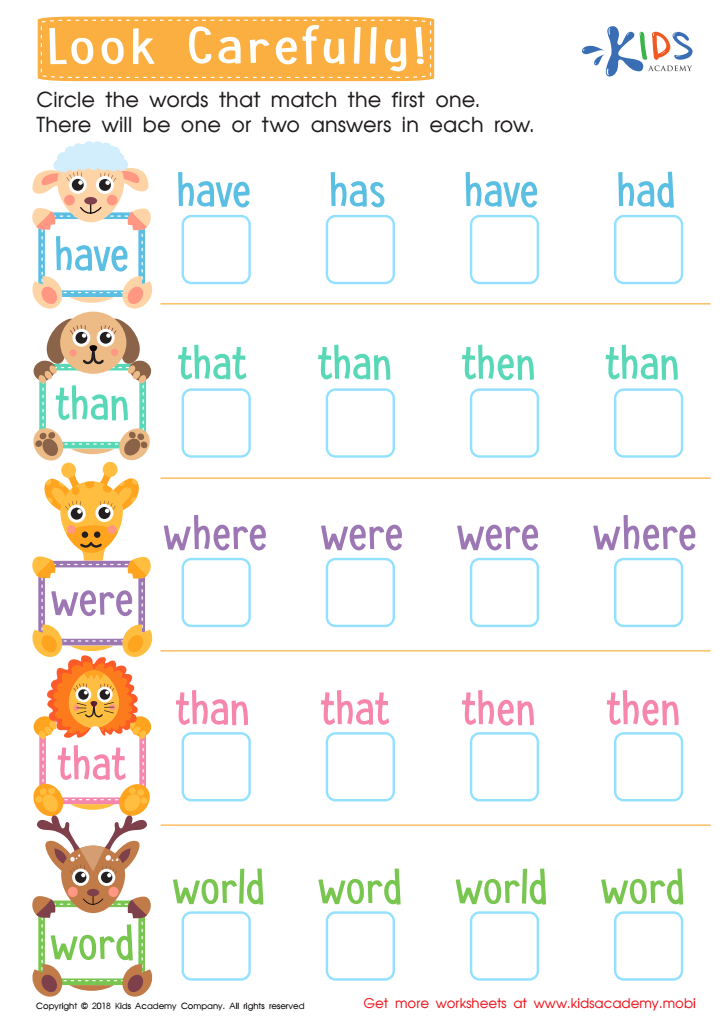
Look Carefully Worksheet
 Assign to My Students
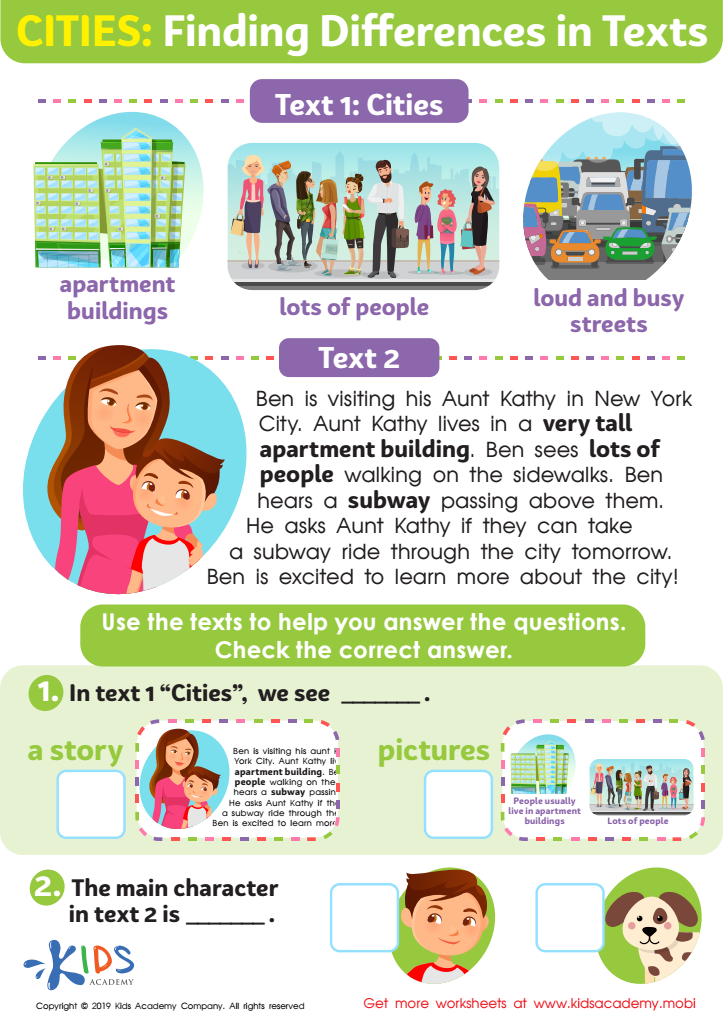
Cities: Finding Differences Worksheet
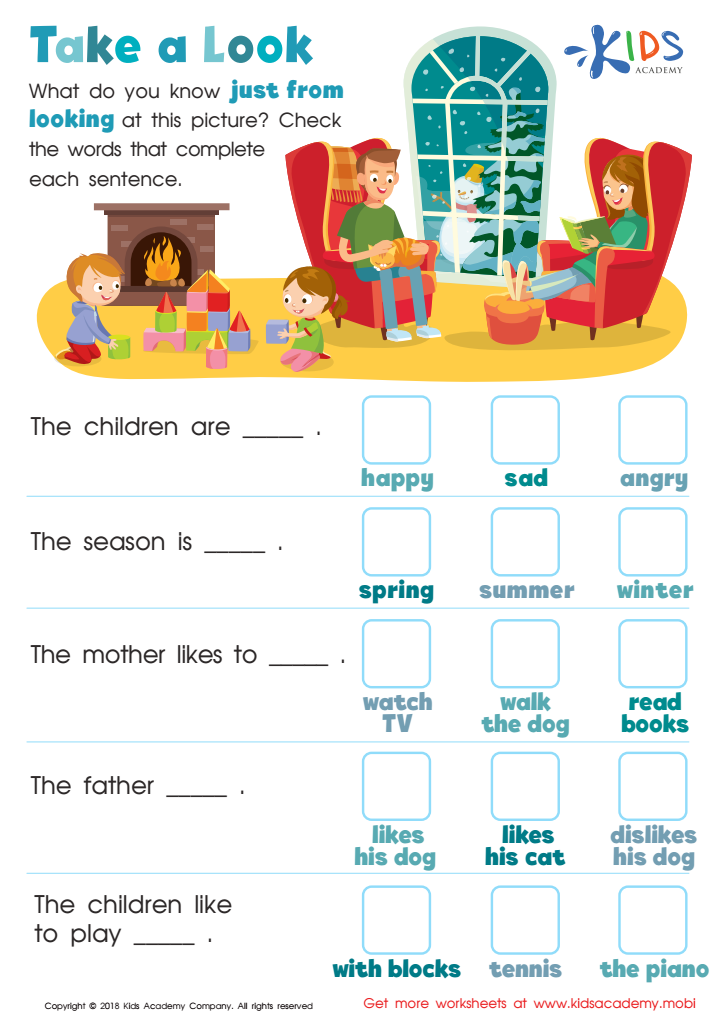
Take a Look - Part 1 Worksheet







Parents and teachers should prioritize developing visual perception skills for children aged 4-7, as these skills are foundational to successful reading comprehension. Visual perception involves the ability to interpret and make sense of visual information, including recognizing letters, words, and pictures. Well-developed visual perception skills help children identify letters and their shapes, making it easier for them to decode words and connect visuals with narrative content.
At this age, children are typically transitioning from pre-reading to early reading stages. Strong visual perception supports their ability to scan text, notice details, and understand the sequence of events, which are crucial for grasping storylines. When kids can effectively process visual information, they are more likely to engage with texts, enhancing their overall literacy skills.
Moreover, fostering visual perception promotes confidence and fosters a love for reading. As children become proficient readers, they build their vocabulary and comprehension skills, paving the way for academic success in later years. Parents and teachers play a vital role in providing activities that nurture these skills, such as puzzles, drawing, and interactive reading, ensuring that children develop a strong foundation for lifelong learning. Consequently, prioritizing visual perception skills lays the groundwork for effective communication and critical thinking in young learners.








