Animal recognition Science Worksheets for Ages 4-7
6 filtered results
-
From - To
Introduce young minds to the wonders of wildlife with our Animal Recognition Science Worksheets for Ages 4-7. Designed to captivate and educate, these interactive worksheets help children identify and learn about different animals through engaging activities. By linking visual recognition with names and sounds, kids enhance their cognitive and observational skills. These worksheets are perfect for home or classroom use, offering a fun and educational experience. Tailored to meet early learning standards, they support developmental milestones while sparking curiosity and fostering a love for science. Start your child’s journey in animal recognition and watch them discover the animal kingdom!
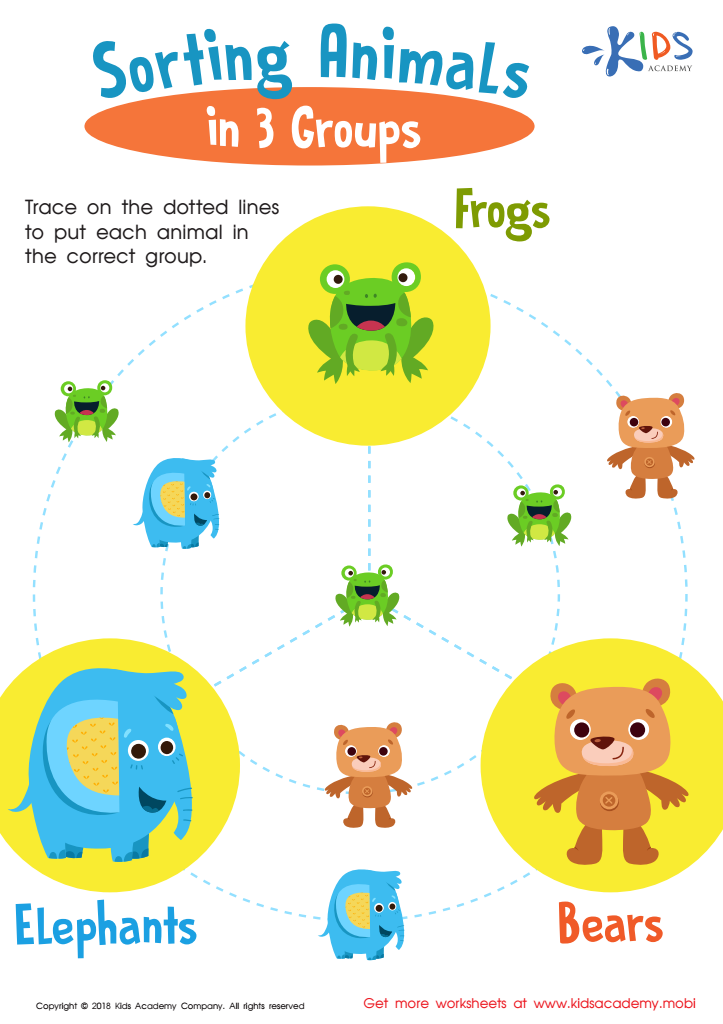
Sorting Animals in 3 Groups Worksheet
 Assign to My Students
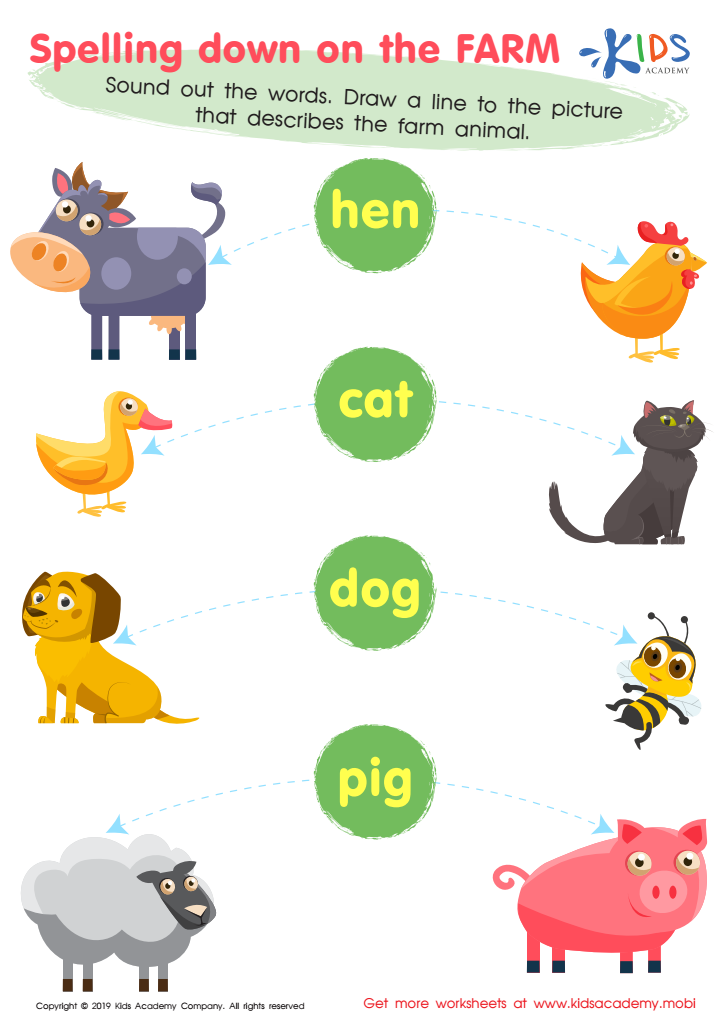
Spelling Down on the Farm Worksheet
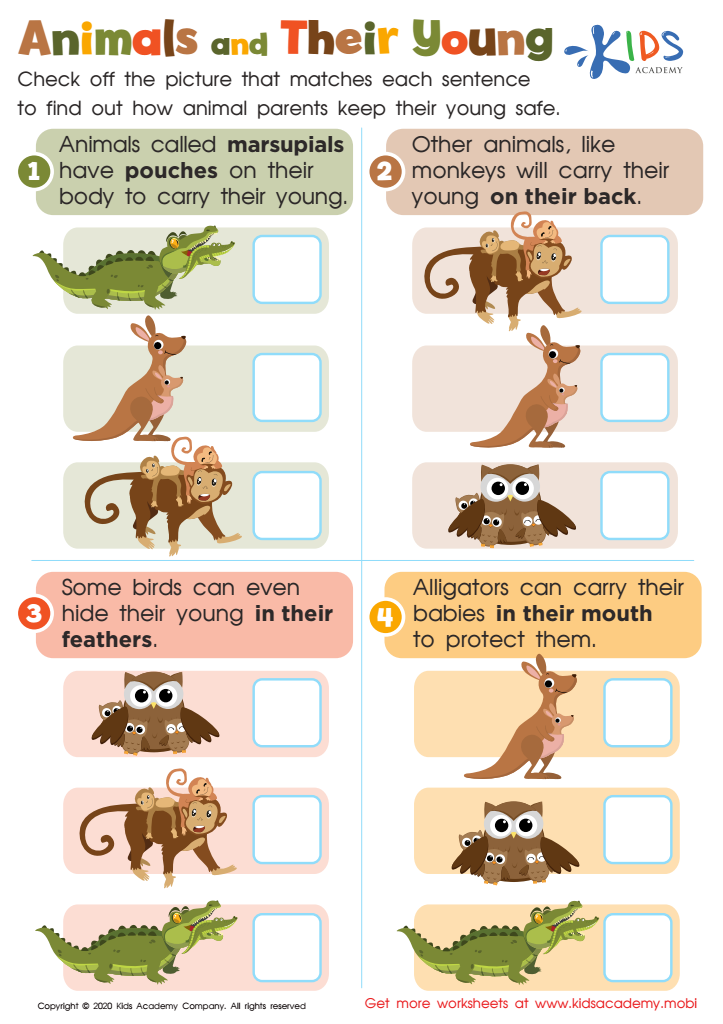
Animals and Their Young Worksheet
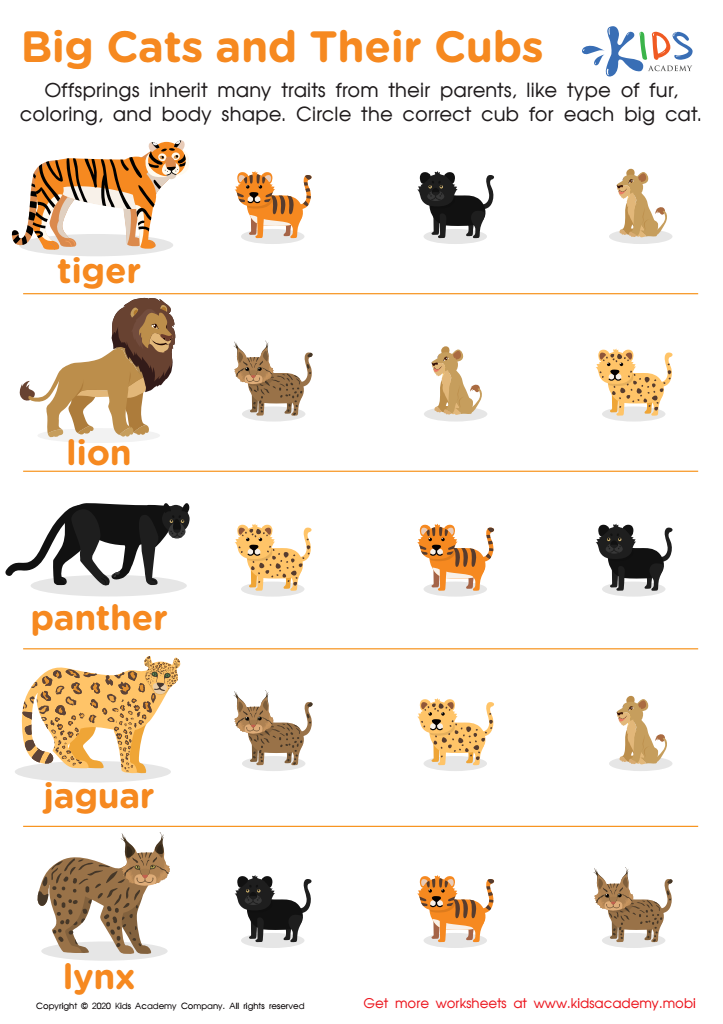
Big Cats and Their Cubs Worksheet
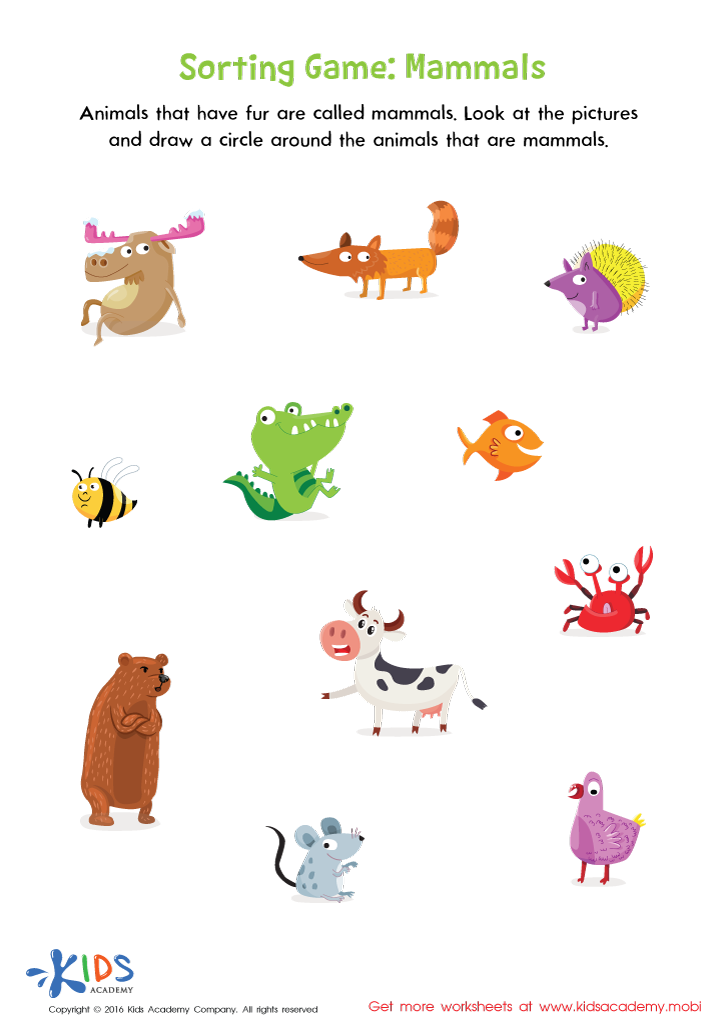
Mammals Sorting Worksheet
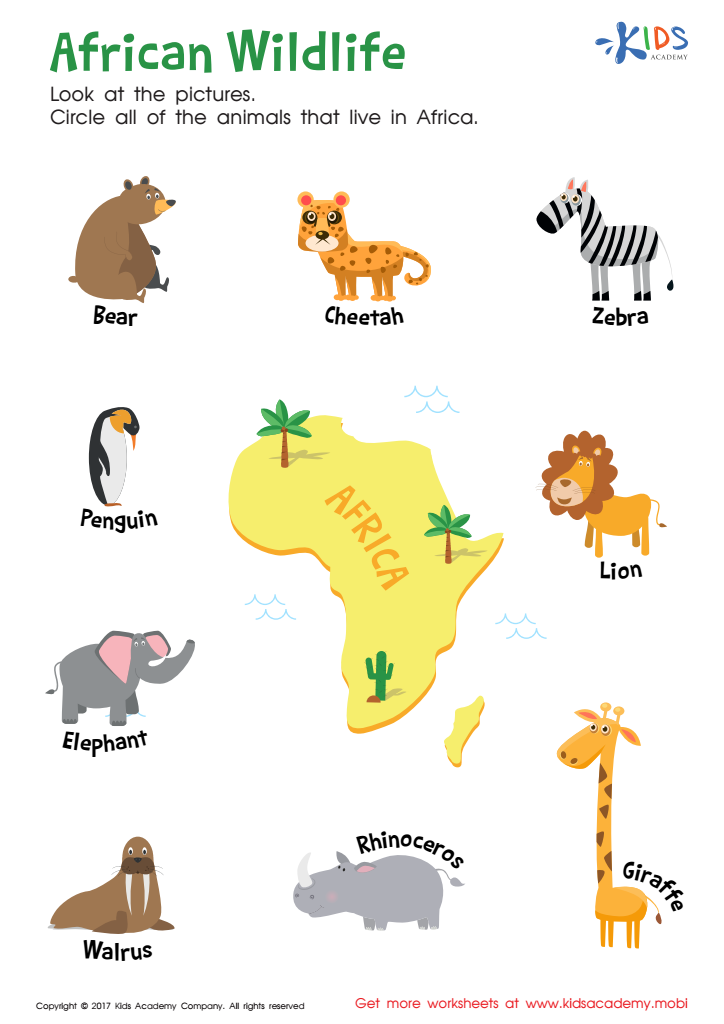







Animal recognition science for children ages 4-7 is important for multiple reasons. At this developmental stage, young learners are highly curious and receptive to new information. Introducing them to animal recognition promotes cognitive development and enhances their observational skills. Recognizing different species bolsters memory and categorization, foundational skills in science education.
This kind of learning extends beyond intellectual growth; it fosters emotional and social development. Animals often captivate children's interest and incite empathy. Learning about living creatures encourages feelings of respect and responsibility for other beings, cultivating a sense of stewardship for the environment from an early age.
Furthermore, engaging children with animal recognition can solidify language skills. By learning names and characteristics of various species, children expand their vocabulary and sharpen their descriptive capabilities. This language development is crucial at this stage, as it directly impacts literacy and current/future academic success.
Interactive and hands-on activities associated with animal recognition—such as visits to zoos, nature walks, or educational games—further enrich the child's learning experience. These activities provide opportunities for sensory exploration and physical movement, catering to different learning styles and keeping young minds engaged.
In sum, fostering an interest in animal recognition in early childhood lays the groundwork for a well-rounded educational foundation enriched with cognitive, emotional, social, and linguistic benefits.







