
Basic astronomy knowledge Science Worksheets for Ages 4-7
3 filtered results
Difficulty Level
Grade
Age
-
From - To
Subject
Activity
Standards
Introduce your budding astronomers to the wonders of space with our Basic Astronomy Knowledge worksheets designed for ages 4-7! These engaging, interactive activities will spark children's curiosity about the universe, teaching them essential concepts like planets, stars, and the moon. Perfect for both classroom and home use, our worksheets include colorful illustrations and fun exercises that promote learning through play. As children explore basic astronomy facts, they develop essential skills in reading, writing, and critical thinking. Foster a love for science early on with our thoughtfully crafted resources that make learning about the cosmos both enjoyable and educational. Start your journey today!
Favorites
With answer key
Interactive
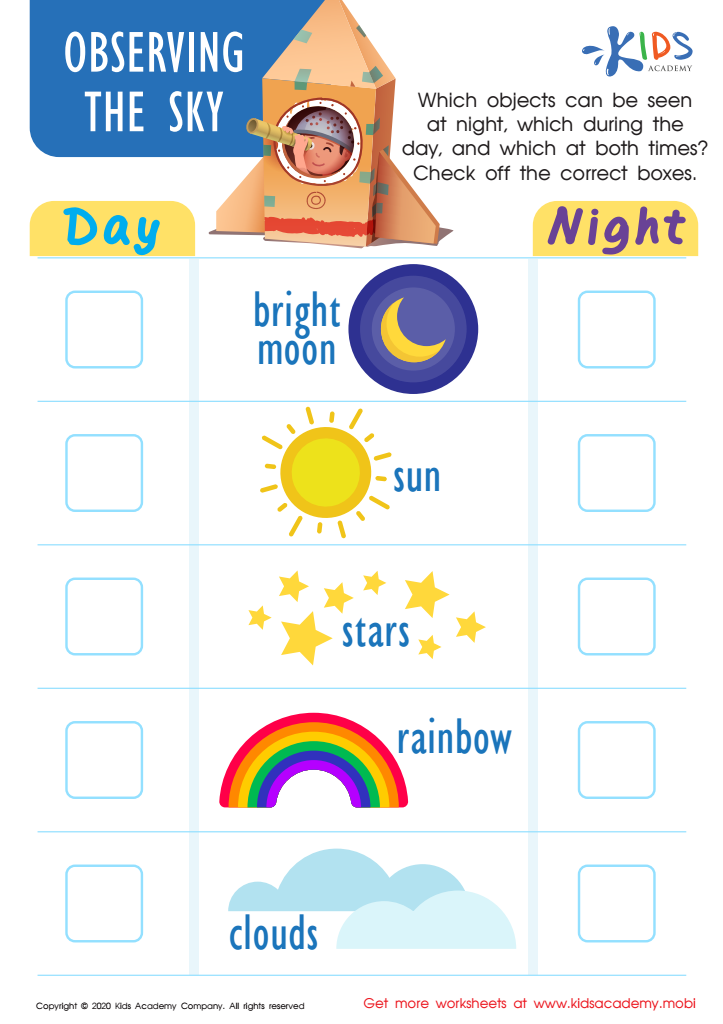
Observing the Sky Worksheet
Look up to the sky and observe day and night objects! See a rainbow or some clouds by day and stars and the moon at night. Help your little learner review this science concept with Kids Academy's fun and colorful worksheet. Have them sort and check off the objects seen by day or night, going down the column in the center.
 Assign to My Students
Observing the Sky Worksheet
Worksheet
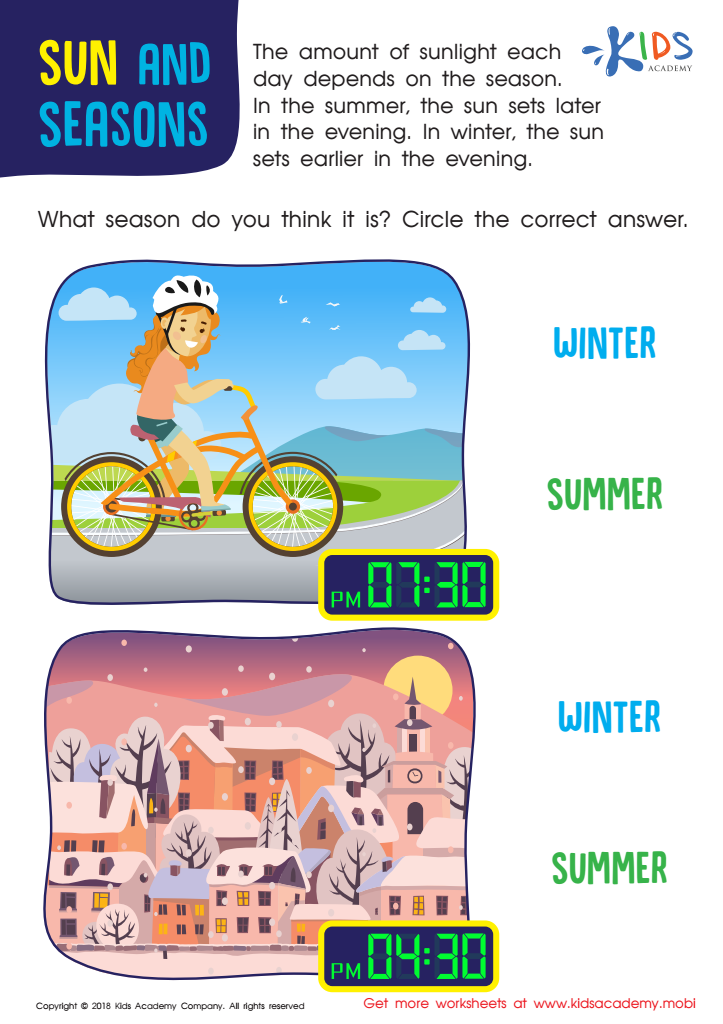
Sun and Seasons Worksheet
Help your child understand science and seasons with this Kids Academy worksheet! Discuss how the daylight varies in summer and winter with them. Guide them to note the digital clock on each page then circle the correct answers. With this sheet, your child will gain a better understanding of why days are longer in summer and shorter in winter!
Sun and Seasons Worksheet
Worksheet
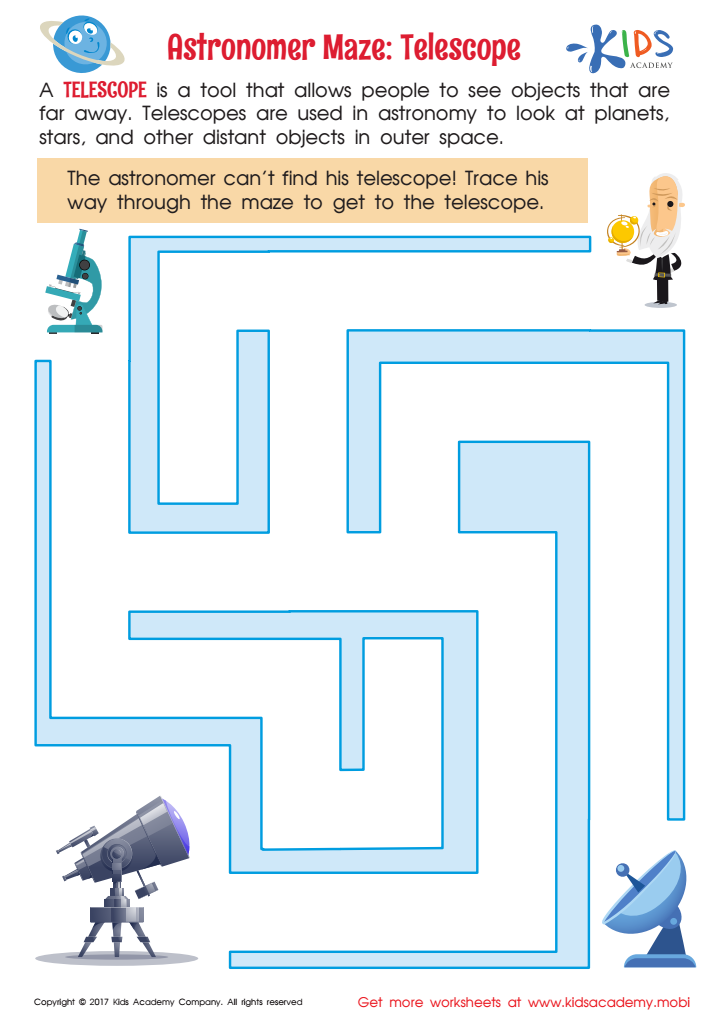
Astronomer Maze: Telescope Worksheet
Let your mini astronomer explore the galaxy with this fun and puzzling space maze worksheet – Telescope! Your child will have a great time navigating the maze, while learning how telescopes help scientists study the stars.
Astronomer Maze: Telescope Worksheet
Worksheet
Join Kids Academy for Free
Who is primarily going to use this learning content?








Teaching basic astronomy concepts to children ages 4-7 is essential for several reasons. Firstly, astronomy awakens curiosity about the universe, fostering a love for learning and exploration. At this age, children are naturally inquisitive; they ask questions about the stars, planets, and our solar system, which opens the door to scientific thinking.
Secondly, learning about celestial bodies can enhance a child’s vocabulary and comprehension skills. As they learn new terms like "planet," "star," and "galaxy," they engage in conversations that help develop their language abilities. Furthermore, astronomy links to other subjects, including math—through concepts like counting stars or measuring distances—encouraging a multidisciplinary approach to education.
Additionally, basic astronomy knowledge enriches children's understanding of our place in the universe, promoting respect for the Earth and its resources. Familiarity with the night sky can spark appreciation for science, technology, engineering, and math (STEM) fields, guiding future educational interests and career paths.
Finally, engaging with astronomy can bring families together through stargazing activities, creating lasting memories and discussions that strengthen relationships. By instilling basic astronomy knowledge, parents and educators can inspire young minds to wonder about the cosmos, encouraging lifelong learners.







