Critical thinking development Science Worksheets for Ages 4-7
4 filtered results
-
From - To
Unlock your child's potential with our meticulously designed Critical Thinking Development Science Worksheets for Ages 4-7. Our practical worksheets blend foundational science concepts with fun, age-appropriate activities to foster critical thinking skills. From engaging puzzles to interactive experiments, each worksheet challenges young minds to observe, hypothesize, and reason. Tailored to develop cognitive abilities and curiosity, these worksheets are perfect for home learning or classroom use, equipping young learners with the skills they need to succeed in science and beyond. Start your child's journey to becoming a critical thinker with our comprehensive science resources today.
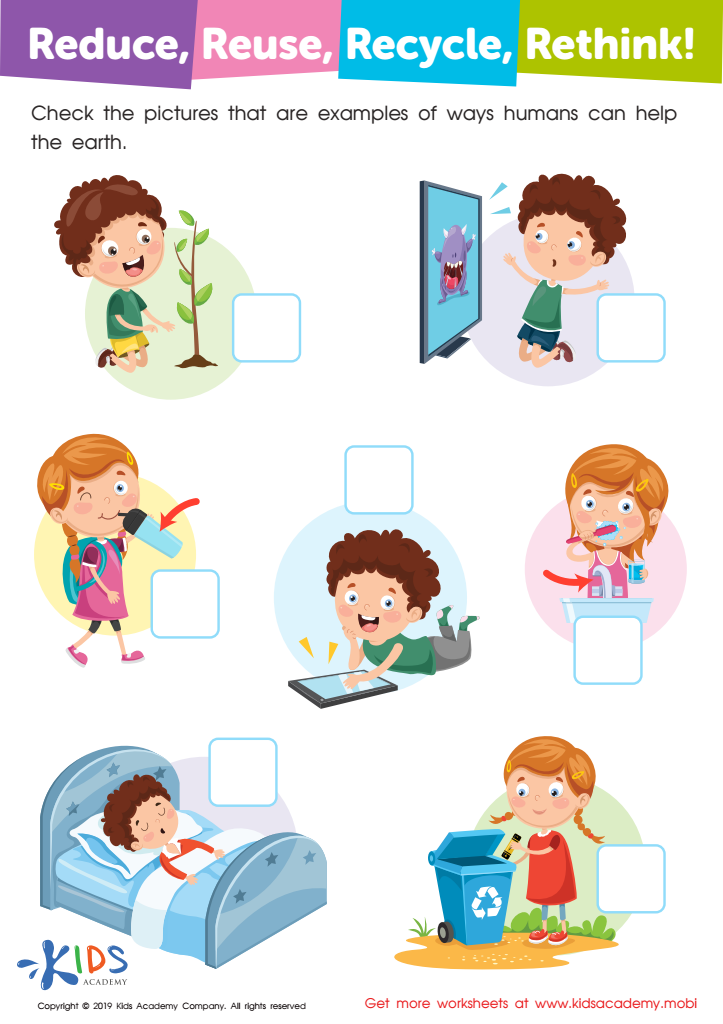
Reduce, Reuse, Recycle, Rethink Worksheet
 Assign to My Students
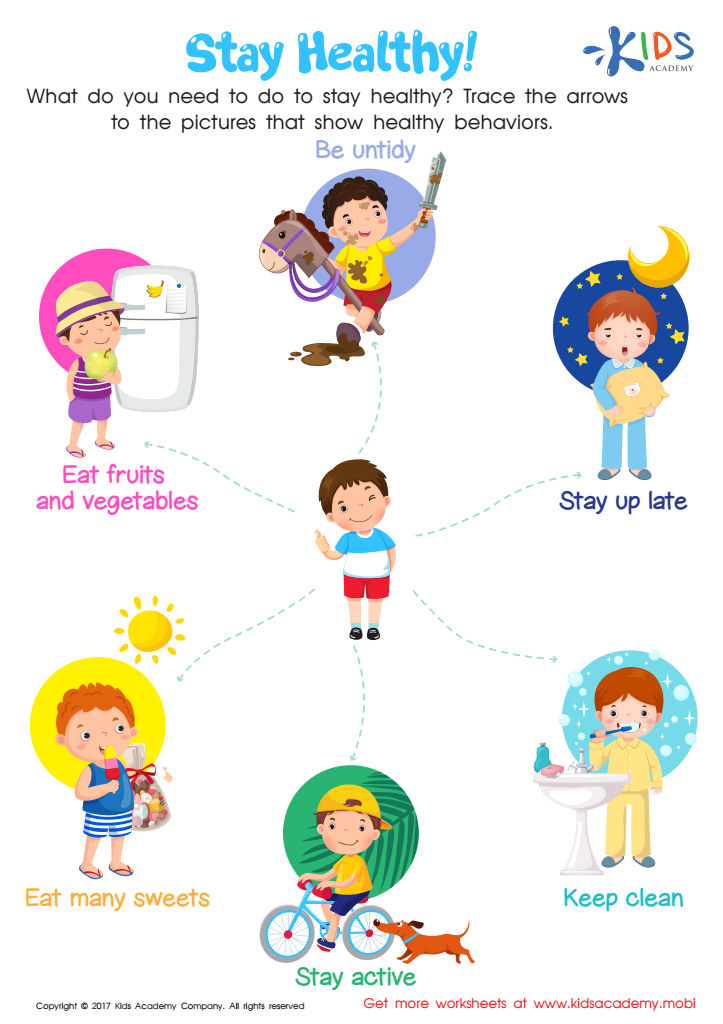
Healthy and Unhealthy Behaviors Worksheet
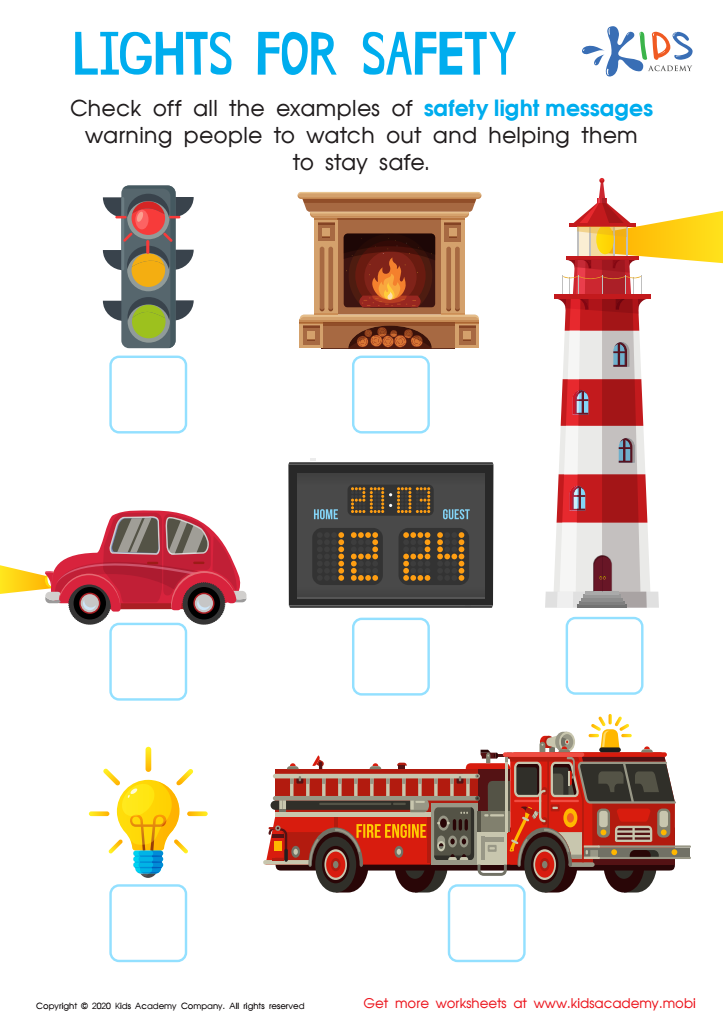
Lights for Safety Worksheet
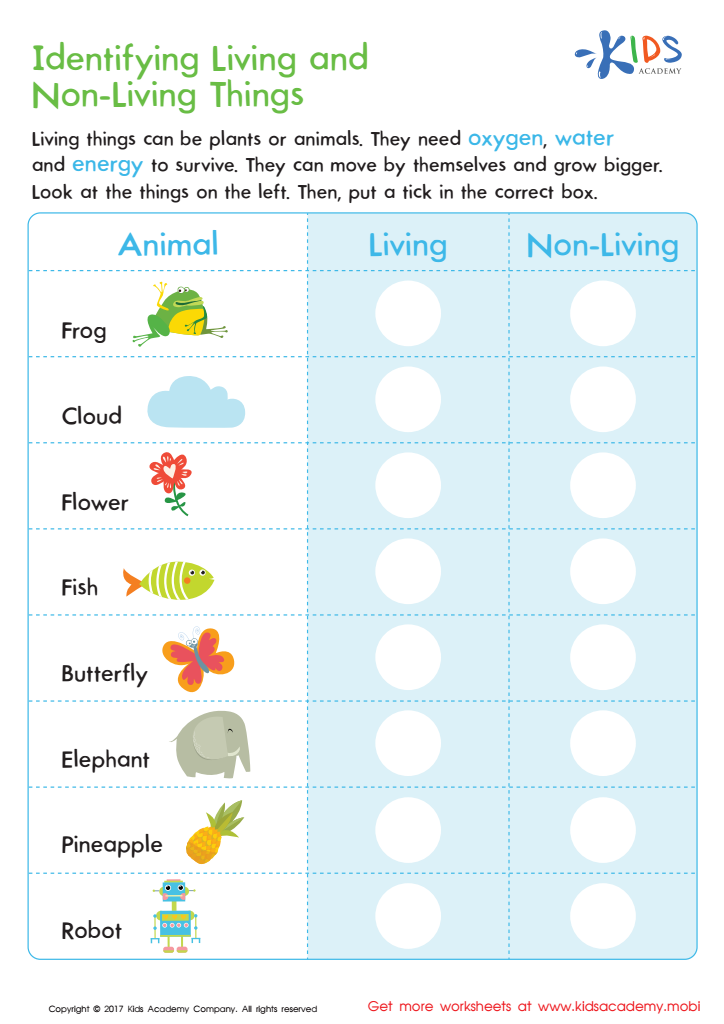
Identifying Living or Non–living Worksheet



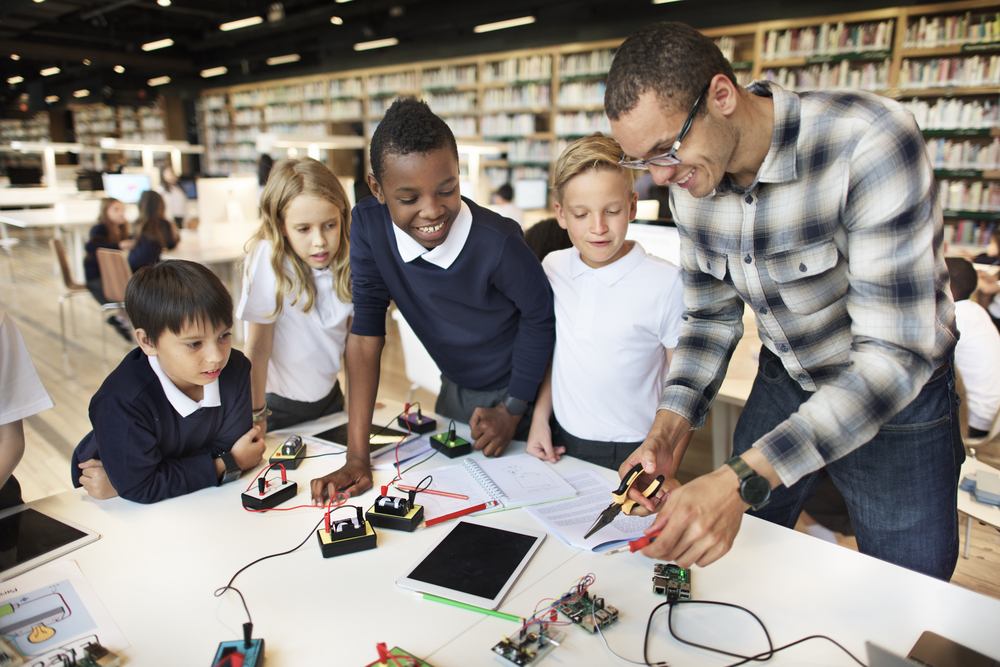


Critical thinking development in science for children aged 4-7 is vital for laying a strong foundation for lifelong learning and problem-solving skills. At this formative stage, young minds are incredibly receptive and curious. Introducing them to scientific concepts through critical thinking activities helps them to observe, question, and analyze the world around them.
For parents and teachers, fostering this skill set early on encourages children to become independent and reflective thinkers. It promotes intellectual curiosity and disciplines like planning, reasoning, and judging based on evidence rather than impulse or assumption. As they engage in experiments or exploration, children learn to ask "why" and "how," which are the cornerstones of scientific inquiry. This habit can expand to all areas of their future schooling, fostering a general enthusiasm for learning.
Additionally, developing critical thinking skills helps children in social and emotional contexts. They become better at resolving conflicts by analyzing situations and considering various outcomes. In the rapidly evolving world, these skills are global prerequisites, ensuring children grow up to be adaptable and rational individuals. Investing in critical thinking at an early age therefore equips them with the cognitive tools to navigate both academic and real-world challenges effectively.







