Developing critical thinking Science Worksheets for Ages 4-7
3 filtered results
-
From - To
Discover essential tools for fostering critical thinking skills in young learners aged 4-7 with our engaging Science worksheets. Designed to stimulate curiosity and analytical thinking, these worksheets feature fun activities that encourage exploration and problem-solving. Kids will embark on exciting journeys through scientific concepts, all while developing essential cognitive skills that lay the foundation for lifelong learning. Our resources are easy to use and adaptable, making them perfect for homeschooling or classroom settings. Help your child nurture their natural inquisitiveness and become a confident thinker with our beautifully crafted Science worksheets, designed specifically for early learners' unique developmental needs.

Seeds on the Move Worksheet
 Assign to My Students
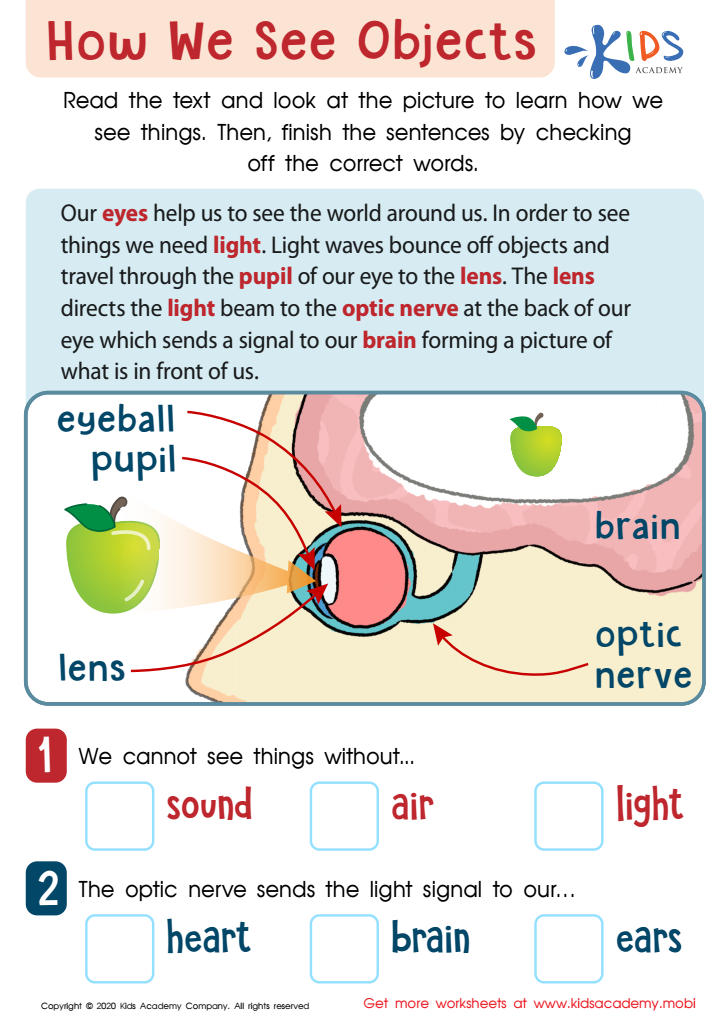
How We See Objects Worksheet
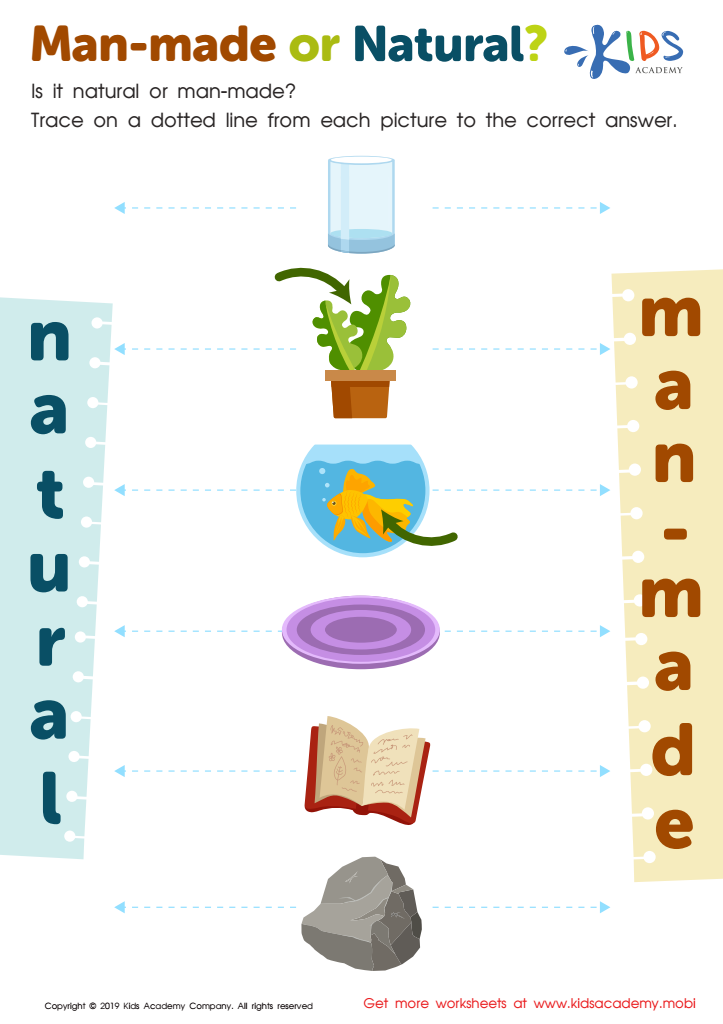
Man-Made or Natural? Worksheet








Developing critical thinking skills in young children, especially in the context of science, is essential for their overall cognitive growth and engagement with the world around them. From ages 4 to 7, children's brains are highly receptive and actively form connections, making it an ideal period for fostering fundamental analytical skills. Parents and teachers should care because critical thinking empowers children to ask questions, investigate, and make informed decisions based on evidence.
In science, this translates to not only understanding concepts but also developing curiosity and a sense of wonder about natural phenomena. Engaging children in hands-on experiments, encouraging them to formulate hypotheses, observe outcomes, and articulate their findings fosters a rich learning environment. It helps children build confidence in their abilities to reason and problem-solve, which are vital skills for future academic success and life challenges.
Moreover, nurturing critical thinking skills enhances creativity and empathy; children learn to respect diverse perspectives and consider the impacts of their choices. In a rapidly evolving world filled with information overload, equipping children with the tools to think critically ensures they grow into informed, responsible, and innovative adults who can tackle real-world issues. Thus, prioritizing critical thinking in early education lays a strong foundation for lifelong learning.







