Unlock your child's potential with our "Enhancing Vocabulary Science Worksheets for Ages 4-7". These engaging educational tools are designed to build robust vocabulary skills while fostering a love for science. Each worksheet combines age-appropriate activities with intriguing scientific concepts, helping young learners expand their word knowledge through interactive exercises. Ideal for curious minds, these worksheets cover topics like animals, plants, weather, and simple experiments. Learning is made fun and effective with colorful illustrations and captivating challenges. An ideal resource for parents and teachers, these worksheets lay a strong foundation for your child's academic journey in both science and language arts.

Check out this FREE Trial Lesson on Science for age 4-7!

Bird and Insect Structures

Favorites
With answer key
Interactive
  • 4-7
  • Enhancing vocabulary
  • Science
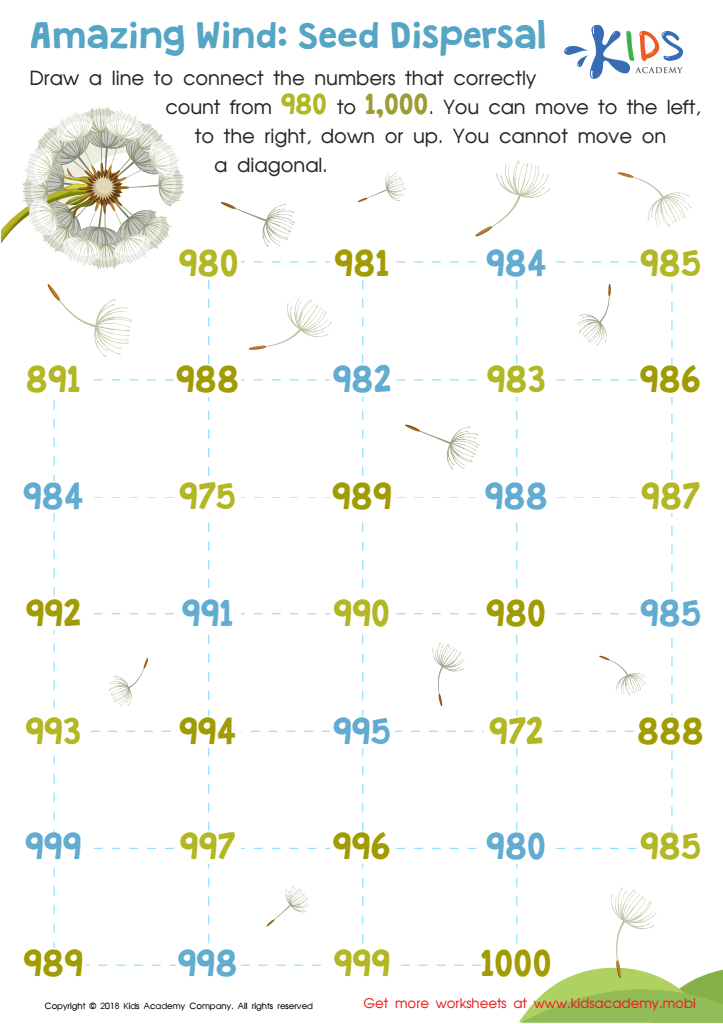
Amazing Wind: Seed Dispersal Worksheet

Amazing Wind: Seed Dispersal Worksheet

Let your child have fun and practice math skills with this worksheet! They'll use traceable lines to disperse a dandelion's seeds, building number sense, sequencing, fine motor, and hand-eye coordination. Discern between similar numbers and strengthen reasoning skills as they enjoy the familiar activity of blowing the seeds away.
Amazing Wind: Seed Dispersal Worksheet
Worksheet
The Water Cycle Worksheet

The Water Cycle Worksheet

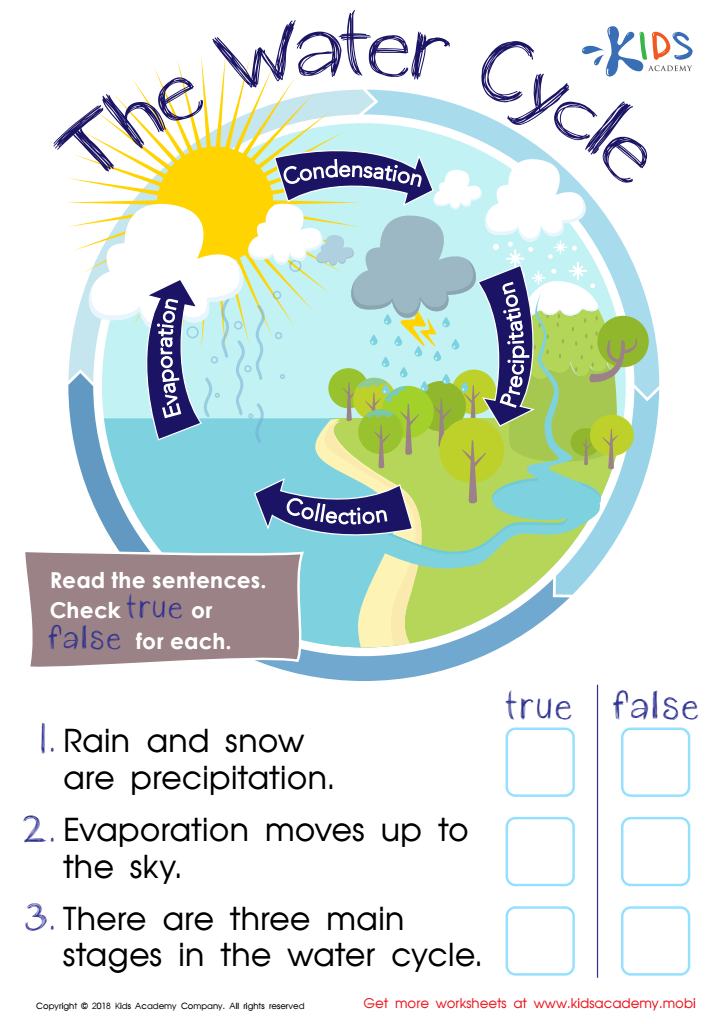
Do your students know about the water cycle? Show them the picture in this worksheet. Explain the stages: collection, evaporation, condensation and precipitation. Read the sentences and have them check the true or false questions. After this, they will understand the cycle water goes through.
The Water Cycle Worksheet
Worksheet
Bird Beaks Worksheet

Bird Beaks Worksheet

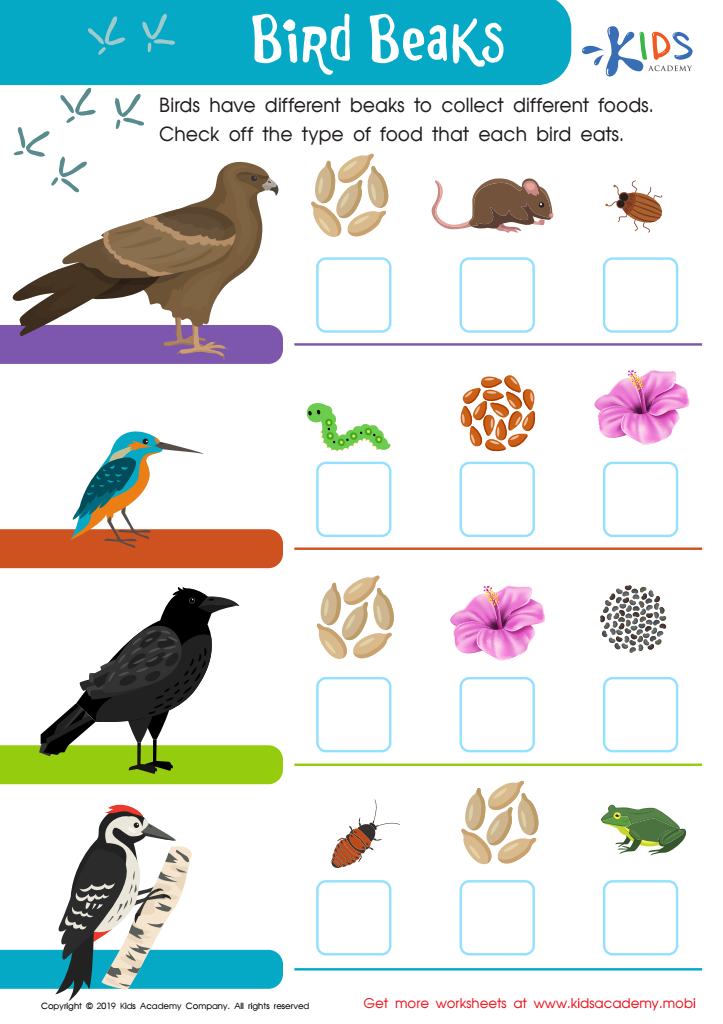
Birds have beaks to eat different types of food. Let your little nature lover explore why with this free worksheet! They'll learn about different beak shapes and match them to the food that's best for them. Be an adorable bird watcher together!
Bird Beaks Worksheet
Worksheet
Parts of Flower Worksheet

Parts of Flower Worksheet

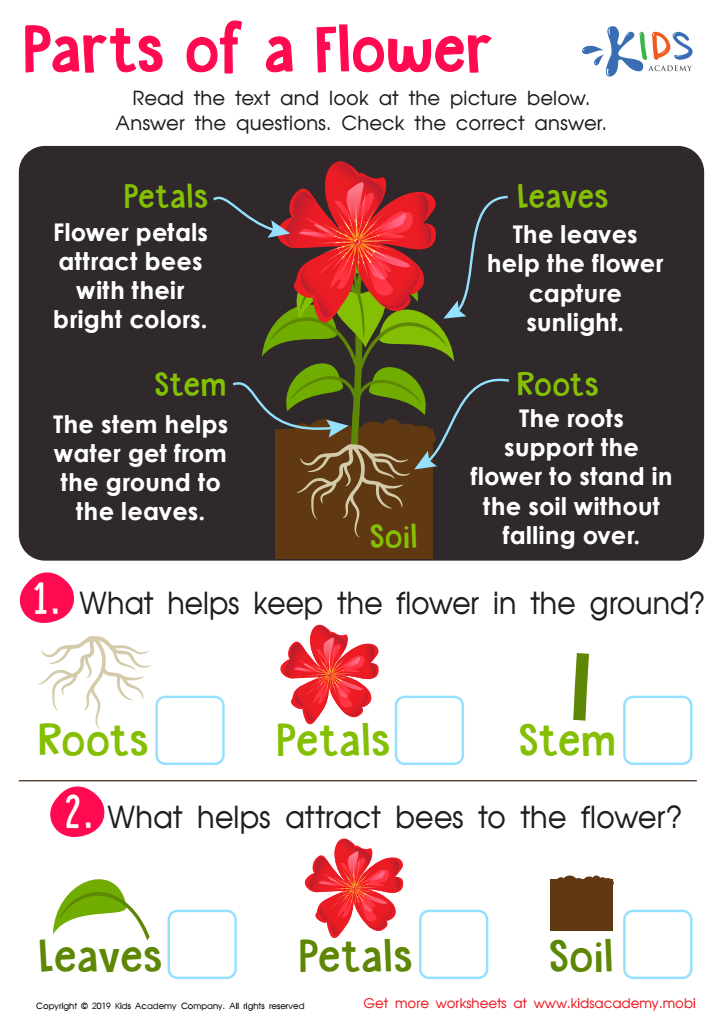
Learning how to dissect info from graphics is essential. This free worksheet on the parts of a flower is a great learning tool for kids. It offers info, picture clues and comprehension questions. Plus, it gives them a visual reference for building on their knowledge of plants.
Parts of Flower Worksheet
Worksheet
Migrate or Hibernate? Worksheet

Migrate or Hibernate? Worksheet

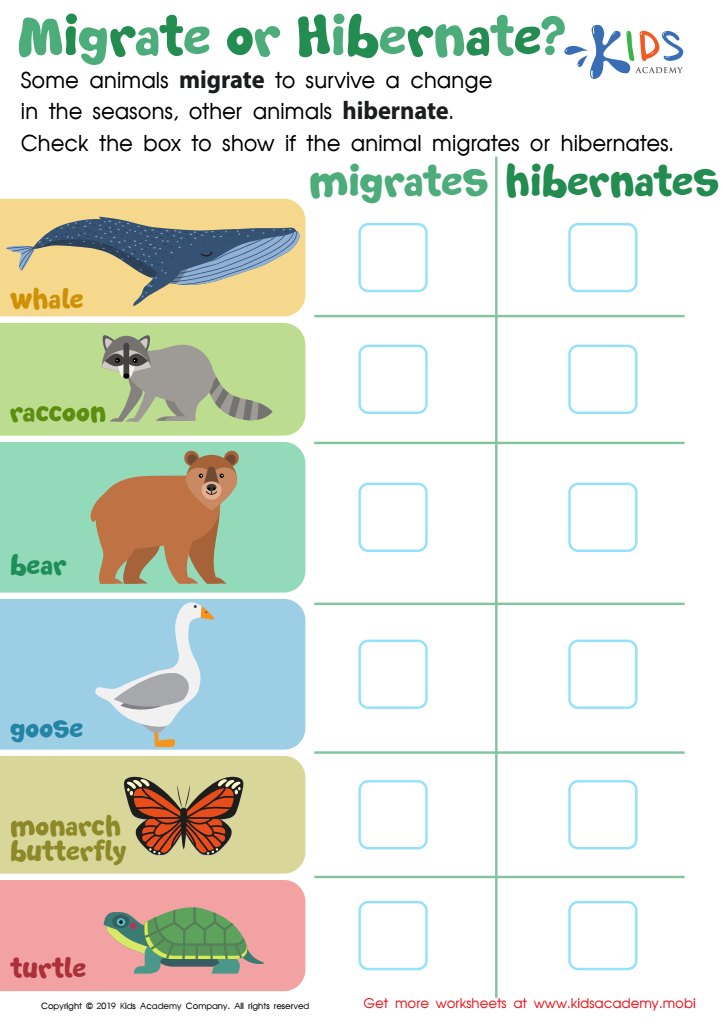
Many animals survive by either migrating or hibernating when the weather changes. Migration involves traveling in flocks or herds to a more temperate climate, while hibernation is when animals stay in their homes and eat and sleep for a long period of time. Show your kids this worksheet and help them decide which strategy animals use to cope with the changing weather.
Migrate or Hibernate? Worksheet
Worksheet
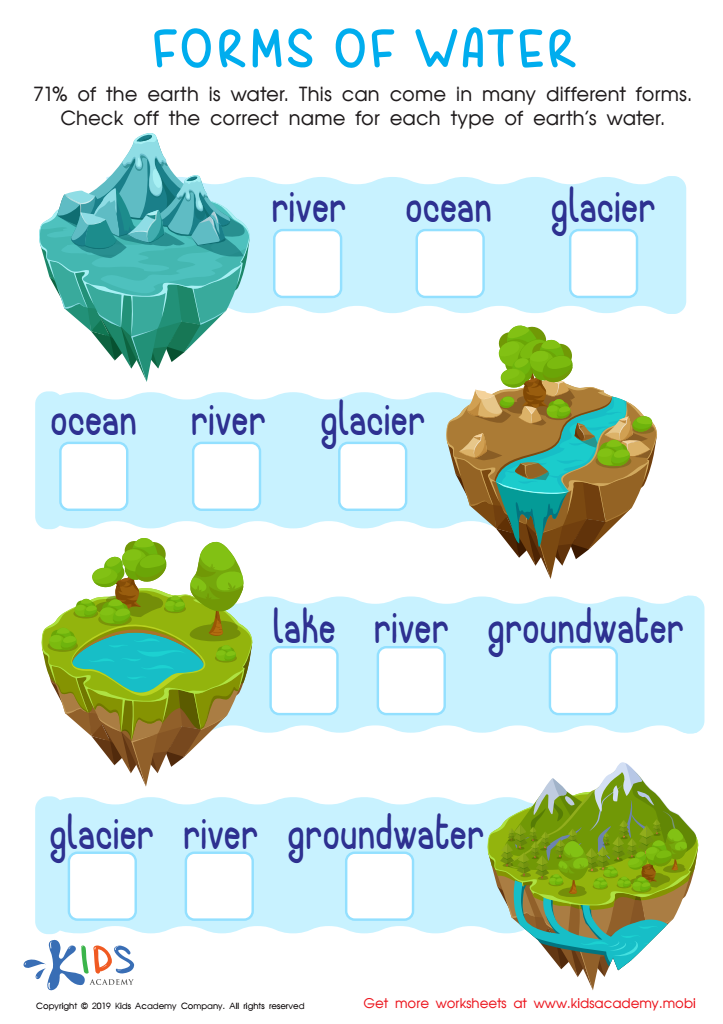
Forms of Water Worksheet

Forms of Water Worksheet

Life on Earth needs water to survive. Luckily, water makes up 75% of the Earth's surface and comes in various forms such as rivers, oceans and lakes. Ask your kids to name other forms and use this worksheet to help them identify each type.
Forms of Water Worksheet
Worksheet
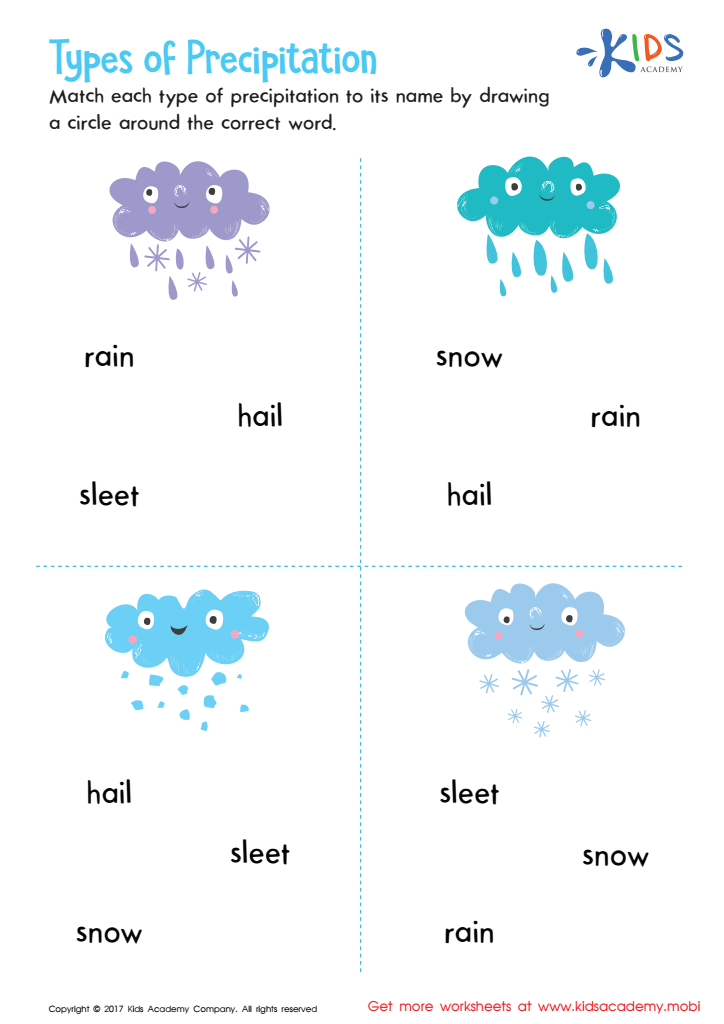
Types of Precipitation Worksheet

Types of Precipitation Printable
Science has a big impact on our world, and teaching kids about weather helps them understand how their learning applies to their lives. Our worksheet reviews different types of weather, so kids can look out the window and know what's happening. It covers familiar types of precipitation and more challenging ones like sleet or hail. Kids can use this to build a mental library of scientific knowledge for the future, even from places that don't get much snow.
Types of Precipitation Printable
Worksheet
Sensory Words Worksheet

Sensory Words Worksheet

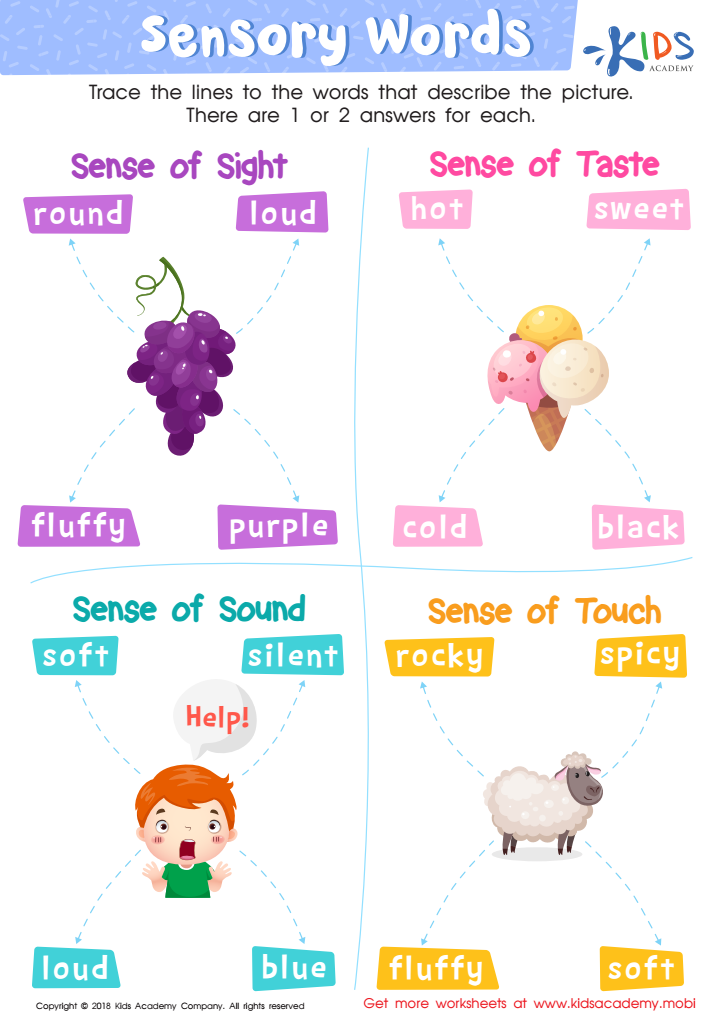
This worksheet helps students explore sensory words by looking at pictures and selecting one or two words to describe how it looks, feels, tastes, smells or sounds. Adding sensory words to texts makes them more interesting and helps students comprehend stories and articles better.
Sensory Words Worksheet
Worksheet


Enhancing vocabulary in young children, especially in the context of science, is incredibly important and can have far-reaching benefits for their overall development. Vocabulary is the building block of communication, which, in turn, is crucial for learning and cognitive development. When focusing on scientific vocabulary for children ages 4-7, we are laying the groundwork for critical thinking and a lifelong interest in exploring the world around them.

At this stage, children's brains are exceptionally receptive to new information. Introducing them to scientific terms and concepts can stimulate curiosity and encourage them to ask questions about their environment. This not only boosts their language skills but also fosters an analytical mindset. Scientific vocabulary helps children articulate their observations and develop the ability to describe phenomena accurately. Words like "magnify," "solid," "liquid," or "estimate" empower children to engage more deeply with scientific activities and experiments.

Moreover, a robust vocabulary contributes to better reading comprehension and can improve performance across various academic subjects. When children understand the terms used in scientific discussions, they can follow instructions more easily, participate more actively in classroom conversations, and build a strong foundation for future scientific learning.

In summary, enhancing vocabulary, particularly in science, equips young children with the tools to excel academically and nurtures a sense of wonder that promotes lifelong learning and discovery.