
Understanding photosynthesis Science Worksheets for Ages 4-7
3 filtered results
Difficulty Level
Grade
Age
-
From - To
Subject
Activity
Standards
Introduce young minds to the wonders of nature with our "Understanding Photosynthesis Science Worksheets for Ages 4-7". These engaging and educational worksheets are designed for early learners, making the complex process of photosynthesis simple and fun. Through colorful illustrations, interactive activities, and easy-to-understand explanations, children will explore how plants convert sunlight into energy. Perfect for home or classroom use, these worksheets will foster a love for science while developing fundamental learning skills. Watch young botanists thrive as they uncover the secrets of photosynthesis in an accessible, enjoyable way! Download today to start your child's scientific journey.
Favorites
With answer key
Interactive
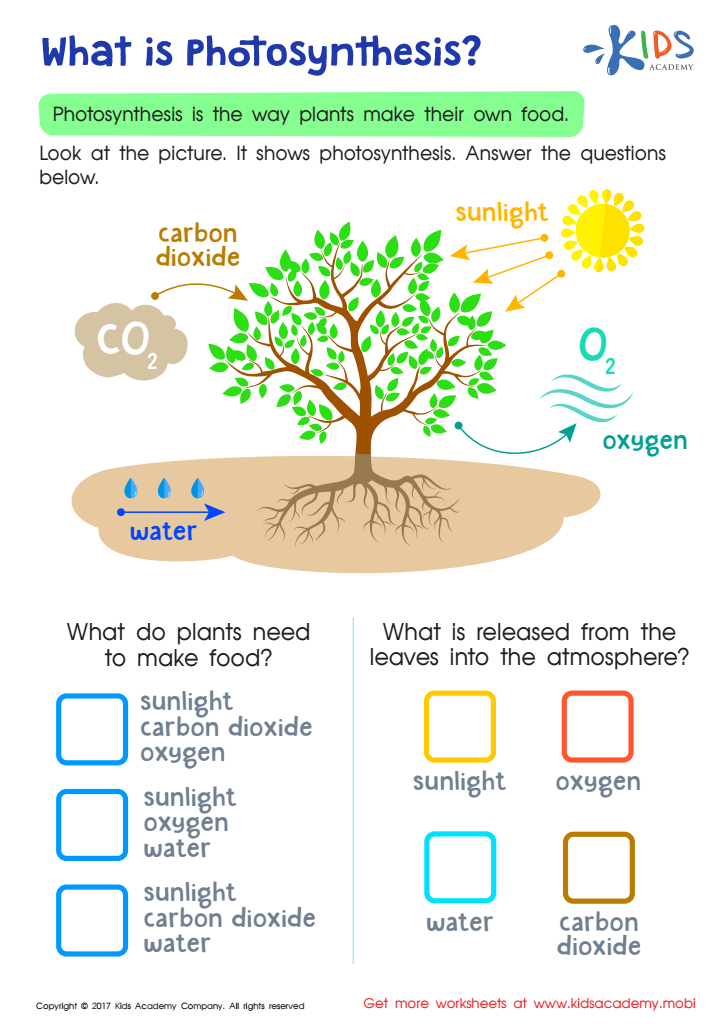
What is Photosynthesis Printable
Plants need to eat too; they make their own food from the air. Introduce them to photosynthesis with this fun worksheet!
 Assign to My Students
What is Photosynthesis Printable
Worksheet
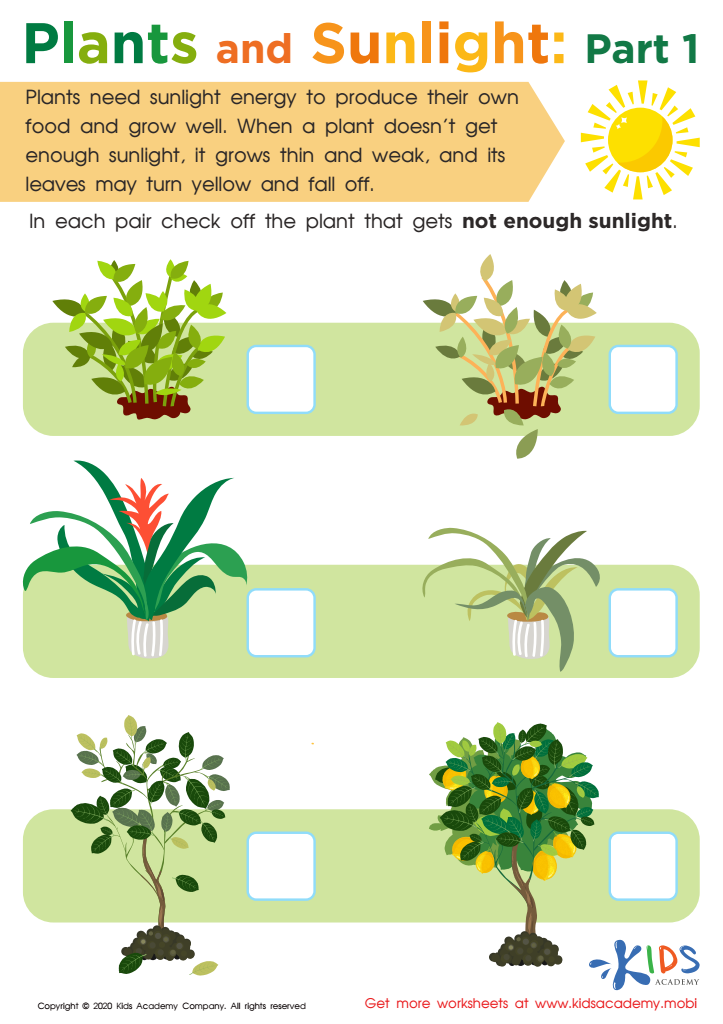
Plants and Sunlight: Part 1 Worksheet
Plants need the sun to grow big and strong, just as much as they need water. Without sunlight, plants can’t grow or flower. Use this worksheet to teach your child the importance of sun for plants. Have them read the passage and analyze the pictures to determine which plants are struggling due to lack of sunlight.
Plants and Sunlight: Part 1 Worksheet
Worksheet
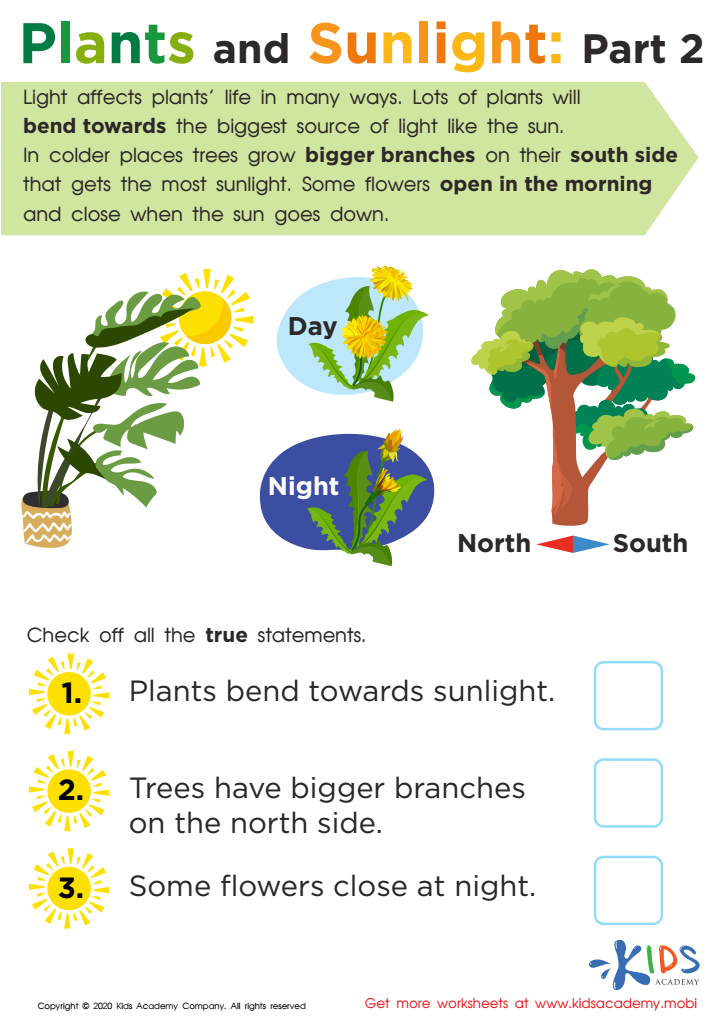
Plants and Sunlight: Part 2 Worksheet
Place a houseplant near the window and observe how it bends to get more sunlight! The sun's effects on plants and trees are amazing - flowers opening and closing, trees growing stronger branches on the south side. Let your child learn with this free Kids Academy printable science worksheet!
Plants and Sunlight: Part 2 Worksheet
Worksheet
Join Kids Academy for Free
Who is primarily going to use this learning content?






Understanding photosynthesis in early childhood sparks curiosity and builds a strong foundation for future scientific learning. For kids aged 4-7, grasping basic concepts about how plants make their food encourages appreciation for the natural world. When parents and teachers introduce photosynthesis, they open the door to inquiries about the environment, fostering a deeper connection with nature.
Teaching photosynthesis also integrates essential skills such as observation and critical thinking. Young children learn to ask questions like, "Why do plants need sunlight?" and "How do leaves make food?". These questions promote investigative thinking and help children understand cause-and-effect relationships.
Furthermore, discussing photosynthesis meets key educational goals by enhancing vocabulary with words like "chlorophyll" and "carbon dioxide." This not only strengthens language development but also empowers children to articulate their thoughts clearly.
Lastly, understanding the crucial role plants play in producing oxygen instills a sense of responsibility toward environmental stewardship. Early awareness of these concepts can lead to lifelong habits like recycling and conserving energy, traits essential for sustainable living.
So, incorporating photosynthesis in early science education doesn't just satisfy cursory academic requirements but plays an integral part in creating well-rounded, environmentally conscious individuals who appreciate and take care of our planet.







