
Critical Thinking Life Science Worksheets for Ages 4-7
3 filtered results
Difficulty Level
Grade
Age
-
From - To
Subject
Activity
Standards
Our "Critical Thinking Life Science Worksheets for Ages 4-7" are designed to foster curiosity and analytical skills at an early age. These engaging, fun activities help young learners explore the natural world while developing important scientific inquiry skills. They'll observe, question, and make connections, enhancing cognitive abilities and laying a strong foundation for future learning. Perfect for classrooms or at-home use, these worksheets cover various life science topics, ensuring children stay interested and motivated. Treasure the joy of discovery with each thoughtfully crafted page, naturally nurturing a love for learning and critical thinking in your child!
Favorites
With answer key
Interactive
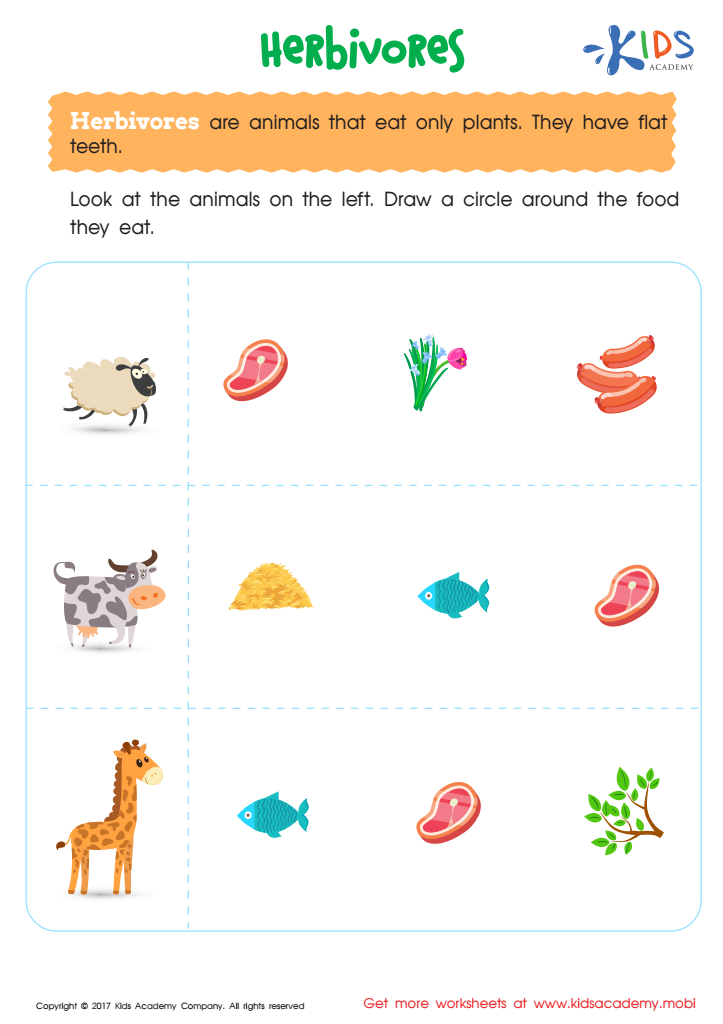
Herbivores Printable
Strengthen their vocab with these fascinating creatures, as they explore an intriguing aspect of beloved animals.
 Assign to My Students
Herbivores Printable
Worksheet
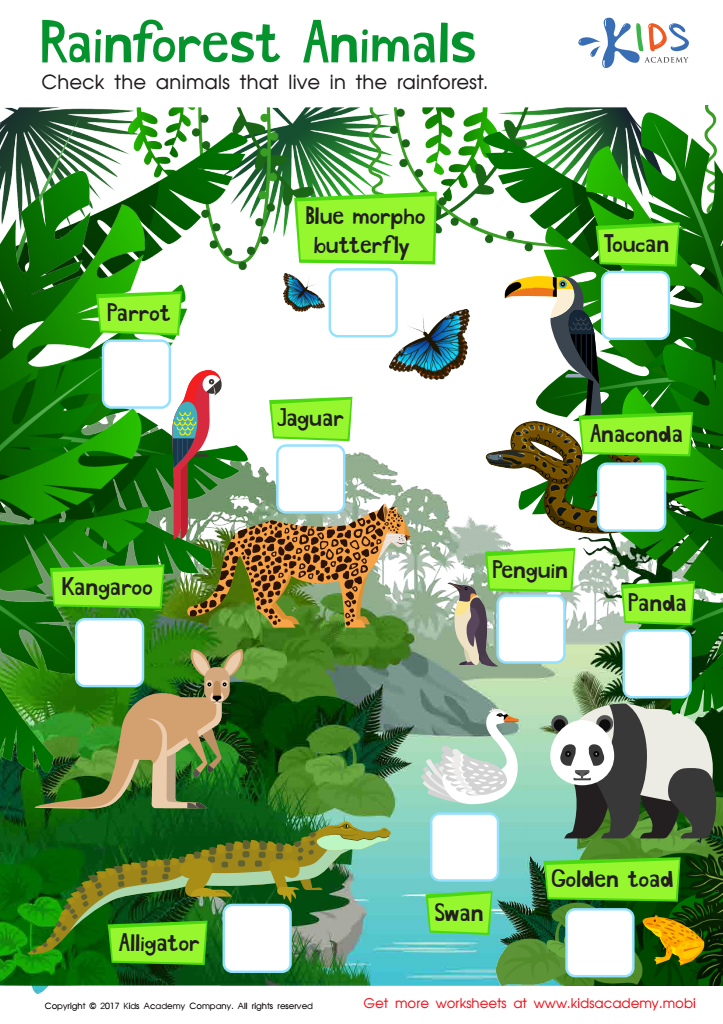
Rainforest Animals Worksheet
Kids love the bright, vivid pics of rainforest animals in this worksheet. It fuels their interest in life science and brings joy to their learning. It encourages them to study these animals in detail.
Rainforest Animals Worksheet
Worksheet
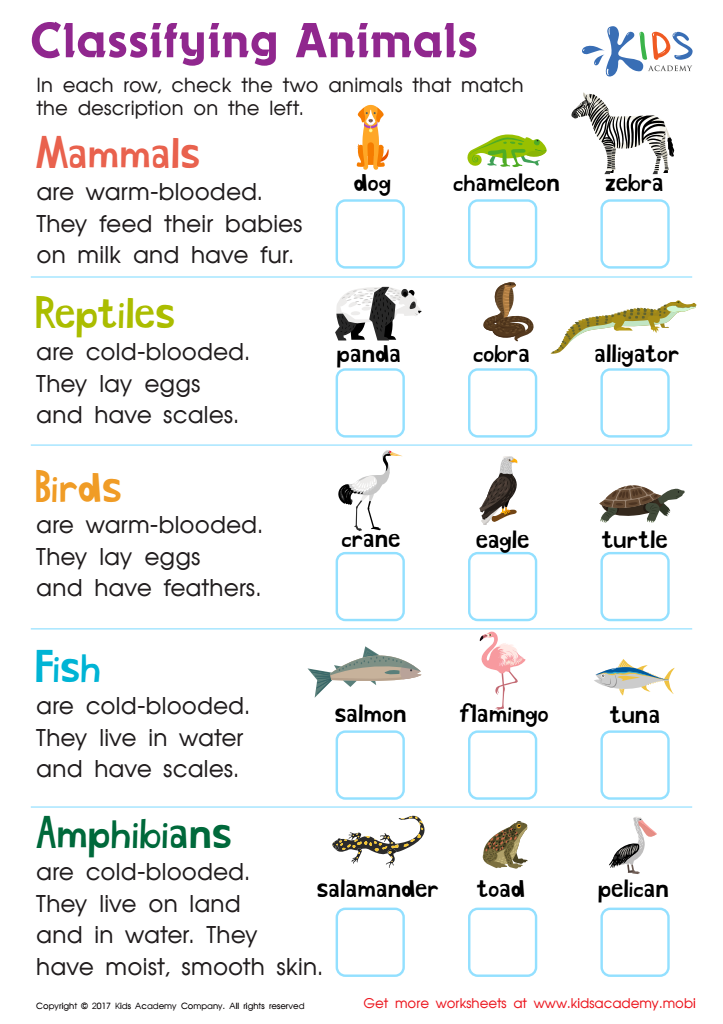
Classifying Animals Worksheet
Print the 2nd grade animal classification worksheet and help kids study the differences between mammals, reptiles, birds, fish and amphibians. Let them pick two examples from the options given.
Classifying Animals Worksheet
Worksheet
Join Kids Academy for Free
Who is primarily going to use this learning content?




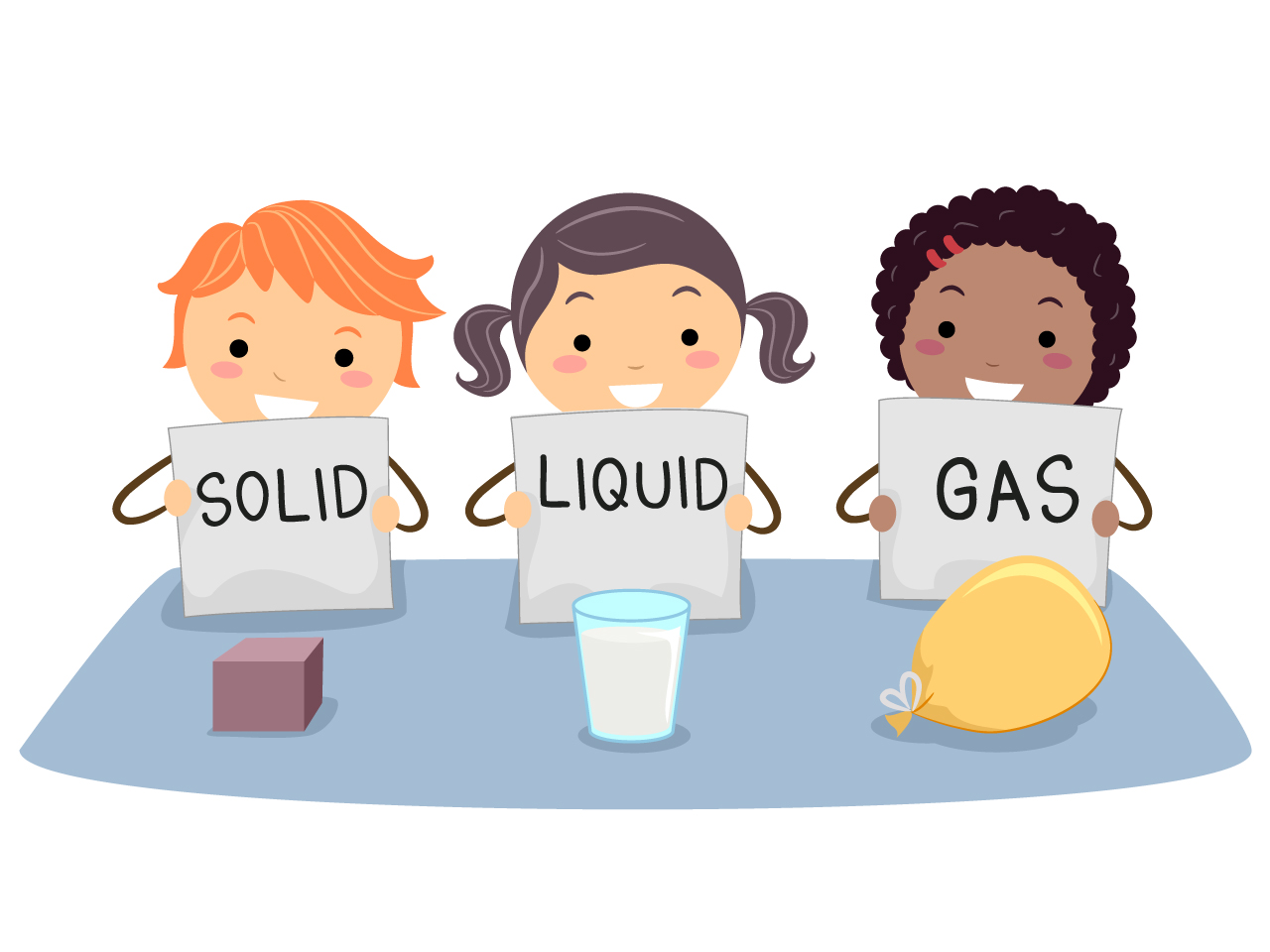


Fostering critical thinking in life sciences for children ages 4-7 is essential for several compelling reasons. First, early exposure to scientific concepts helps children develop curiosity about the natural world, laying the foundation for lifelong learning and inquiry. By integrating critical thinking, children learn to question, explore, and understand their environment instead of passively accepting information. This active engagement promotes awareness and appreciation for living organisms and ecosystems, nurturing future stewards of our planet.
Young children are naturally inquisitive, often asking "why" and "how" about the world around them. Approaching life sciences with critical thinking at this stage taps into their innate curiosity and keeps them engaged. It encourages problem-solving and investigative skills, requiring them to observe, hypothesize, experiment, and draw conclusions. These foundational skills are not just vital within the realm of science but are also transferable to other areas such as mathematics, reading comprehension, and even social interactions.
Moreover, critical thinking encourages empathy and ethical reasoning. Understanding basic life science concepts and the interconnectedness of living things can foster a sense of responsibility and respect for all forms of life. Early educators and parents who emphasize critical thinking in life sciences equip children with tools not only for academic success but also for conscientious citizenship and thoughtful decision-making.








