Shape Recognition Physical Science Worksheets for Ages 4-7
3 filtered results
-
From - To
Discover the perfect blend of fun and education with our Shape Recognition Physical Science Worksheets, tailored for children aged 4-7. Ignite their curiosity as they explore various shapes through hands-on activities and vibrant illustrations. Our expertly designed worksheets help kids develop essential skills such as critical thinking, observation, and problem-solving in an engaging way. Ideal for early grade learners, these printable resources are perfect for classroom use or home learning. Start the journey of scientific discovery now and watch young minds flourish with confidence and creativity. Download and enjoy our Shape Recognition worksheets today!
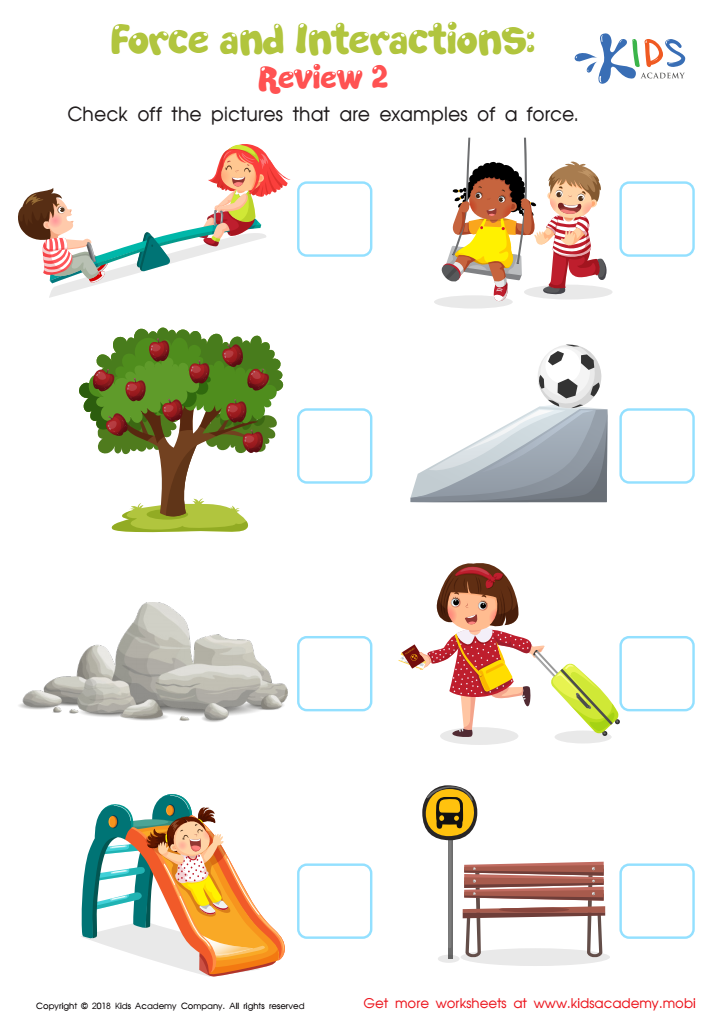
Force and Interactions: Review 2 Worksheet
 Assign to My Students
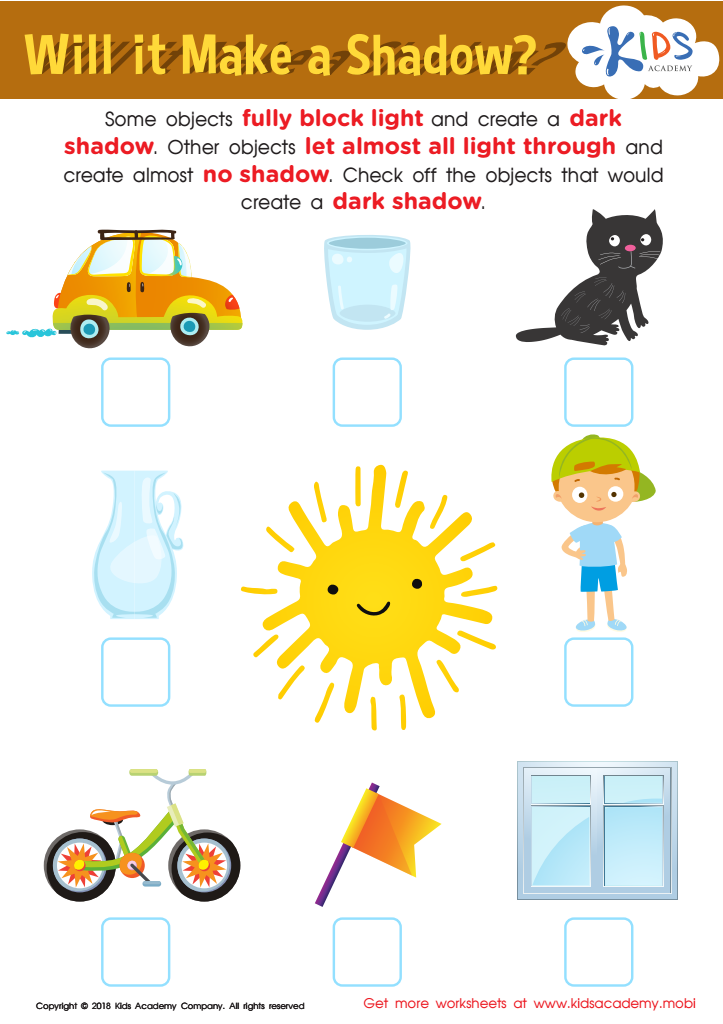
Will It Make a Shadow? Worksheet
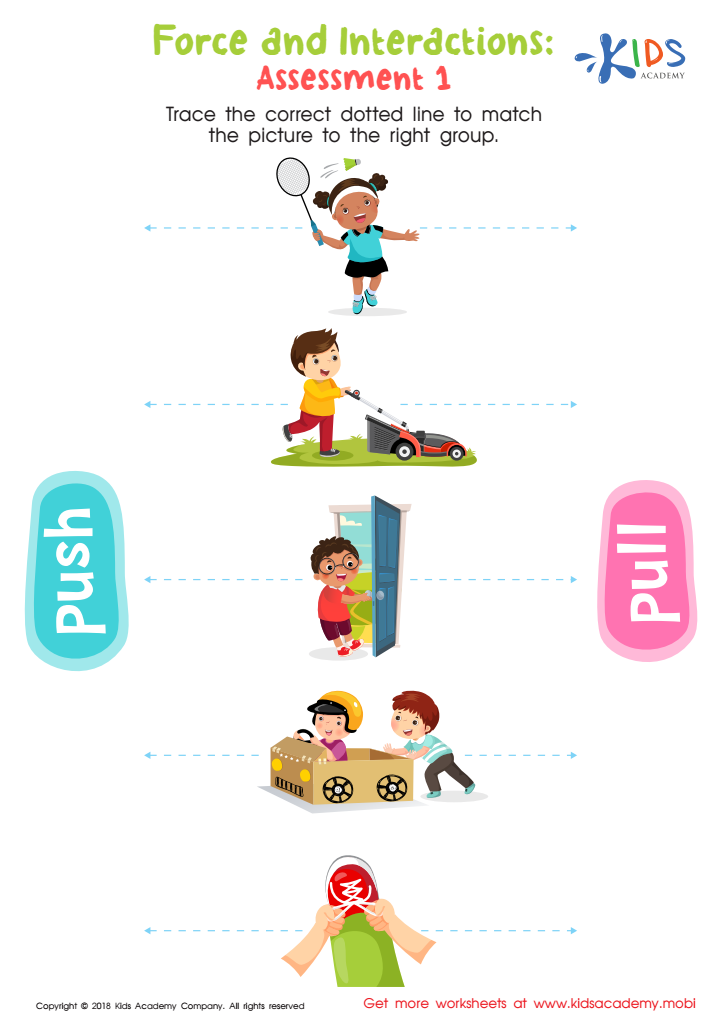
Force and Interactions: Assessment 2 Worksheet







Shape recognition is a foundational skill in early childhood education that plays a critical role in a child's cognitive development, particularly in the realm of physical science. For ages 4-7, understanding shapes is more than just identifying circles, squares, and triangles; it's about comprehending the properties and relationships that different shapes have. When children discern shapes in the physical world, they begin to hone their spatial awareness and geometric reasoning, which are essential for subjects like mathematics and science.
Recognizing shapes aids in the development of critical thinking and problem-solving skills. When children are encouraged to classify and sort different objects based on their shapes, they learn to observe, compare, and contrast—skills that are crucial in the scientific method. Such activities also enhance their ability to recognize patterns, which is a fundamental aspect of scientific inquiry and technical disciplines.
Additionally, shape recognition supports fine motor skills. Manipulating objects to understand shapes requires coordination and control that are important for other academic tasks such as writing and drawing.
Teachers and parents should integrate shape recognition into playful, exploratory activities to foster a deeper understanding of the physical world. By doing so, children build a solid foundation for future learning, ensuring they have the readiness for more complex scientific concepts later in their education.







