Vocabulary enhancement Physical Science Worksheets for Ages 4-7
6 filtered results
-
From - To
Enhance your child's vocabulary with our engaging Physical Science Worksheets designed for ages 4-7! These printable resources are perfect for young learners, helping them explore essential physical science concepts while boosting their language skills. Our worksheets feature fun activities that introduce key vocabulary related to everyday science phenomena, enabling children to connect words with real-world contexts. Each worksheet encourages curiosity, critical thinking, and creativity, making learning enjoyable and effective. Start nurturing a strong foundation in science and language with our vocabulary enhancement worksheets today and watch your little ones thrive as they discover the wonders of the world around them!
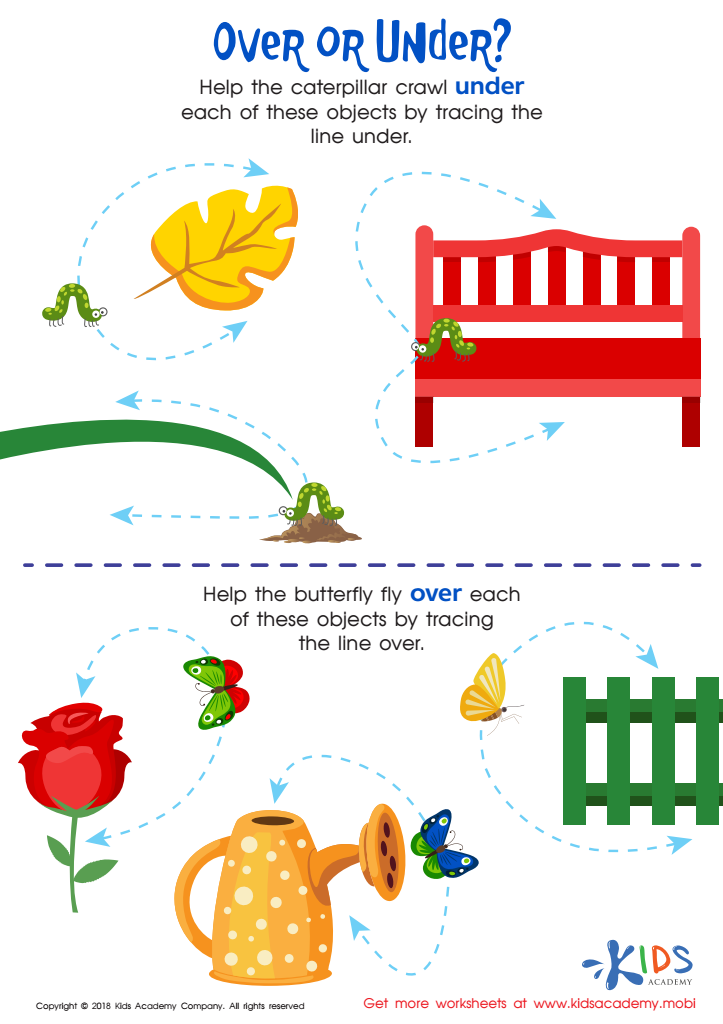
Over or Under? Worksheet
 Assign to My Students
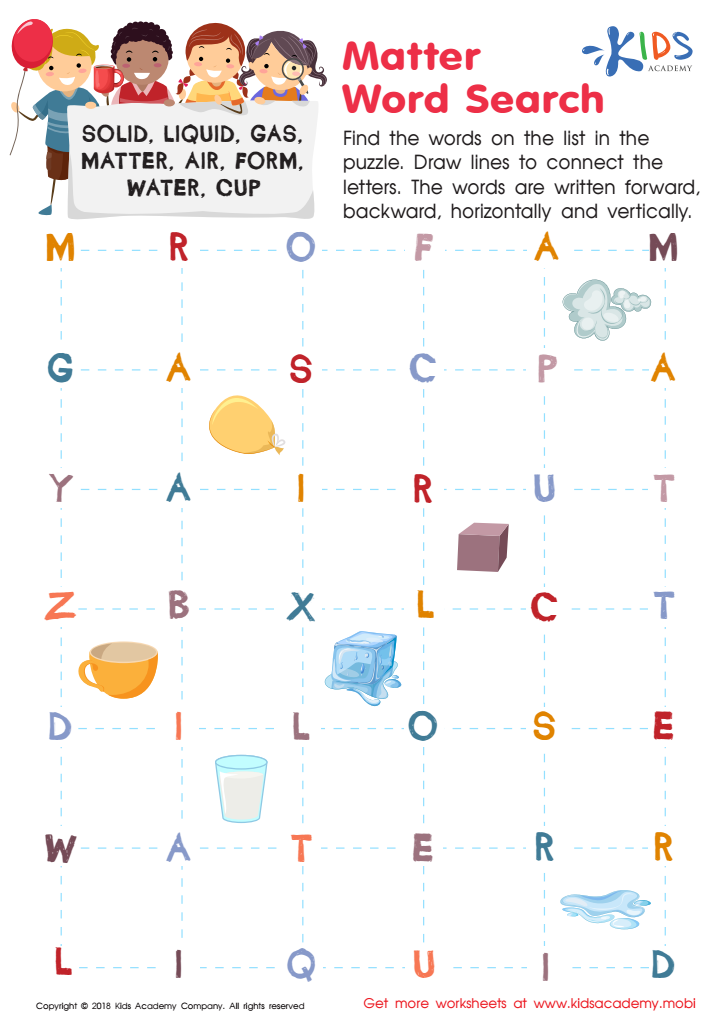
Matter Word Search Worksheet
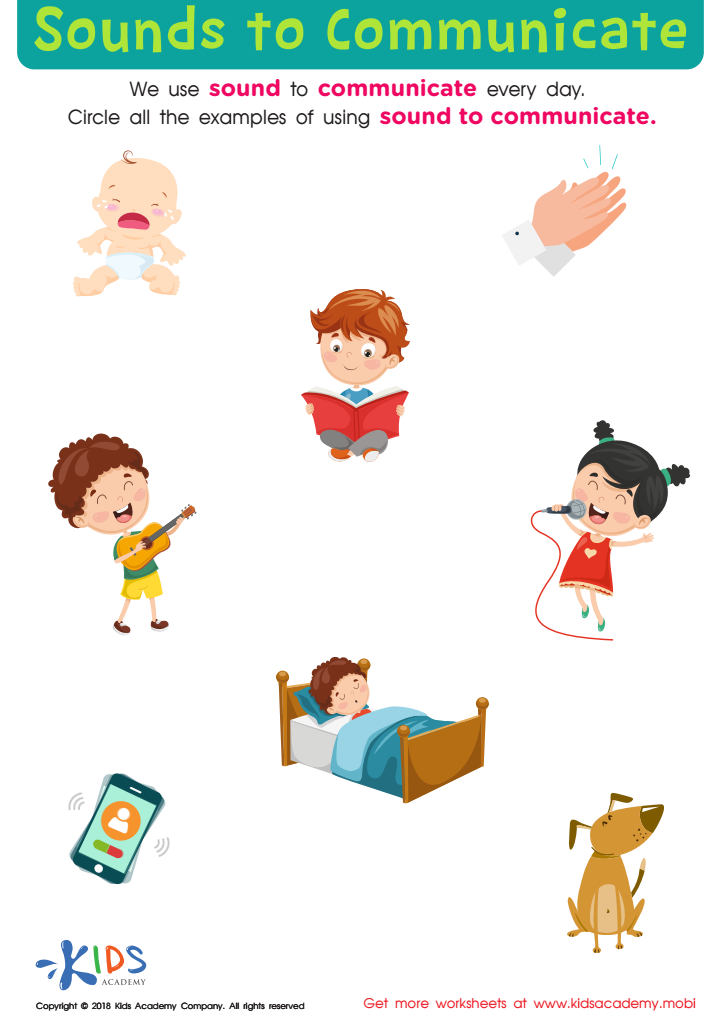
Sounds to Communicate Worksheet
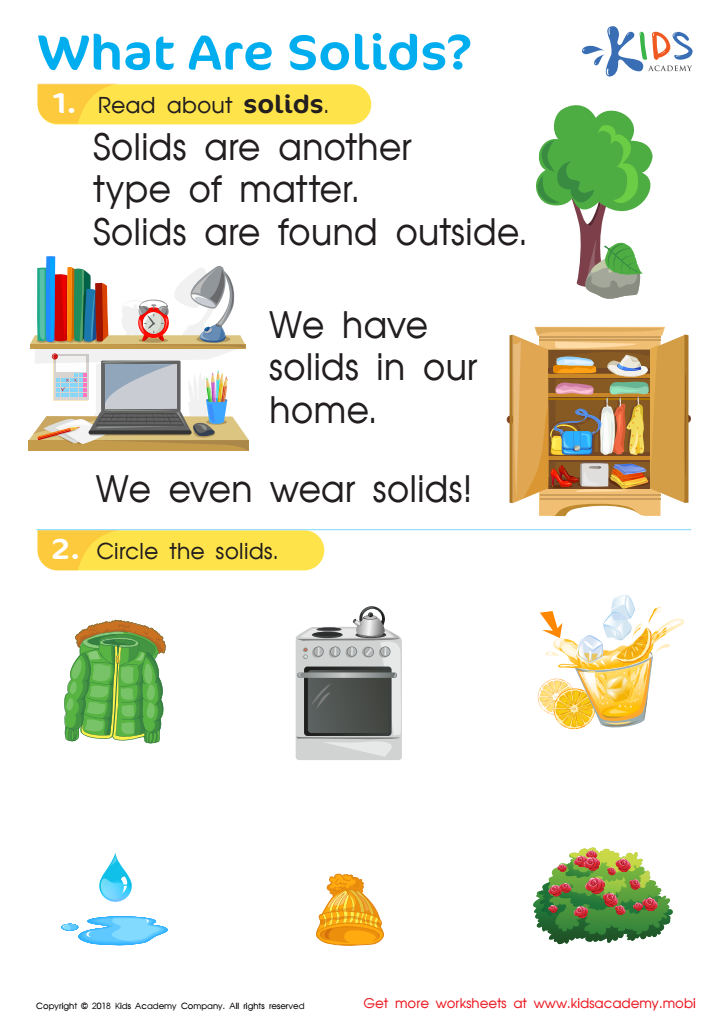
What Are Solids? Worksheet
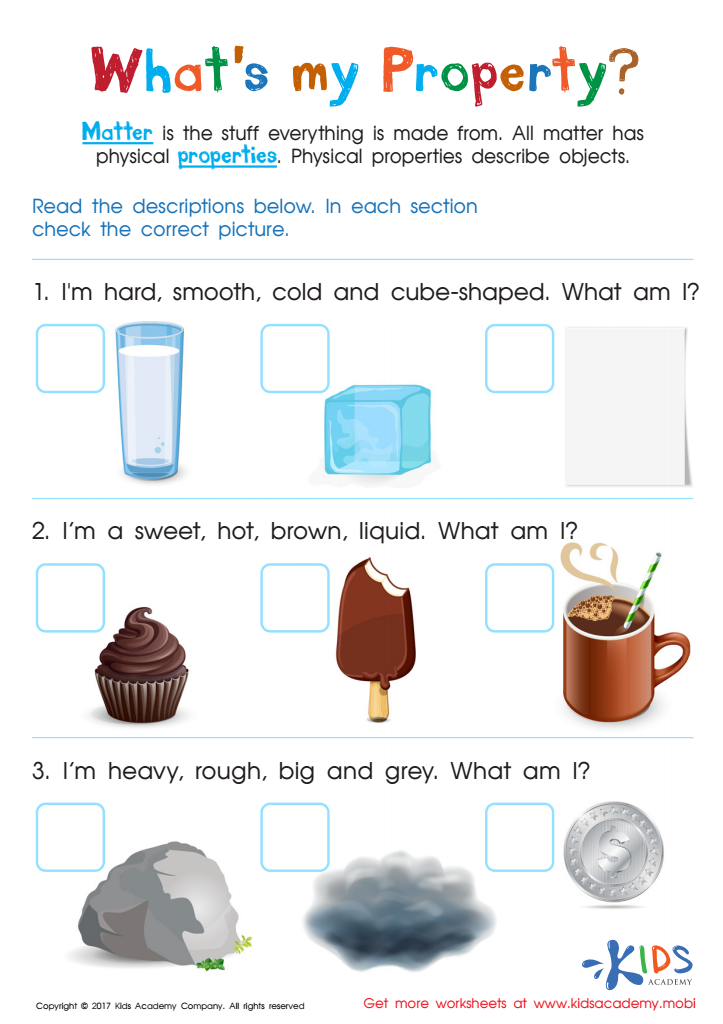
Physical Properties Of Matter Worksheet
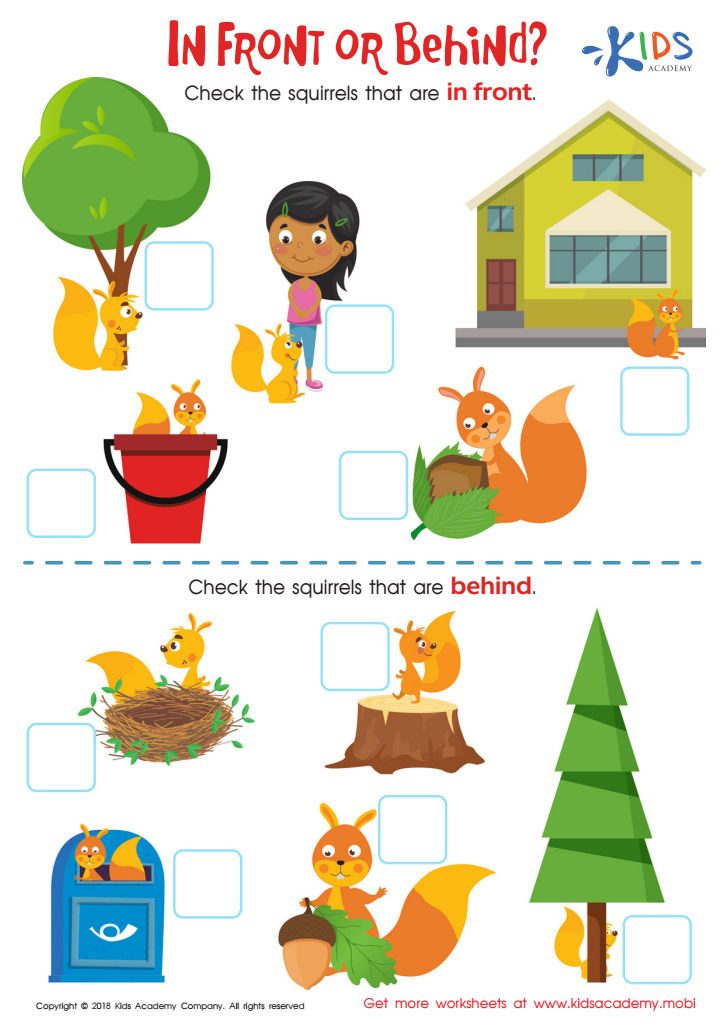
In Front or Behind: Part 2 Worksheet








Vocabulary enhancement in Physical Science for children aged 4-7 is crucial for several reasons. First, early exposure to scientific vocabulary helps bridge the gap between everyday language and scientific concepts. Children who learn terms like "force," "gravity," and "energy" not only improve their language skills but also develop a foundational understanding of scientific principles. This early comprehension fosters curiosity and promotes a lifelong interest in science.
Additionally, a strong vocabulary enables children to articulate their thoughts and observations, encouraging critical thinking skills. When children can express ideas or ask questions about their environment, they become active participants in their learning process. This engagement is pivotal in these formative years, as it builds confidence and enhances their ability to work collaboratively with peers.
Parents and teachers play a vital role in this process. They can introduce science vocabulary through engaging activities like hands-on experiments, storytelling, or playful exploration of nature, making learning both fun and relevant. This approach not only boosts vocabulary acquisition but also reinforces comprehension and retention, laying a strong foundation for future academic success in science and other subjects. By prioritizing vocabulary enhancement in Physical Science, caregivers empower young learners to understand and interact with the world around them effectively.







